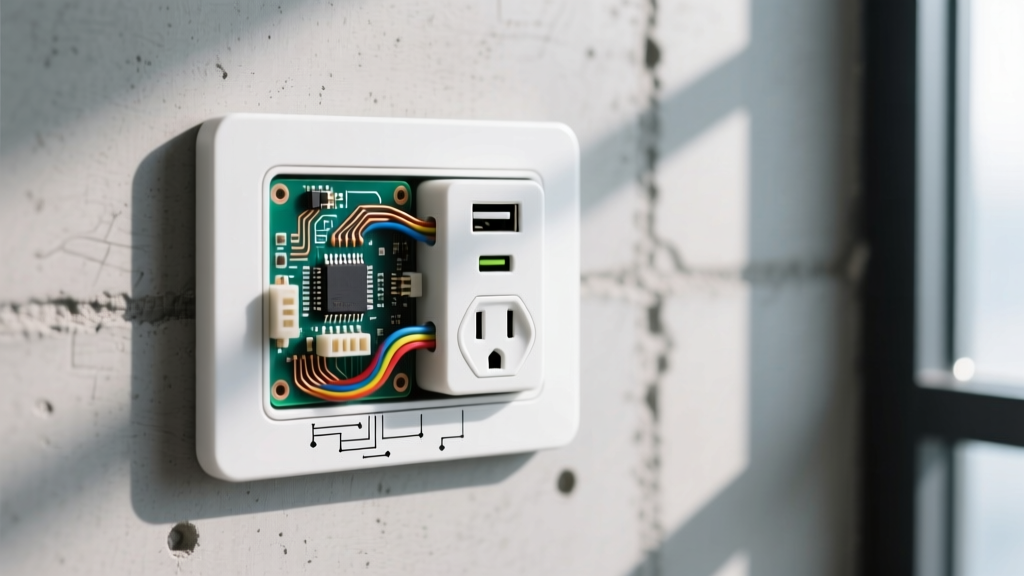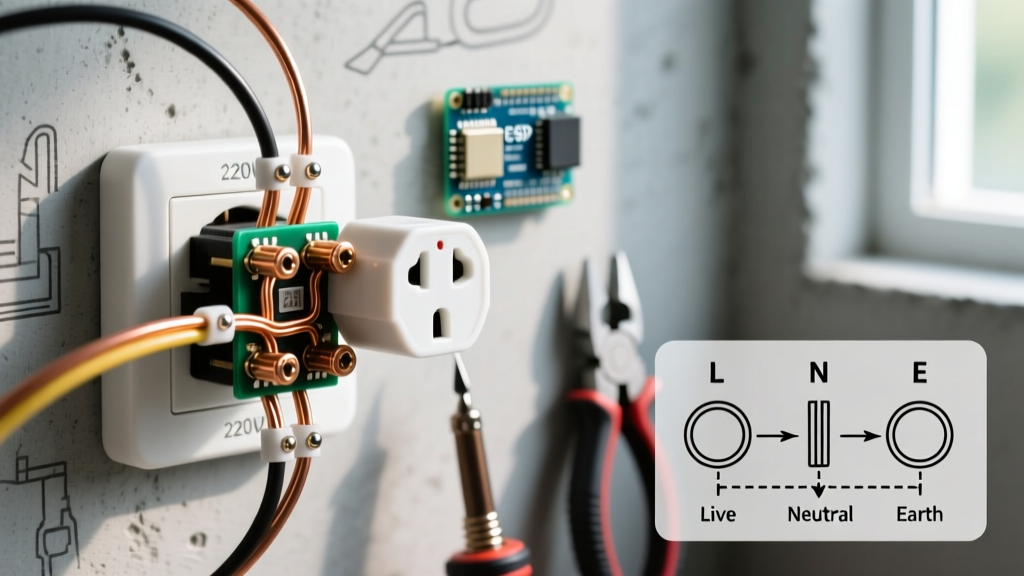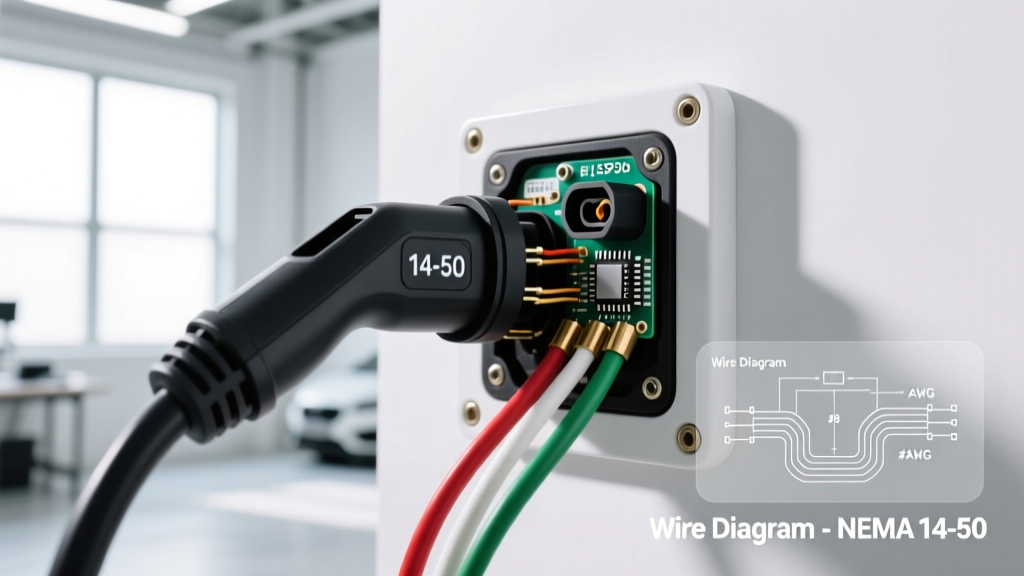

The EV Home Charging Revolution: Beyond the Standard 120V
As electric vehicle adoption accelerates through 2026, the demand for reliable, high-speed home charging has never been higher. According to the Department of Energy's Alternative Fuels Data Center, over 80% of all EV charging occurs at home. While a standard 120V Level 1 outlet can technically charge a vehicle, it delivers a mere 3 to 5 miles of range per hour. For modern EVs with 300+ mile battery packs, this is mathematically insufficient for daily drivers. This reality forces homeowners and electricians to navigate the complexities of installing a dedicated electric car charger outlet, typically a 240V Level 2 setup.
Wiring an electric car charger outlet is not as simple as swapping a standard bedroom receptacle. It requires strict adherence to National Fire Protection Association (NFPA) NEC guidelines, specifically Article 625 (Electric Vehicle Charging System). In this guide, we break down the most common wiring scenarios, the hidden hardware traps that cause electrical fires, and the exact specifications required for a safe, code-compliant installation.
CRITICAL SAFETY WARNING: EV charging is classified as a 'continuous load' under NEC Article 210.20(A) because it operates for three hours or more. This means a 50-amp breaker can only safely deliver 40 amps of continuous current. Never size your wire or breaker based on the absolute maximum peak; always apply the 125% continuous load multiplier.
Scenario 1: The NEMA 14-50 Receptacle (The Industry Standard)
The NEMA 14-50 is the undisputed king of residential EV charging. It provides 240 volts on a 50-amp circuit, allowing for 40 amps of continuous charging (roughly 9.6 kW). This setup is highly desired because it allows the use of portable EVSEs (Electric Vehicle Supply Equipment), like the Tesla Mobile Connector or the Emporia Level 2 Portable Charger, which can be unplugged and taken on road trips or to a new home.
The Receptacle Brand Trap: Why Hardware Store Outlets Fail
The most common failure mode in DIY and budget electrician installations is the use of standard residential-grade NEMA 14-50 receptacles (such as the ubiquitous Leviton 279-S00, which costs around $12). While technically rated for 50 amps, these receptacles are designed for intermittent loads like electric ranges, not 10-hour continuous EV charging sessions. Under continuous 40-amp loads, the internal brass bus bars of cheap receptacles lose their grip, creating micro-arcing, immense heat, and eventually melting the outlet faceplate.
The Expert Solution: You must use an industrial/commercial-grade receptacle with heavy-duty brass contacts and a high-tolerance grip. The Hubbell 9450FR or the Bryant 9450FR (priced between $120 and $150) are the only receptacles widely recommended by EV engineers and master electricians for continuous EVSE loads. They feature robust terminal blocks that can handle the thermal expansion and contraction of daily charging cycles without degrading.
Scenario 2: Hardwired vs. Receptacle (The 2026 Code Debate)
While the NEMA 14-50 is popular, hardwired wall connectors (like the ChargePoint Home Flex or Tesla Wall Connector) are increasingly becoming the preferred scenario for new constructions. The primary driver for this shift is the NEC's GFCI (Ground Fault Circuit Interrupter) requirements.
Recent NEC cycles mandate GFCI protection for all 14-50 receptacles used for EV charging. This requires installing a 50-amp 2-pole GFCI breaker (costing $100-$140) in the main panel. However, UL-listed EVSEs already contain internal GFCI protection. Stacking a GFCI breaker on top of an internal GFCI often results in 'nuisance tripping,' where the breaker trips randomly during charging. Hardwiring the EVSE bypasses the NEC receptacle GFCI requirement, saving money on breakers and eliminating nuisance trips.
| Feature | NEMA 14-50 Receptacle | Hardwired Wall Connector |
|---|---|---|
| Max Continuous Amperage | 40A (on a 50A breaker) | 48A (on a 60A breaker) |
| GFCI Breaker Required? | Yes (NEC 625.54) | No (Relies on internal EVSE GFCI) |
| Hardware Cost | ~$150 (Hubbell outlet + GFCI breaker) | ~$15 (Wire nuts & conduit fittings) |
| Charging Speed | ~30-35 miles of range per hour | ~40-44 miles of range per hour |
| Portability | High (Take EVSE when moving) | None (Unit is permanently mounted) |
Scenario 3: Upgrading a 100-Amp Panel for EV Charging
Many older homes operate on a 100-amp main electrical service. Adding a 50-amp electric car charger outlet to a 100-amp panel that is already supporting central air, an electric oven, and a dryer will almost certainly overload the main breaker. Traditionally, this required a costly service upgrade to 200 amps (averaging $2,500 to $4,000 in 2026).
However, the rise of Smart Load Management has created a new wiring scenario. Devices like the Emporia VUE Load Management or the Span Smart Panel monitor the home's real-time energy consumption. If the house draws heavy power (e.g., the AC and oven turn on simultaneously), the smart system automatically throttles the amperage sent to the EV charger to prevent the main breaker from tripping. This allows homeowners to install a 50-amp EV circuit on a 100-amp panel safely, provided the local Authority Having Jurisdiction (AHJ) approves the engineered load calculation.
Step-by-Step Wiring Flow for a 14-50 Outlet
For electricians and advanced DIYers pulling permits, here is the precise workflow for a code-compliant NEMA 14-50 installation. For deeper safety protocols, always consult the Electrical Safety Foundation International (ESFI).
- Load Calculation (NEC Article 220): Calculate the existing continuous and non-continuous loads to ensure the panel has 50 amps of spare capacity.
- Conduit Routing: Run 3/4-inch EMT (Electrical Metallic Tubing) or Schedule 80 PVC from the main panel to the outlet location. The outlet must be mounted between 18 and 48 inches above the floor per NEC 625.50.
- Pulling Wire: Pull four strands of 6 AWG THHN/THWN copper wire (Black, Red, White, Green). Do not use 6-3 NM-B (Romex) if your local jurisdiction prohibits it for 50A continuous loads; THHN in conduit is the gold standard for heat dissipation.
- Breaker Termination: Install a 50-amp 2-pole GFCI breaker. Connect the black and red to the hot terminals, the white to the neutral, and the green to the ground bus bar. Torque all terminal screws to the manufacturer's exact specification (usually 35-50 in-lbs) using a calibrated torque screwdriver.
- Receptacle Termination: Wire the Hubbell/Bryant 14-50 receptacle. Ensure the ground pin is oriented to the top or bottom based on local inspector preference (though NEC does not strictly mandate orientation, 'ground up' prevents short circuits if a metal object falls on a partially plugged-in cord).
Common Failure Modes & Troubleshooting
1. Melting Outlet Faceplates
Cause: Using a $12 residential receptacle or failing to torque the terminal screws to spec. Loose connections increase electrical resistance, which generates exponential heat (I²R losses). Fix: Replace the receptacle with a Hubbell 9450FR. Cut back any heat-damaged wire insulation and re-terminate using a torque screwdriver set to 50 inch-pounds.
2. Excessive Voltage Drop
Cause: The wiring run from the panel to the garage exceeds 100 feet using 6 AWG wire, causing voltage to drop below 230V, which triggers EVSE error codes and reduces charging efficiency. Fix: Upsize the conductors to 4 AWG copper for runs between 100 and 150 feet to maintain a voltage drop of less than 3%.
3. Nuisance GFCI Tripping
Cause: The upstream 50A GFCI breaker and the EVSE's internal GFCI are conflicting due to minor capacitive leakage currents inherent in EV battery chargers. Fix: Update the EVSE firmware via its mobile app, as manufacturers like Tesla and ChargePoint frequently release patches to improve upstream GFCI tolerance. If tripping persists, switch to a hardwired installation to eliminate the breaker-level GFCI.
Frequently Asked Questions
Can I use a dryer outlet for my EV charger?
While older homes may have NEMA 10-30 (30-amp, 3-prong) dryer outlets, using them for EV charging is highly discouraged. NEMA 10-30 lacks a dedicated ground wire, relying instead on the neutral wire for grounding, which is a severe shock hazard if the neutral fails. Furthermore, a 30-amp circuit only yields 24 amps of continuous charging (5.7 kW), which is painfully slow for modern long-range EVs. Always install a dedicated, properly grounded circuit.
Does an outdoor electric car charger outlet require a weatherproof cover?
Yes. If the NEMA 14-50 is installed on an exterior wall, NEC Article 406.9 requires an 'in-use' weatherproof bubble cover. This ensures the outlet remains sealed from rain and snow even when the heavy EVSE plug is inserted. Standard flat flip-covers are illegal and unsafe for exterior EV charging.