
Understanding the 50-Amp Electric Stove Circuit
Modern electric ranges and induction cooktops are power-hungry appliances. Models like the GE Profile PTD90EBPTDS or Samsung Bespoke induction ranges routinely draw between 40 and 50 amps under peak load. Because of this, the National Electrical Code (NEC) mandates a dedicated 50-amp, 240-volt circuit for standard full-size electric stoves. Learning how to install an electric stove outlet requires a firm grasp of high-voltage safety, precise wire termination, and strict adherence to the latest NEC 2023/2026 adoption standards.
Unlike standard 120V household receptacles, a NEMA 14-50R outlet utilizes a 4-wire configuration: two hot legs (120V each, 180 degrees out of phase), one neutral, and one dedicated equipment ground. This guide provides a professional-grade, step-by-step installation workflow for running a new 50-amp circuit from your main service panel to the kitchen.
CRITICAL SAFETY WARNING: Working inside a live electrical panel exposes you to 240V and potentially lethal fault currents. If you are not comfortable with panel-level terminations, torque specifications, and NEC load calculations, hire a licensed electrical contractor. Always verify local permitting requirements before opening your main service panel.
Tools, Materials, and 2026 Pricing Matrix
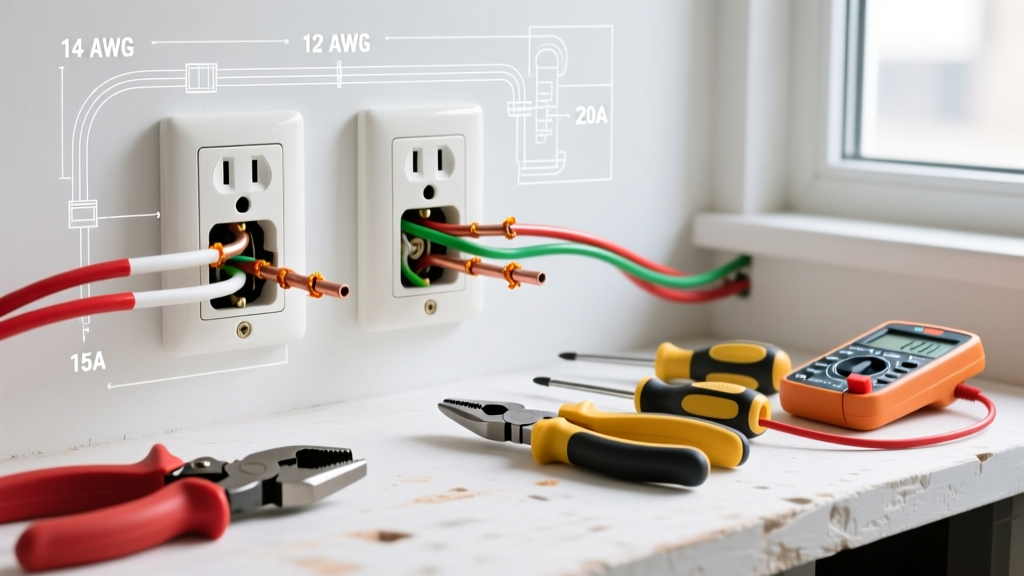
Before beginning, gather the correct materials. Using undersized wire or incorrect breaker types is a primary cause of residential electrical fires. The U.S. Consumer Product Safety Commission (CPSC) regularly flags improper high-amperage terminations in their annual hazard reports.
| Component | Specification / Model Example | Estimated Cost (2026) |
|---|---|---|
| Double-Pole Breaker | 50A (Square D QO250, HOM250, or Eaton BR250) | $18 - $35 |
| Feeder Cable | 6/3 NM-B (Romex) with Ground OR 6 AWG THHN in conduit | $1.75 - $3.50 / ft |
| Receptacle | NEMA 14-50R (Leviton 279-S00 or Hubbell 9450A) | $15 - $28 |
| Electrical Box | Deep 2-Gang or 4x4 Masonry Box with 14-50 cover plate | $6 - $14 |
| Torque Screwdriver | Klein Tools 69150 (Inch-pound calibrated) | $45 - $60 |
Step 1: Panel Capacity and Load Calculation
Before running wire, you must ensure your main service panel has both the physical space and the amperage capacity to support a new 50-amp load. According to the National Fire Protection Association (NFPA), NEC Article 220 outlines the standard method for residential load calculations.
The 80% Rule and Continuous Loads
While a stove is not typically classified as a continuous load (running at max capacity for 3+ hours), the main breaker must not be overloaded. A standard 200-amp residential service can usually accommodate a 50-amp range circuit, provided you do not simultaneously run heavy secondary loads like an 80-amp EV fast charger or dual 50-amp electric tankless water heaters. Check your panel's busbar rating; it must be equal to or greater than the main breaker size.
Step 2: Roughing In the 6/3 Feeder Cable
For indoor, dry-wall enclosed runs, 6/3 NM-B (Non-Metallic Sheathed Cable) is the standard choice. If you are running the circuit through an unfinished basement, masonry, or outdoors, you must use individual 6 AWG THHN/THWN wires pulled through a minimum 3/4-inch EMT or PVC conduit.
- Drill Access Holes: Use a 7/8-inch auger bit to drill through wall studs and top/bottom plates. Keep holes at least 1.25 inches from the edge of the stud to prevent drywall screw punctures (NEC 300.4).
- Pull the Cable: Feed the 6/3 NM-B from the panel to the kitchen outlet location. Leave at least 12 inches of slack inside the panel and 8 inches of slack inside the kitchen electrical box.
- Secure the Cable: Staple the NM-B cable within 8 inches of the electrical box and every 4.5 feet along the run using UL-listed cable staples. Do not over-tighten the staples, which can deform the cable insulation and cause a short.
Step 3: Terminating the 50-Amp Double-Pole Breaker
Shut off the main breaker to de-energize the panel busbars. Note: The service entrance wires coming from the utility meter remain live and lethal even with the main breaker off.
- Strip the Sheathing: Remove the outer NM-B jacket where the cable enters the panel, leaving the individual insulated wires intact. Strip exactly 3/4 inch of insulation from the black, red, and white wires using wire strippers.
- Land the Neutral and Ground: Connect the bare copper ground wire to the equipment grounding bar. Connect the white neutral wire to the neutral busbar. (In a main service panel, neutral and ground are bonded; in a subpanel, they must remain isolated).
- Connect the Hot Legs: Insert the black and red wires into the two terminal lugs on the 50-amp double-pole breaker. Crucial Step: Use a calibrated torque screwdriver to tighten the lugs to the manufacturer's specification (typically 45 to 50 inch-pounds for Square D and Eaton 50A breakers). Under-torqued lugs cause arcing and thermal failure over time.
- Snap the Breaker In: Align the breaker with the panel busbar stabs and press firmly until it clicks into place. Secure the panel cover.
Step 4: Wiring the NEMA 14-50R Receptacle
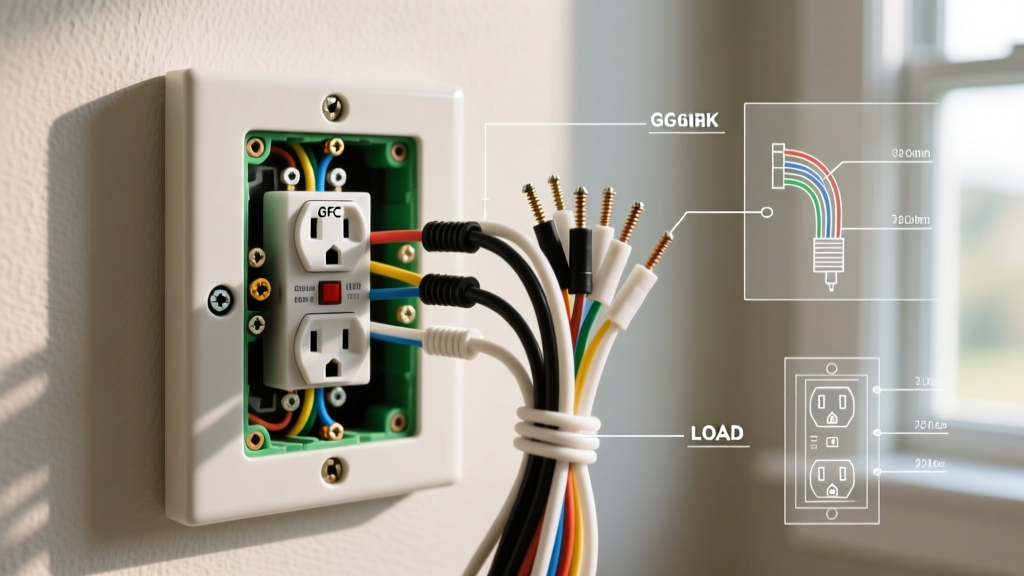
The NEMA 14-50R receptacle features four terminal screws. Proper phase and neutral identification is critical for the stove's internal 120V control boards and timers.
- X and Y Terminals (Brass): These are the hot legs. Connect the Black and Red wires here. Polarity between X and Y does not matter for 240V appliances.
- W Terminal (Silver): This is the neutral. Connect the White wire here. The stove's 120V logic circuits rely on this connection.
- G Terminal (Green): This is the equipment ground. Connect the Bare copper wire here.
Strip the wire ends to exactly 5/8 inch. Loop the wire clockwise around the terminal screw so that tightening the screw pulls the loop closed. Torque the receptacle terminals to 50 inch-pounds. Push the wires neatly into the back of the deep 2-gang box, mount the receptacle, and attach the heavy-duty 14-50 cover plate.
Step 5: Voltage Testing and Commissioning
Before plugging in a $2,000 appliance, verify the wiring with a CAT III or CAT IV digital multimeter (such as a Fluke 117).
| Test Points | Expected Reading | Indicates |
|---|---|---|
| X to Y (Hot to Hot) | 240V (+/- 5%) | Both breaker poles are live and correctly phased. |
| X to W (Hot to Neutral) | 120V (+/- 5%) | Neutral is properly bonded at the main panel. |
| Y to W (Hot to Neutral) | 120V (+/- 5%) | Neutral is properly bonded at the main panel. |
| X to G (Hot to Ground) | 120V (+/- 5%) | Equipment ground path is continuous. |
| W to G (Neutral to Ground) | < 2V (Ideally 0V) | Confirms no neutral-to-ground bond at the receptacle. |
Troubleshooting and Edge Cases
The 3-Prong to 4-Prong Conversion Dilemma
If you are upgrading an older home, you may encounter an existing 3-wire setup (two hots and a neutral, with no dedicated ground). Under NEC Article 250.140, Exception 1, you are permitted to use the neutral as a ground for an existing 3-wire range circuit only if no equipment grounding conductor exists and the circuit is grandfathered. However, for all new installations as of 2026, a 4-wire setup with an isolated neutral and dedicated ground is strictly mandatory. Never bond the neutral to the ground at the receptacle on a new 4-wire circuit; doing so creates a parallel neutral path, energizing the stove's chassis and posing a severe shock hazard.
Voltage Drop Over Long Runs
If the distance from your main panel to the kitchen outlet exceeds 90 feet, 6 AWG copper wire may experience a voltage drop exceeding the NEC recommended 3% for branch circuits. In runs exceeding 100 feet, you must upsize the feeder cable to 4 AWG copper to maintain optimal voltage at the stove terminals, preventing the appliance's internal relays from chattering or failing prematurely.
GFCI and AFCI Requirements
As of the latest NEC cycles, AFCI (Arc-Fault Circuit Interrupter) protection is generally required for kitchen circuits. However, 240V appliance receptacles like the NEMA 14-50 often fall under specific exceptions depending on your local jurisdiction's exact adoption amendments. Always consult your local Authority Having Jurisdiction (AHJ) or municipal building inspector regarding whether a 50-amp double-pole AFCI breaker is mandated for kitchen range circuits in your specific county or city.