
Understanding the Iceland Electrical Outlet Type
When working on international electrical projects, relocating, or simply traveling with high-end electronics, understanding the local electrical infrastructure is a matter of both safety and code compliance. The Iceland electrical outlet type operates within the broader European framework, utilizing Type C and Type F receptacles. However, Iceland’s unique geographic and geological profile—heavily reliant on geothermal and hydroelectric power—means its grid stability and specific national annexes to European wiring codes require precise attention from electricians and DIY enthusiasts alike.
As of 2026, Iceland’s electrical installations are governed by the Icelandic Building Authority (Mannvirkjastofnun) and align closely with the CENELEC HD 60364 series of standards. This guide breaks down the physical specifications, code requirements, and wiring practices for Icelandic receptacles.
Physical Specifications: Type C vs. Type F Receptacles
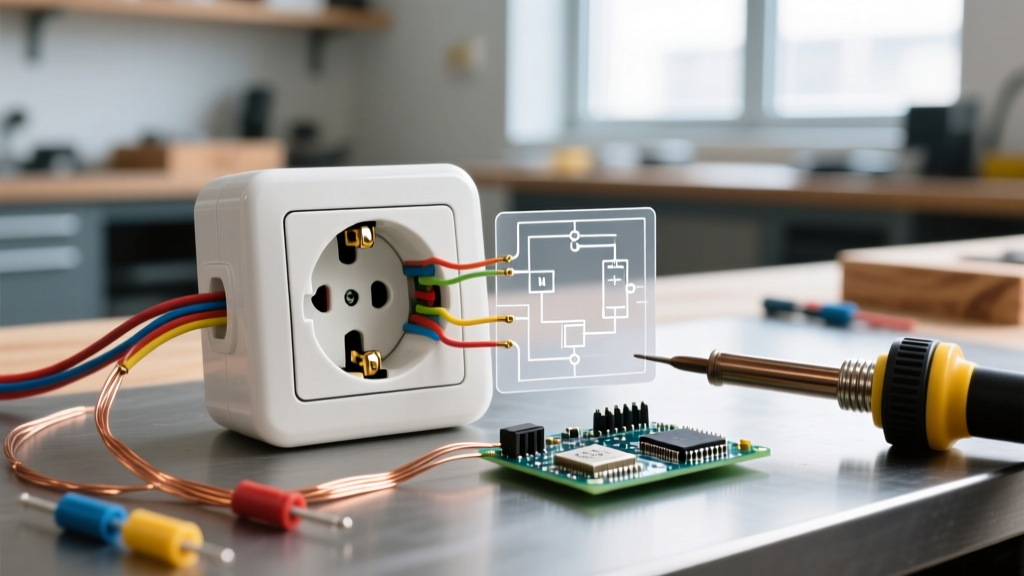
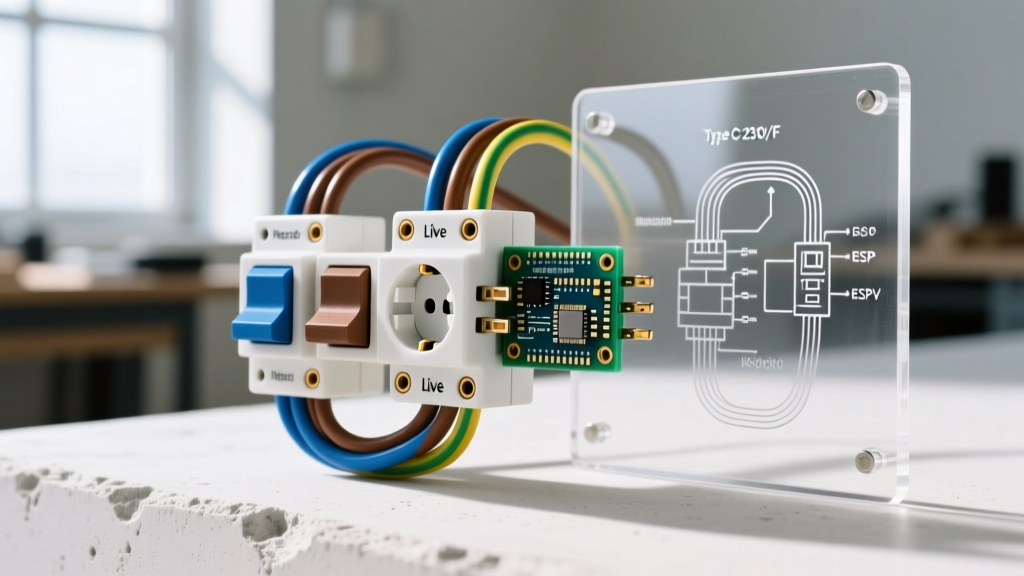
While travelers often refer generically to the 'European plug,' electrical professionals must distinguish between the two primary configurations found in Iceland. New construction and major renovations exclusively mandate grounded Type F (Schuko) outlets, while Type C is largely restricted to the plugs of low-power, double-insulated appliances.
| Feature | Type F (Schuko) | Type C (Europlug) |
|---|---|---|
| Standard Designation | CEE 7/3 (Socket) / CEE 7/4 (Socket variant) | CEE 7/16 (Plug only) |
| Pin Configuration | Two round pins + grounding clips | Two round pins (no ground) |
| Pin Dimensions | 4.8mm diameter, 19mm length | 4.0mm diameter, 19mm length |
| Current Rating | 16A (Standard residential circuit) | 2.5A (Maximum appliance draw) |
| Grounding Method | Side earthing clips | None (Double insulated only) |
| Code Status in Iceland | Mandatory for all new general-use receptacles | Phased out for wall sockets; permitted on appliance plugs |
National Code Alignment and Voltage Tolerances
Iceland is not a member of the European Union, but it is a member of the EEA (European Economic Area). Consequently, its electrical codes mirror EU directives. The nominal voltage is 230V AC at 50Hz. Under the harmonized European standard EN 50160, the voltage tolerance is strictly maintained within ±10% (207V to 253V) for 95% of 10-minute averages.
Expert Insight: Because Iceland’s grid is heavily powered by isolated geothermal and hydro plants rather than a massive interconnected continental grid, localized voltage sags can occasionally occur in remote fjords during peak winter heating loads. Electricians installing sensitive equipment in these areas should specify Type 2 Surge Protective Devices (SPDs) at the main distribution board.
Wiring Requirements for Type F (Schuko) Receptacles
Installing a Type F receptacle requires strict adherence to color codes and terminal torque specifications to prevent arcing and thermal failures. In Iceland, the harmonized CENELEC color codes apply:
- Line (L): Brown
- Neutral (N): Blue
- Protective Earth (PE): Green/Yellow stripe
Step-by-Step Termination Procedure
- Wire Stripping: Strip exactly 12mm to 14mm of insulation from 2.5mm² solid copper conductors. Over-stripping exposes live metal; under-stripping causes insulation to be clamped under the terminal screw, leading to high-resistance faults.
- Terminal Insertion: Insert the Line (Brown) into the right-hand terminal and Neutral (Blue) into the left-hand terminal when facing the receptacle. While Schuko is technically unpolarized, maintaining consistent L/N orientation across a building aids in troubleshooting and ensures single-pole switches interrupt the Line conductor.
- Earth Connection: Connect the Green/Yellow PE wire to the central grounding terminal. This terminal connects directly to the side metal clips of the Type F socket.
- Torque Application: Use a calibrated torque screwdriver. Standard brass terminal screws on 16A Schuko receptacles require 0.5 Nm to 0.8 Nm of torque. Under-torquing is a leading cause of receptacle fires.
Earthing Systems: TN-C-S vs. TT in Iceland
A critical aspect of the Iceland electrical outlet type code is the earthing system. The grounding method dictates the required RCD (Residual Current Device) trip times and fault loop impedance limits.
Urban Installations (TN-C-S)
In Reykjavik, Akureyri, and most populated municipalities, the TN-C-S (Combined Neutral and Earth in the supply, separated at the premises) system is standard. The utility provides a PEN conductor, which is split into separate PE and N bars at the main intake panel. Here, the fault loop impedance must be low enough to trip a standard Type B or C circuit breaker within 0.4 seconds.
Rural and Remote Installations (TT System)
In rural areas, isolated summer houses, or off-grid geothermal setups, a TT system is frequently used. The premises has its own earth electrode (ground rod). Because earth electrode resistance can vary wildly with volcanic soil composition and freezing temperatures, fault currents may be too low to trip a standard MCB. Code Requirement: In TT systems, 30mA RCD protection is absolutely mandatory for all socket outlets to ensure life safety.
RCD Mandates for Wet Areas and General Sockets
Icelandic building codes enforce strict RCD (Residual Current Device) requirements, particularly in wet areas where the risk of electric shock is magnified. As of the latest 2026 code updates, the following RCD protections are mandated:
| Location / Circuit | RCD Rating | RCD Type | Code Rationale |
|---|---|---|---|
| Bathroom Zones 1 & 2 | 30mA | Type A or F | Protection against shock in wet conditions; handles pulsating DC from modern heated towel rails. |
| Kitchen Countertop Sockets | 30mA | Type A | Protection for portable appliances near water sources. |
| General Lighting Circuits | 30mA | Type A | Mandated by recent HD 60364 amendments to prevent arc fires and shock during bulb replacement. |
| EV Charging Outlets (Type 2) | 6mA DC / 30mA AC | Type B or EV-specific | Handles smooth DC fault currents generated by onboard vehicle chargers. |
Practical Guide: Adapters, Converters, and Device Compatibility
For travelers and expats bringing appliances to Iceland, confusing a plug adapter with a voltage converter is a common and destructive error. The Iceland electrical outlet type delivers 230V. Plugging a 120V North American appliance directly into a Type F socket using only a physical adapter will result in catastrophic failure, fire, or injury.
Appliance Compatibility Matrix
| Device Category | Typical Voltage Rating | Action Required for Iceland |
|---|---|---|
| Smartphones, Laptops, Camera Chargers | 100-240V, 50/60Hz (Dual Voltage) | Physical Adapter Only: Use a Type C or Type F plug adapter. |
| Hair Dryers, Curling Irons, Kettles | 120V (Single Voltage - US/Canada) | Do Not Use: Requires a heavy, expensive step-down transformer. Buy a local 230V appliance instead. |
| Desktop PCs, Gaming Consoles | 110-240V (Auto-switching PSU) | Physical Adapter Only: Verify the PSU label reads 'INPUT: 100-240V'. Replace the figure-8 or C13 power cable with a local Type F cable. |
| North American Power Tools | 120V, 60Hz | Step-Down Transformer: Note that 50Hz grid frequency may cause 60Hz AC motors to run 17% slower and overheat. |
Frequently Asked Questions (FAQ)
Can I install a US-style NEMA 5-15R outlet in my Icelandic home?
From a strict code perspective, installing a 120V NEMA 5-15R receptacle in a standard 230V Icelandic residential property is highly discouraged and likely violates local inspection codes unless it is fed by a dedicated, properly labeled step-down transformer with isolated grounding. Mixing 120V and 230V physical outlet types in the same room creates a severe hazard for guests or future owners who may plug a 120V device into a 230V source.
Do Type F Schuko outlets have child safety shutters?
Unlike the UK (Type G) or US (NEMA 1-15/5-15) standards, traditional CEE 7/3 and CEE 7/4 Schuko sockets do not inherently require mechanical child safety shutters by default across all of Europe. However, modern premium brands like Schneider Electric and Legrand offer Type F receptacles with integrated 'Safe-Shutter' mechanisms that only open when both pins are inserted simultaneously with equal pressure. For homes with toddlers, specifying shuttered models is highly recommended.