
The "Like-for-Like" Replacement Myth vs. Reality
When a receptacle cracks, sparks, or simply stops working, the immediate instinct is to swap it out for an identical replacement. However, from the perspective of the National Electrical Code (NEC), the moment you open the junction box to fix an electrical outlet, you may inadvertently trigger mandatory code upgrades. Understanding the boundary between a simple repair and a required code compliance overhaul is critical for both safety and passing municipal inspections.
According to the National Fire Protection Association (NFPA), which publishes the NEC, the concept of "grandfathering" only applies as long as the existing installation remains untouched. Once you alter, extend, or replace components in a dwelling unit, specific articles within the NEC—particularly Article 406—dictate the minimum safety standards your repair must meet. In 2026, with most jurisdictions enforcing the 2023 NEC or newer, the days of simply slapping a standard 2-prong or non-tamper-resistant receptacle back into a wall are largely over.
Critical Code Triggers When You Fix an Electrical Outlet
Before you strip a single wire, you must identify the environment of the outlet and the condition of the existing wiring. Here are the primary code mandates that will dictate how you execute your repair.
1. The Grounding Mandate (NEC 406.4(D)(2))
If you are working in an older home (typically pre-1962) with ungrounded, 2-prong receptacles, you cannot simply install a modern 3-prong receptacle without providing a valid Equipment Grounding Conductor (EGC). Doing so creates a lethal false sense of security. If no ground wire exists in the box, the NEC provides three legal pathways to fix the outlet:
- Option A: Replace it with another 2-prong (ungrounded) receptacle. (Legal, but highly impractical for modern appliances).
- Option B: Install a GFCI (Ground Fault Circuit Interrupter) receptacle. The GFCI does not provide a true ground, but it protects against shock. It must be labeled with the included stickers: "GFCI Protected" and "No Equipment Ground."
- Option C: Install an AFCI/GFCI dual-function receptacle if the location also requires arc-fault protection, similarly labeled.
2. Tamper-Resistant (TR) Requirements (NEC 406.12)
The NEC mandates that all 15-amp and 20-amp, 125-volt and 250-volt receptacles installed in dwelling units must be Tamper-Resistant (TR). TR receptacles feature internal shutter mechanisms that prevent children from inserting foreign objects into the slots. According to the Electrical Safety Foundation International (ESFI), TR receptacles have drastically reduced childhood electrocution incidents. If you are fixing a broken standard receptacle in a living room, bedroom, or kitchen, the replacement must be a TR model, even if the original was not.
3. AFCI and GFCI Expansion (NEC 210.8 & 210.12)
The footprint for required ground-fault and arc-fault protection has expanded significantly in recent code cycles. If you are replacing an outlet in a kitchen, bathroom, garage, outdoor area, or crawl space, it must be GFCI protected. Furthermore, if the outlet is in a bedroom, living room, or hallway, it requires AFCI (Arc-Fault Circuit Interrupter) protection. If the breaker panel is already upgraded to AFCI/GFCI dual-function breakers, a standard TR receptacle is acceptable; otherwise, you must install a point-of-use GFCI/AFCI receptacle.
NEC Code Upgrade Matrix: Location vs. Requirement
Use this matrix to determine the exact receptacle type required when you fix an electrical outlet in specific areas of a modern dwelling unit.
| Location | Old/Existing Outlet | Required Fix / Upgrade (2023+ NEC) | NEC Reference |
|---|---|---|---|
| Kitchen Countertop | Standard 15A Duplex | 20A TR GFCI Receptacle | 210.8(A)(6), 406.12 |
| Bathroom Vanity | Standard 15A Duplex | 20A TR GFCI Receptacle | 210.8(A)(1), 210.11(C)(3) |
| Bedroom / Living Room | Standard 15A Duplex | 15A TR Receptacle (AFCI at breaker) | 210.12(A), 406.12 |
| Garage / Unfinished Basement | Standard 15A Duplex | 15A/20A TR GFCI Receptacle | 210.8(A)(2), 210.8(A)(5) |
| Pre-1962 Ungrounded Box | 2-Prong Receptacle | TR GFCI (Labeled "No Equipment Ground") | 406.4(D)(2)(c) |
Step-by-Step: Fixing an Ungrounded Outlet Legally
Let’s walk through the exact procedure for fixing a broken, ungrounded outlet in a living room using a GFCI upgrade. This method costs between $18 and $28 for a high-quality GFCI (such as the Leviton SmartlockPro 2091) and takes roughly 20 minutes.
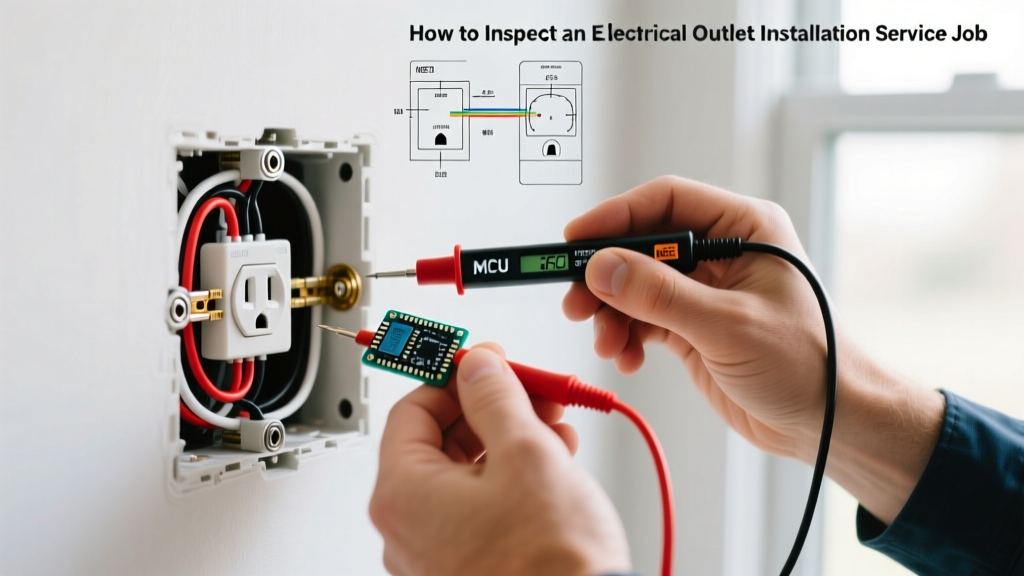
- Kill the Power and Verify: Turn off the breaker. Use a non-contact voltage tester (e.g., Klein Tools NCVT-2) and a multimeter to confirm 0V across hot-neutral, hot-ground, and neutral-ground.
- Extract and Inspect: Remove the old receptacle. Check the wire insulation. If the fabric or rubber insulation is brittle and flakes off, you must consult an electrician to rewire the branch circuit; do not simply tape it.
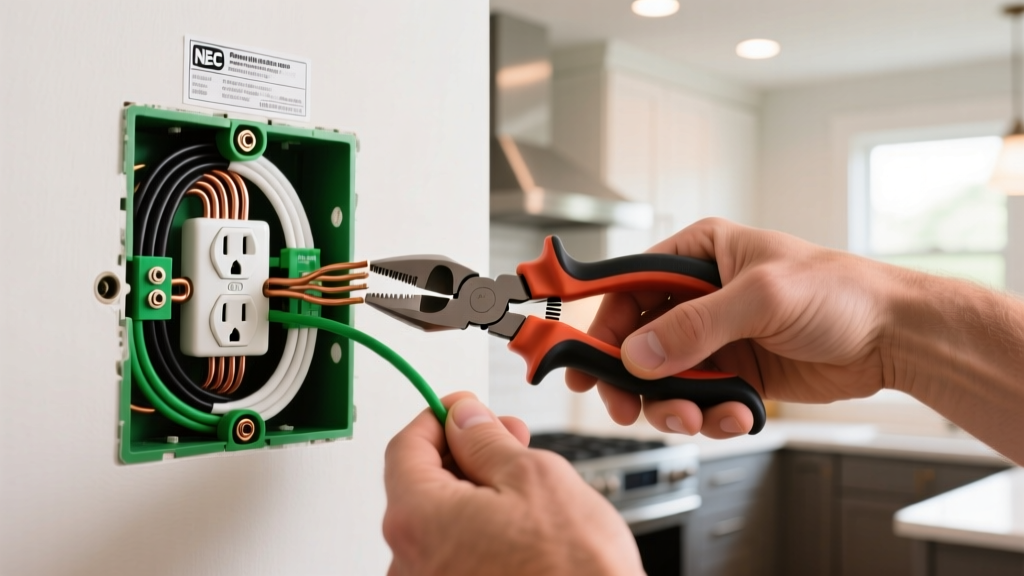
- Prep the Wires: Use wire strippers (like the Klein 11063W) to strip exactly 3/4 inch of insulation from the black (hot) and white (neutral) wires. Do not nick the copper conductor, which creates a weak point that can snap under torque.
- Identify LINE vs. LOAD: On a GFCI, the wires bringing power from the panel connect to the "LINE" terminals. Wires feeding downstream outlets connect to "LOAD." If you only have one set of wires, use LINE only.
- Terminate and Torque: Loop the wire clockwise around the terminal screw. Use a torque screwdriver (such as the Ideal 35-600) set to the manufacturer’s specification—typically 12 to 14 inch-pounds for 14 AWG and 12 AWG copper on Leviton devices. Proper torque prevents thermal expansion from loosening the connection over time.
- Apply Mandatory Labels: Before screwing the device into the box, apply the "GFCI Protected" and "No Equipment Ground" stickers provided in the Leviton box to the visible faceplate.
CRITICAL SAFETY WARNING: The "Bootleg Ground"
Never fix an electrical outlet by installing a jumper wire between the neutral terminal and the ground screw to trick a 3-light tester into reading "Correct." This illegal practice, known as a bootleg ground, violates NEC 250.148. If the neutral wire opens upstream, the metal chassis of any plugged-in appliance will become fully energized at 120V, creating an extreme electrocution hazard. The U.S. Consumer Product Safety Commission (CPSC) strongly warns against improper grounding modifications. Always use a solenoid tester or multimeter to verify true ground continuity.
Troubleshooting Common Outlet Failures Beyond Code
Sometimes the outlet itself isn't the primary issue; the failure lies in the wiring methodology used by the previous installer. When you open the box, look for these critical failure modes:
The "Backstab" Push-In Connection
Many older receptacles feature spring-loaded push-in terminals on the back. These connections rely on a small metal tang biting into the wire. Over time, thermal cycling (heating and cooling from current draw) causes the spring to weaken, leading to high-resistance arcing and melted plastic. The Fix: Always cut off the backstabbed ends, strip fresh wire, and terminate using the side-binding screws or screw-down back-wire clamps.
Feed-Through Overloading (Daisy Chaining)
If the receptacle is in the middle of a run, it acts as a junction point. Relying on the receptacle's internal brass tab to pass current to the next outlet is technically legal but highly discouraged for high-draw circuits (like kitchens). The internal tab is a known failure point under continuous loads near 15 amps. The Fix: Cut the wires, strip them, and use a wire nut (e.g., Ideal WingNut 341) to connect the incoming and outgoing wires along with a 6-inch pigtail of the same AWG. Connect the pigtail to the new receptacle. This ensures the downstream circuit remains live even if the receptacle is removed or fails.
Frequently Asked Questions
Can I replace a 15-amp outlet with a 20-amp outlet?
No. You can only install a 20-amp receptacle if the branch circuit wiring is 12 AWG copper and the breaker is rated for 20 amps. Installing a 20-amp receptacle on a 14 AWG wire with a 15-amp breaker violates NEC 210.21(B)(3) because it allows a user to plug in a 20-amp appliance that could overload the 15-amp breaker and wiring.
Do I need a permit just to fix an electrical outlet?
In most municipalities, a "like-for-like" repair (swapping a broken 15A TR receptacle for a new 15A TR receptacle in the same location) is considered minor maintenance and does not require a permit. However, if you are upgrading an ungrounded circuit, adding GFCI protection where it didn't exist, or altering the wiring topology, a permit and inspection may be legally required.
Why does my new GFCI outlet trip immediately when I plug something in?
If a new GFCI trips instantly, you likely have a neutral-to-ground fault downstream, or you have wired the LINE and LOAD terminals backward. Furthermore, if you are feeding downstream outlets from the LOAD terminals, a ground fault anywhere down the line will trip this primary GFCI. Disconnect the LOAD wires, reset the GFCI, and test. If it holds, the fault is downstream.
Final Thoughts on Code Compliance
Learning how to properly fix an electrical outlet goes far beyond matching wire colors and tightening screws. It requires an understanding of the evolving safety landscape dictated by the NEC. By enforcing Tamper-Resistant mandates, eliminating false grounds, and utilizing proper torque specifications, you ensure that your repair not only restores power but actively protects the occupants of the home from arc faults, ground faults, and thermal failures. Always prioritize code compliance over convenience; the cost of a $25 GFCI or a $40 torque screwdriver is negligible compared to the cost of an electrical fire.