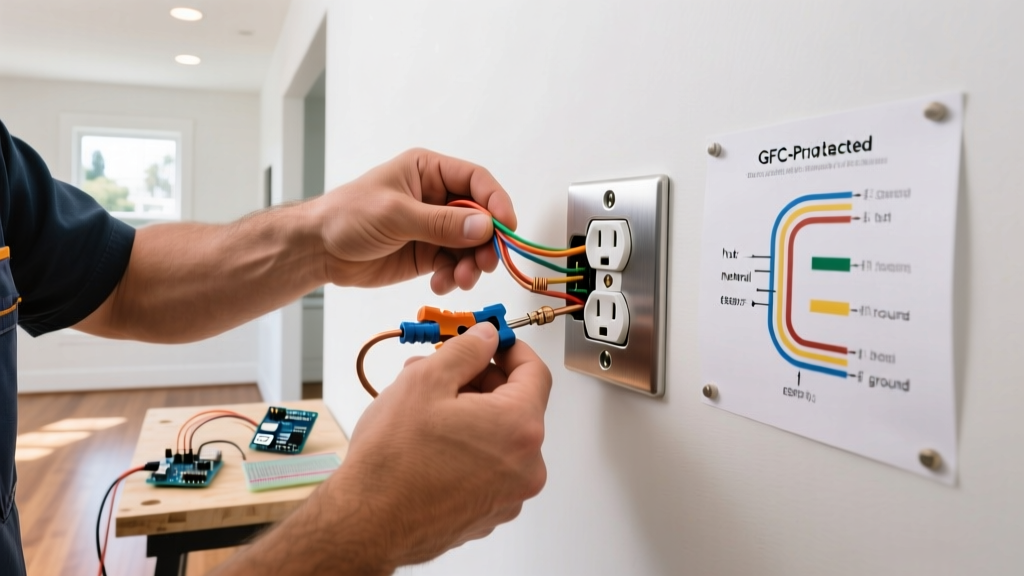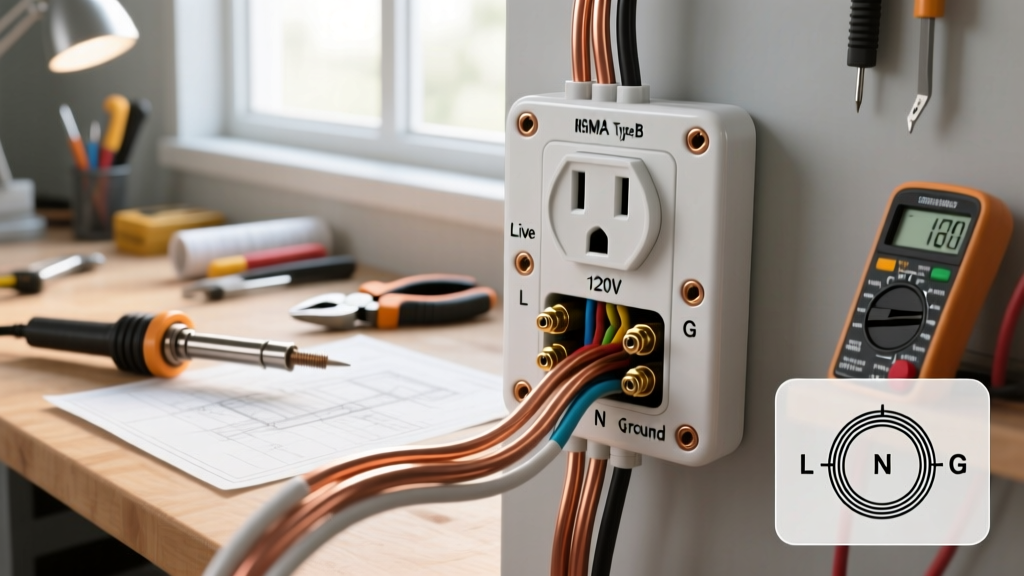

The Foundation of Safe GFCI Electrical Wiring
Executing flawless GFCI electrical wiring requires more than just connecting the line and load terminals. As electrical codes evolve and home appliances draw more complex power profiles, the physical materials and precision tools you select dictate the longevity and safety of your installation. According to the U.S. Consumer Product Safety Commission, properly installed Ground Fault Circuit Interrupters prevent thousands of shocks and electrocutions annually, but only if the underlying wiring, box depth, and termination torque meet strict modern standards.
This comprehensive 2026 tool and material guide strips away the guesswork. We detail the exact receptacle models, wire gauges, enclosure depths, and torque-rated tools required for both 15-amp and 20-amp GFCI circuits, ensuring your work passes inspection and stands the test of time.
Core Receptacle Selection: 15A vs. 20A Models
Choosing the right GFCI receptacle is the first critical material decision. Modern codes mandate Tamper-Resistant (TR) mechanisms in almost all residential applications, and Wet-Rated (WR) models for outdoor or damp locations. Below is a matrix of the industry-standard models favored by professionals for GFCI electrical wiring in 2026.
| Specification | 15-Amp Standard (Leviton GFNT1-W) | 20-Amp Commercial (Pass & Seymour 2095TRW) |
|---|---|---|
| Max Continuous Load | 12 Amps | 16 Amps |
| Wire Gauge Acceptance | 14 AWG to 10 AWG | 12 AWG to 10 AWG |
| Back-Wire Capability | Yes (Clamp plate) | Yes (Internal torque clamp) |
| Body Depth | 1.125 inches | 1.25 inches |
| Average Retail Price | $16.00 - $19.00 | $24.00 - $28.00 |
Expert Insight: Always utilize the back-wire clamp plates rather than wrapping wires around the side terminal screws. Back-wiring provides a larger surface area contact and significantly reduces the risk of the wire slipping out under thermal expansion cycles.
Conductor and Cable Requirements
The backbone of any GFCI electrical wiring setup is the cable. For residential branch circuits, Non-Metallic Sheathed Cable (NM-B) is the standard. Southwire's Romex SIMpull remains the market leader due to its patented jacket that reduces pulling friction by up to 50%.
- 15-Amp Circuits: Require minimum 14/2 NM-B with ground. (Max breaker size: 15A).
- 20-Amp Circuits: Require minimum 12/2 NM-B with ground. Essential for kitchens, bathrooms, and garages where high-draw appliances like hair dryers or power tools are used.
- Conduit Runs (THHN/THWN-2): If running individual conductors in EMT or PVC conduit, use 12 AWG solid copper THHN. Always pull a dedicated green or bare equipment grounding conductor; do not rely on the conduit alone for residential GFCI grounding paths.
Code Alert: The National Electrical Code (NEC) strictly prohibits using 14 AWG wire on any circuit protected by a 20-amp breaker, even if the GFCI receptacle itself is rated for 15 amps and features a 20-amp pass-through face. Match the wire to the breaker.
Electrical Box Sizing and Depth Constraints
One of the most frequent failures in DIY and amateur GFCI electrical wiring is attempting to stuff a deep GFCI mechanism into a standard-depth electrical box. Standard GFCIs are over 1.1 inches deep from the mounting yoke to the back of the casing. When you add 12/2 wire, wire nuts, and pigtails, a standard 18 cubic inch box becomes dangerously overcrowded, violating NEC box fill calculations and creating a fire hazard.
Recommended Box Materials and Models
- New Work (Wood Studs): Carlon B618R (22.5 cubic inch, extra-deep). This provides ample room for the bulky GFCI body and the required wire bending radius.
- Old Work (Drywall Retrofit): Madison Electric Smart Box MSB622W (22 cubic inch, extra-deep). Features adjustable wings and a deep cavity specifically designed for smart switches and GFCIs.
- Masonry/Concrete: Arlington Industries BR1000 series deep masonry boxes with integral ground screws.
The 2026 Electrician's Tool Arsenal
Proper materials are useless without the precision tools required to terminate them. Modern electrical inspections increasingly focus on termination torque and insulation integrity.
1. Torque Screwdrivers (The New Mandatory Standard)
Recent NEC updates have placed heavy emphasis on securing terminations to manufacturer-specified torque values to prevent arc faults caused by loose connections over time. For most Leviton and Pass & Seymour GFCIs, the required torque is between 14 in-lbs and 16 in-lbs.
- Top Pick: Klein Tools 32500 Torque Screwdriver set. Includes the exact hex and square bits needed for terminal screws. Priced around $55, it is a non-negotiable investment for modern GFCI electrical wiring.
2. Precision Wire Strippers
Nicking the copper conductor while stripping 12 AWG wire creates a weak point that will snap when you fold the GFCI into the box.
- Top Pick: Klein Tools 11055 (for 10-18 AWG solid/stranded). The precision-machined holes strip the insulation cleanly without scoring the copper. Cost: ~$28.
- Stripping Length: Use the built-in gauge on the back of the GFCI receptacle. Typically, this requires exactly 5/8 inch of bare copper for back-wiring, or 3/4 inch for wrapping around terminal screws.
3. Non-Contact and Solenoid Voltage Testers
Never rely solely on a non-contact voltage (NCV) pen. Phantom voltages from adjacent wires in the same box can trigger false positives.
- Primary Tester: Fluke 1AC-II VoltAlert (NCV pen) for initial sweep.
- Verification Tester: Fluke T+PRO Solenoid Voltage Tester. This draws actual current to verify a true zero-voltage state across Line, Load, and Ground before you touch a single wire.
Consumables and Connectors
The small components in GFCI electrical wiring often dictate the ease of installation and long-term reliability.
- Wire Connectors: Ideal Industries Wing-Nut (Tan for 12/2, Yellow for 14/2). The winged design allows for high-torque twisting without hand fatigue, ensuring a gas-tight connection.
- Pigtailing Grounds: Never daisy-chain the ground wire through the GFCI. Use a green grounding wire nut or a copper crimp sleeve to join all incoming and outgoing ground wires, adding a 6-inch 12 AWG bare copper pigtail to the green ground screw on the GFCI.
- Electrical Tape: Use 3M Super 33+ vinyl electrical tape. While not strictly required if wire nuts are properly applied, wrapping the tape around the base of the wire nut and the wire jacket provides a secondary mechanical lock and moisture barrier in damp-rated boxes.
Common Wiring Failure Modes and Material Fixes
Even with the right tools, specific material mismatches lead to nuisance tripping or complete failure. Here is how to troubleshoot and fix them using the correct materials.
| Failure Mode | Root Cause | Material / Tool Fix |
|---|---|---|
| GFCI trips immediately upon reset | Shared neutral between Line and Load circuits, or neutral touching ground downstream. | Use a multi-meter to verify neutral isolation. Replace downstream standard receptacles with isolated-neutral models if necessary. |
| Receptacle faceplate bows or cracks | Overcrowded box pushing the GFCI body outward, stressing the plastic cover. | Upgrade to a 22.5 cu-in extra-deep box (Carlon B618R) and use 1/4 inch box spacers to align the yoke perfectly flush with the drywall. |
| Intermittent power loss | Side-wired terminal screws loosened due to thermal expansion/contraction cycles. | Switch to back-wiring using the internal clamp plate, and verify termination with a Klein Tools torque screwdriver set to 14 in-lbs. |
Frequently Asked Questions
Can I use a 20-amp GFCI on a 15-amp breaker?
Yes, you can install a 20-amp rated GFCI receptacle on a 15-amp circuit protected by a 15-amp breaker, provided you are using 14 AWG or 12 AWG wire. However, it is generally more cost-effective to use a 15-amp GFCI model (like the Leviton GFNT1) since the breaker will limit the circuit to 15 amps regardless of the receptacle's pass-through rating.
Do I need a special GFCI for outdoor installations?
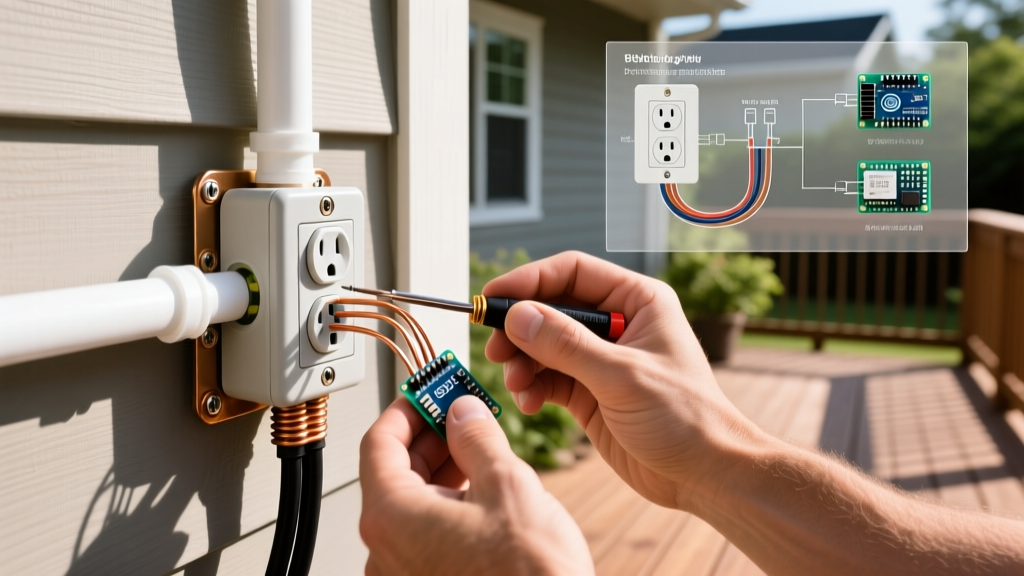
Absolutely. Any GFCI electrical wiring exposed to the elements must utilize a WR (Wet-Rated) receptacle. These feature nickel-plated brass components and UV-resistant face plastics that resist corrosion and degradation from sunlight and moisture. Pair this with an extra-duty, in-use weatherproof bubble cover.
Why does my GFCI have a 'Load' terminal if I only want to protect one outlet?
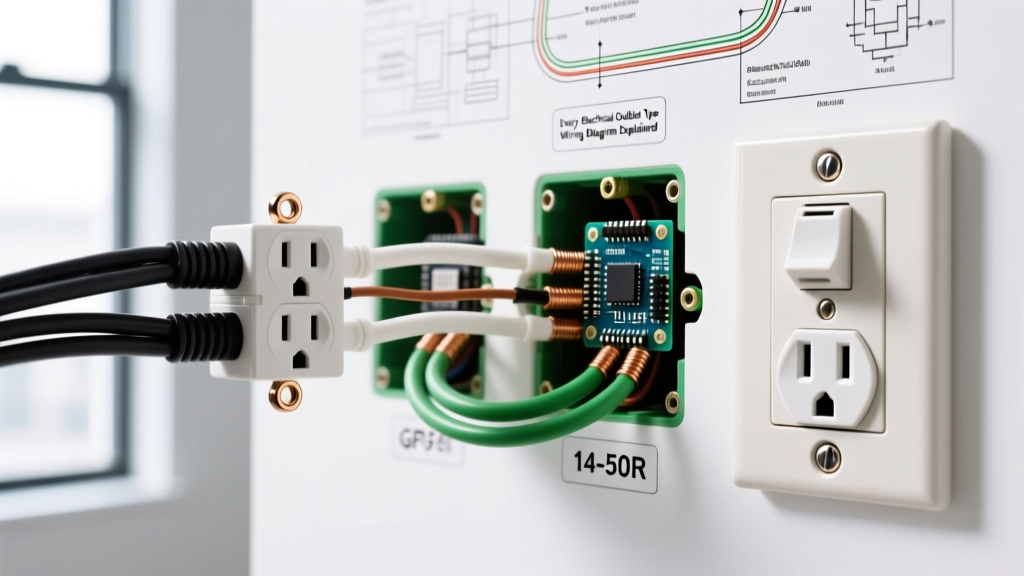
The 'Load' terminals are designed for feed-through wiring, allowing a single GFCI to protect multiple standard downstream receptacles. If you only need to protect the single location where the GFCI is installed (an end-of-run scenario), you simply cap the Load wires with wire nuts and connect your incoming power solely to the 'Line' terminals.