
Understanding the Belgium Electrical Outlet Standard
When working with European electrical systems, understanding the specific regional variations is critical for safety and compliance. The Belgium electrical outlet operates on the CEE 7/5 standard, commonly referred to as the Type E socket. Unlike the German Schuko (Type F) which uses side grounding clips, the Belgian Type E socket features a prominent, protruding male earth pin built directly into the socket face. This design accepts the CEE 7/7 hybrid plug, which includes both a grounding hole and side metal strips to ensure compatibility across both Belgian and German systems.
According to the International Electrotechnical Commission (IEC), Belgium utilizes a 230V, 50Hz alternating current supply. For DIY enthusiasts, expats, and electrical professionals installing or replacing receptacles in 2026, adhering to the Belgian AREI/RGIE (General Regulations for Electrical Installations) is not just a best practice—it is a legal requirement.
Anatomy of the Type E Socket & Compatibility
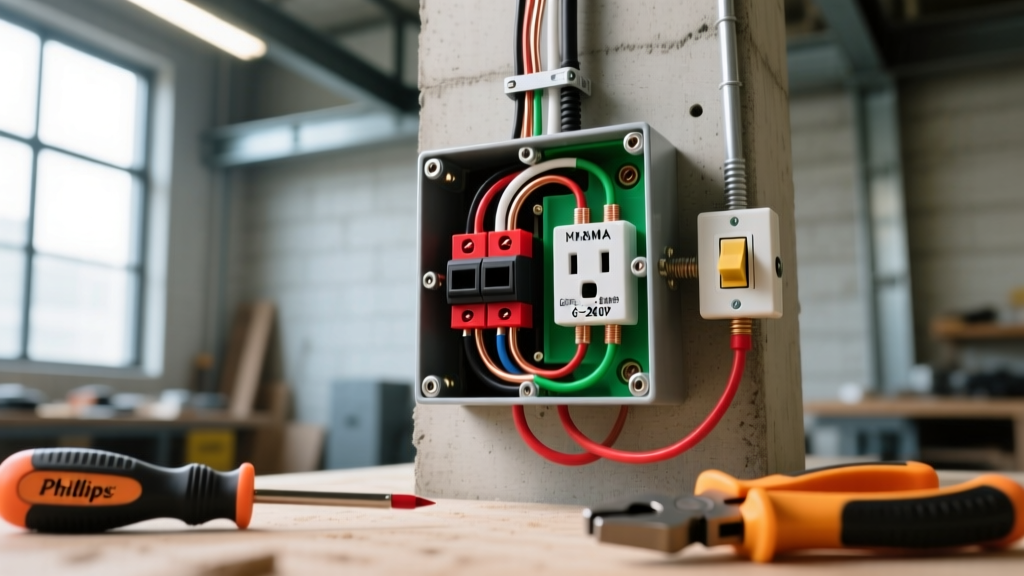
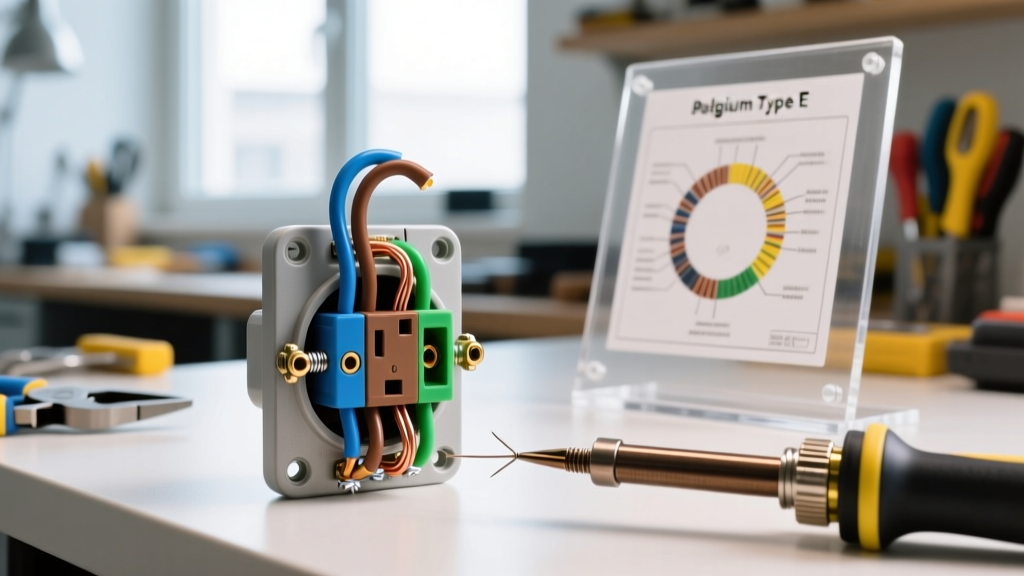
Before pulling any wires, you must verify the physical mechanism of your receptacle. Leading Belgian manufacturers like Niko, Legrand, and Schneider Electric design their Type E mechanisms with specific terminal layouts.
- Protruding Earth Pin: Located at the 12 o'clock position. This pin connects to the PE (Protective Earth) terminal on the back of the mechanism.
- Live (Phase) & Neutral: Located at the 4 and 8 o'clock positions. While the CEE 7/5 standard does not strictly enforce left/right polarity for Live and Neutral at the socket face, Belgian electrical best practices and modern AREI guidelines strongly recommend maintaining consistent polarity (Phase on the right, Neutral on the left when facing the socket).
- Shutter Mechanism: Modern Belgian sockets feature integrated child-proof shutters that only open when simultaneous, equal pressure is applied to both the Live and Neutral holes.
Belgian Wire Color Codes & AREI Compliance
Belgium follows the harmonized European HD 308 S2 standard for wire color codes, but older installations (pre-2000s) may feature legacy colors. When wiring a new Belgium electrical outlet, you must use modern color codes. If you are extending an old circuit, use a multimeter to verify the conductors before connecting.
| Conductor | Modern HD 308 S2 Color | Legacy Belgian Color (Pre-2000) | Terminal Marking |
|---|---|---|---|
| Phase (Live) | Brown (or Black/Red) | Red, Black, or Brown | L |
| Neutral | Blue | Light Blue or White | N |
| Protective Earth | Green/Yellow | Yellow/Green (or bare copper) | PE / ⏚ |
Note: Under AREI regulations, the Green/Yellow earth wire must never be used as a switched live or neutral conductor under any circumstances.
Step-by-Step Wiring Diagram Reference
Follow this precise workflow to install a standard flush-mount Niko or Legrand Type E receptacle. Ensure your circuit is protected by a 20A MCB (Miniature Circuit Breaker) and a 30mA RCD (Residual Current Device), which is mandatory for all socket circuits in Belgium.
- Isolate the Circuit: Turn off the 20A breaker at the main distribution board. Use a CAT III or CAT IV VDE-certified voltage tester (e.g., Fluke T6-1000 or Wiha SoftFinish) to confirm zero voltage at the wall box.
- Prepare the Conductors: Strip exactly 12mm of insulation from the 2.5 mm² solid copper conductors. Do not nick the copper, as this creates a stress fracture point that can lead to arcing.
- Connect the Earth (PE): Insert the Green/Yellow wire into the terminal marked with the earth symbol (⏚). This terminal routes directly to the protruding front pin. Tighten the screw to 0.5 Nm. Give the wire a firm tug to ensure a solid mechanical grip.
- Connect the Neutral (N): Insert the Blue wire into the left-side terminal (marked N). Tighten securely.
- Connect the Phase (L): Insert the Brown wire into the right-side terminal (marked L). Tighten securely.
- Secure the Mechanism: Push the wires neatly into the back of the flush-mount box. Use the provided M3.5 mounting screws or claw grips to secure the mechanism to the box. Ensure the mechanism is perfectly level using a spirit level before tightening the faceplate.
Crucial AREI/RGIE Circuit Limitations
A common mistake DIYers make is overloading a single socket circuit. The Belgian AREI code strictly limits the number of outlet points per circuit to prevent cable overheating and voltage drop.
AREI Circuit Rule (2.5 mm² / 20A Breaker): A maximum of 8 single socket points OR 4 double socket points are permitted on a single 20A radial circuit. A double socket counts as 2 points. If you are installing a kitchen island with 6 outlets, you must run a dedicated second circuit.
Furthermore, all socket circuits must be protected by a maximum 30mA earth leakage breaker (differentieelschakelaar) to protect against fatal shock hazards, alongside a 300mA main RCD at the service entrance.
Troubleshooting Edge Cases & Failure Modes
1. Nuisance RCD Tripping
If your newly wired Belgium electrical outlet causes the 30mA RCD to trip immediately upon plugging in an appliance, check for a shared neutral fault. In older Belgian homes, it is common to find 'borrowed neutrals' where a socket circuit shares a neutral wire with a lighting circuit. When a load is applied, the current imbalance triggers the RCD. Solution: Trace and separate the neutral conductors in the junction box.
2. Protruding Earth Pin Damage
The male earth pin on a Type E socket is robust but can bend if forced by a non-compatible plug (like a UK Type G adapter forced into the socket). If the pin is bent, the internal PE connection may fracture. Do not attempt to bend it back; the internal plastic housing is likely compromised. Replace the entire mechanism (approx. €8 - €15 for a standard Niko Original Pure White unit).
3. Phantom Voltage Readings
When testing a disconnected Belgian socket with a high-impedance digital multimeter, you may read 40V-110V on the neutral or earth wire. This is 'phantom voltage' caused by capacitive coupling from adjacent live wires in the same conduit. Use a low-impedance voltage tester (LoZ setting) to bleed off the ghost voltage and confirm a true zero.
Frequently Asked Questions
Can I use a German Schuko (Type F) socket in Belgium?
Physically, a Type F socket will fit in standard European flush boxes, but it lacks the protruding earth pin. While a CEE 7/7 hybrid plug will ground via the side clips, installing a Type F socket in Belgium is technically non-compliant with strict AREI interpretations for new installations, as it alters the standardized national receptacle profile. Always use a CEE 7/5 (Type E) mechanism.
What wire size is required for Belgian sockets?
You must use a minimum of 2.5 mm² cross-sectional area solid copper wire (XVB or VOVB cable) for standard 20A socket circuits. Using 1.5 mm² wire is strictly prohibited for general power outlets and is reserved exclusively for lighting circuits protected by a 10A or 16A breaker.
Are WAGO connectors legal in Belgian junction boxes?
Yes. Modern push-in and lever connectors like the WAGO 221 series are fully compliant with AREI regulations, provided they are housed in an approved, accessible junction box (do not bury them behind drywall without a blanking plate). They are the preferred method over traditional screw-terminal chocolate blocks due to their superior vibration resistance and consistent clamping force.
For further reading on international plug profiles and safety standards, refer to the comprehensive database at World Standards or the technical overview on AC power plugs and sockets.