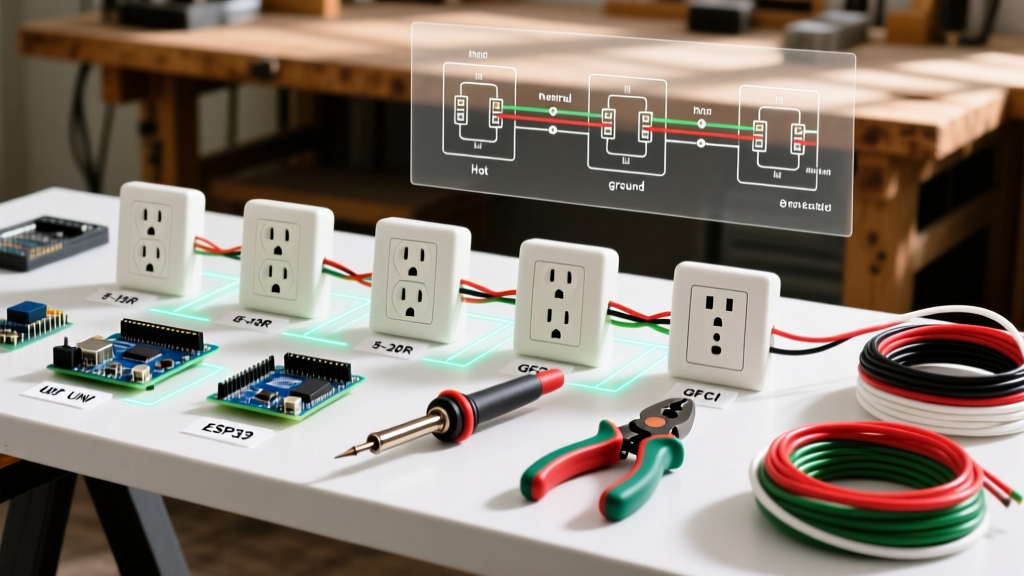

Why Bidets Demand Specific Electrical Outlet Configurations
Upgrading to a smart bidet seat—such as the Toto Washlet S550e or the BioBidet BB-2000 Bliss—transforms your bathroom experience, but it also introduces significant electrical loads to a space dominated by water. Unlike standard bathroom appliances, tankless water-heating bidets draw between 1200W and 1500W of peak power when simultaneously heating the water, seat, and air dryer. This translates to a continuous draw of 10 to 12.5 amps on a standard 120V circuit.
Because of this high draw and the proximity to water sources, installing an electrical outlet for a bidet is not as simple as swapping a standard duplex receptacle. The National Electrical Code (NEC) mandates strict Ground-Fault Circuit Interrupter (GFCI) protection for all bathroom receptacles. According to the National Fire Protection Association (NFPA), NEC Article 210.8(A)(1) requires GFCI protection in bathrooms, while Article 210.11(C)(3) dictates that bathroom receptacles must be supplied by at least one dedicated 20-ampere branch circuit. This guide breaks down the exact tools, materials, and specifications required to execute this installation flawlessly in 2026.
The Receptacle: Selecting the Correct GFCI for Bidet Use
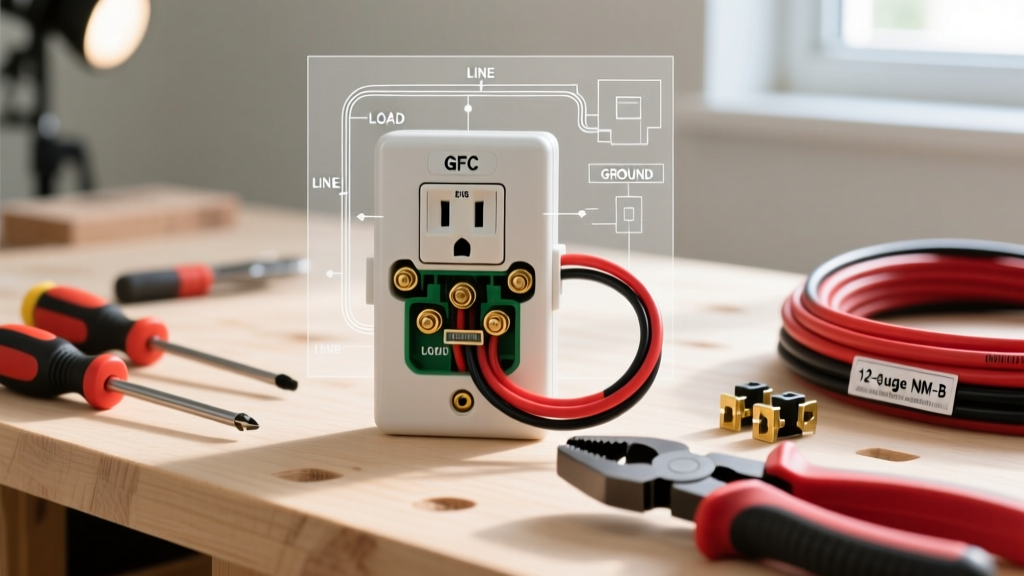
Not all GFCI outlets are created equal. When sourcing an electrical outlet for a bidet, you must look for three specific markings on the face of the receptacle: GFCI, TR (Tamper-Resistant), and ideally WR (Weather-Resistant) if the outlet is located within the damp zone of a shower or tub enclosure.
15-Amp vs. 20-Amp Feed-Through Ratings
While a 15-amp GFCI receptacle can be installed on a 20-amp circuit (per NEC 210.21(B)(3)), a 20-amp rated GFCI is vastly superior for bidet applications. Bidets cause frequent thermal cycling, which can degrade the internal contacts of lower-rated receptacles over time. Furthermore, a 20-amp GFCI allows you to feed-through power to downstream devices without bottlenecking the circuit.
- Top Pick: Leviton GFTNL-W2 (20-Amp Smartlock Pro Slim GFCI). Its slim profile leaves more room in the electrical box for wire bends, a critical factor when working with stiff 12 AWG wire.
- Alternative: Pass & Seymour 2095TRWR (20-Amp Tamper-Resistant Weather-Resistant). Ideal for outlets mounted on exterior-facing bathroom walls where condensation is a factor.
Expert Insight: Never use a standard non-GFCI receptacle on a GFCI breaker for a bidet. While legally permissible in some jurisdictions, local GFCI receptacles provide a visible, accessible test/reset point, which is crucial when a bidet trips the circuit due to internal moisture ingress.
Wire and Cable Materials: Sizing for Bathroom Environments
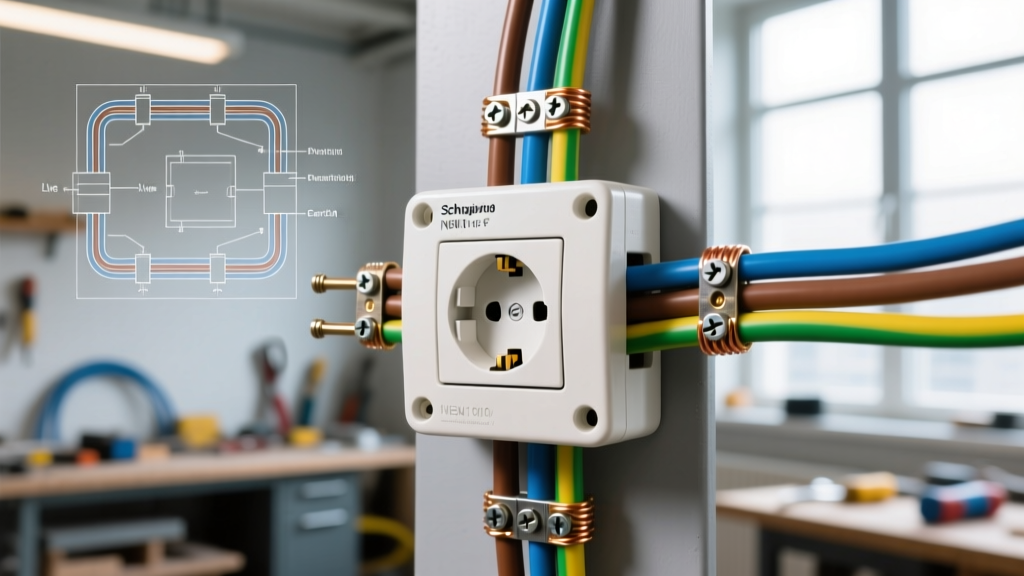
The wire gauge and jacket type you select will dictate the longevity and safety of your bidet outlet. Since modern NEC codes require a 20-amp circuit for bathroom receptacles, 12 AWG copper wire is mandatory. Using 14 AWG wire on a 20-amp breaker is a severe fire hazard and an immediate code violation.
Choosing the Right Cable Jacket
For standard interior walls with drywall, standard NM-B (Non-Metallic Sheathed Cable), commonly known as Romex, is perfectly adequate. Southwire's SIMpull 12/2 NM-B is the industry standard, featuring a lubricated jacket that makes pulling through studs significantly easier.
However, if your bidet outlet is being mounted on a masonry wall, a concrete basement bathroom wall, or an area subject to continuous dampness, you must upgrade to UF-B (Underground Feeder) cable or run THWN-2 individual conductors inside PVC or EMT conduit. UF-B features a solid plastic sheath that resists moisture and fungal growth, ensuring the integrity of the insulation in high-humidity bathroom environments.
Electrical Box Sizing and Box Fill Calculations
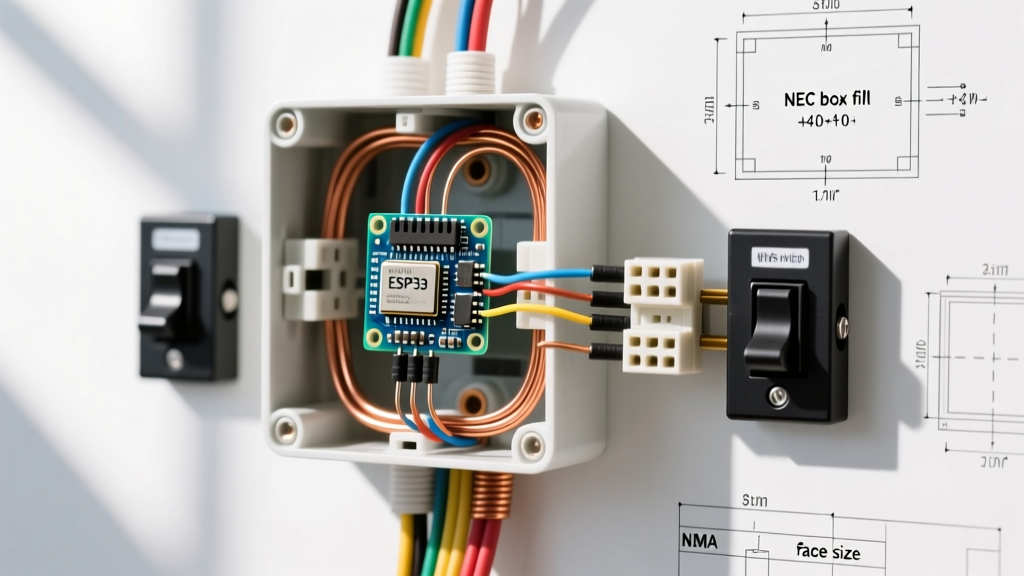
GFCI receptacles are physically deeper than standard outlets. Cramming a GFCI, three 12 AWG conductors, grounding pigtails, and wire nuts into a standard 14-cubic-inch single-gang box violates NEC Article 314.16 box fill calculations. You must use a deep single-gang box. The Carlon B618R-UPC (22.5 cubic inches) provides the necessary volume to safely fold the stiff 12 AWG wires behind the GFCI without pinching the conductors or damaging the internal electronics of the bidet receptacle.
The 2026 Essential Tool Matrix for Bidet Outlet Installation
Installing an electrical outlet for a bidet requires precision. Stripped wires, under-torqued terminals, and loose neutral connections are the primary causes of GFCI nuisance tripping. Below is the definitive tool checklist for professional-grade results.
| Tool Category | Specific Purpose | Pro Model Recommendation (2026) |
|---|---|---|
| Voltage Tester | Verifying dead circuit before contact | Fluke T6-1000 (Non-contact and probe) |
| Wire Strippers | Cleanly stripping 12 AWG without nicking copper | Klein Tools 11055 (10-18 AWG Solid) |
| Torque Screwdriver | Tightening terminals to NEC 110.14(D) specs | Wiha 28501 (10-50 in-lb range) |
| Wire Connectors | Securing pigtails and grounds | Ideal 34 Yellow In-Sure Push-In (3-Port) |
| Side Cutters | Scoring and snapping device mounting yokes | Knipex 03 02 (8-inch High Leverage) |
The inclusion of a torque screwdriver is no longer optional. NEC 110.14(D) mandates that electrical connections must be tightened to the manufacturer's specified torque. Leviton specifies 14 in-lbs for their GFCI terminal screws. Using a standard handheld screwdriver often results in over-torquing, which strips the soft brass threads and creates a high-resistance connection that will melt under the 12-amp load of a bidet heater.
Step-by-Step Material Preparation & Edge Case Troubleshooting
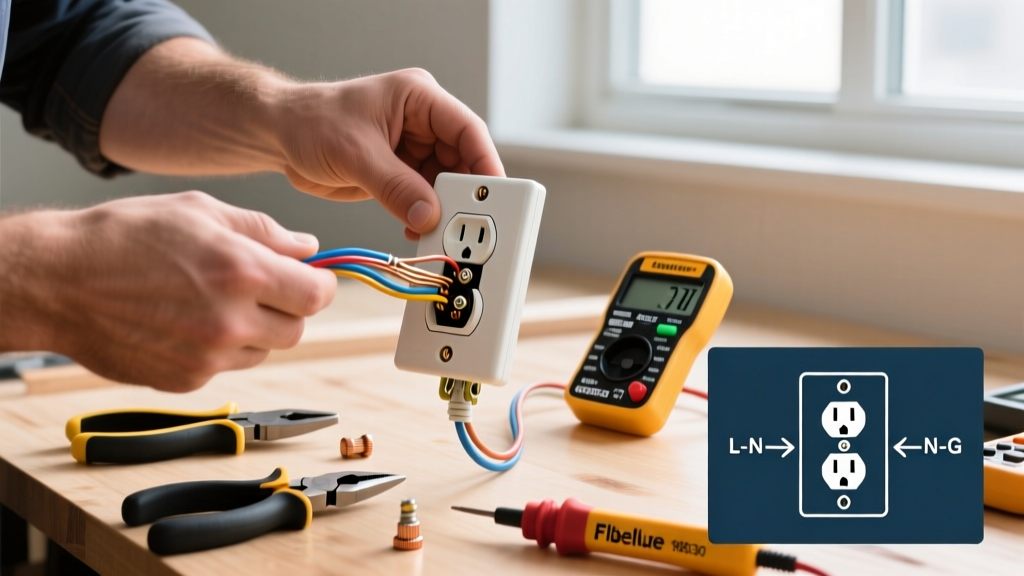
When wiring the electrical outlet for your bidet, the physical preparation of the wires determines the reliability of the connection. Follow these specific preparation steps to avoid the most common edge cases.
1. The Pigtailing Method vs. Feed-Through
If your bidet outlet is at the end of the circuit run, you will only have one set of Line wires. However, if it is in the middle of a run, you will have two sets of 12/2 cables. Do not use the 'Load' terminals on the GFCI to feed downstream standard outlets unless absolutely necessary. Instead, use the pigtailing method. Connect all hot wires together with a yellow push-in connector and a 6-inch black pigtail to the 'Line Hot' terminal on the GFCI. Do the same for the neutrals. This ensures that if the GFCI trips or fails, downstream devices (like a bathroom exhaust fan or vanity lights) do not lose power unnecessarily.
2. Stripping and Hooking 12 AWG Wire
Strip exactly 5/8-inch of insulation from the 12 AWG wire. When forming the J-hook for the terminal screw, bend the wire clockwise so that tightening the screw pulls the loop closed rather than pushing it open. Ensure no bare copper is exposed outside the terminal housing, and no insulation is trapped under the brass plate.
3. Addressing Nuisance Tripping
If your newly installed bidet outlet trips immediately upon plugging in the Washlet, check for a shared neutral. Bidets are highly sensitive to current imbalances. If the neutral from the bidet circuit is accidentally bundled with a neutral from a lighting circuit in the junction box, the GFCI will detect the returning current imbalance and trip. The Electrical Safety Foundation International (ESFI) notes that improper neutral sharing is the leading cause of unexplained GFCI trips in modern bathroom renovations.
Project Cost Breakdown: Materials and Tools
Budgeting for a bidet outlet installation requires factoring in code-compliant materials. Cutting corners on a 20-amp GFCI or deep electrical boxes will result in failed inspections and potential fire hazards. Below is a realistic 2026 pricing matrix for a single outlet run (assuming a 30-foot cable run from the panel).
| Material / Component | Specification | Estimated 2026 Cost |
|---|---|---|
| GFCI Receptacle | 20-Amp TR (Leviton GFTNL-W2) | $32.50 |
| Electrical Cable | 12/2 NM-B SIMpull (50 ft roll) | $48.00 |
| Deep Outlet Box | Carlon 22.5 cu in (B618R-UPC) | $4.25 |
| Weatherproof Cover | Extra-Duty While-In-Use Cover | $14.00 |
| Wire Connectors | Ideal In-Sure Push-In (Assorted) | $8.50 |
| Pigtails | 12 AWG THHN (Black/White/Green) | $3.00 |
| Total Materials | Excluding Panel Breaker | $110.25 |
Note: If your main electrical panel requires a new 20-Amp AFCI/GFCI dual-function breaker (such as the Square D HOM220DF) to meet current bedroom/bathroom arc-fault codes, add approximately $55.00 to your budget.
Final Safety and Inspection Notes
Before energizing the circuit, double-check that the bare copper ground wire is securely bonded to both the metal electrical box (if applicable) and the green grounding terminal on the GFCI. The Consumer Product Safety Commission (CPSC) emphasizes that a GFCI will still function without a ground wire, but the equipment grounding path is vital for protecting the sensitive microprocessors inside your bidet seat from static discharge and voltage spikes.
Once the outlet is mounted, use a commercial GFCI receptacle tester to verify correct wiring. Plug in your bidet, run a test cycle with the heated seat and warm water functions engaged simultaneously, and monitor the outlet for heat. A properly installed, torqued, and 12-AWG-wired electrical outlet for a bidet will remain cool to the touch, providing years of safe, code-compliant operation.