
The Hidden Dangers of a Loose Electric Outlet
When homeowners search for solutions to an electric outlet loose problem, they are usually describing one of two distinct mechanical failures: either the plug slides out of the receptacle with zero resistance, or the entire outlet assembly wiggles and shifts when inserting a cord. While both scenarios are incredibly frustrating, they represent severe safety hazards that go far beyond mere inconvenience.
A loose connection—whether internal to the receptacle's brass wipers or external at the mounting yoke—creates high electrical resistance. According to the Electrical Safety Foundation International (ESFI), high-resistance connections generate localized heat that can melt the polycarbonate face of the outlet, degrade wire insulation, and ultimately trigger an arc fault or electrical fire. In 2026, with homes drawing more continuous current than ever from high-wattage appliances and EV chargers, ensuring your receptacles are rigidly mounted and making solid contact is non-negotiable.
This guide breaks down the exact diagnostic steps and professional-grade repair methods to permanently fix a wobbly or loose receptacle, ensuring compliance with the National Electrical Code (NEC).
Diagnostic Checklist: Pinpointing the Exact Failure Point
Before purchasing replacement parts, you must identify which component of the outlet assembly has failed. Never attempt to diagnose a live circuit.
Step 1: Verify Power is Off
Locate your breaker panel and switch off the circuit. Use a non-contact voltage tester (NCVT), such as the Klein Tools NCVT-3 ($25), to verify that both the top and bottom duplex receptacles are completely dead. Test a known live outlet first to confirm your tester's battery is functional.
Step 2: Remove the Faceplate and Inspect
Using a Wiha 32090 insulated Phillips screwdriver ($12), remove the single center screw holding the faceplate. Once removed, observe the outlet without touching any wires. Does the outlet sit flush against the drywall? Does it shift when you gently touch the yoke (the metal mounting strap)?
Step 3: The Plug Retention Test
Take a standard, undamaged NEMA 1-15P plug (like a basic lamp cord) and insert it into the top and bottom slots. If it falls out under its own weight or offers no tactile 'click' of resistance, the internal beryllium-copper contact wipers are permanently fatigued.
4 Proven Fixes for a Loose Electric Outlet
Based on the diagnostic results, apply the appropriate professional repair method below.
Scenario A: The Plug Falls Out (Worn Internal Contacts)
The Problem: Every time you insert and remove a plug, the internal metal wipers spread slightly. Over thousands of cycles, the metal suffers from plastic deformation and loses its spring tension. No amount of tightening will fix this; the receptacle must be replaced.
The Fix: Replace the unit with a modern, Tamper-Resistant (TR) receptacle. Under NEC Article 406.12, all 15A and 20A, 125V and 250V non-locking receptacles in dwelling units must be listed as tamper-resistant.
- Recommended Product: Leviton T5262-W (15A TR Duplex) or Eaton TR7745W (15A TR Spec-Grade). Both retail between $3.50 and $5.00.
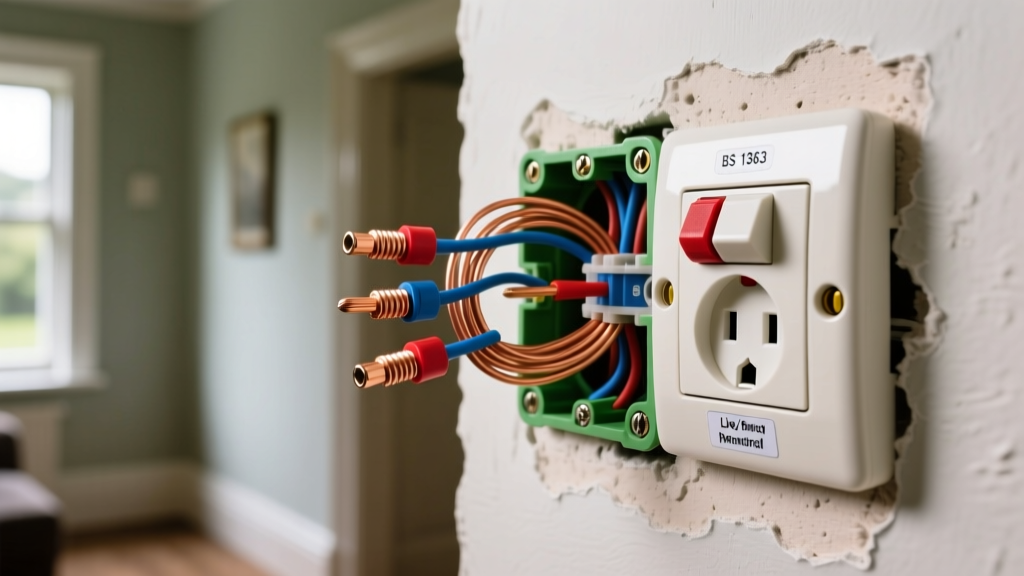
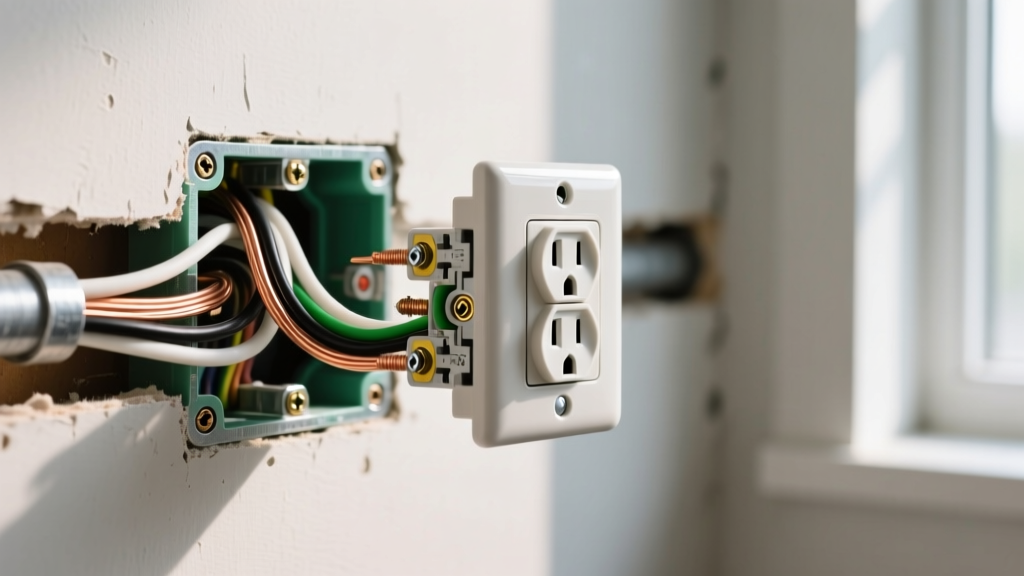
- Pro-Tip: Avoid using the 'backstab' push-in wire holes on the back of the new receptacle. These rely on a small internal spring that can loosen over time, causing arcing. Instead, strip your 14 AWG or 12 AWG wire to exactly 3/4 inch, loop it clockwise around the brass and silver terminal screws, and torque to 14 in-lbs.
Scenario B: The Outlet Wiggles (Recessed Electrical Box)
The Problem: If the electrical box was installed too deep in the wall cavity during construction or drywall repair, the outlet's mounting yoke cannot sit flush against the wall surface. When you plug something in, the entire outlet pushes backward into the wall void.
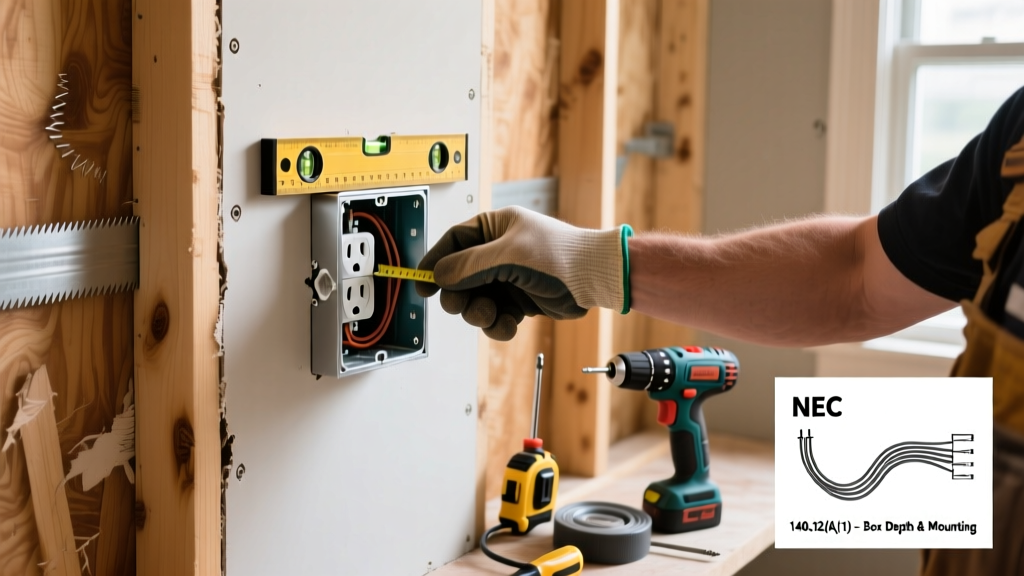
The Fix: Install a non-combustible box extender. NEC Section 314.20 strictly mandates that in walls containing combustible material (like drywall and wood studs), boxes must be installed so that the front edge is set back no more than 1/4 inch (6 mm) from the finished surface.
- Recommended Product: Arlington BE-1 Box Extender ($2.68). This UL-listed polycarbonate sleeve slides over the wires and bridges the gap between the recessed metal box and the drywall, providing a rigid, code-compliant surface for the outlet yoke to rest against.
Scenario C: Outlet Shifts Side-to-Side (Loose Yoke or Missing Drywall)
The Problem: The box is flush, but the drywall around it has crumbled, or the installer failed to tighten the yoke screws properly. The outlet twists when you pull a plug out at an angle.
The Fix: Use purpose-built outlet shims. Never use folded cardboard or drywall scraps to pack behind an outlet. Cardboard is highly combustible and compressible, meaning it will eventually crush and leave you with a loose outlet again.
- Recommended Product: Ideal Industries 30-108 Outlet Shims ($3.00 for a 10-pack). These are made of rigid, fire-retardant polycarbonate. Snap them to size and stack them behind the yoke screw holes to provide rock-solid structural support against the drywall.
Scenario D: Broken Plaster Ears on the Yoke
The Problem: The 'plaster ears' are the small metal tabs on the far left and right edges of the outlet's yoke. They are designed to rest on the surface of the drywall to prevent the outlet from being pushed into the wall. If a previous DIYer broke them off, the outlet will never sit securely.
The Fix: While you can replace the outlet entirely, a faster fix for a perfectly good receptacle with broken ears is to install an 'Oversized' or 'Mid-Size' faceplate. A standard faceplate is 4.5 inches wide, while a mid-size plate (like the Leviton 80414) is 4.88 inches wide, providing extra overlap to grab the drywall and hold the assembly rigidly in place.
Repair Matrix: Cost and Time Estimates (2026)
| Symptom | Root Cause | Hardware Solution | Avg. Cost | Time to Fix |
|---|---|---|---|---|
| Plug falls out easily | Fatigued internal wipers | Leviton T5262-W TR Receptacle | $3.50 - $5.00 | 15 Minutes |
| Outlet pushes into wall | Recessed junction box | Arlington BE-1 Box Extender | $2.68 | 10 Minutes |
| Outlet twists side-to-side | Crumbled drywall support | Ideal 30-108 Polycarbonate Shims | $0.30 each | 5 Minutes |
| Outlet wiggles vertically | Broken yoke plaster ears | Mid-Size Faceplate (Leviton 80414) | $1.50 - $3.00 | 5 Minutes |
NEC Code Compliance and Arc Fault Considerations
When addressing a loose electric outlet, it is vital to understand how modern breaker panels interact with these faults. According to the National Fire Protection Association (NFPA 70 / NEC), most living areas now require Arc-Fault Circuit Interrupter (AFCI) protection.
Expert Insight: A loose plug connection creates a 'series arc'—a microscopic spark that jumps between the plug blade and the fatigued receptacle wiper. Standard thermal-magnetic breakers will not trip during a series arc because the current draw remains below the 15A or 20A threshold. However, an AFCI breaker will detect the high-frequency signature of the arc and trip the circuit, preventing a fire. If your AFCI breaker keeps tripping randomly, a loose, high-resistance outlet connection is a primary suspect.
Furthermore, the U.S. Consumer Product Safety Commission (CPSC) emphasizes that any receptacle showing signs of thermal damage (brown scorch marks on the polycarbonate face) or extreme looseness must be replaced immediately, as the internal arc-quenching chambers may be compromised.
Frequently Asked Questions
Can I just bend the metal yoke to make it fit tighter?
No. Bending the steel mounting yoke compromises its structural integrity and alters the alignment of the internal contacts. This can cause the plug blades to bind, increasing resistance and heat. Always use shims or box extenders to achieve a flush fit.
Is it safe to use an outlet where only the top plug is loose, but the bottom is tight?
No. A duplex receptacle shares a common internal thermal mass and mounting structure. If the top wipers are fatigued, the entire unit should be replaced. Additionally, the heat generated by a loose top connection can degrade the insulation of the wires connected to the bottom terminals.
Why does my outlet feel warm to the touch?
A warm faceplate is an immediate red flag. It indicates high resistance, usually caused by a loose wire on the terminal screw, a failed backstab connection, or a heavily corroded internal contact. Turn off the breaker immediately, remove the outlet, and inspect the wire terminations. If the wires are darkened or the insulation is brittle, you must strip them back to fresh, bright copper before reinstalling a new receptacle.
Final Thoughts
Ignoring an electric outlet that is loose or wobbly is a gamble with your home's safety. By spending less than $10 and 15 minutes utilizing professional-grade shims, box extenders, and TR-rated receptacles, you eliminate arc fault risks and ensure your electrical system meets modern 2026 safety standards. Always prioritize side-terminal screw connections over push-in backstabs, and never bypass the structural support of the drywall when mounting a yoke.