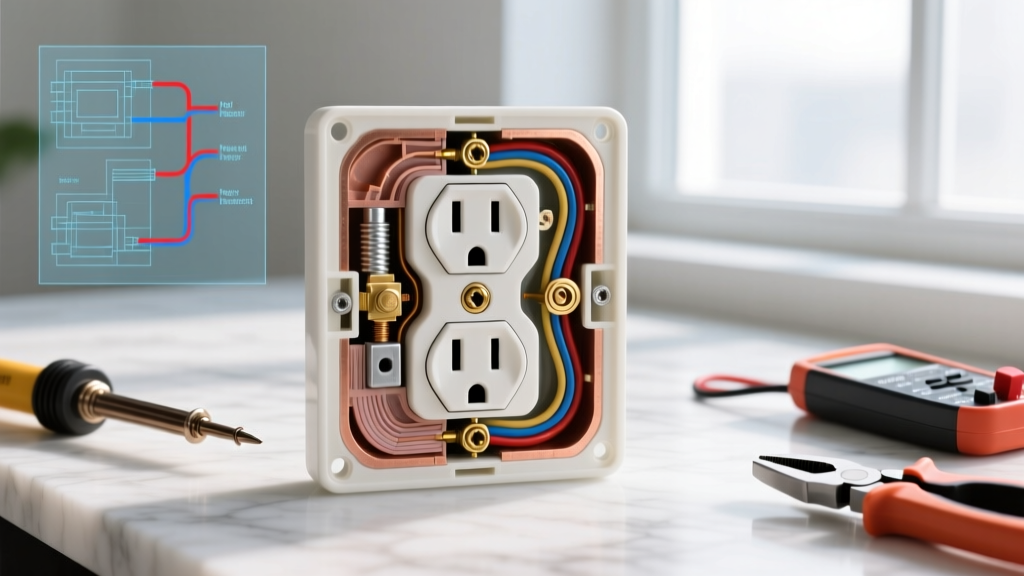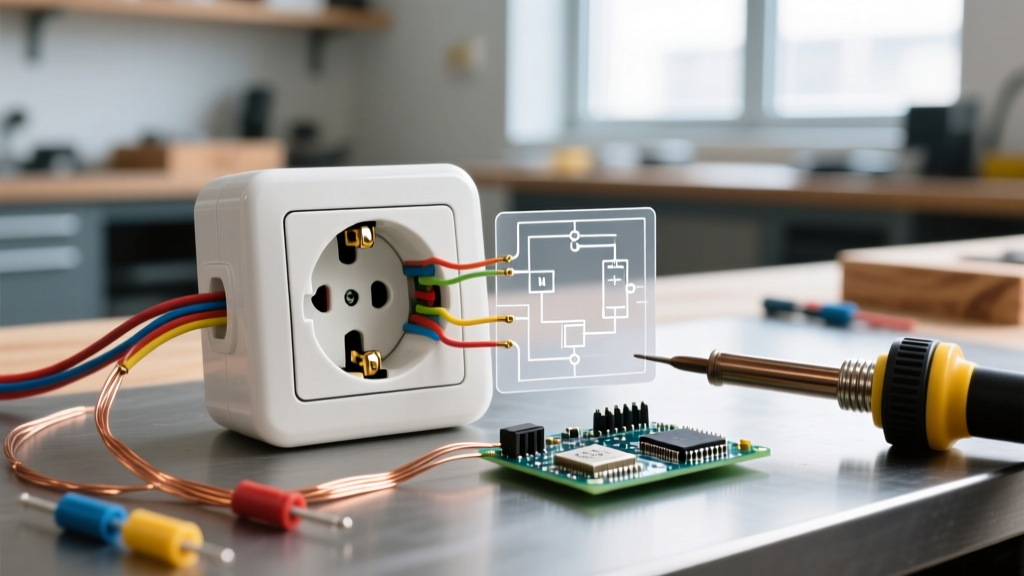

Understanding the Germany Electrical Outlet (Type F Schuko)
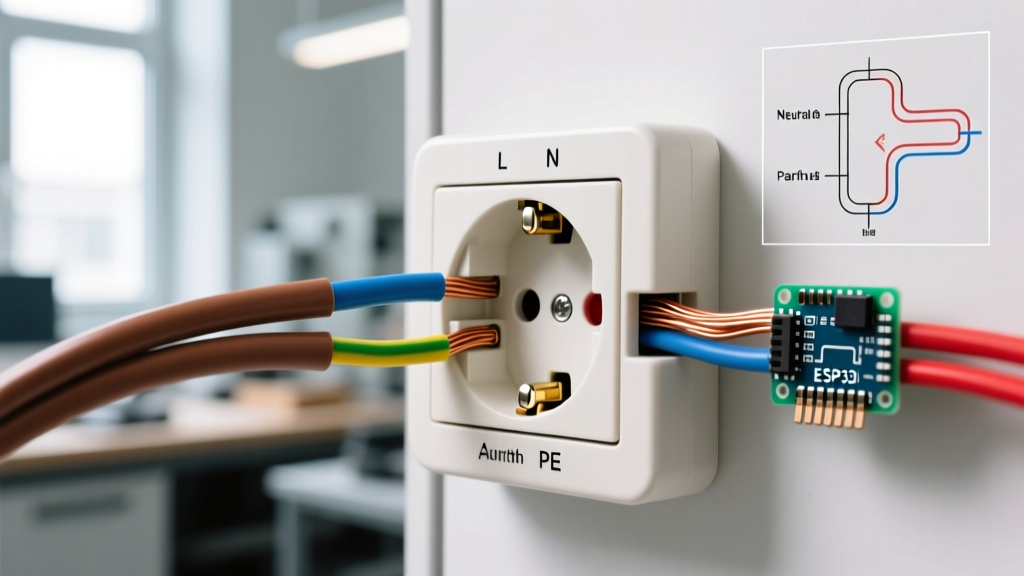
The standard Germany electrical outlet, universally known as the Schuko (short for Schutzkontakt or protective contact), is a robust 230V/50Hz system governed by the strict DIN VDE 0620-1 standard. Unlike North American NEMA receptacles, the Type F CEE 7/3 socket relies on dual lateral grounding clips rather than a dedicated third pin. While highly reliable, aging infrastructure, high-draw appliance usage, and modern smart-home integrations can introduce complex faults. Troubleshooting these outlets requires a methodical approach to isolate mechanical wear, thermal degradation, and residual current device (RCD) conflicts.
⚠️ CRITICAL SAFETY WARNING: German residential circuits operate at 230V nominal (often measuring 225V–235V). Lethal shock hazards exist at the terminal screws. Always deactivate the specific Leitungsschutzschalter (MCB) at the distribution board and verify zero energy using a CAT III or CAT IV multimeter (e.g., Fluke 117) before removing the outlet faceplate.Diagnostic Matrix: Symptom vs. Root Cause
Before unscrewing the faceplate, map the observable behavior to the most likely underlying fault. This matrix helps prioritize your diagnostic steps.
| Observable Symptom | Probable Root Cause | Primary Diagnostic Action |
|---|---|---|
| Zero voltage between Line (L) and Neutral (N) | Tripped B16A MCB, broken wire, or loose Wago connector in the junction box | Check distribution board; perform continuity test on L and N conductors |
| Plug inserts loosely; device intermittently loses power | Deformed lateral grounding clips or fatigued internal brass contacts | Visual inspection of CEE 7/3 clips; tension test with a known-good CEE 7/4 plug |
| FI-Schalter (RCD) trips instantly upon plugging in a device | Earth leakage >30mA, moisture ingress, or faulty appliance power supply | Insulation resistance test (Megger) at 500V DC; isolate appliance |
| Plug cannot be fully inserted into the socket | Jammed or broken child-safety shutter (Kindersicherung) | Inspect shutter mechanism with a flashlight; replace outlet insert |
| Visible brown scorch marks around plug pins | High-resistance connection causing thermal arcing (often from 16A heaters) | Check terminal screw torque; inspect wire stripping length |
Step-by-Step Multimeter Troubleshooting
When a Germany electrical outlet fails to deliver power, follow this precise sequence using a digital multimeter (DMM) rated for CAT III 600V minimum.
Step 1: Verify True Zero Energy
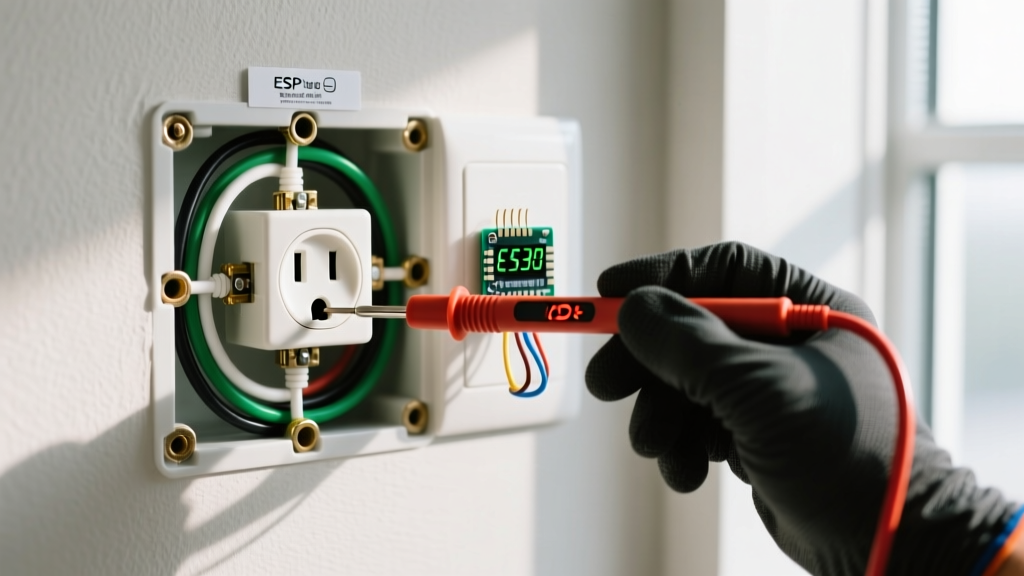
After switching off the breaker, insert your DMM probes into the L and N holes. The reading must be 0.00V. Next, test L to PE (Protective Earth via the grounding clip) and N to PE. If any reading exceeds 2V, you have turned off the wrong breaker or have a dangerous backfeed condition from a solar inverter or shared neutral.
Step 2: Inspect Terminal Torque and Wire Stripping
Remove the outlet from the flush-mounted box (Unterputzdose). German electricians typically use 1.5mm² or 2.5mm² solid copper wire (NYM-J cable).
- Stripping Length: The insulation should be stripped exactly 12mm. If stripped too short, the screw bites the insulation, causing high resistance and heat. If too long, bare copper is exposed, risking short circuits.
- Torque Specification: Terminal screws on modern Gira or Jung outlets require exactly 0.8 Nm of torque. Overtightening deforms the brass cage, while undertightening leads to arc faults.
Step 3: Live Voltage and Polarity Testing
Restore power. Measure L to N (expect 225V–235V). Measure L to PE (expect identical voltage). Measure N to PE (expect < 2V). If N to PE reads >10V, you have a loose neutral connection upstream, which is a severe fire hazard that requires immediate attention at the distribution panel.
Deep Dive: FI-Schalter (RCD) Nuisance Tripping
In Germany, the Fehlerstrom-Schutzschalter (FI-Schalter) is the equivalent of a GFCI, typically rated at 30mA for personal protection. As of 2026, the proliferation of smart home KNX systems, modern inverter-driven washing machines, and home EV wallboxes has drastically increased "blind currents" (cumulative capacitive leakage).
If your Germany electrical outlet is on a circuit protected by a standard Type A RCD, and it trips when you plug in a device with a high-frequency switched-mode power supply (like a modern PC or server rack), the RCD may be blinded by DC leakage components. According to ABB's latest RCD guidelines, circuits serving modern electronics with 3-phase inverters or EV chargers increasingly require Type B or Type B+ RCDs, which can detect smooth DC residual currents up to 100kHz. If you are diagnosing a nuisance trip, check the RCD type printed on the breaker. Upgrading from a Type A to a Type B RCD (costing roughly €80–€150 in 2026) often resolves unexplained tripping on shared circuits.
Mechanical Failures: Shutters and Grounding Clips
The physical design of the CEE 7/3 Schuko socket includes two distinct mechanical failure points that do not exist in US/UK outlets.
1. The Grounding Clip Fatigue
The lateral grounding clips provide the PE connection before the L/N pins make contact. In high-draw scenarios (e.g., a 2000W space heater drawing ~8.7A continuously), cheap or aged outlets experience thermal expansion and contraction. Over years, the spring steel clips lose their tension. This results in a micro-gap between the plug pin and the clip, leading to localized arcing, melting of the thermoplastic faceplate, and eventual open-circuit grounding. Diagnosis: If a plug slides in without firm resistance on the sides, the outlet must be replaced immediately.
2. Child Safety Shutter Jams
DIN VDE 0620-1 mandates integrated child safety shutters. These are typically dual-gate plastic mechanisms that only open when equal pressure is applied to both L and N holes simultaneously. If a user forces a non-standard plug (like a Europlug CEE 7/16) or a single object into one hole, the asymmetric pressure can snap the internal plastic pivot. The shutter then permanently locks, rendering the Germany electrical outlet useless. There is no repair for this; the entire insert must be swapped.
2026 Replacement Guide: Top Tier German Brands
When diagnosis dictates replacement, avoid generic hardware store brands. Stick to the primary German manufacturers that comply strictly with VDE testing. Below is a comparison of standard 16A Schuko inserts with integrated child safety shutters.
| Brand & Model Line | Terminal Type | Approx. 2026 Price | Best Application |
|---|---|---|---|
| Gira System 55 (Standard Insert) | Screw / Claw | €6.50 - €8.00 | General residential, high durability |
| Busch-Jaeger Reflex SI | Screwless (Push-in) | €5.00 - €7.00 | Fast installation, solid wire only |
| Jung AS 500 | Screw / Claw | €7.00 - €9.50 | Premium aesthetics, commercial spaces |
Note: For detailed compatibility and architectural integration specifications, refer to the Gira Installation Technology portal.
Frequently Asked Questions (FAQ)
Can I replace a German Schuko outlet with a standard US NEMA 5-15?
No. Germany operates on a 230V/50Hz grid. Installing a 120V NEMA outlet without a step-down transformer will instantly destroy 120V appliances and create a severe fire and shock hazard. Furthermore, it violates VDE regulations and voids home insurance.
Why does my outlet have two extra wires connected to it?
German wiring frequently uses a "daisy-chain" (loop) method where the outlet serves as a junction point for the next outlet in the circuit. You will see two Line, two Neutral, and two PE wires. Modern push-in terminals (like those on Busch-Jaeger) have separate slots for the incoming and outgoing wires. Never cut the downstream wires, or you will kill power to the rest of the room.
What is the purpose of the small plastic pin on the outlet faceplate?
That is the release mechanism for the flush-mounted box claws. If the outlet is loose and wiggling in the wall, you can tighten the long M3.5 screws on the left and right sides, which expand the metal claws against the inside of the Unterputzdose. Do not overtighten, or you will crack the plastic drywall box.
Final Diagnostic Thoughts
Troubleshooting a Germany electrical outlet requires respecting the high-fault current potential of the 230V European grid while understanding the unique mechanical nuances of the Schuko design. By systematically verifying voltage, inspecting the lateral grounding clips for thermal fatigue, and understanding the modern interactions between switched-mode power supplies and Type A/B FI-Schalters, you can accurately diagnose and resolve nearly any Type F receptacle fault. For comprehensive global plug and socket standards, the IEC World Plugs guide remains the definitive reference for cross-border electrical compatibility.