
Why Your Laundry Circuit Keeps Failing Mid-Cycle
There are few things more frustrating in a modern home than a washing machine that abruptly kills the power mid-spin cycle. When you are troubleshooting an electrical outlet for washing machine applications, the issue usually stems from a conflict between high-draw appliance dynamics and sensitive safety devices. In 2026, with the widespread adoption of high-efficiency inverter motors, nuisance tripping has become a prevalent diagnostic headache for homeowners and electricians alike.
This guide bypasses generic advice and dives into the exact diagnostic procedures, National Electrical Code (NEC) requirements, and advanced failure modes specific to modern laundry circuits.
The Baseline: NEC Requirements for Laundry Receptacles
Before pulling out a multimeter, you must verify that the circuit was installed to code. According to the National Fire Protection Association (NFPA), the NEC mandates specific parameters for laundry areas:
NEC 210.11(C)(2): At least one additional 20-ampere branch circuit shall be provided to supply the laundry receptacle outlet(s). This circuit shall have no other outlets.
NEC 210.8(A)(10): All 125-volt through 250-volt receptacles installed in laundry areas shall have ground-fault circuit-interrupter (GFCI) protection.
If your outlet is on a 15-amp breaker, wired with 14 AWG wire, or shared with a laundry room light or freezer, it is fundamentally undersized and violates code. A proper setup requires a dedicated 20-amp single-pole breaker, 12 AWG copper conductors, and a 20-amp rated NEMA 5-20R receptacle.
Step-by-Step Diagnostic Protocol
Phase 1: Isolate the Appliance vs. The Circuit
Do not assume the outlet is guilty until you clear the appliance. Modern washing machines have complex PCBs and heating elements that can develop internal ground faults.
- The Resistive Load Test: Unplug the washing machine. Plug in a known high-draw resistive load, such as a 1500W space heater or a professional heat gun.
- Run Time: Let the resistive load run for 15 continuous minutes. Resistive loads do not produce the inductive kickback or electromagnetic interference (EMI) that motors do.
- Evaluate: If the breaker or GFCI trips during this test, the fault lies in the branch circuit wiring, the breaker itself, or the receptacle. If it holds steady, the washing machine is the culprit.
Phase 2: Diagnosing Inverter Motor EMI Nuisance Tripping
If the circuit passes the resistive load test but trips specifically when the washing machine transitions into the high-speed spin cycle, you are likely dealing with EMI nuisance tripping. This is the most common issue with 2024–2026 LG, Samsung, and GE models featuring Brushless DC (BLDC) inverter drives.
Inverter drives use high-frequency pulse-width modulation (PWM) to control motor speed. This switching generates common-mode high-frequency noise that leaks to the equipment grounding conductor. If the cumulative leakage exceeds the GFCI’s 5mA threshold, it trips.
- The Fix: Replace standard GFCI receptacles with advanced models featuring integrated EMI/RFI filtering, such as the Leviton GFNT2 SmartlockPro (approx. $28). These are specifically engineered to ignore high-frequency transient noise while still tripping on dangerous 60Hz ground faults.
- Verify the EGC: Use a milliohm meter to test the Equipment Grounding Conductor from the receptacle back to the panel. High impedance (> 0.5 ohms) prevents high-frequency noise from safely dissipating, forcing the GFCI to absorb it.
Phase 3: Thermal and Torque Inspections
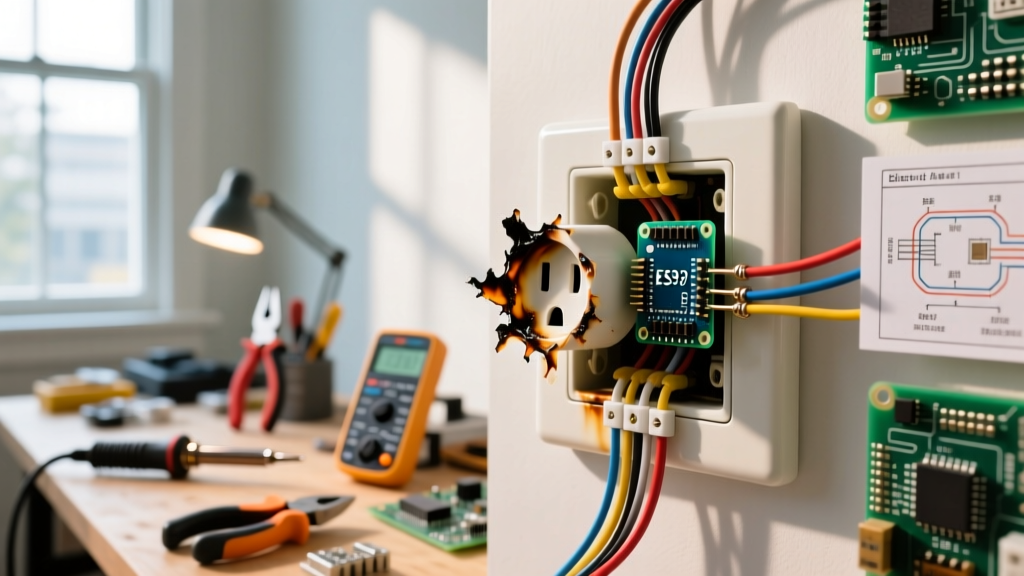
A washing machine draws between 10 to 15 amps during water heating and spin cycles. Loose terminal connections create micro-arcing and localized resistance, leading to voltage drops and heat buildup.
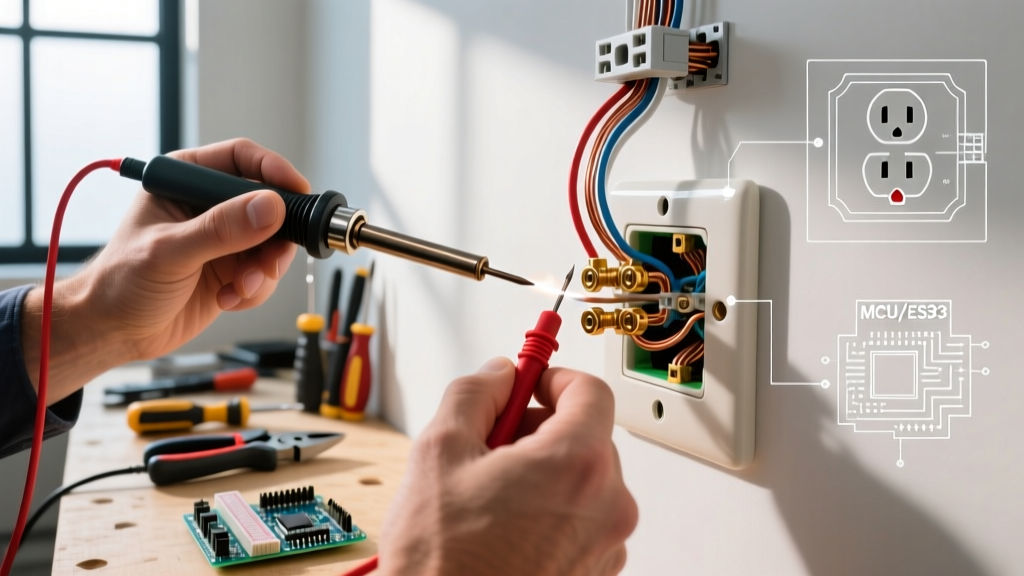
Using an infrared thermometer (like the Etekcity Lasergrip 774, ~$25), scan the receptacle faceplate during the spin cycle. If the temperature exceeds 10°F above ambient room temperature, you have a high-resistance connection. Turn off the breaker, remove the receptacle, and verify that the terminal screws are torqued to the manufacturer's specification—typically 14 in-lbs for standard 20A commercial-grade receptacles. Furthermore, ensure you are using the side-wire terminal screws or a properly crimped spade connector, never the push-in "backstab" connectors, which are notorious for failing under sustained 15A loads.
Phase 4: Verifying Equipment Grounding Conductor (EGC) Impedance
A critical but often overlooked aspect of modern appliance troubleshooting is the quality of the ground path. The GFCI relies on a differential current measurement, but high-frequency EMI from inverter motors needs a low-impedance path to bleed off safely. If your EGC has high resistance, the noise has nowhere to go but through the GFCI's internal sensing toroid, causing a trip.
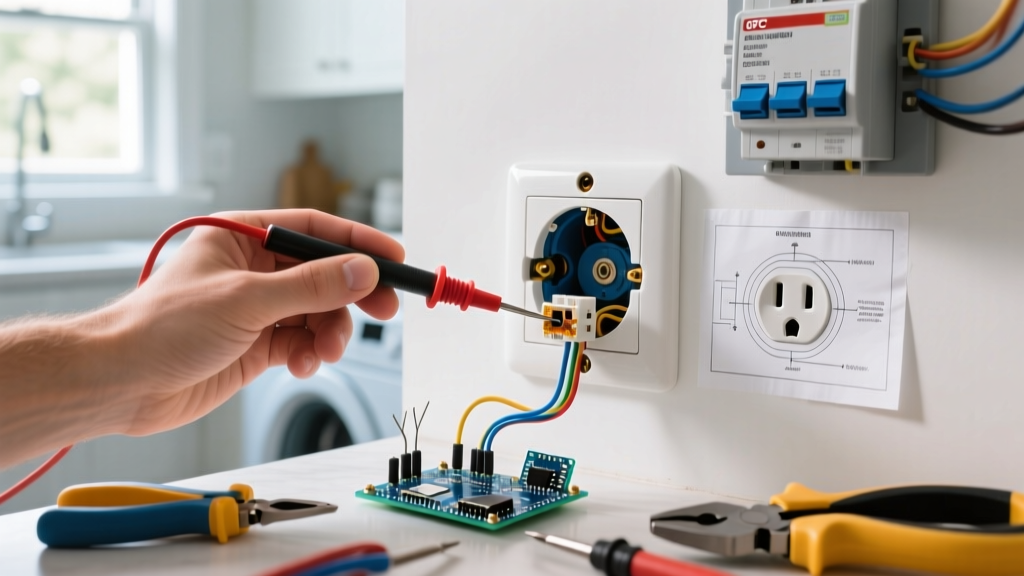
Using a dedicated ground impedance tester or a high-quality milliohm meter, measure the resistance between the receptacle's ground slot and the main panel's ground bus bar. The reading should be well under 0.5 ohms. If it is higher, you likely have a corroded ground rod connection, a loose neutral-ground bond at the main service disconnect, or a compromised splice in the 12/2 NM-B cable. Remedying this ground path issue often permanently solves nuisance tripping without needing to swap out the receptacle itself.
Troubleshooting Matrix: Symptom to Solution
| Symptom | Probable Failure Mode | Diagnostic Tool | Actionable Fix |
|---|---|---|---|
| Trips instantly when plugged in | Hard ground fault in appliance or wiring short | Fluke 87V Multimeter (Continuity) | Check appliance power cord for damage; test hot-to-ground continuity. |
| Trips only during high-speed spin | BLDC Inverter EMI / Common-mode noise leakage | Klein RT250 GFCI Tester | Upgrade to EMI-filtered GFCI (Leviton GFNT2); verify low-impedance ground. |
| Trips after 10-15 minutes of heating | Thermal overload due to loose neutral/hot connection | IR Thermometer / Thermal Camera | Re-terminate wires; torque screws to 14 in-lbs; replace backstabbed wires. |
| Breaker trips, GFCI does not | Arc fault or sustained overcurrent (>20A) | Clamp Meter (Amp draw test) | Check for seized water pump motor drawing locked-rotor amps. |
Safety Devices: GFCI vs. AFCI Protection
While GFCI protection is mandated by the NEC for the laundry area to prevent shock hazards, what about Arc Fault Circuit Interrupters (AFCI)? According to safety guidelines outlined by the U.S. Consumer Product Safety Commission (CPSC), GFCIs protect people from shock, while AFCIs protect the building from electrical fires caused by arcing.
In many modern 2026 electrical panels, the laundry circuit is protected by a Dual-Function (DF) breaker that provides both AFCI and GFCI protection at the panel, allowing the use of a standard (non-GFCI) 20A receptacle on the wall. If you have a DF breaker at the panel, installing a GFCI receptacle on the wall is redundant and can actually increase the likelihood of nuisance tripping due to overlapping electronic filters. Always verify your panel's breaker type before replacing a wall receptacle.
When to Upgrade the Entire Circuit
If your home was built before 1990, your laundry outlet might be wired with 14 AWG aluminum or degraded copper, and lack a true equipment ground. Upgrading to modern smart washers—which require stable, clean power for their Wi-Fi modules and advanced PCBs—demands a circuit overhaul.
Estimated 2026 Costs for Circuit Upgrades:
- DIY Receptacle Swap (20A GFCI): $25 - $35 (Materials only)
- DIY Breaker Swap (Dual Function 20A): $45 - $65 (Materials only)
- Professional Circuit Rewire (Running new 12/2 NM-B): $350 - $600 (Depending on drywall repair and panel accessibility)
For more information on the energy demands and electrical requirements of modern high-efficiency appliances, refer to the ENERGY STAR clothes washer specifications, which detail the shifting power profiles of inverter-based machines.
Final Diagnostic Takeaways
Troubleshooting an electrical outlet for washing machine setups requires moving beyond simply resetting the breaker. By isolating the load, understanding the EMI characteristics of modern inverter motors, and verifying mechanical torque and thermal stability, you can permanently resolve mid-cycle power failures. Always prioritize NEC compliance and ensure your grounding infrastructure is robust enough to handle the high-frequency noise generated by today's smart appliances.