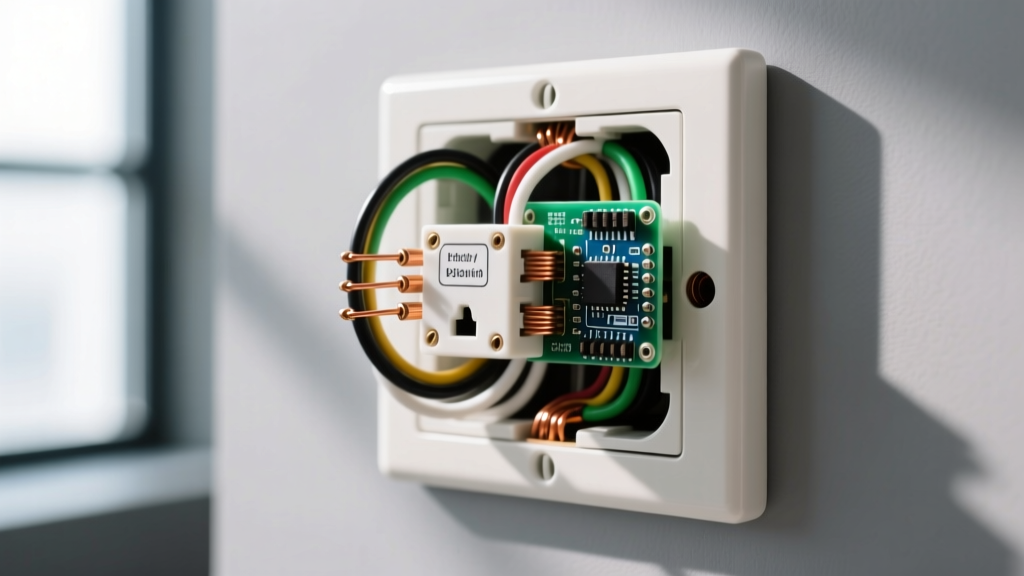

Initial Triage: Why Your Electrical Outlet Does Not Work
When an electrical outlet does not work, the immediate assumption is often a failed receptacle or a tripped breaker. However, modern residential wiring involves complex cascading circuits, GFCI/AFCI protections, and multi-wire branch circuits (MWBCs) that can mask the true point of failure. According to the National Fire Protection Association (NFPA), electrical failures or malfunctions are a leading cause of home fires, making systematic testing critical rather than just guessing and swapping parts.
This inspection and testing guide walks you through a professional, tiered diagnostic approach to identify exactly why your receptacle is dead, moving from non-invasive checks to advanced multimeter analysis.
The 'Switched Receptacle' Trap
Before pulling out any tools, verify the room's switching logic. In living rooms and bedrooms, building codes often allow a switched receptacle to satisfy the requirement for a switched lighting outlet. Typically, the top half of the duplex receptacle is controlled by a wall switch, while the bottom half remains constantly hot. If the wall switch is off, plugging a lamp into the top socket will result in a dead circuit. Toggle all wall switches in the room to rule this out.
GFCI and AFCI Cascading Failures
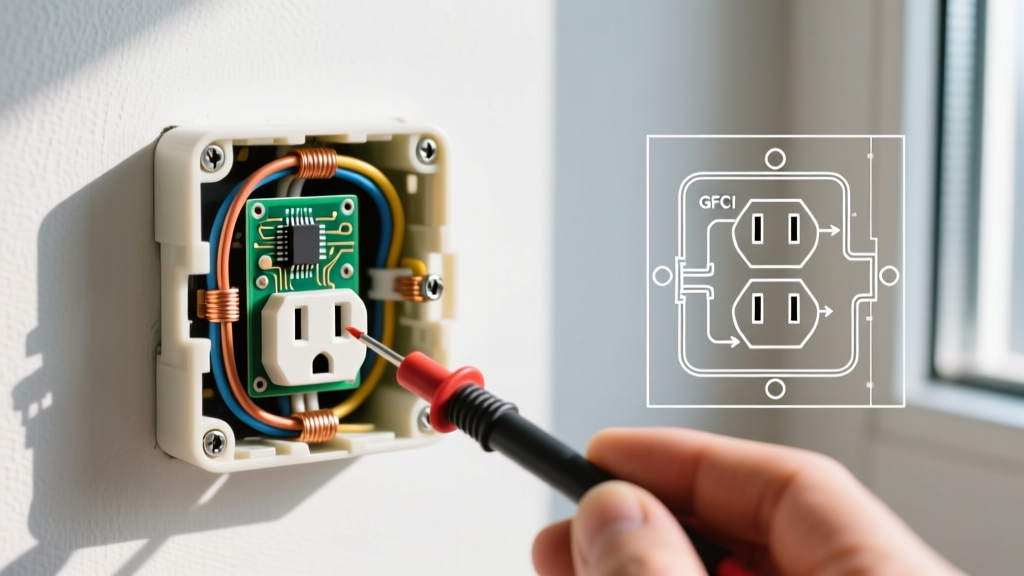
Ground Fault Circuit Interrupter (GFCI) receptacles protect downstream standard outlets. If a standard outlet in your bathroom, garage, or exterior wall does not work, a GFCI receptacle located upstream—sometimes in a completely different room or even outside—may have tripped. Similarly, Arc Fault Circuit Interrupter (AFCI) breakers in the main panel can trip due to nuisance arcing from appliances like vacuums or power tools. Reset all GFCI buttons in the home and check the main panel for breakers sitting in the 'middle' tripped position, which must be switched fully OFF before being pushed back to ON.
Phase 1: Non-Contact Voltage (NCV) Testing
If the breaker is on and no GFCI is tripped, the next step is to verify the presence of voltage at the face of the outlet without removing the cover plate. Use a high-sensitivity non-contact voltage tester, such as the Milwaukee 2201-20 (approximately $25 in 2026).
- Hot Slot Test: Insert the tip into the smaller (hot) slot. A red light and audible beep indicate voltage is reaching the receptacle.
- Neutral Slot Test: Insert the tip into the larger (neutral) slot. It should remain silent. If it beeps here, you may have reversed polarity or a floating neutral.
Safety Warning: NCV testers can yield false negatives on shielded cables or false positives due to phantom voltage. Never rely solely on an NCV tester to confirm a circuit is dead before touching bare wires. The Occupational Safety and Health Administration (OSHA) mandates using a direct-contact meter to verify zero energy before physical contact.
Phase 2: Plug-In Receptacle Tester Diagnostics
For a rapid assessment of wiring topology, a plug-in receptacle tester is indispensable. The Klein Tools RT105 (approx. $18) uses a three-light matrix to instantly identify common wiring faults. Plug the tester into the dead outlet and observe the LED pattern.
Receptacle Tester Light Patterns & Meanings
| Left LED (Yellow) | Center LED (Yellow) | Right LED (Red) | Diagnosis / Fault Condition |
|---|---|---|---|
| OFF | OFF | OFF | Open Hot / Dead Circuit: No voltage reaching the outlet. Check breakers, upstream GFCIs, or wire nut connections. |
| OFF | ON | ON | Open Neutral: Hot is present, but the return path is broken. Often caused by a failed push-in (backstab) connection upstream. |
| ON | OFF | ON | Open Ground: The outlet functions but lacks a safety ground path. Common in older homes or due to a disconnected bare copper wire. |
| OFF | ON | OFF | Hot/Neutral Reversed: Dangerous polarity swap. The socket sleeve is energized, creating a severe shock hazard. |
| ON | ON | OFF | Correct Wiring: Standard 120V circuit is functioning properly. |
Phase 3: Advanced Multimeter Testing (Fluke 117)
When a receptacle tester indicates an 'Open Hot' or 'Open Neutral,' or if the outlet works intermittently, you must remove the faceplate and test the bare terminals. Ensure you are using a True-RMS multimeter with a CAT III or CAT IV rating, such as the Fluke 117 (approx. $220 in 2026).
Testing Hot-to-Neutral and Hot-to-Ground
- Confirm Power: Turn the breaker OFF, remove the receptacle from the junction box, and pull it out carefully. Turn the breaker back ON for live testing (exercise extreme caution).
- Hot-to-Neutral (H-N): Place the black probe on the silver (neutral) screw and the red probe on the brass (hot) screw. You should read between 115V and 125V.
- Hot-to-Ground (H-G): Move the black probe to the green grounding screw. The reading should be virtually identical to the H-N reading.
- Neutral-to-Ground (N-G): Place probes on the silver and green screws. This should read less than 2V. A higher reading indicates voltage drop on the neutral wire, meaning the neutral connection is loose or undersized upstream.
The 'Bootleg Ground' Edge Case
If your receptacle tester shows 'Correct Wiring' but the outlet still does not work reliably, or if you are in an older home with two-prong outlets upgraded to three-prong, test for a bootleg ground. A bootleg ground is an illegal and dangerous jumper wire connecting the neutral terminal to the ground screw to trick testers. To test for this, measure the resistance (Ohms) between the neutral and ground slots with the power OFF. A reading near 0.0 ohms indicates a jumper wire. This must be corrected immediately, as a broken neutral upstream will energize the metal casing of any plugged-in appliance. The Consumer Product Safety Commission (CPSC) heavily warns against improper grounding modifications due to severe electrocution risks.
Phase 4: Physical Inspection & Tear-Down
If voltage is present at the wire nuts behind the outlet but not at the receptacle terminals, the receptacle itself has failed internally, or the termination method has degraded.
Backstab vs. Side-Wired Terminals
The most common physical failure mode for a dead outlet is the use of 'backstab' (push-in) connections. These rely on a small internal brass spring to grip the 14 AWG or 12 AWG solid wire. Over years of thermal expansion and contraction from high-draw appliances (like space heaters or hair dryers), the spring loses tension, leading to high resistance, arcing, and eventual open-circuit failure.
- The Fix: Cut back the wire to expose fresh copper, strip it to 5/8 inch, and wrap it clockwise around the side terminal screw.
- Torque Requirement: The NEC (NFPA 70) Section 110.14(D) requires that terminations be torqued to the manufacturer's specifications. For standard 15A and 20A commercial-grade receptacles (like the Leviton 5362), this is typically 14 in-lbs. Use an insulated torque screwdriver, such as the Klein Tools 32500TORQ14, to ensure a fire-safe connection.
Multi-Wire Branch Circuit (MWBC) Shared Neutral Failures
If the dead outlet is on a kitchen or bathroom circuit and you notice the voltage reading fluctuates wildly (e.g., dropping to 90V or spiking to 140V) when appliances turn on in other rooms, you likely have a broken shared neutral on an MWBC. This is a critical emergency. Immediately turn off both breakers feeding the circuit (they should be tied together with a handle tie) and call a licensed electrician to locate the broken neutral in the junction box or panel.
2026 Diagnostic Tool & Replacement Cost Matrix
Investing in the right diagnostic tools saves time and prevents unnecessary drywall damage. Below is a current market breakdown for professional-grade testing and repair materials.
| Tool / Material | Model / Specification | Approx. 2026 Cost | Primary Use Case |
|---|---|---|---|
| NCV Tester | Milwaukee 2201-20 | $25.00 | Initial live/dead verification at faceplate |
| Receptacle Tester | Klein Tools RT105 | $18.00 | Wiring topology and GFCI trip testing |
| True-RMS Multimeter | Fluke 117 Electricians | $220.00 | Exact voltage, continuity, and bootleg ground checks |
| Torque Screwdriver | Klein 32500TORQ14 (14 in-lb) | $35.00 | NEC-compliant terminal screw tightening |
| Replacement Receptacle | Leviton 5362 (20A TR) | $4.50 | Commercial-grade, Tamper-Resistant replacement |
When to Call a Licensed Electrician
While diagnosing a single dead outlet is well within the scope of an experienced DIYer, certain findings require professional intervention. If your multimeter reveals a broken shared neutral on an MWBC, if you discover melted wire insulation or scorch marks on the receptacle yoke, or if the circuit lacks an equipment grounding conductor entirely (common in pre-1960s knob-and-tube or ungrounded Romex), stop work immediately. Upgrading ungrounded circuits to meet modern NEC 406.12 Tamper-Resistant and 210.8 GFCI/AFCI standards requires pulling new wire or installing specialized dual-function breakers, a task best handled by a licensed professional to ensure compliance with local electrical codes and home insurance requirements.