
Understanding the Fiji Electrical Grid and Type I Standard
Troubleshooting electrical issues in Fiji requires a foundational understanding of the local grid and receptacle standards. Fiji operates on a 240V nominal supply voltage and a 50Hz frequency. The country utilizes the Type I electrical outlet, which is identical to the AS/NZS 3112 standard used in Australia and New Zealand. According to the International Electrotechnical Commission (IEC), Type I receptacles feature three flat pins arranged in a triangular pattern: two slanted power pins (Active and Neutral) set at 30 degrees from the vertical, and a longer, straight vertical Earth pin.
Whether you are managing a boutique resort on the Coral Coast, maintaining a residential property in Suva, or simply a traveler dealing with a dead hotel receptacle in Denarau, diagnosing outlet failures requires a systematic approach. In 2026, while Energy Fiji Limited (EFL) has significantly improved grid stability across the main islands, localized voltage sags, environmental degradation, and incompatible travel adapters remain the primary culprits behind outlet failures and damaged electronics.
Diagnostic Triage: Why is the Outlet or Device Dead?
Before grabbing a multimeter, you must isolate the point of failure. Is the receptacle dead, or is the device fried? Use this triage sequence to narrow down the issue.
1. The Voltage Mismatch Catastrophe (Fried Electronics)
The most common and destructive issue encountered in Fiji involves North American or Japanese travelers plugging 120V/100V devices directly into a 240V Type I outlet using a cheap, unregulated physical plug adapter. A physical adapter only changes the pin shape; it does not step down the voltage.
- The Failure Mode: When a 120V device receives 240V, the internal Metal Oxide Varistor (MOV) on the device's power supply board attempts to clamp the overvoltage. It will rapidly overheat, often resulting in a loud pop, a flash of light, and the distinct smell of ozone or burnt phenolic resin.
- The Diagnosis: Inspect the device's power cord or external power brick. If it smells acrid or shows bulging/burn marks, the internal thermal fuse has blown to prevent a fire. The Fiji outlet is likely fine; the device is permanently destroyed.
- The Fix: Always verify the device's input rating. Look for 'INPUT: 100-240V ~ 50/60Hz' on the power label. Modern laptop chargers and smartphone bricks are dual-voltage and safe. Hair dryers, kettles, and older grooming tools are usually single-voltage and will be destroyed.
2. Adapter Overheating and Pin Deformation
Type I receptacles rely on precise pin angles to maintain friction and electrical contact. Universal travel adapters often feature flimsy, poorly machined pins that do not conform to the strict 30-degree angle required by the AS/NZS 3112 standard.
- The Failure Mode: Forcing a poorly manufactured universal adapter into a Fijian outlet bends the internal phosphor bronze contact wipers. This creates a high-resistance connection. When drawing heavy loads (like charging an e-bike or running a CPAP machine), the outlet faceplate will become hot to the touch, and the plastic may melt or discolor.
- The Diagnosis: Carefully touch the faceplate of the outlet. If it is warm or hot, or if the plug easily falls out when nudged, the internal contacts are fatigued or the adapter pins are deformed.
- The Fix: Discard the universal adapter. Purchase a dedicated, grounded Type I travel plug (often labeled as 'Australia/New Zealand/Fiji' type) rated for at least 10 Amps (2400 Watts). If the receptacle itself is loose, the internal mechanism must be replaced by a licensed Fijian electrician.
3. Environmental Degradation: Coastal Humidity and RCD Tripping
Fiji's tropical climate, characterized by high humidity and salt-laden coastal air, is incredibly harsh on electrical infrastructure. Outdoors, or in poorly sealed beachfront bures, corrosion is a constant enemy.
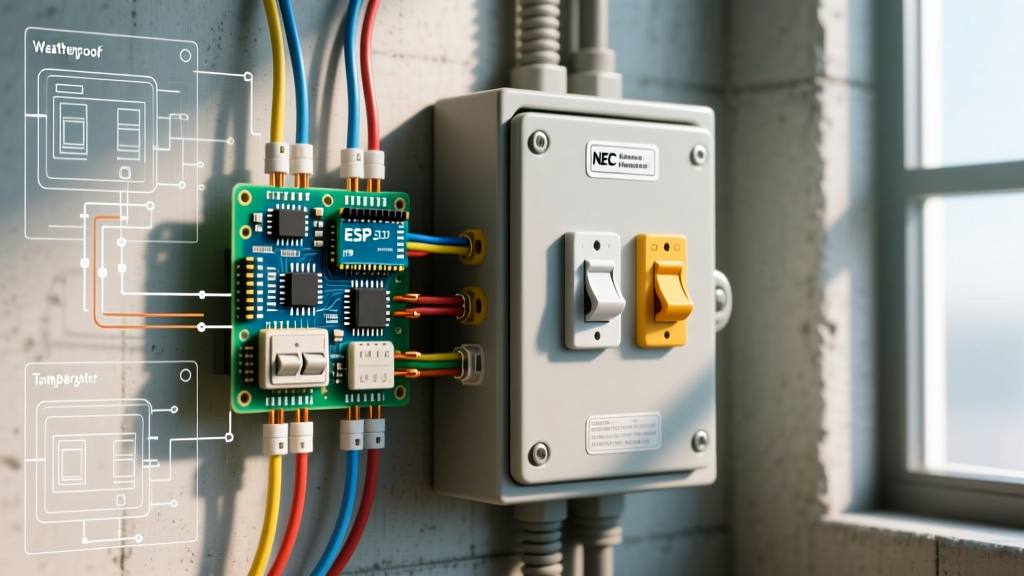
- The Failure Mode: Salt air accelerates galvanic corrosion on the brass terminals inside the outlet. This increases resistance and causes intermittent power loss. Furthermore, moisture ingress into outdoor IP44-rated weatherproof covers can cause the circuit's Residual Current Device (RCD) or Ground Fault Circuit Interrupter (GFCI) to trip instantly.
- The Diagnosis: If the outlet is dead and the main breaker panel shows a tripped RCD (usually a button that has popped out on the breaker), moisture or corrosion is likely causing a ground fault. Inspect the outlet's weatherproof gasket for dry rot or cracking.
- The Fix: Reset the RCD. If it trips immediately, do not force it. The outlet must be opened, cleaned with electrical contact cleaner, and the weatherproof seal replaced. For coastal properties, upgrading to marine-grade stainless steel or nickel-plated Type I receptacles is highly recommended to prevent future corrosion.
Step-by-Step Multimeter Diagnosis for Type I Receptacles
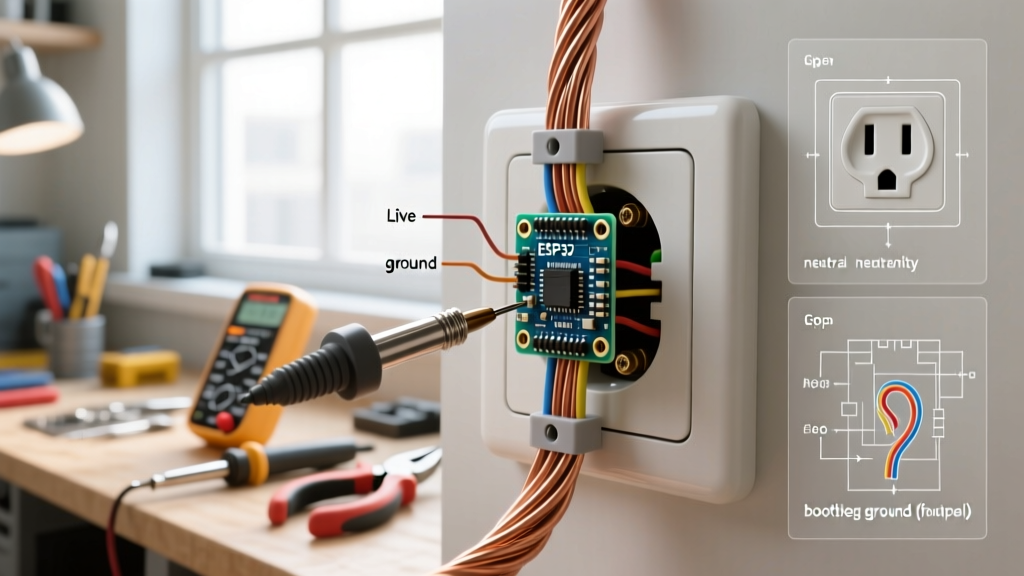
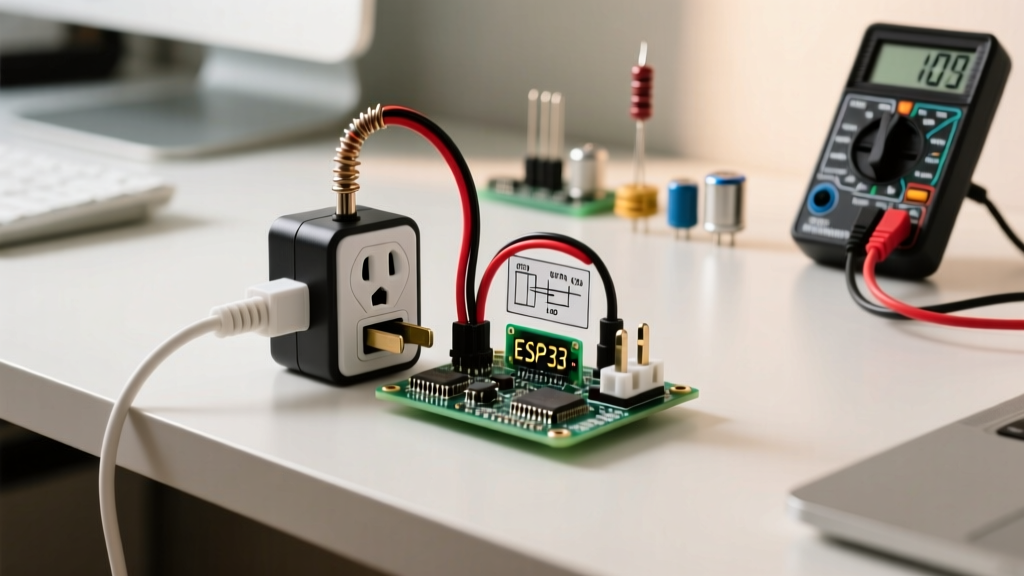
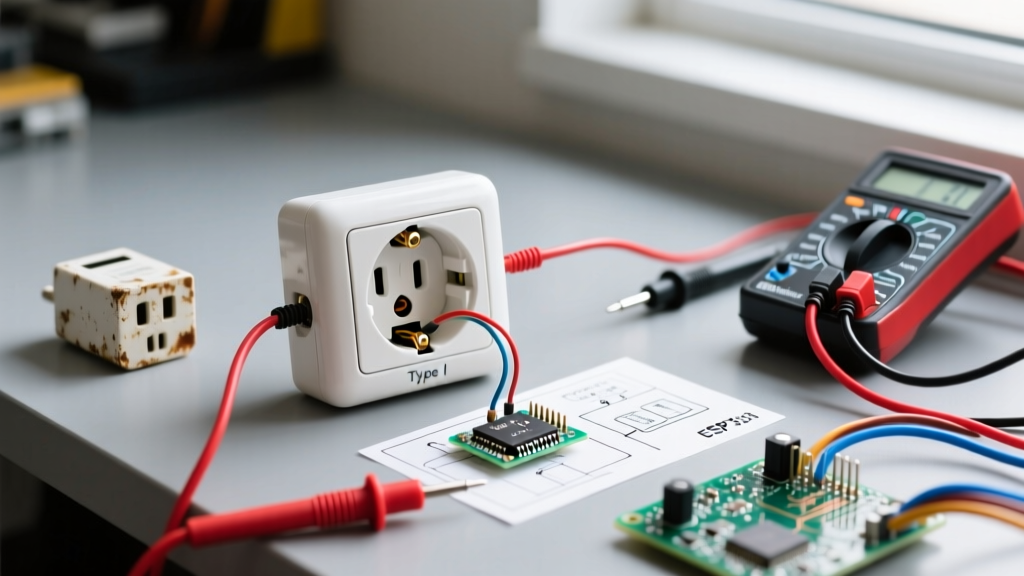
If the device is confirmed dual-voltage and the adapter is high-quality, but the outlet remains dead, it is time to test the receptacle with a True-RMS digital multimeter (such as a Fluke 117).
- Safety First: Ensure your hands are dry and you are wearing insulated footwear. Set your multimeter to AC Voltage (V~), ensuring the range is set above 240V (usually the 600V setting).
- Test Active to Neutral: Insert the black probe into the right-hand slanted slot (Neutral) and the red probe into the left-hand slanted slot (Active). Note: In Fiji, Active is typically the left pin when looking at the outlet, but always treat both as live until proven otherwise. You should read between 230V and 245V. If you read 0V, the circuit is dead or a breaker has tripped.
- Test Active to Earth: Move the black probe to the bottom vertical slot (Earth). The reading should remain ~240V. If it reads significantly lower, or 0V, you have a broken earth wire or a high-resistance ground fault.
- Test Neutral to Earth: Insert the probes into the Neutral and Earth slots. The reading should be very low (typically under 2V). If you read 120V or 240V here, the Active and Neutral wires have been reversed at the breaker or the outlet—a severe shock hazard requiring immediate professional intervention.
Common Device Compatibility and Action Matrix
Use this matrix to quickly determine the required troubleshooting action based on the device you are attempting to power in Fiji.
| Device Category | Typical Voltage Rating | Fiji 240V Compatibility | Required Hardware / Troubleshooting Action |
|---|---|---|---|
| Smartphone / Laptop Chargers | 100-240V (Dual) | Yes - Safe | Requires only a physical Type I plug adapter. No transformer needed. |
| Hair Dryers / Straighteners | 110V or 120V (Single) | No - Will Destroy | Requires a heavy, expensive step-down transformer. Better to buy a local 240V appliance in Nadi or Suva. |
| Camera Battery Chargers | 100-240V (Dual) | Yes - Safe | Verify the 'figure-8' or IEC cable is rated for 240V. Use a Type I adapter for the wall side. |
| CPAP Machines | 100-240V (Dual) | Yes - Safe | Check the power brick. Ensure the adapter used has a grounding pin to prevent static buildup on the mask. |
| North American Power Strips | 120V (Single) | No - Fire Hazard | Never plug a 120V power strip into a 240V outlet via an adapter. The strip's internal MOV will explode. |
Field Technician Callouts: Pro-Tips for Fiji Infrastructure
Surge Protection is Non-Negotiable: While EFL has modernized much of the grid, rural areas and outer islands (like the Yasawas or Mamanucas) still experience frequent voltage spikes during tropical storms and lightning events. Always use a high-quality, 240V-rated surge protector with a replaceable MOV cartridge between the wall outlet and expensive electronics. Ensure the surge protector is specifically rated for 50Hz/240V operation; using a US 120V surge strip in Fiji will result in an immediate short circuit.
The 'Earth Pin' Bypass Danger: In older, budget accommodations, you may encounter Type I outlets where the plastic earth pin slot has been broken out, or previous tenants have bent the earth pin of their adapters to force a two-pin plug into a three-pin socket. Never bypass the earth pin. The Type I standard relies on the longer earth pin to open the internal safety shutters that cover the Active and Neutral slots. Forcing the shutters open with a pen or screwdriver exposes live 240V contacts and is a leading cause of severe electrical shocks.
When to Call a Licensed Electrician
Under Fijian law, all fixed electrical wiring and receptacle replacements must be performed by a licensed electrician. If your multimeter testing reveals reversed polarity (Active/Neutral swap), a dead earth ground, or if you smell burning plastic originating from inside the wall cavity rather than the plug itself, turn off the main breaker immediately. Contact a local electrical contractor approved by Energy Fiji Limited to replace the damaged AS/NZS 3112 receptacle and inspect the branch wiring for thermal damage.