
The Unique Electrical Stress of EV Charging
Troubleshooting an electric car charging outlet requires a fundamental shift in how we view residential electrical loads. Unlike a dryer or an oven, which cycle on and off via thermostats, an Electric Vehicle Supply Equipment (EVSE) unit pulls a maximum, uninterrupted continuous load for 8 to 14 hours. This sustained thermal stress exposes marginal wiring, loose terminal connections, and substandard receptacles that would otherwise go unnoticed in standard household circuits. If your Level 2 charger keeps tripping the breaker, slowing down, or showing fault lights, the issue rarely lies with the car itself. According to the U.S. Department of Energy, the vast majority of home charging faults stem from the physical infrastructure between the panel and the vehicle's charge port.
The 80% NEC Continuous Load Rule (And Why It Trips Your Breaker)
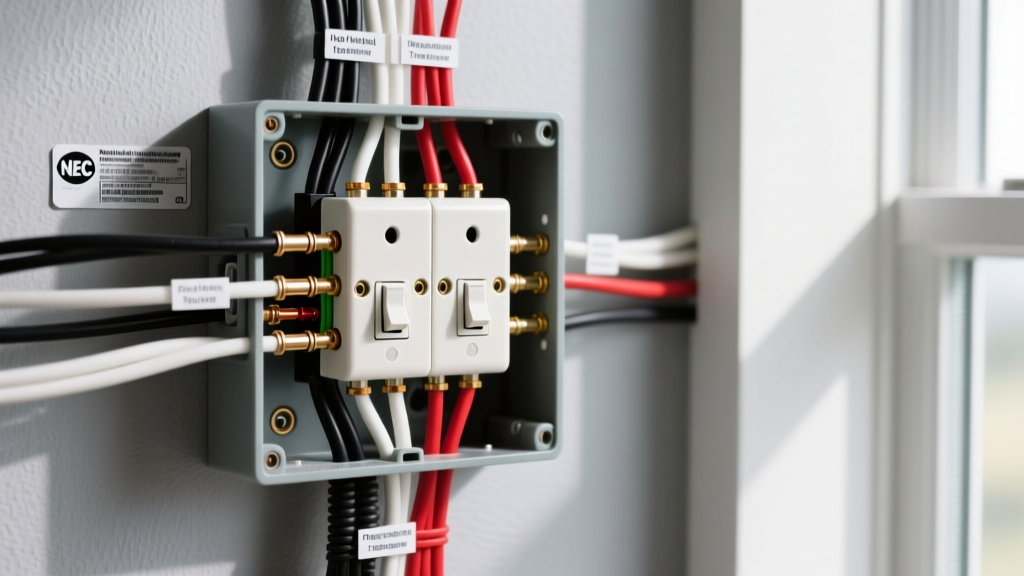
The most common reason for an EV charging session aborting after two or three hours is a violation of the National Electrical Code (NEC) continuous load rule. Under NFPA 70 (NEC) Article 210.20(A) and Article 625.40, any load that operates continuously for three hours or more must be derated to 80% of the circuit breaker's maximum rating. Circuit breakers are thermally calibrated to trip at 100% capacity, but sustained heat buildup in the panel will cause a premature trip if the 80% rule is ignored.
| Breaker Size | Wire Gauge (Copper) | Max Continuous EVSE Output | Common EVSE Models |
|---|---|---|---|
| 20 Amp | 12 AWG | 16 Amps | Gen 1 Mobile Connectors |
| 30 Amp | 10 AWG | 24 Amps | Emporia Vue, Lectron 24A |
| 40 Amp | 8 AWG | 32 Amps | ChargePoint Home Flex (set to 32A) |
| 50 Amp | 6 AWG | 40 Amps | Tesla Wall Connector (40A config) |
| 60 Amp | 4 AWG | 48 Amps | Tesla Wall Connector, Grizzl-E Smart |
Diagnostic Check: If you have a 50-amp NEMA 14-50 outlet but your EVSE (like a Tesla Mobile Connector or a JuiceBox 48) is hardcoded or manually set to pull 48 amps, your 50-amp breaker will inevitably trip once the internal bimetallic strip heats up. You must either use the EVSE's companion app or internal DIP switches to cap the amperage at 40A, or upgrade the panel wiring to 4 AWG and install a 60-amp breaker.
Receptacle Forensics: Why NEMA 14-50 Outlets Melt
If your breaker is not tripping but you notice a burning smell, melted plastic, or the EVSE plug is too hot to touch, you are experiencing receptacle failure. Not all NEMA 14-50R receptacles are built equally. The internal brass wipers that grip the EVSE plug blades must maintain high contact pressure to prevent electrical arcing and resistance heating.
Expert Warning: Avoid the Leviton 279-S00 for EV charging. While perfectly legal and fine for intermittent RV or welder use, its internal contacts are known to lose tension under the daily thermal expansion and contraction of EV charging, leading to catastrophic melting. Always specify the Hubbell 9450A or the Bryant 9450FR for EV applications.
The Hubbell 9450A features a glass-filled nylon face and heavy-duty industrial wipers designed to sustain 50-amp continuous loads without thermal degradation. If you are troubleshooting a melted plug, inspect the EVSE male plug blades for pitting or black carbon scoring. If the blades are pitted, the entire EVSE cord must be replaced, as the damaged plug will quickly destroy a brand-new receptacle.
Step-by-Step Diagnostic Protocol for Hot Outlets
- Thermal Imaging: Use a thermal camera (like the Fluke TiS20+ or Seek Thermal) to scan the receptacle face and the breaker panel during hour three of a charging session. Any hotspot exceeding 60°C (140°F) on the breaker casing or receptacle yoke indicates a high-resistance connection.
- Voltage Drop Testing: Set your digital multimeter to AC Voltage. Measure the voltage at the main panel lugs, then measure at the receptacle under full EV charging load. A drop of more than 3% (7.2V on a 240V circuit) indicates undersized wire for the run length. For example, using 6 AWG copper on a 90-foot run to a 50-amp outlet will cause excessive voltage drop and heat generation.
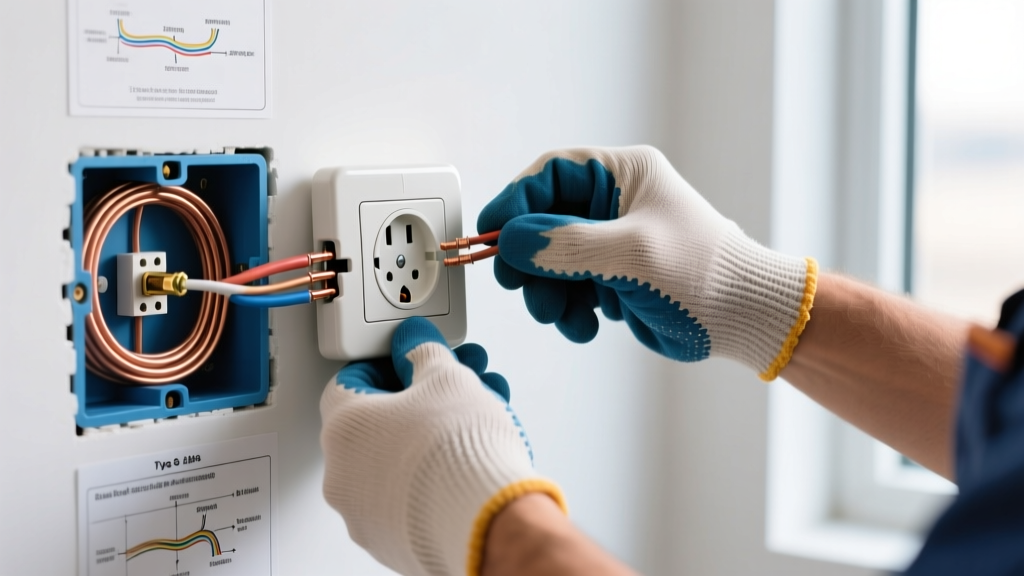
- Terminal Torque Verification: Turn off the main breaker. Remove the receptacle cover. Use a calibrated torque screwdriver (such as a CDI Torque or Wiha) to check the terminal screws. The Hubbell 9450A requires exactly 45 in-lbs of torque for 6 AWG copper wire. Hand-tightening with a standard screwdriver is the leading cause of terminal arcing in DIY installations.
Aluminum Wire Creep and Terminal Oxidation
To save costs, many electricians run 2-2-2-4 Aluminum SER (Service Entrance Rating) cable from the panel to a subpanel or directly to a 60-amp EV hardwire junction. Aluminum is an excellent, code-compliant conductor when installed correctly, but it suffers from 'cold creep' and thermal expansion at a higher rate than copper.
If your EV charging outlet is wired with aluminum and begins tripping or showing thermal faults after 6 to 12 months of flawless operation, the terminal connections have likely loosened due to thermal cycling. Furthermore, if the electrician failed to apply an anti-oxidant compound like Noalox to the stripped aluminum wires before termination, a microscopic layer of aluminum oxide has formed. Aluminum oxide is an electrical insulator; as it builds up, resistance increases, generating immense heat at the terminal lug.
The Aluminum Fix Protocol
- Power down and isolate the circuit.
- Remove the wires from the lugs and inspect for white, powdery oxidation or dark scorch marks.
- Use a wire brush designed specifically for aluminum to clean the conductor.
- Apply a generous coat of Noalox or Ideal Noalox antioxidant paste.
- Re-terminate and torque to the manufacturer's exact specification (typically 40 in-lbs for 2 AWG aluminum on Square D Homeline breakers, but always verify the breaker label).
Ground Fault and GFCI Nuisance Tripping
The 2017 and 2020 NEC updates introduced requirements for GFCI (Ground Fault Circuit Interrupter) protection on certain 240V receptacles, though the 2023 NEC rolled back the GFCI requirement for dedicated EVSE hardwired connections and specific receptacles in garages due to widespread nuisance tripping issues. If your EV charging outlet is on a GFCI breaker and trips randomly during rainstorms or high-humidity nights, the issue is often condensation inside the outdoor receptacle housing or microscopic leakage current in the EVSE's internal EMI filtering capacitors.
The Solution: If local code permits, hardwire the EVSE directly to the circuit, bypassing the receptacle entirely. Hardwiring eliminates the receptacle failure point, removes the need for GFCI protection under NEC 625.44 (in most jurisdictions), and provides the most reliable, fire-safe connection for long-term EV ownership. If a receptacle is mandatory for flexibility, ensure you are using an extra-duty, while-in-use weatherproof cover (like the Taymac ML550) to prevent ambient moisture from triggering the GFCI sensor.
Summary Checklist for Electricians and Advanced DIYers
Troubleshooting an electric car charging outlet is an exercise in thermal management and strict code adherence. Before replacing an EVSE unit or blaming the vehicle's onboard charger, run through this definitive diagnostic checklist:
- Verify the EVSE software amperage is set to exactly 80% of the breaker rating.
- Confirm the receptacle is an industrial-grade Hubbell 9450A or Bryant 9450FR, not a standard residential Leviton.
- Measure voltage drop under load; ensure it remains under 3%.
- Verify all terminal lugs (panel and receptacle) are torqued to manufacturer specs using a calibrated inch-pound torque screwdriver.
- Inspect aluminum conductors for creep and re-apply antioxidant paste if thermal hotspots are detected.
By treating the EV charging circuit as a continuous-duty industrial load rather than a standard household appliance circuit, you will eliminate 99% of all charging faults, breaker trips, and fire hazards.