
Navigating the Mexican Electrical Grid and CFE Standards
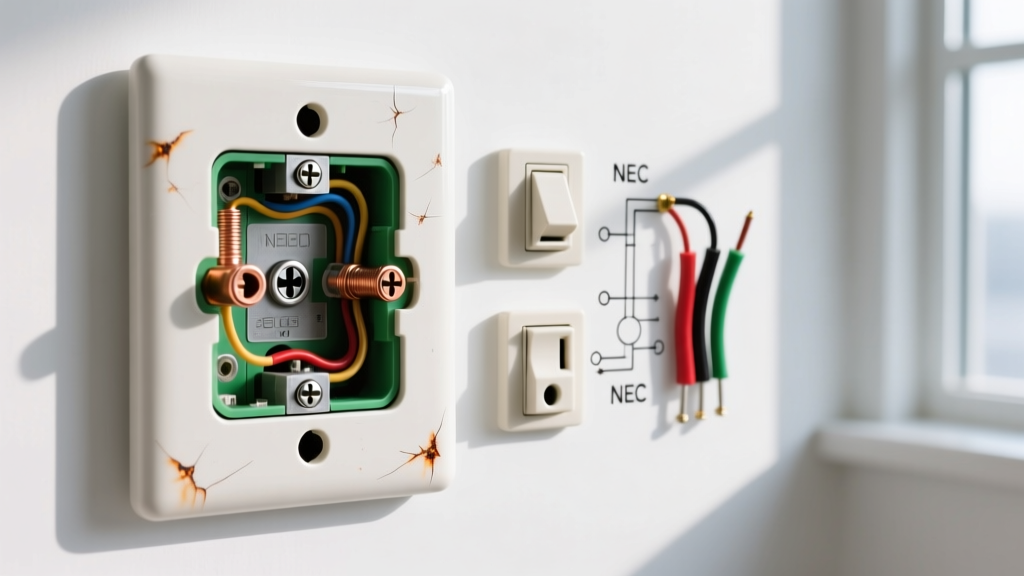
Wiring an electrical receptacle in North America might seem uniform at first glance, but crossing the border introduces distinct regulatory and infrastructural nuances. When tackling an electric outlet Mexico wiring project, you are no longer working strictly under the US National Electrical Code (NEC). Instead, you must adhere to the Norma Oficial Mexicana NOM-001-SEDE, which is enforced alongside the regulations of the Comisión Federal de Electricidad (CFE), Mexico's state-owned electric utility.
While the physical plug shapes often mirror those in the United States, the nominal voltage, standard wire insulation types, and common residential wiring topologies require specific adaptations. In 2026, with the rapid expansion of smart home tech and high-efficiency mini-split air conditioners across Mexican states, understanding these local wiring scenarios is critical for safety and code compliance.
Electric Outlet Mexico: Voltage and Frequency Baseline
Unlike the US standard of 120V, Mexico's CFE grid officially operates at a nominal 127V at 60Hz. While most 120V appliances from the US or Canada will operate perfectly fine on a 127V supply (often running slightly hotter or more efficiently), the distinction matters when calculating voltage drop over long wire runs or sizing transformers for imported 220V/50Hz European appliances.
Expert Insight: The Mexican standard NOM-001-SEDE is heavily derived from the NFPA 70 National Electrical Code. However, local CFE inspectors often enforce stricter rules regarding meter base (base para medidor) grounding and the physical routing of service entrance conductors.
Standard Receptacle Configurations
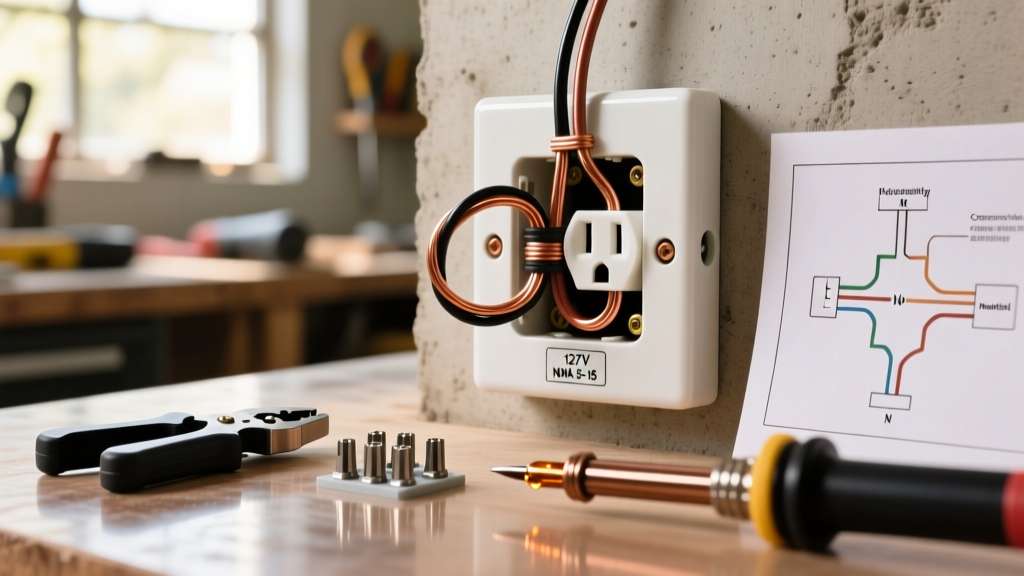
According to the IEC World Plugs database, Mexico utilizes Type A and Type B receptacles. These correspond directly to NEMA 1-15 and NEMA 5-15 configurations.
| Plug Type | NEMA Designation | Grounding | Amperage | Typical Use Case in Mexico |
|---|---|---|---|---|
| Type A | 1-15R | Ungrounded (2-prong) | 15A | Older homes, low-draw electronics, lamps. |
| Type B | 5-15R | Grounded (3-prong) | 15A | Modern residential builds, kitchens, appliances. |
| Type B (20A) | 5-20R | Grounded (T-slot) | 20A | Heavy kitchen loads, microwaves, refrigerators. |
For physical receptacle configurations and dimensional standards, electricians refer to the NEMA Wiring Devices Standards, which are universally adopted by Mexican manufacturers like Bticino and Simon.
Scenario 1: Upgrading Ungrounded Outlets in 'Casas Viejas'
A massive percentage of residential properties in Mexico built before the mid-1990s feature 2-wire ungrounded systems. You will frequently encounter cloth-sheathed wiring or early THW without an equipment grounding conductor (EGC). Homeowners often request an upgrade to modern 3-prong NEMA 5-15R outlets to accommodate laptops and grounded appliances.
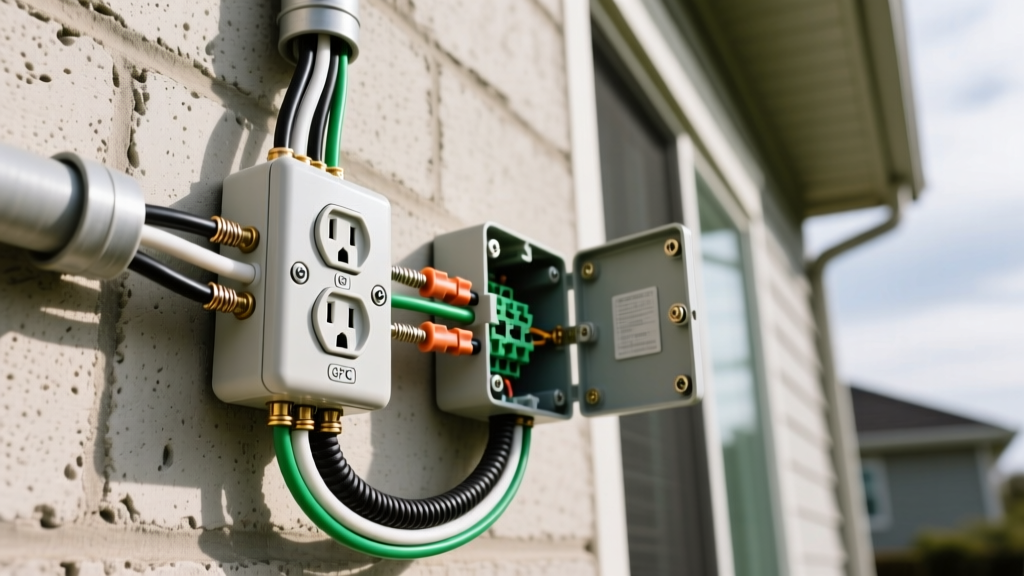
The NOM-001-SEDE GFCI Workaround
If pulling a new ground wire back to the main panel is structurally impossible due to solid brick or cinderblock (block de concreto) walls, NOM-001-SEDE permits a specific retrofit strategy using GFCI protection.
- Install a GFCI Receptacle: Replace the ungrounded NEMA 1-15R with a GFCI (Interruptor de Falla a Tierra). Connect the hot (Fase) and neutral (Neutro) wires to the LINE terminals. Leave the ground screw empty.
- Downstream Protection: You can wire standard 3-prong outlets downstream from the GFCI's LOAD terminals. This provides shock protection via the GFCI's internal sensor, even without a physical ground path.
- Mandatory Labeling: You must apply a sticker to the faceplate reading 'Protegido por GFCI / Sin Conexión a Tierra' (GFCI Protected / No Equipment Ground). This is a strict code requirement for passing local inspections.
Scenario 2: Wiring 220V Split-Phase for Mini-Split ACs
Mini-split air conditioning systems are ubiquitous in Mexico due to the climate and the high cost of central ductwork. Most modern inverter mini-splits (e.g., LG, Mirage, Mabe) require a 220V supply. The CFE provides residential homes with a split-phase 127/220V service via a center-tapped transformer.
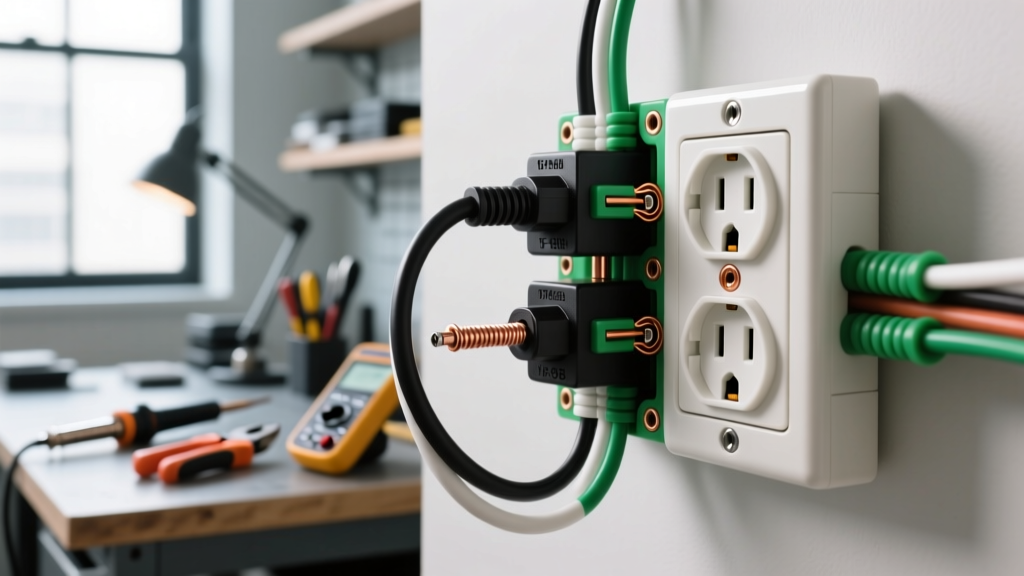
Step-by-Step 220V Receptacle Wiring
While many mini-splits are hardwired through a local disconnect switch (desconectador), some setups utilize a NEMA 6-15R or 6-20R receptacle.
- Breaker Selection: Install a 2-pole, 15A or 20A breaker in the main load center (Centro de Carga). Square D QO series or Schneider Electric Homeline are the most common CFE-approved panels in Mexico.
- Wire Sizing: Use 12 AWG THW-LS wire for a 20A circuit. THW-LS (Baja Emisión de Humos / Low Smoke) is the Mexican standard, replacing older THW to reduce toxic fumes in case of a fire.
- Color Coding: Mexican code strictly mandates color coding. For 220V, use Red and Black for the two hot legs (Fases). Do not use white or gray, as those are reserved exclusively for the neutral conductor.
- Grounding: Run a 12 AWG bare copper or green insulated ground wire to the receptacle's grounding terminal and bond it to the panel's ground busbar, which must be tied to a physical ground rod (varilla de tierra) driven into the earth outside the home.
Material Sourcing and 2026 Pricing Estimates
Sourcing materials in Mexico involves visiting local electrical distributors (refaccionarias eléctricas) or big-box stores like Home Depot Mexico or Sodimac. Local brands dominate the market and offer excellent quality at lower price points than imported US brands.
| Material | Common Mexican Brand / Spec | Est. Price (MXN) | Est. Price (USD) |
|---|---|---|---|
| 15A Duplex Receptacle | Bticino Magic / Simon 27 | $45 - $85 MXN | $2.50 - $4.75 |
| 12 AWG THW-LS Wire (100m) | Condumex / IUSA | $1,600 - $1,900 MXN | $90.00 - $105.00 |
| 20A GFCI Receptacle | Square D / Schneider | $450 - $650 MXN | $25.00 - $36.00 |
| 2-Pole 20A Breaker | Square D QO (QO220) | $380 - $500 MXN | $21.00 - $28.00 |
Note: Prices reflect early 2026 retail averages and may vary by region and distributor.
Common Wiring Faults and Troubleshooting
When troubleshooting existing Mexican electric outlet installations, be on high alert for these specific regional failure modes:
1. The 'Bootleg Ground' (Falso Tierra)
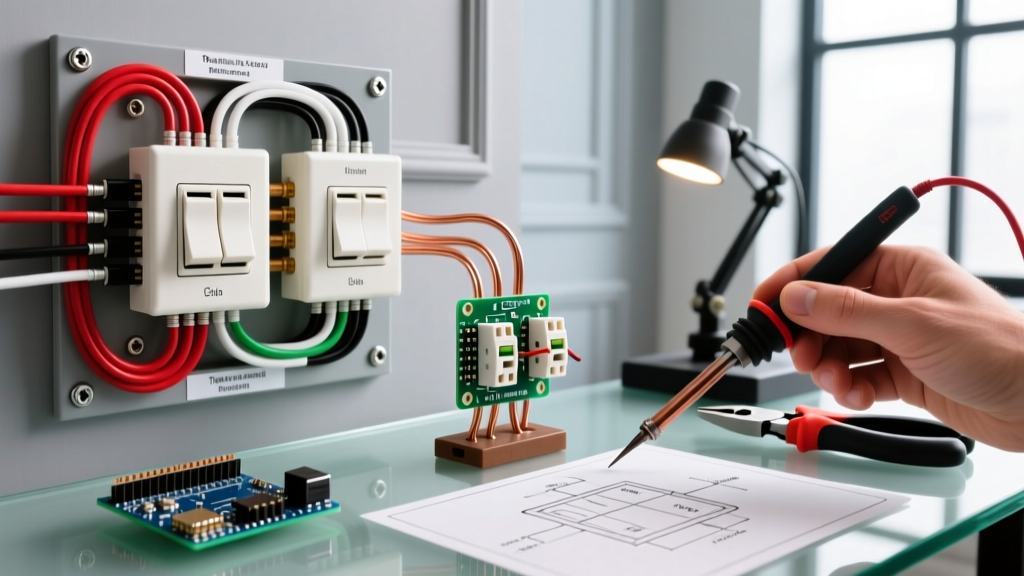
In an attempt to pass a superficial inspection or satisfy a tenant, some handymen will install a jumper wire between the neutral terminal and the ground screw on a NEMA 5-15R receptacle. This is incredibly dangerous. If the neutral wire disconnects upstream, the metal casing of any plugged-in appliance will become energized at 127V. Always test with a 3-light receptacle tester and verify impedance with a multimeter.
2. Reversed Polarity (Polaridad Invertida)
Because older Mexican wiring sometimes lacks strict color-coding adherence (especially in rural areas where black and white wires might be swapped), you will frequently find hot and neutral reversed. This poses a shock hazard when changing lightbulbs or servicing appliances. Always verify that the brass screw is connected to the hot (Fase) and the silver screw to the neutral (Neutro).
3. Undersized Conductors on 20A Circuits
It is a common cost-cutting measure in some Mexican developments to wire entire homes with 14 AWG wire but install 20A breakers to prevent nuisance tripping when multiple appliances run. This creates a severe fire hazard, as the 14 AWG wire will melt before the 20A breaker trips. If you find 14 AWG wire (Calibre 14), you must downgrade the breaker to 15A immediately.
Final Safety Directives
Working on the grid in Mexico requires respect for the CFE's infrastructure. Never attempt to modify the service entrance conductors between the CFE meter and the main breaker panel; this is strictly reserved for CFE-certified contractors (Unidad Verificadora). For all branch circuit receptacle work, ensure the main breaker is locked out, verify zero voltage with a CAT III rated multimeter, and torque all terminal screws to the manufacturer's specifications to prevent high-resistance arcing faults.