
Understanding Standard Electrical Plug Wiring Colours
When replacing a damaged plug on a power tool, appliance, or custom extension cord, understanding electrical plug wiring colours is the single most critical factor in preventing shock hazards, reverse polarity, and equipment damage. In North America, the National Electrical Code (NEC) and the National Electrical Manufacturers Association (NEMA) dictate strict colour-coding standards for flexible cords and attachment plugs. Miswiring a standard NEMA 5-15P plug can result in the appliance chassis becoming energized at 120V, a potentially lethal scenario.
This guide breaks down the exact colour standards, material selections, and professional termination techniques required for safe, code-compliant plug wiring in 2026. According to the National Fire Protection Association (NFPA), flexible cords and their terminations must adhere strictly to NEC Article 400, which governs the identification and usage of portable power cables.
The North American Colour Matrix
For standard 120V alternating current (AC) applications, the insulation colours inside the cord jacket correspond to specific electrical functions and terminal screw colours on the replacement plug.
| Wire Insulation Colour | Electrical Function | Plug Terminal Screw Colour | NEMA Pin / Blade | NEC Designation |
|---|---|---|---|---|
| Black | Hot (Ungrounded Conductor) | Brass / Gold | Right-hand narrow blade | Line / Phase |
| White (or Grey) | Neutral (Grounded Conductor) | Silver / Nickel | Left-hand wide blade | Neutral / Return |
| Green (or Bare Copper) | Equipment Ground | Green | Bottom round pin | Earth / Ground |
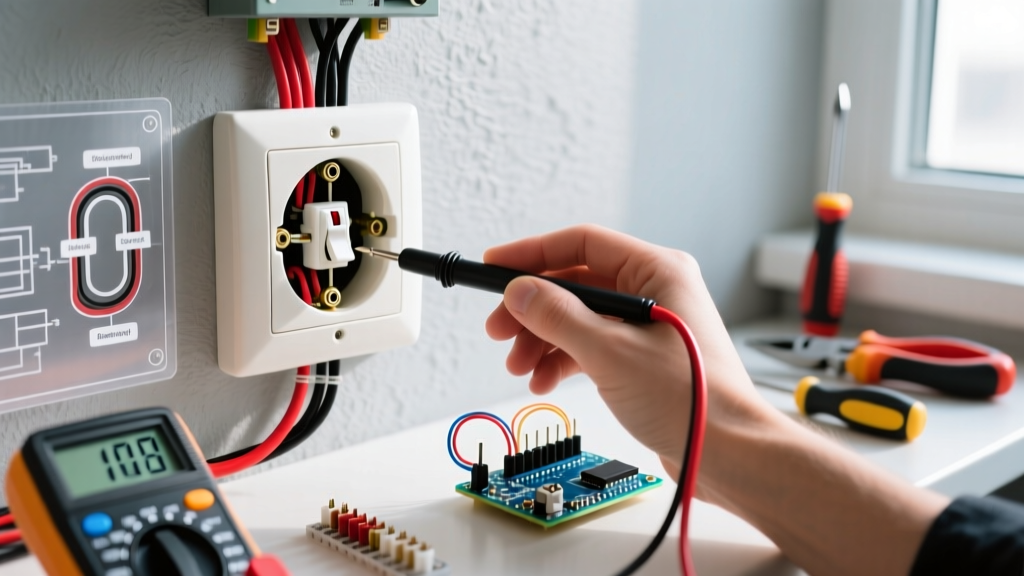
Critical Safety Note: Never assume the internal wire colours of an imported or uncertified appliance cord. Always verify continuity with a digital multimeter (DMM) before energizing. The U.S. Consumer Product Safety Commission (CPSC) reports that reverse polarity and improper grounding remain leading causes of residential electrical shocks involving portable equipment.
Material Guide: Selecting the Right Flexible Cord
A common and dangerous mistake among DIYers is attempting to wire a flexible plug using solid-core building wire (like THHN or Romex). Attachment plugs are engineered exclusively for stranded flexible cord. Solid wire will snap under the vibration typical of portable tools and will not seat correctly in the plug's cord grip. Here is a breakdown of the correct cord materials to pair with your plug hardware:
SJOOW vs. SJTW vs. SVT: Which Jacket Do You Need?
- SJOOW (Heavy-Duty Rubber): Rated for 300V. The 'O' stands for oil-resistant jacket and insulation, while 'W' means weather/water resistant. Ideal for industrial power tools, shop vacuums, and outdoor equipment. 2026 Cost: ~$1.80 to $2.40 per foot for 14/3 AWG.
- SJTW (Vinyl / Plastic): Commonly used for commercial extension cords. 'T' denotes a thermoplastic (PVC) jacket. It is highly flexible and weather-resistant but degrades faster when exposed to industrial oils or extreme UV over several years. 2026 Cost: ~$0.90 to $1.30 per foot for 14/3 AWG.
- SVT (Light-Duty): Thinner jacket, typically 18 AWG or 16 AWG. Used for indoor lamps, clocks, and low-draw electronics. Never use SVT for power tools or high-draw appliances.
AWG Sizing Rule: For a standard 15-Amp plug (NEMA 5-15P), you must use a minimum of 14 AWG stranded copper. For a 20-Amp plug (NEMA 5-20P, featuring a T-slot neutral blade), you must step up to 12 AWG stranded copper to prevent thermal melting at the terminal screws.
Tool Guide: Precision Instruments for Plug Termination
Proper termination requires stripping the jacket without nicking the delicate copper strands underneath. A nicked strand creates a localized hot spot that can melt the plug housing over time.
Recommended Strippers and Drivers
- Klein Tools 11055 Wire Stripper: The industry standard for stripping both solid and stranded wire. The 14 AWG and 12 AWG stranded holes provide a clean cut without scoring the copper. (Retail: ~$32.00)
- Wiha 32092 Insulated Screwdriver Set: When tightening terminal screws on a live-test bench, VDE-rated 1000V insulated drivers protect against accidental slips. (Retail: ~$18.00 per driver)
- Leviton 5266-C or Hubbell 5362 Replacement Plugs: Avoid $1.50 generic hardware store plugs. The Leviton 5266-C (15A) and Hubbell 5362 (20A) feature deep-set terminal wells and heavy-duty internal cord clamps that prevent wire pull-out. (Retail: $6.50 - $14.00)
Step-by-Step: Wiring a NEMA 5-15P Replacement Plug
Follow this precise sequence to ensure a mechanically robust and electrically safe termination. These steps align with OSHA's flexible cord termination standards for workplace safety.
Step 1: Jacket and Conductor Stripping
Measure exactly 1.5 inches from the end of the cord and score the outer jacket. Pull the jacket back and trim it. Next, strip exactly 3/8 inch of insulation from the Black, White, and Green conductors. Do not strip more than 3/8 inch; exposed copper outside the terminal screw is a primary cause of short circuits.
Step 2: Stranding and the 'Clockwise Hook'
Twist the exposed copper strands tightly between your thumb and forefinger. Always twist clockwise. Bend the wire into a 'J-hook' shape. When you place the hook around the terminal screw, the clockwise twist ensures that tightening the screw pulls the wire tighter into the hook, rather than splaying the strands outward.
Step 3: Terminal Assignment
- Black Wire: Loop around the Brass screw.
- White Wire: Loop around the Silver screw.
- Green/Bare Wire: Loop around the Green screw.
Tighten each screw to roughly 12-14 inch-pounds of torque. The insulation should sit flush against the screw head, but no copper should be visible outside the terminal well.
Step 4: The Cord Grip
The internal cord clamp (grip) must bite down only on the outer rubber jacket, never on the individual coloured wires. If the clamp pinches the Black or White wire, it will eventually cut through the insulation and cause a dead short inside the plug.
Advanced Edge Cases: High-Voltage and International Colours
While 120V standard plugs are common, electricians and DIYers frequently encounter high-voltage appliance plugs and international equipment where the colour coding shifts dramatically.
240V Dryer and Range Plugs (NEMA 10-30 vs. 14-30)
Older homes may still feature 3-prong NEMA 10-30 dryer plugs. In a 10-30 cord, there is no dedicated ground wire; the White wire serves as a combined neutral/ground (a practice banned in new installations since the 1996 NEC update). Modern NEMA 14-30 (4-prong) cords use the following colours:
- Black & Red: Hot legs (120V each, 240V total). Connect to outer brass terminals.
- White: Neutral. Connect to the center silver terminal.
- Green: Dedicated Earth Ground. Connect to the green chassis screw.
International Standards (UK / EU / AU)
If you are repairing an imported appliance or wiring a plug for overseas travel, North American colours do not apply. The International Electrotechnical Commission (IEC) harmonized colours are:
- Brown: Hot / Line (Replaces Black)
- Blue: Neutral (Replaces White)
- Green with Yellow Stripe: Earth Ground (Replaces Green/Bare)
Common Failure Modes and Troubleshooting
Even with correct electrical plug wiring colours, mechanical failures can occur. Here is how to diagnose and prevent them:
1. Splayed Strands (The 'Whisker' Effect):
If a single strand of copper escapes the terminal well and touches the adjacent screw, it creates an arc fault. Fix: Trim the wire back, re-twist tightly, and use a terminal screw with a built-in washer or 'combo' head to clamp the wire securely.
2. Insulation Under the Screw Head:
If the wire isn't stripped back far enough, the screw head clamps down on the plastic insulation rather than the copper. This causes high electrical resistance, leading to a melted plug face after a few hours of high-draw use. Fix: Ensure exactly 3/8 inch of bare copper is exposed.
3. Ground Loop Hum in Audio Equipment:
If you are wiring a plug for a high-end audio amplifier or studio monitor, standard grounding can introduce a 60Hz hum. While you must never remove the ground pin (a severe shock hazard), you can use a specialized ground-lift adapter at the receptacle end, or ensure your flexible cord is routed at least 6 inches away from unshielded audio signal cables to prevent electromagnetic interference (EMI).
Final Thoughts on Code Compliance
Mastering electrical plug wiring colours goes beyond simple memorization; it requires an understanding of the mechanical forces and thermal dynamics at play inside the plug housing. By selecting the correct SJOOW or SJTW cord, utilizing precision stripping tools, and adhering strictly to the Black-Brass, White-Silver, Green-Green matrix, you ensure your custom cords and repaired appliances meet the rigorous safety standards demanded by modern electrical codes. Always test your finished plug with a commercial-grade receptacle tester (such as the Gardner Bender GRT-101) before connecting it to your valuable equipment.