
The 'Upside Down' Outlet: Code Violation or Clever Trick?
Walk into a modern hotel room, a hospital, or even a newly renovated living room, and you might spot something unusual: an electrical outlet upside down, with the round grounding pin sitting at the top instead of the bottom. For most homeowners, this looks like a sloppy mistake made by an electrician who wasn't paying attention. However, in the professional electrical trade, flipping a receptacle is almost always an intentional, highly functional decision.
If you are troubleshooting your home's wiring or planning a remodel, understanding why an electrical outlet upside down is a common sight can save you from unnecessary rewiring and help you decode your home's electrical layout. In this guide, we break down the National Electrical Code (NEC) requirements, the practical reasons for ground-up installations, and the safety edge cases you need to know in 2026.
What the NEC Actually Says About Receptacle Orientation
The most common question electricians face regarding this topic is simple: Is it against code to install a receptacle with the ground pin up?
The Short Answer: No. The National Electrical Code (NEC) does not mandate the vertical orientation of the grounding slot on a standard NEMA 5-15R or 5-20R receptacle.
According to the National Fire Protection Association (NFPA), which publishes the NEC, Article 406 covers the installation of receptacles, cord connectors, and attachment plugs. While the code is incredibly strict about spacing (no point along a wall can be more than 6 feet from an outlet), height requirements for specific applications, and the mandatory use of Tamper-Resistant (TR) shutters in dwelling units, it remains entirely silent on whether the ground pin must face up or down.
Because the NEC does not forbid it, installing an electrical outlet upside down is perfectly legal and compliant, provided the installation meets all other box-fill, grounding, and termination torque requirements outlined in NEC 110.14(D).
3 Legitimate Reasons Electricians Flip the Ground Pin
If the code doesn't require it, why do professionals do it? The orientation serves as a visual communication tool. Here are the three primary scenarios where a ground-up receptacle is the industry standard.
1. Identifying Switched Receptacles (Half-Hot Circuits)
In living rooms and bedrooms, building codes require a wall switch to control a lighting outlet. Instead of wiring a dedicated overhead light, many builders wire a 'half-hot' receptacle. The bottom half of the outlet is always live, while the top half is controlled by a wall switch to power a floor lamp. By flipping the entire receptacle upside down, the electrician provides an immediate visual cue to the homeowner, guests, and future maintenance workers that the top plug is switched.
2. Isolated Ground (IG) and Hospital-Grade Circuits
In commercial buildings, data centers, and healthcare facilities, sensitive electronics require an isolated ground to prevent electromagnetic interference (EMI). These are often orange-colored receptacles featuring an orange triangle on the face. While not universally mandated, many commercial electricians and facility managers specify that isolated ground receptacles be mounted ground-up to instantly differentiate them from standard, noisy power circuits.
3. Strain Relief and Cord Management in Hospitality
Look under the nightstand in a high-end hotel, and you will likely see the receptacle mounted ground-up. When a heavy power brick (like a laptop charger) is plugged in, the cord hangs down. If the ground pin is at the bottom, the heavy plug can leverage against the ground pin and slowly work its way out of the socket. With the ground pin at the top, the physical weight of the cord and plug rests securely against the grounding blade, providing superior mechanical strain relief.
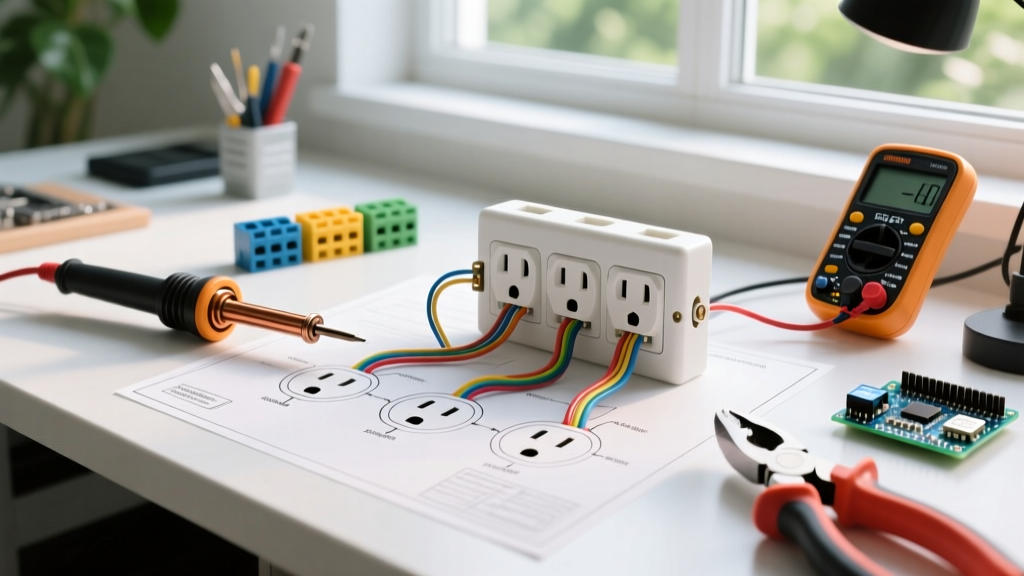
Receptacle Orientation Comparison Matrix
Use this quick-reference table to identify the purpose of the outlets in your home or commercial space based on their physical orientation and markings.
| Orientation & Markings | Primary Purpose | NEC / Industry Reference | Typical Location |
|---|---|---|---|
| Ground-Down (Standard) | General purpose, always-hot power | NEC 210.52 (Dwelling spacing) | Kitchens, hallways, standard bedroom walls |
| Ground-Up (Standard White) | Switched half-hot circuit indicator | NEC 210.70 (Lighting outlets required) | Living rooms, bedrooms (near entry switches) |
| Ground-Up (Orange / IG) | Isolated ground for sensitive tech | NEC 250.146(D) (Isolated ground paths) | Hospitals, server rooms, recording studios |
| Ground-Up (Red / Switched) | Dedicated switched circuit (often 240V or specialized) | Custom commercial specs | Commercial workshops, specialized HVAC |
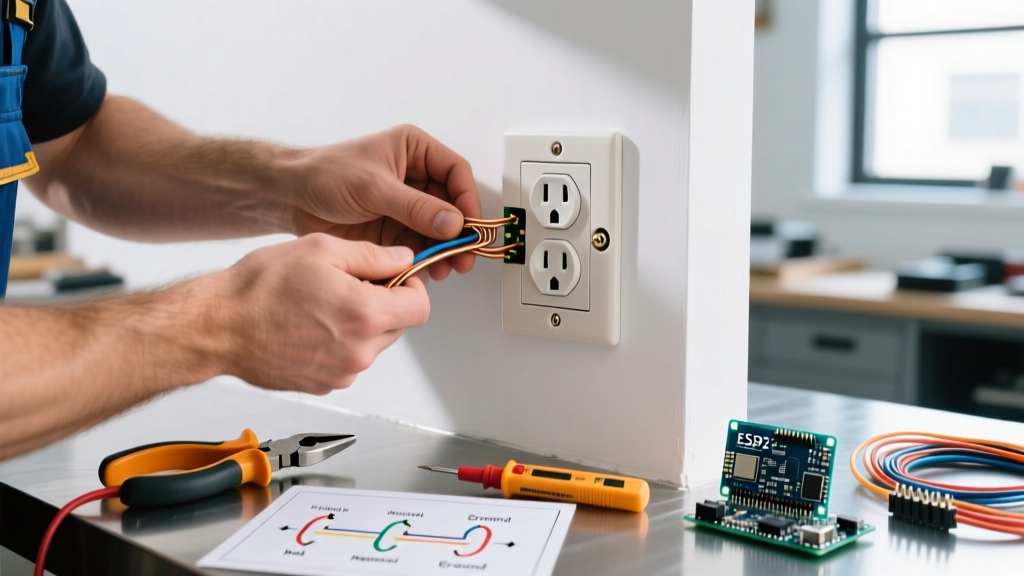
How to Wire a Switched 'Half-Hot' Receptacle (Ground-Up)
If you are upgrading an older home and want to install a switched receptacle with the ground pin facing up for visual clarity, you must properly configure the internal yoke. Here is the professional methodology for a 15-amp, 120-volt circuit.
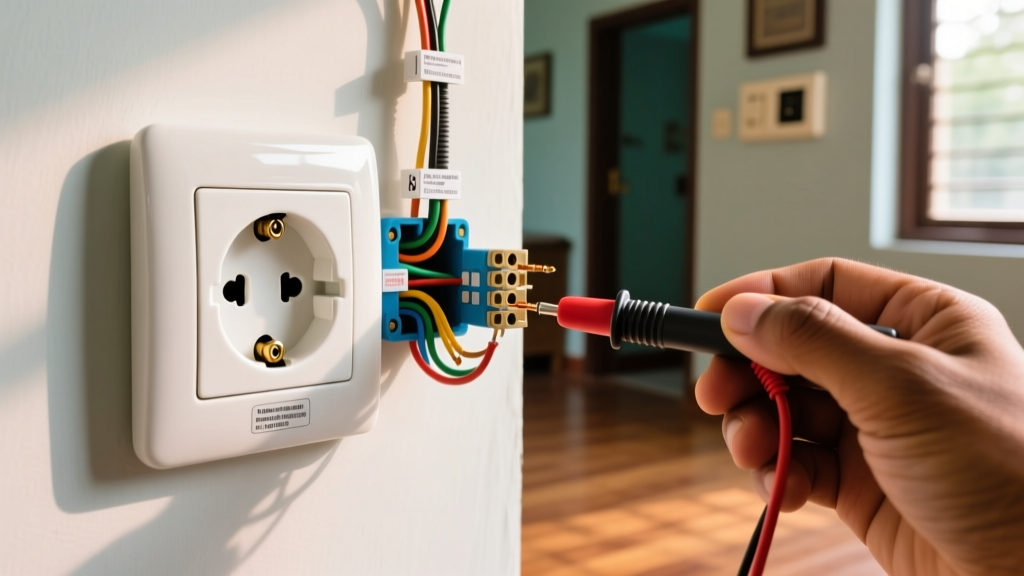
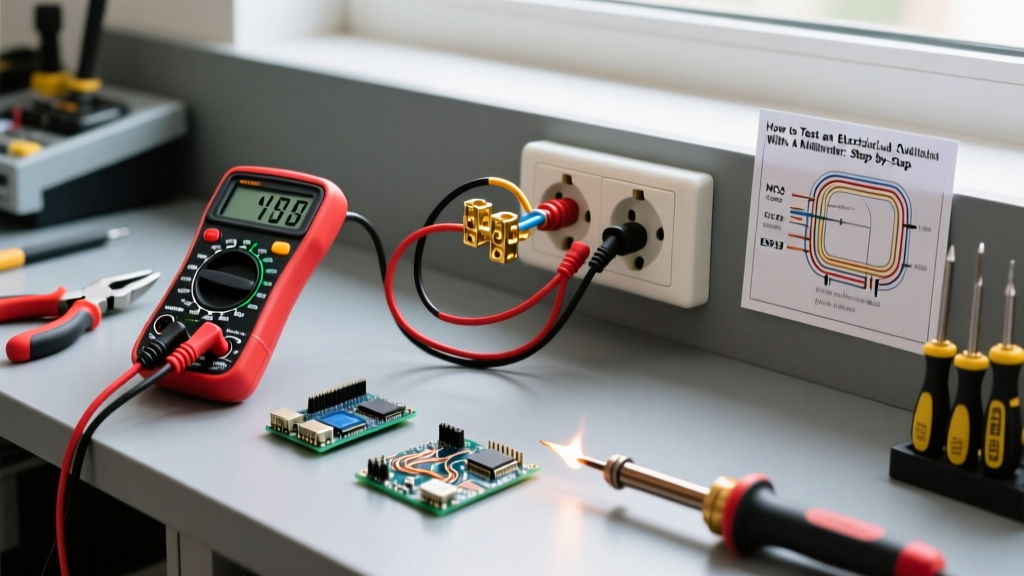
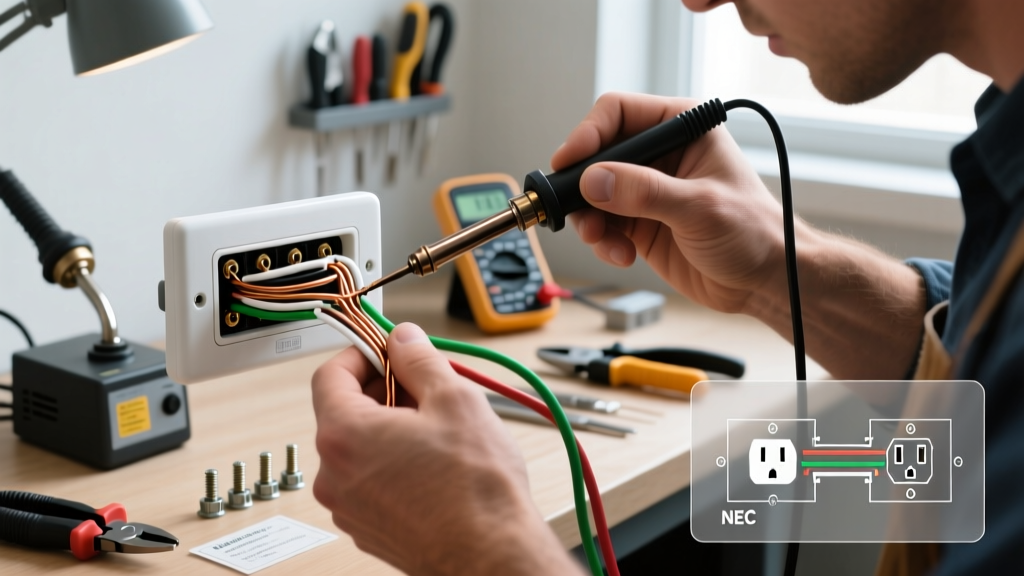
- Cut the Power and Verify: Turn off the breaker and use a non-contact voltage tester and a multimeter to confirm the circuit is dead.
- Break the Hot Fin: On the side of the receptacle where the brass (hot) screws are located, you will see a small metal tab connecting the top and bottom terminals. Use a pair of needle-nose pliers to bend and snap this tab off. Do not break the silver (neutral) fin.
- Pigtail the Neutrals: Connect all white neutral wires together with a wire nut and a 6-inch pigtail leading to one of the silver screws.
- Wire the Constant Hot: Connect the always-hot black wire (from the panel) to the bottom brass screw.
- Wire the Switched Hot: Connect the switched-leg wire (returning from the wall switch) to the top brass screw.
- Ground and Torque: Attach the bare copper ground to the green screw. Per NEC 110.14(D), use a calibrated torque screwdriver to tighten the terminal screws to the manufacturer's specified inch-pound rating (usually around 14 in-lbs for standard 15A devices).
- Mount Ground-Up: Orient the receptacle so the green ground screw is at the top, secure it to the box, and install a TR-rated wall plate.
Safety Edge Cases: The 'Sheet Metal' Short-Circuit Theory
There is a persistent myth in the DIY community that installing an electrical outlet upside down is dangerous. The theory goes like this: If a plug is partially pulled out, exposing the metal prongs, and a thin piece of sheet metal (like a picture frame or a ruler) falls off the wall and lands on the plug, it will cause a catastrophic short circuit.
The Reality: If the outlet is ground-down, the falling metal hits the hot and neutral prongs, causing a short. If the outlet is ground-up, the metal hits the hot and ground prongs, tripping the breaker. Neither scenario is ideal, but both result in the breaker tripping.
More importantly, in 2026, this theory is largely obsolete in residential settings due to Tamper-Resistant (TR) receptacles. Mandated by NEC 406.12 for almost all dwelling unit locations, TR outlets feature internal spring-loaded shutters that only open when equal pressure is applied to both the hot and neutral slots simultaneously. A falling piece of metal cannot depress the shutters, rendering the 'sheet metal' danger virtually non-existent in modern homes. For commercial spaces, OSHA's electrical safety guidelines focus far more on proper cord management and strain relief than on vertical orientation.
Frequently Asked Questions
Can I flip an upside-down outlet back to ground-down myself?
Yes, if it is a standard always-hot receptacle and you simply dislike the look, you can turn off the breaker, remove the two mounting screws, rotate the device 180 degrees, and reinstall it. However, if it is a switched half-hot outlet, rotating it will move the switched portion to the bottom, which may confuse future occupants. Always test with a voltage tester first.
Do GFCI outlets work properly when installed upside down?
Yes. Ground Fault Circuit Interrupter (GFCI) receptacles monitor the current balance between the hot and neutral conductors. Gravity and the physical orientation of the grounding slot have zero effect on the internal solid-state sensing circuitry. As long as the LINE and LOAD terminals are wired correctly, a GFCI will trip within milliseconds regardless of which way it is facing.
Why are some outlets upside down and red?
A red receptacle mounted ground-up is typically found in commercial or industrial settings and indicates a dedicated circuit powered by an emergency generator or an Uninterruptible Power Supply (UPS). The flipped orientation and distinct color warn employees not to plug in high-draw appliances like vacuums or space heaters, which could overload the critical backup systems.
Final Verdict
Finding an electrical outlet upside down in your home or workplace is rarely a sign of poor craftsmanship. Instead, it is a deliberate, code-compliant visual indicator used by professional electricians to denote switched circuits, isolated grounds, or specialized commercial power. By understanding the 'ground-up' language, you can safely navigate your electrical environment, troubleshoot switched lamps with ease, and appreciate the hidden logic behind your walls. For further reading on device standards and dimensional specifications, refer to the National Electrical Manufacturers Association (NEMA) guidelines.