
The Critical Intersection of Language and Electrical Safety
As the electrical contracting and DIY maintenance landscape evolves in 2026, multilingual job sites are the industry standard. With over 30% of North American construction and facility maintenance teams operating bilingually, miscommunication is no longer just a logistical hurdle—it is a severe life-safety and code compliance risk. Understanding how to properly identify, discuss, and wire an electrical outlet in Spanish is essential for electricians, project managers, and advanced DIYers working across borders, managing diverse crews, or installing imported components.
A linguistic error when translating 'line,' 'load,' or 'ground' can result in catastrophic arc flashes, equipment destruction, or fatal electrocution. This comprehensive safety guide bridges the gap between the US National Electrical Code (NEC), Mexico's NOM-001-SEDE, and Spain's REBT standards, ensuring your bilingual electrical projects remain safe, compliant, and up to code.
Decoding the Terminology: Receptacle, Tomacorriente, or Enchufe?
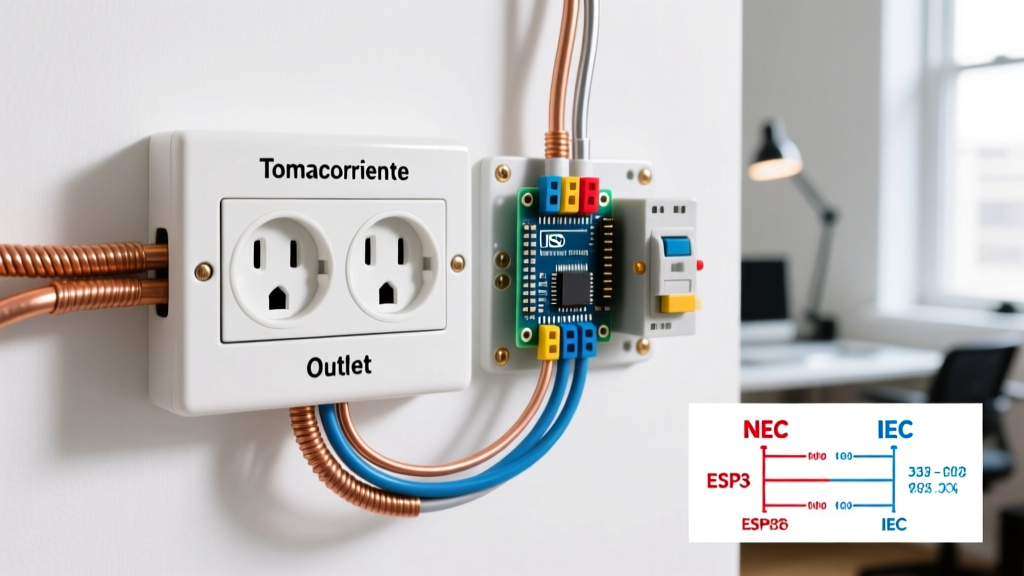
The English term 'electrical outlet' or 'receptacle' does not have a single, universal Spanish translation. The correct terminology shifts dramatically depending on the region, which directly correlates to the electrical codes and plug types (NEMA vs. Schuko) used in those areas.
| English Term (NEC) | Spanish (Mexico / LatAm) | Spanish (Spain / IEC) | Code Standard & Plug Type |
|---|---|---|---|
| Receptacle / Outlet | Contacto / Tomacorriente | Enchufe / Toma de corriente | NOM-001 (NEMA 1-15 / 5-15) |
| Ground Fault Circuit Interrupter (GFCI) | Interruptor por Falla a Tierra | Interruptor Diferencial | NEC Art. 210.8 / REBT |
| Hot / Line Wire | Fase / Vivo | Fase | NEC / IEC 60446 |
| Neutral Wire | Neutro | Neutro | NEC / IEC 60446 |
| Ground Wire | Tierra Física / Puesta a Tierra | Tierra | NEC Art. 250 / REBT |
Safety Note: In Spain, the word enchufe often refers to both the male plug and the female socket, whereas in Mexico, contacto specifically denotes the female receptacle wired into the wall, and clavija is the male plug. Using the wrong term on a bilingual job site can lead to ordering the wrong replacement components.
Wiring Color Codes: A Lethal Point of Confusion
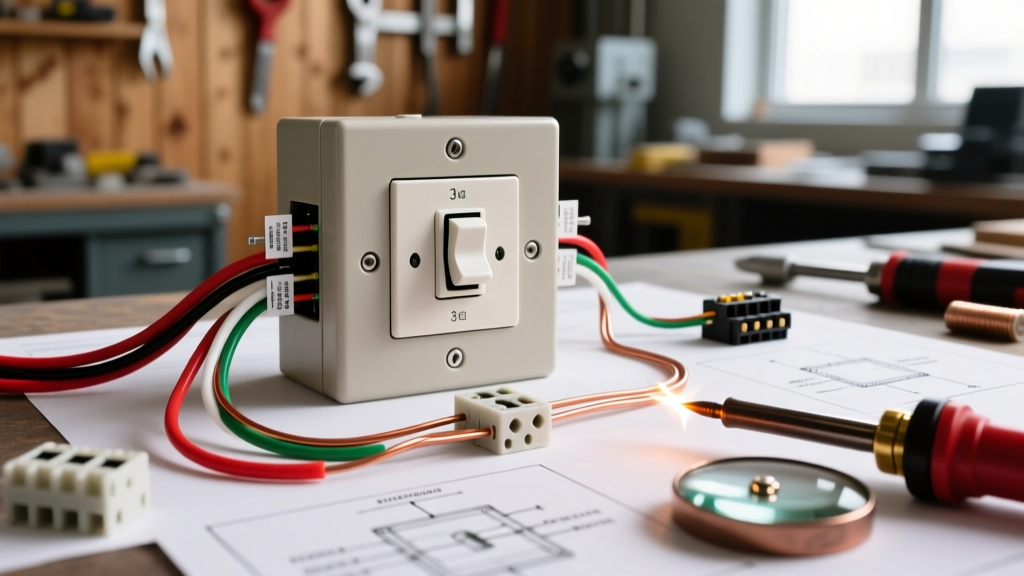
The most dangerous aspect of cross-border electrical work or interpreting Spanish-language wiring diagrams is the divergence in insulation color codes. If you are troubleshooting a tomacorriente in a facility built to European/IEC standards (common in specialized manufacturing plants in the US or when working in Spain), assuming NEC color codes will result in a direct short circuit.
North American Standards (NEC & NOM-001-SEDE)
- Hot (Fase): Black, Red, or Blue (Black is standard for 120V single-phase).
- Neutral (Neutro): White or Grey.
- Ground (Tierra): Bare copper or Green.
European & Spanish Standards (REBT & IEC 60446)
- Phase (Fase): Brown (Marrón). Black is often used for a second phase or switched leg.
- Neutral (Neutro): Blue (Azul).
- Ground (Tierra): Green with Yellow stripe (Verde/Amarillo).
Edge Case Failure Mode: In older Latin American installations predating modern NOM-001 updates, you may encounter legacy wiring where Red was used for neutral and Black for hot, or even unshielded copper used as a neutral return. Always verify voltage with a True-RMS multimeter (such as the Fluke 117) before touching any conductors, regardless of the insulation color.
GFCI vs. RCD: Understanding Protection Thresholds
When reading a Spanish-language electrical panel schedule or equipment manual, you will frequently encounter the term Interruptor Diferencial. While often translated simply as a GFCI, the technical parameters between a US GFCI and a European/Spanish RCD (Residual Current Device) are vastly different and dictate how you protect human life.
The 6mA vs. 30mA Trip Threshold
According to the NFPA 70 (NEC) Spanish Edition Portal, a standard Class A GFCI receptacle in the United States is designed to trip at a leakage current of 4 to 6 milliamps (mA). This specific threshold is engineered to prevent ventricular fibrillation in the human heart.
Conversely, in Spain and many parts of South America governed by IEC standards, the standard Interruptor Diferencial for personal protection in residential tomacorrientes trips at 30mA. While 30mA provides excellent fire protection and prevents prolonged shock, it is theoretically high enough to cause cardiac arrest under specific conditions (e.g., wet skin, current passing directly across the chest).
Compliance Action: If you are maintaining a US-based facility that imported Spanish machinery equipped with 30mA RCDs, you must ensure the upstream US branch circuit is protected by a standard 6mA GFCI breaker or receptacle to meet OSHA and NEC life-safety requirements. Never rely solely on a 30mA imported RCD for personal shock protection in a US wet-location environment.
OSHA Compliance for Bilingual Job Sites
Language barriers on construction sites are a recognized hazard. The Occupational Safety and Health Administration (OSHA) mandates that safety signage and electrical warnings must be comprehensible to all workers. Under OSHA 1910.145 (Accident Prevention Signs and Tags), employers are required to use bilingual labeling where a significant portion of the workforce is non-English speaking.
Best Practices for Panel and Receptacle Labeling
- Dual-Language Panel Directories: Every breaker panel must feature a directory translated into Spanish. For example, 'Kitchen Receptacles' should be listed as Tomacorrientes de Cocina.
- Voltage Warnings: Standard NEMA 120V outlets require no special warning, but if you are wiring 240V equipment or specialized 277V lighting, use bright red warning labels reading: PELIGRO: Alto Voltaje (277V).
- Lockout/Tagout (LOTO): LOTO tags must be bilingual. 'Do Not Operate' translates to No Opere or No Encienda. Ensure the tags are made of non-conductive, durable materials.
Step-by-Step: Testing a Bilingual-Labeled Receptacle Safely
When tasked with troubleshooting a contacto that has been labeled with Spanish warnings or is part of an imported system, follow this rigorous testing protocol to ensure safety and code compliance.
Step 1: Visual Inspection and Identification
Identify the physical plug type. If the outlet accepts a clavija with two round pins (Type C or Schuko Type F), you are dealing with a 230V European system. Do not insert a standard US 120V NEMA plug adapter without a step-down transformer, as this will cause an immediate catastrophic failure and potential arc flash.
Step 2: Non-Contact Voltage Testing
Use a non-contact voltage tester (NCVT) to verify the presence of voltage at the face of the tomacorriente. Note that NCVTs can sometimes give false positives due to phantom voltage in multi-gang boxes. Always confirm with a contact tester.
Step 3: Receptacle Tester Verification
Insert a GFCI receptacle tester (like the Klein Tools RT250) into the outlet. If the outlet is a standard US NEMA 5-15R, the tester will verify correct wiring (Hot, Neutral, Ground). If the outlet is a Spanish Schuko, you will need a specialized European adapter for your tester, as Schuko outlets rely on side-grounding clips rather than a third grounding pin.
Step 4: Multimeter Load Testing
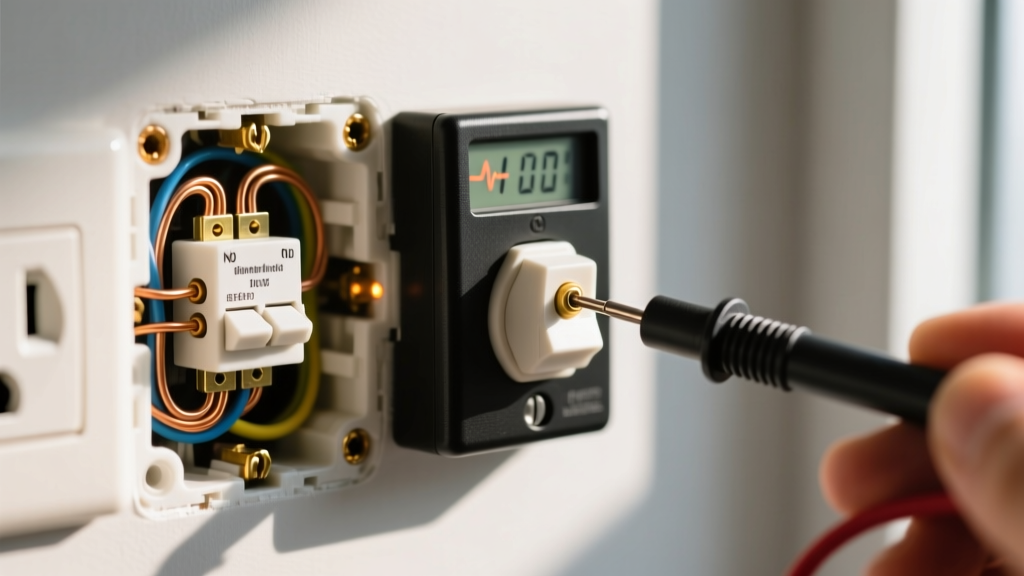
Set your True-RMS multimeter to AC Voltage. Measure Line-to-Neutral (should read ~120V in North America, ~230V in Spain). Measure Line-to-Ground (should match Line-to-Neutral). Measure Neutral-to-Ground (should read less than 2V). If Neutral-to-Ground reads high, you have a loose neutral connection (neutro flojo), which is a severe fire hazard that requires immediate panel remediation.
Final Thoughts on Cross-Border Electrical Safety
Knowing how to say 'electrical outlet in Spanish' is merely the first step in bilingual electrical safety. True compliance requires a deep understanding of the regional codes (NEC, NOM, REBT), the physical differences in plug topographies, and the life-saving distinctions between 6mA and 30mA fault protection. For further reading on general household electrical hazards and prevention, consult the Consumer Product Safety Commission's Electrical Safety Guide. Always prioritize verified testing over assumed translations, and ensure your job site communicates safety in every language spoken by your crew.