
The Hidden Complexity of Outlet Fasteners
When homeowners and even some apprentice electricians ask about the size of screw for electrical outlet installations, they are usually met with a vague "just use the ones in the box." However, as municipal adoptions of the 2023 and 2026 National Electrical Code (NEC) become strictly enforced across the country, the exact dimensions, thread pitches, and torque specifications of these fasteners have become a critical focal point for electrical inspectors. Using the wrong screw isn't just a cosmetic issue; it can compromise the equipment grounding path, lead to arcing faults, or result in a failed inspection.
To understand the correct size of screw for electrical outlet assemblies, we must break the hardware down into three distinct categories: yoke mounting screws, cover plate screws, and terminal screws. Each serves a unique mechanical and electrical function governed by specific NEC articles.
The Three Critical Screw Types in Outlet Wiring
1. Yoke Mounting Screws (Device-to-Box)
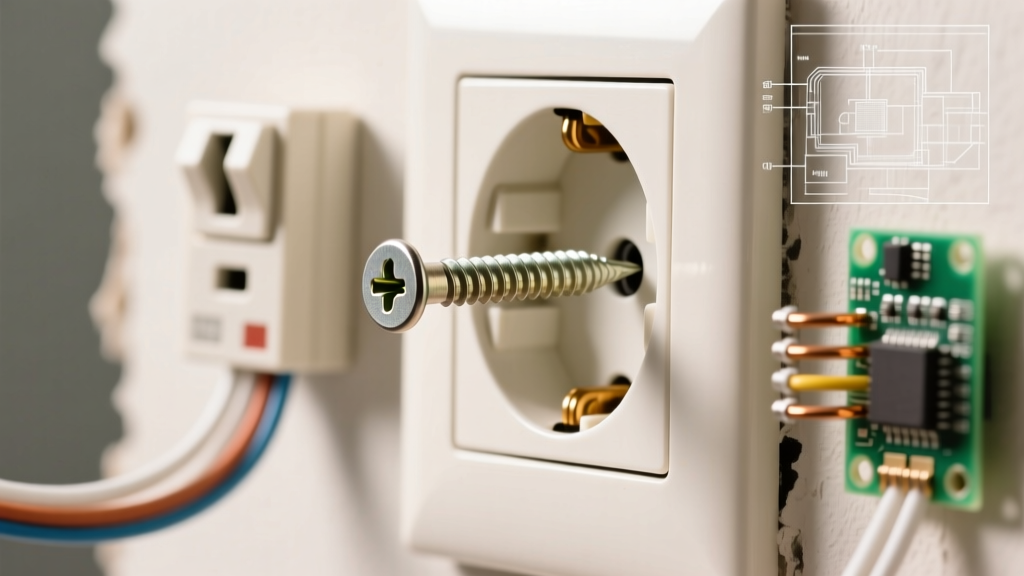
The mounting screws secure the receptacle's metal yoke (the strap) to the electrical box. The universal standard for standard residential and commercial outlet boxes in North America is the #6-32 UNC (Unified National Coarse) machine screw.
- Thread Size: #6 (approx. 0.138-inch major diameter).
- Thread Pitch: 32 threads per inch (TPI).
- Length: Typically 1/2 inch for standard shallow boxes, but can range up to 2 inches for deep plaster rings or mud rings.
- Head Style: Combo Phillips/Slotted pan head or oval head.
According to the National Fire Protection Association (NFPA) guidelines, these screws must fully engage the tapped holes in metal boxes to ensure mechanical stability. If the box is set too deep in the drywall, using a standard 1/2-inch screw will result in poor thread engagement, causing the receptacle to wobble when plugs are inserted or removed.
2. Cover Plate Screws
Cover plate screws secure the decorative wall plate over the receptacle. While they share the same thread specification as mounting screws, their physical dimensions differ.
- Thread Size: #6-32 UNC.
- Length: 1/4 inch to 5/16 inch.
- Head Style: Oval or flat head, typically slotted, and color-matched to the plate (white, ivory, almond, or black).
Because these screws pass through the plastic or metal cover plate and thread directly into the tapped holes on the receptacle yoke itself, they must be short enough to avoid bottoming out or damaging internal components, yet long enough to secure at least three full threads into the yoke.
3. Terminal Screws (Wire Terminations)
These are the brass and silver screws pre-installed on the receptacle body used to secure the copper or aluminum circuit conductors. While you do not supply these screws, their size dictates the torque requirements enforced by modern electrical codes.
- Thread Size: Typically #8-32 or #10-32 UNC.
- Function: Clamping the wire under the terminal plate or directly against the brass bus bar.
Standard Screw Sizes and Applications Matrix
| Screw Application | Thread Specification | Standard Length | Head Type | Primary Code Concern |
|---|---|---|---|---|
| Yoke to Metal Box | #6-32 UNC | 1/2" to 2" | Pan / Oval Combo | Grounding path continuity (NEC 250.146) |
| Yoke to Plastic Box | #6-32 UNC | 1/2" to 3/4" | Pan / Oval Combo | Mechanical retention only |
| Cover Plate to Yoke | #6-32 UNC | 1/4" to 5/16" | Oval Slotted | Flush fit, no exposed live parts (NEC 406.5) |
| Wire Terminal | #8-32 / #10-32 | N/A (Factory) | Combo / Hex | Torque verification (NEC 110.14(D)) |
NEC Code Requirements: Torque, Grounding, and Box Fill
Understanding the size of screw for electrical outlet hardware is only half the battle; understanding how the NEC regulates their installation is where true expertise lies. As of the 2026 inspection cycle, three specific code articles heavily impact outlet screw usage.
NEC 110.14(D): The Torque Mandate
Introduced in the 2017 NEC and heavily enforced in 2023 and 2026, Article 110.14(D) requires that equipment terminations be tightened to the manufacturer's published torque values using a calibrated torque tool. While this primarily applies to the terminal screws (which usually require 12 to 14 inch-pounds of torque for standard 15A/20A receptacles), it also implicitly affects mounting screws in metal boxes. If a metal box relies on the mounting screws for its equipment grounding conductor (EGC) path, the screws must be tightened sufficiently to ensure low-impedance continuity. Most manufacturers recommend approximately 12 in-lbs for #6-32 mounting screws into steel boxes.
NEC 250.146: Equipment Grounding Continuity
When installing a receptacle in a surface-mounted metal box, the NEC allows the mounting screws to serve as the grounding path between the device yoke and the box, provided the yoke is listed for grounding and the contact surfaces are clean and free of non-conductive coatings. If you use a screw that is too short, or a screw with the wrong thread pitch (causing it to cross-thread and sit loosely), you compromise this life-safety grounding path. In the event of a ground fault, the breaker may not trip, leaving the metal faceplate energized.
NEC 314.20 and the Danger of Over-Long Screws
While using a screw that is too short is a mechanical failure, using one that is too long is a severe fire hazard. If you use a 2-inch #6-32 screw in a shallow box where only a 1/2-inch screw is needed, the protruding threads can pierce the insulation of the circuit wires bundled in the back of the box. This violates NEC 300.4 (Protection Against Physical Damage) and can cause a direct short circuit or ground fault inside the wall cavity.
Inspector's Warning: Never use drywall screws or sheet metal screws to mount an electrical outlet. Drywall screws are made of hardened, brittle high-carbon steel. They lack the ductility of standard steel machine screws and can easily snap off under the shear stress of a tight yoke or when a stubborn plug is pulled from the receptacle. Furthermore, their bugle heads will not seat correctly in the yoke's countersunk holes, violating NEC 406.5 regarding flush mounting.
Troubleshooting Common Screw and Box Failures
Even when you know the correct size of screw for electrical outlet installations, field conditions often present challenges. Here is how to handle the most common edge cases professionally.
Stripped Tapped Holes in Metal Boxes
Older steel or cast-iron boxes frequently suffer from stripped #6-32 threaded holes due to decades of over-tightening or rust. Do not force a larger screw into the hole. Instead, use a #6-32 helical insert (commonly known by the brand name Heli-Coil) to restore the original factory threading. If an insert is unavailable, you can carefully drill out the hole and tap it to the next size up: #8-32. You must then use an #8-32 machine screw for the yoke mounting to ensure a secure, code-compliant fit.
Receptacles Recessed Too Deep in the Wall
NEC 406.5 requires that the receptacle face be flush with the wall surface. If the drywall was cut too thick or the box was set too deep, standard 1/2-inch mounting screws will not reach the box threads securely. The Solution: Purchase a pack of 1-inch or 1.5-inch #6-32 UNC machine screws from any electrical supplier. Pair these with plastic outlet shims (spacers) placed between the yoke and the drywall to provide rigid mechanical support. Never rely on the cover plate screws to pull a recessed outlet flush against the wall; this creates immense stress on the yoke and can crack the internal bus bars.
Corrosion in High-Moisture Environments
For outlets installed in damp or wet locations (such as outdoor patios or basement utility sinks), standard zinc-plated steel #6-32 screws will eventually rust, seizing the yoke to the box and compromising the grounding path. For these installations, the Occupational Safety and Health Administration (OSHA) and general best practices dictate the use of stainless steel #6-32 machine screws to resist oxidation while maintaining structural integrity.
Summary: Building Your Outlet Hardware Kit
To ensure you are always prepared for a 2026-compliant installation, every professional electrician and serious DIYer should maintain a dedicated hardware kit specifically for receptacles. This kit should include:
- 1/2-inch #6-32 UNC Pan Head Combo Screws: For standard metal and plastic box mounting.
- 1-inch and 1.5-inch #6-32 UNC Pan Head Combo Screws: For deep mud rings and plaster extensions.
- 1/4-inch #6-32 UNC Oval Head Slotted Screws: Assorted colors for cover plate replacements.
- Plastic Outlet Shims: For stabilizing recessed boxes.
- Calibrated Inch-Pound Torque Screwdriver: Essential for verifying terminal screw tightness per NEC 110.14(D).
By respecting the precise engineering and code requirements behind these small but vital components, you ensure that every outlet you install is mechanically robust, electrically safe, and fully compliant with modern electrical standards.