
The Finland Electrical Outlet: Schuko Type F Standards
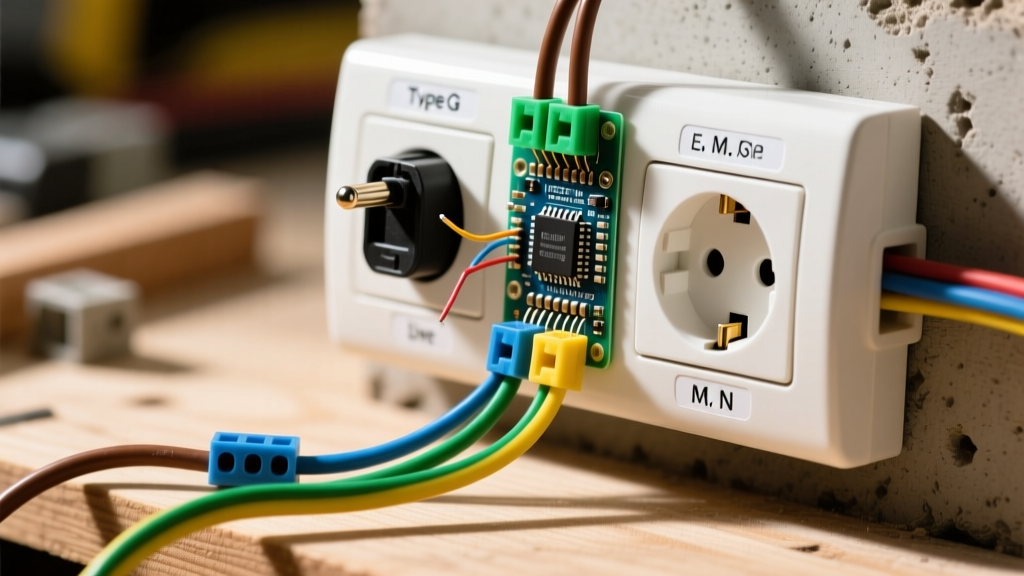
Installing or replacing a Finland electrical outlet requires strict adherence to Nordic safety codes and the European Type F (Schuko) standard. Unlike North American NEMA 1-15 or 5-15 receptacles, Finnish homes operate on a 230V ±10%, 50Hz alternating current system. The standard wall receptacle is the CEE 7/3 (Schuko), designed to accept CEE 7/4 and CEE 7/7 plugs, providing a robust 16A continuous current rating and mandatory side-earth grounding clips.
In 2026, modern Finnish residential builds are governed by the SFS 6000 national wiring rules (heavily based on IEC 60364). Whether you are upgrading to smart Schneider Electric Exxact sockets or replacing a damaged ABB Impedance faceplate, understanding the exact mechanical and electrical tolerances is critical to preventing thermal faults and arc tracking.
⚠️ Tukes Legal Compliance Warning:
According to the Finnish Safety and Chemicals Agency (Tukes), laypersons are legally permitted to replace an existing, fixed socket outlet in a flush-mounted box, provided the circuit is de-energized and the structural integrity of the installation is maintained. However, pulling new cables, installing new backboxes, or modifying the distribution board is strictly reserved for certified electrical professionals.
Tools and Materials Matrix (2026 Pricing)
Precision is paramount when terminating 2.5 mm² solid copper conductors. Below is the required tooling for a compliant installation.
| Item | Specification / Model | Purpose | Est. Cost (EUR) |
|---|---|---|---|
| Voltage Tester | Fluke 1AC-II VoltAlert | CAT IV 1000V non-contact verification | €35.00 |
| Wire Strippers | Knipex 12 62 160 | Precision stripping for 1.5 - 2.5 mm² solid wire | €42.00 |
| Insulated Screwdriver | Wiha SoftFinish VDE (0.8 x 4.0 mm) | Terminal tightening (1000V rated) | €8.50 |
| Socket Outlet | Schneider Electric Exxact Type F | 16A Schuko with child protection shutters | €12.00 |
| Flush Box | OBO Bettermann 68mm Deep | Standard Nordic 68mm diameter cavity | €2.50 |
Finnish Wiring Color Codes (HD 308 S2)
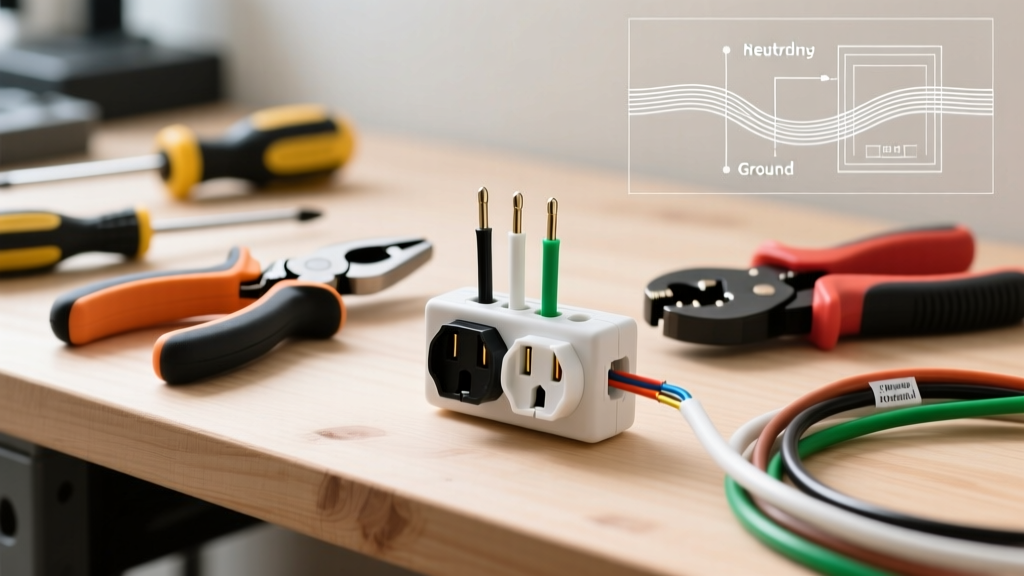
Before touching any conductors, verify the color coding. Finland utilizes the harmonized European CENELEC HD 308 S2 standard:
- Brown (L1): Line / Phase (Live)
- Blue (N): Neutral
- Green/Yellow (PE): Protective Earth (Ground)
Edge Case Note: In older Finnish homes (pre-1990s), you may encounter black (Phase), grey (Neutral), and bare copper or yellow/green (Earth). Always treat legacy wiring with extreme caution and verify with a multimeter.
Step-by-Step Installation Procedure
Step 1: Isolate and Verify the Circuit
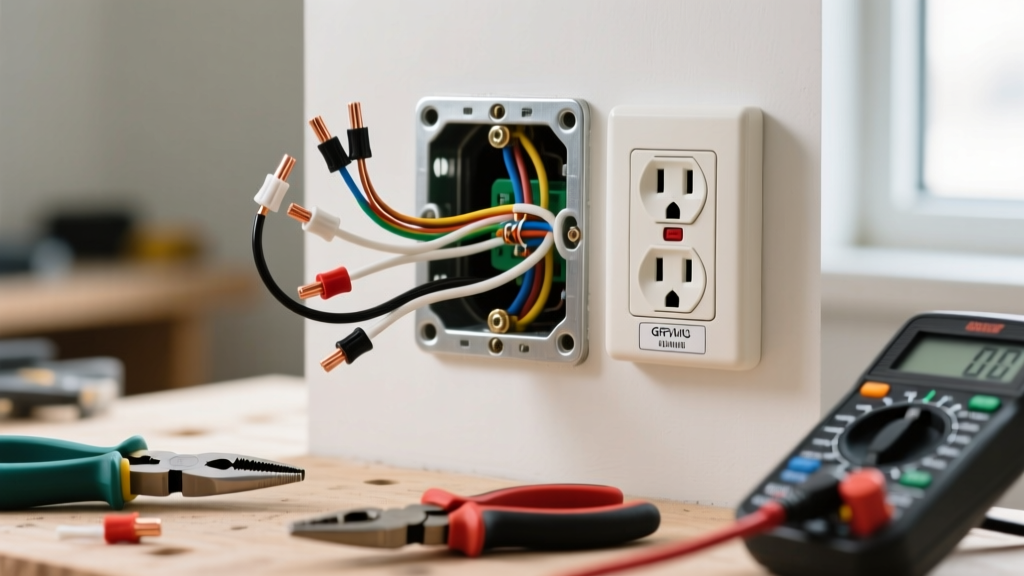
Navigate to your residential distribution board (sähkökeskus). Identify the 16A B-curve Miniature Circuit Breaker (MCB) protecting the room's outlet circuit. Switch it to the OFF position. Insert your Fluke 1AC-II into the existing socket to confirm the absence of voltage. For absolute certainty, remove the faceplate and test between L-N, L-PE, and N-PE using a CAT III multimeter.
Step 2: Extract and Prep the 68mm Backbox
Unscrew the central M3.5x25mm machine screw or loosen the expansion claws (kynnet) holding the old socket. Gently pull the faceplate out, being mindful of the stiff 2.5 mm² solid copper wires. Inspect the 68mm flush-mounted backbox. Clear any dried plaster or debris that might prevent the new socket from sitting flush against the drywall or plasterboard. If the box lugs are stripped, use a 68mm box repair ring.
Step 3: Terminate the Schuko Connections
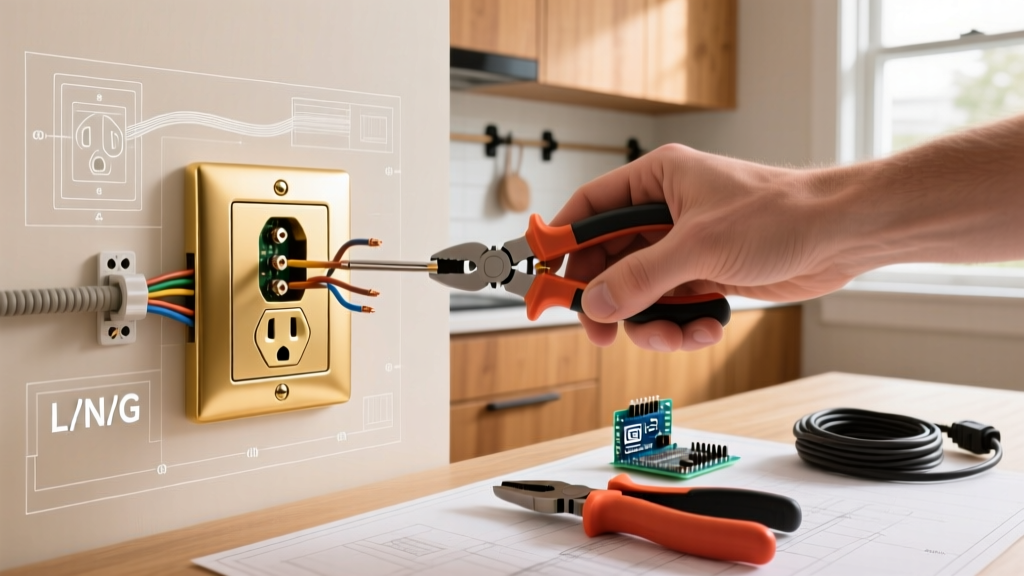
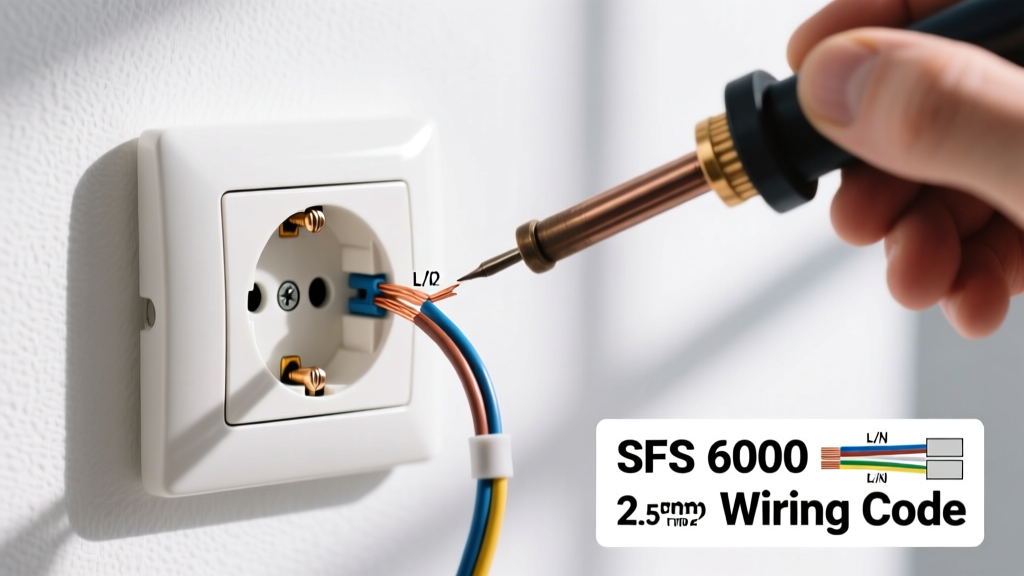
Using your Knipex strippers, remove exactly 12mm of insulation from the Brown, Blue, and Green/Yellow wires. Do not nick the copper, as this creates a micro-fracture point that can lead to thermal fatigue under 16A loads.
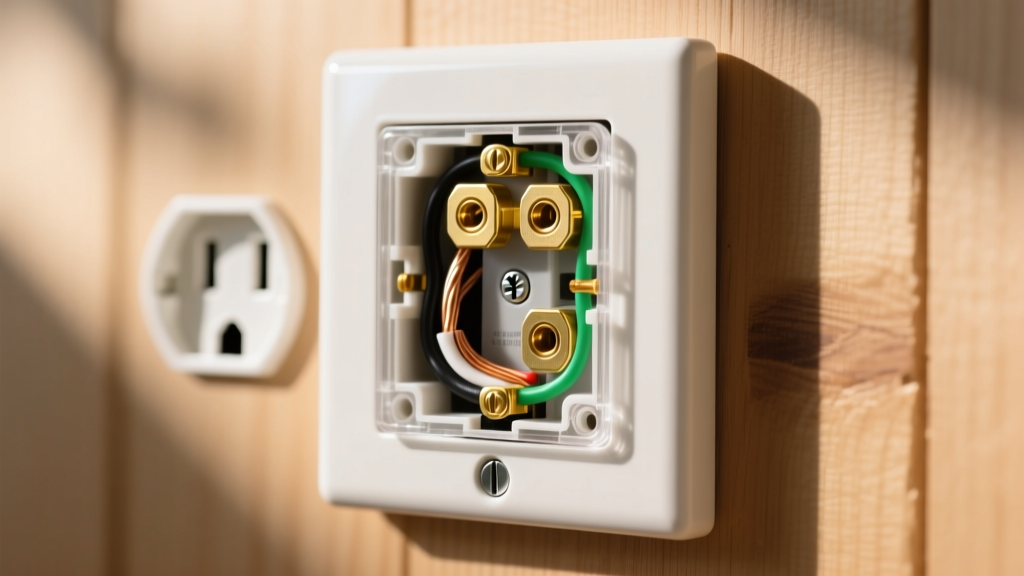
- Protective Earth (PE): Connect the Green/Yellow wire to the central earth terminal or the side bridging clip. This is the most critical safety connection.
- Line (L) and Neutral (N): Insert the Brown and Blue wires into the rear terminal block. While Schuko plugs are physically unpolarized (reversible), SFS 6000 best practices dictate that if the earth clips are positioned on the left and right, the Line (Brown) should be routed to the right-hand terminal and Neutral (Blue) to the left.
Tighten the terminal screws to 1.2 Nm. Give each wire a firm 1 kg pull-test to ensure the clamp plates have fully bitten into the copper.
Step 4: Mount the Faceplate
Fold the wires neatly into the back of the 68mm box using a slight S-curve to prevent pinching. Align the Schneider Exxact faceplate. It is highly recommended to use the provided M3.5 machine screws to secure the socket directly to the box lugs rather than relying solely on the expansion claws, which can loosen over time due to the mechanical force of pulling heavy appliance plugs.
Step 5: RCD and Loop Impedance Testing
Restore power at the distribution board. Modern Finnish circuits require a 30mA Residual Current Device (RCD). Press the 'Test' button on the RCD module to ensure it trips. If you have access to an installation tester (e.g., Megger MFT1845), verify that the earth loop impedance (Ze) is below 2.3 ohms to ensure the MCB will trip within the required 0.4 seconds during a short-circuit fault.
2026 Considerations: Smart Outlets and EV Charging Loads
As of 2026, the integration of smart home ecosystems and high-draw appliances has changed how Finnish electricians approach outlet replacements. If you are swapping a standard Schuko socket for a smart metering outlet (like the ABB-free@home or Schneider Wiser Zigbee sockets), you must ensure the backbox has adequate depth. Standard 45mm deep boxes often cause overheating when housing the relay and power supply modules of smart sockets. Always upgrade to a 60mm or 68mm deep flush box when installing smart electronics.
Furthermore, while the Type F Schuko outlet is rated for 16A (approx. 3.6 kW), continuous EV charging via a portable 'granny' charger pushes the thermal limits of standard wall receptacles. Finnish electrical inspectors increasingly recommend installing dedicated Type 2 EV wallboxes for vehicles, rather than relying on continuous 16A Schuko loads, which can suffer from thermal creep and contact degradation over multi-year daily use cycles.
Troubleshooting Common Installation Faults
| Symptom | Probable Cause | Corrective Action |
|---|---|---|
| RCD trips immediately upon plugging in an appliance | Earth leakage in the appliance or Neutral/Earth short in the socket. | Verify N and PE are not touching inside the 68mm box. Ensure no stray copper strands are bridging terminals. |
| Socket feels warm under a 2000W load | Under-torqued terminal screws or stripped 1.5 mm² wire on a 16A circuit. | Re-strip wire to 12mm, ensure 2.5 mm² wire is used for 16A circuits, and torque to 1.2 Nm. |
| Faceplate sits unevenly on the wall | Plaster debris in the 68mm box or over-tightened expansion claws warping the frame. | Clean the box cavity. Switch from claw mounting to direct M3.5 screw mounting into the box lugs. |
Additional Resources and Standards
For comprehensive details on Nordic wiring regulations and plug standards, consult the following authoritative resources:
- Finnish Standards Association (SFS) - Publishers of the SFS 6000 electrical safety code.
- European and Related Plug Types - Technical breakdown of the CEE 7/3 Schuko standard.