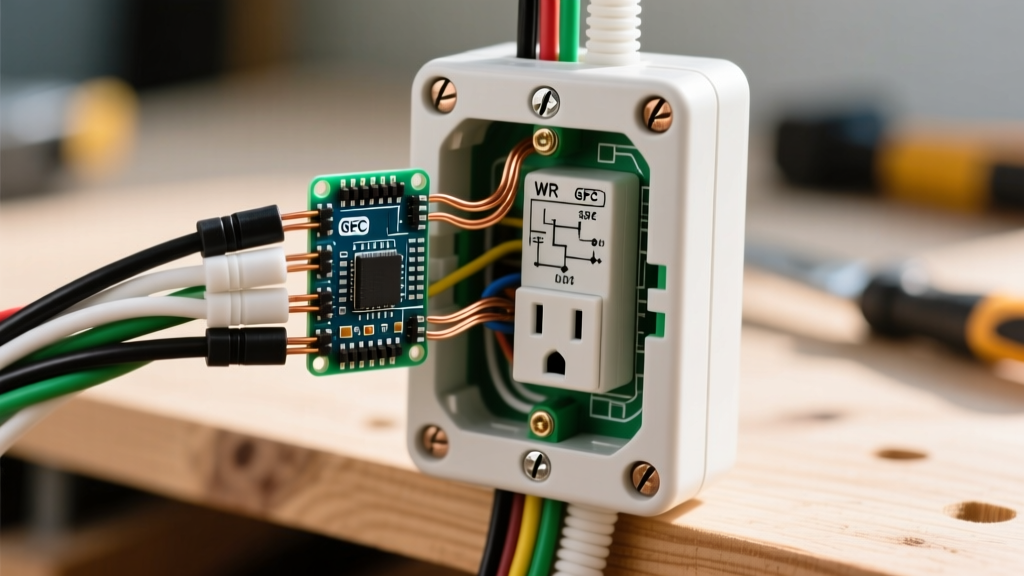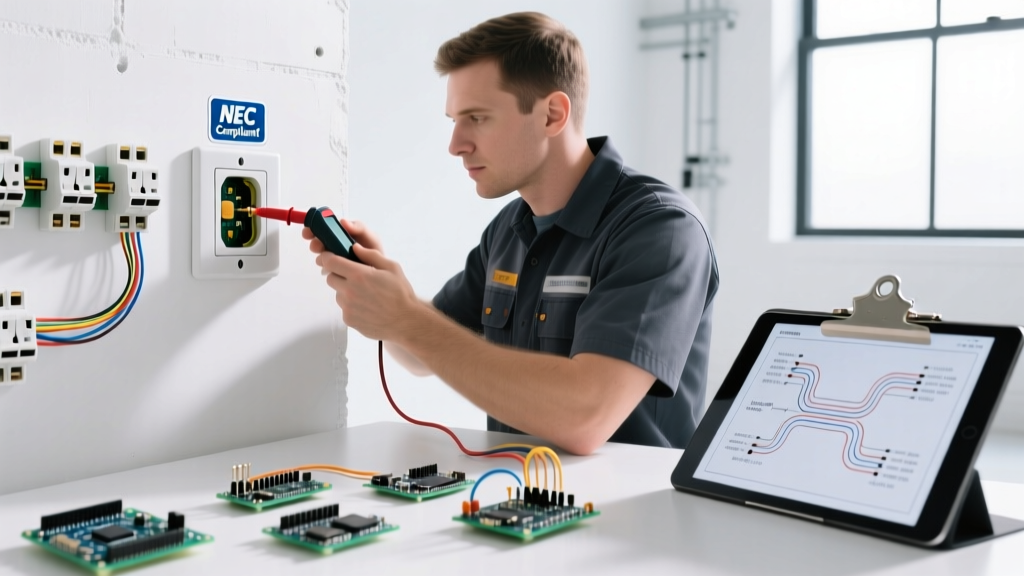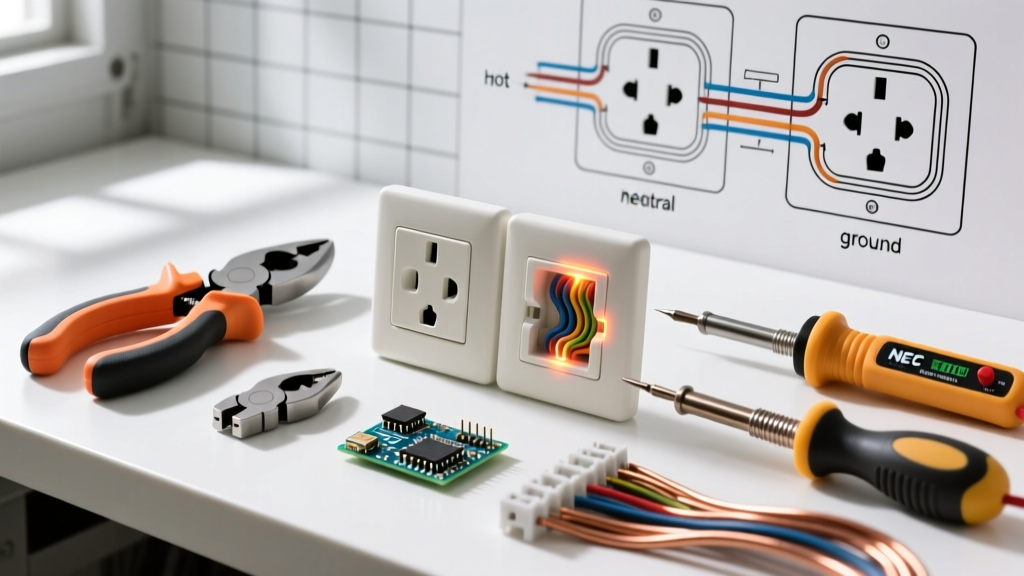

The Foundation of a Safe Electrical Outlet Replacement
Executing a flawless electrical outlet replacement requires more than just a flathead screwdriver and a trip to the hardware store. Whether you are upgrading aging receptacles, swapping standard duplex outlets for GFCI protection, or repairing melted terminals, the quality of your tools and materials directly dictates the safety and longevity of the circuit. In 2026, with the National Electrical Code (NEC) enforcing stricter guidelines on arc-fault protection and tamper resistance, DIYers and apprentice electricians must approach this task with professional-grade gear.
This comprehensive guide bypasses generic advice, detailing the exact diagnostic instruments, termination tools, and receptacle models required to perform an electrical outlet replacement that meets modern safety standards and prevents high-resistance connection failures.
The Diagnostic & Safety Arsenal
Before a single wire is disconnected, you must verify the absence of voltage and assess the physical health of the existing circuit. Relying solely on the breaker panel labeling is a leading cause of residential electrical shocks.
1. Non-Contact Voltage Tester (NCVT)
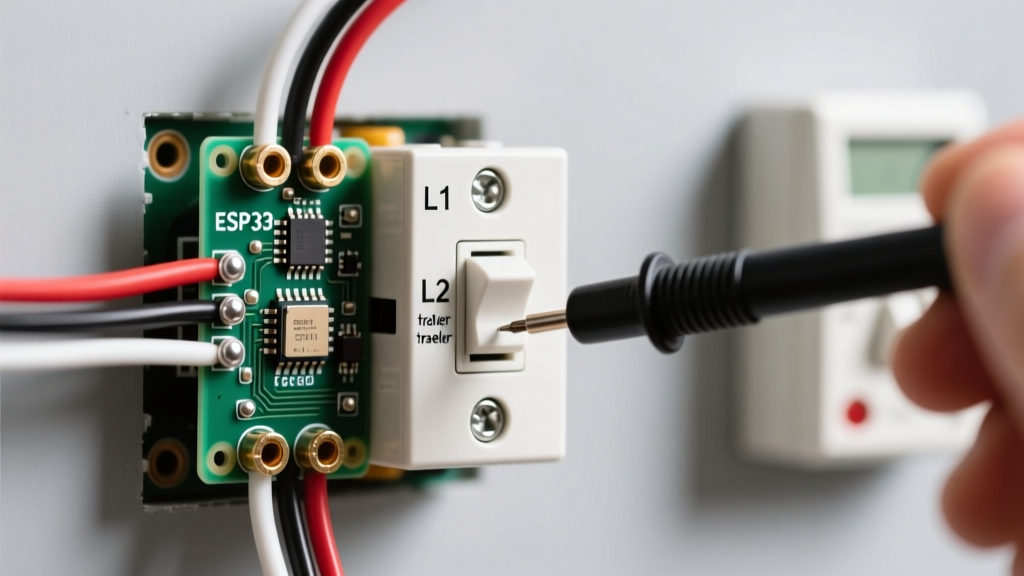
Skip the single-range budget testers. The Klein Tools NCVT-2 (approx. $28) is the industry standard for residential work. It features dual-range detection (70–1000V AC and 12–1000V AC), allowing you to verify both standard branch circuits and low-voltage thermostat or doorbell wiring. Its bright LED and audible chirp provide redundant confirmation before you touch a terminal.
2. True-RMS Digital Multimeter
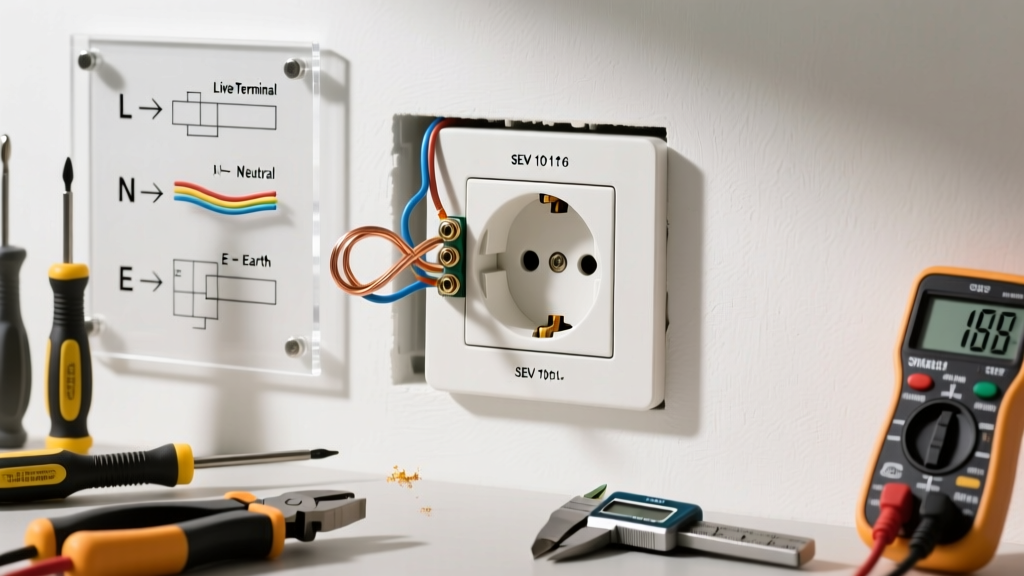
For verifying exact line voltage and checking for reversed polarity or open neutrals, a CAT III or CAT IV rated multimeter is non-negotiable. The Fluke 117 True-RMS Electricians Multimeter (approx. $210) offers VoltAlert non-contact voltage detection and AutoVolt automatic AC/DC selection. For a budget alternative, the AstroAI DM6000AR (approx. $40) provides reliable CAT III 600V protection for basic outlet diagnostics.
3. Receptacle Tension Tester
This is the most overlooked tool in DIY electrical work. Loose blade tension causes arcing, which generates immense heat and is a primary cause of outlet fires. The Ideal Industries Receptacle Tension Tester (approx. $35) features precision-calibrated pins. If the tester slides into the receptacle slots without noticeable resistance, the internal brass contacts are fatigued, and the outlet must be replaced immediately, regardless of its visual condition.
Pro Tip: Never use a plug-in circuit analyzer (the $10 devices with three LED lights) as your primary safety verification tool. These devices can yield false 'safe' readings on multi-wire branch circuits (MWBCs) or open neutral scenarios. Always verify with an NCVT and Multimeter.
Material Selection Matrix: Choosing the Right Receptacle
Not all 15-amp or 20-amp receptacles are created equal. Builder-grade outlets (often priced under $1.50) use thinner internal brass and lower-grade thermoplastics that degrade under thermal cycling. For a permanent electrical outlet replacement, always specify 'Spec Grade' or higher.
| Receptacle Type | Recommended Model (2026) | Amperage | Avg. Price | Best Application |
|---|---|---|---|---|
| Standard Tamper-Resistant (TR) | Leviton T5252-W | 15A | $3.25 | General living areas, bedrooms, hallways. |
| Spec Grade TR | Pass & Seymour 5262-XTR | 15A | $5.50 | High-use areas (kitchens, home offices) requiring superior plug retention. |
| 20A Commercial Grade | Leviton T5362-W | 20A | $6.80 | Kitchen countertop small-appliance circuits, garage workbenches. |
| GFCI Protection | Leviton GFNL1-W | 15A | $22.00 | Bathrooms, exteriors, garages, and unfinished basements. |
| CO/ALR (Copper/Aluminum) | Leviton 5266-CW | 15A | $11.50 | Homes built between 1965-1972 with solid aluminum branch wiring. |
Hand Tools for Precision Termination
The physical act of stripping and terminating wires requires tools that preserve the integrity of the copper conductor. Nicked wires create hot spots under load.
- Wire Strippers: The Klein Tools 11063W Katapult (approx. $28) allows for one-handed stripping of 10-20 AWG solid and stranded wire. For an electrical outlet replacement, you must strip exactly 3/4 inch of insulation to ensure the wire wraps fully around the terminal screw without exposing bare copper outside the screw head.
- Insulated Screwdrivers: Use VDE-rated insulated drivers, such as the Wiha 11575 SoftFinish Insulated Set (approx. $18). The #2 Phillips and 5/16-inch slotted tips are the exact sizes required for standard receptacle terminal and mounting screws.
- Needle-Nose Pliers: The Knipex 13 72 8 (approx. $45) features a built-in gripping zone and precision jaws for forming perfect 'shepherd's hook' loops on solid copper wire, ensuring the wire pulls tight under the screw head as it is torqued clockwise.
Wiring Connectors: The WAGO vs. Wire Nut Debate
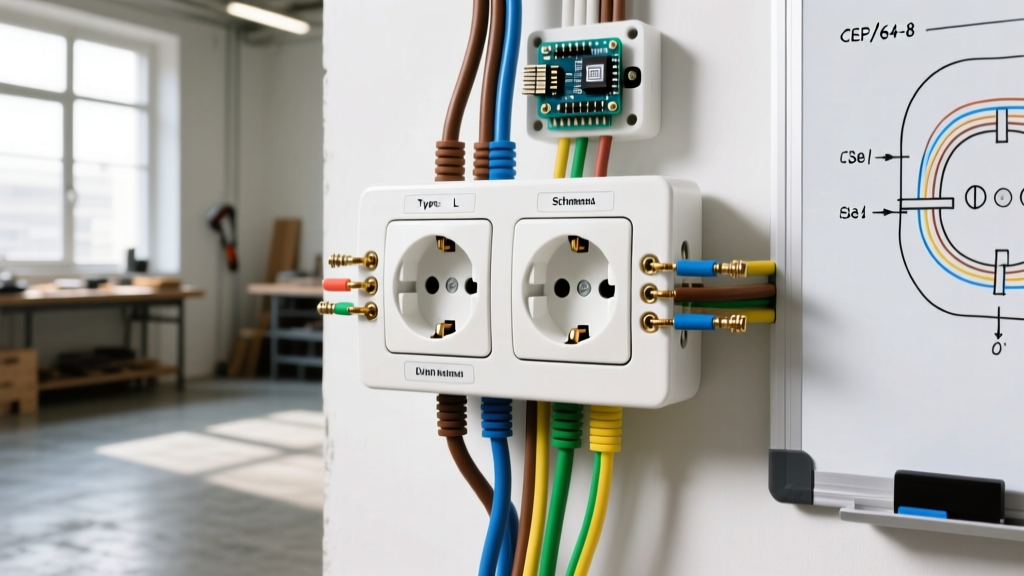
When performing an electrical outlet replacement, you must often create 'pigtails'—short jumper wires that connect the incoming line, the outgoing load, and the receptacle's own wire lead. This prevents the receptacle from becoming the sole feed-through point for downstream devices, a practice that violates NEC guidelines for critical circuits and risks breaking the circuit if the outlet is removed later.
Traditional Wire Nuts
The Ideal Wire-Nut 72B (Yellow) remains a staple. However, they require significant torque and proper pre-twisting of the wires to ensure a gas-tight connection. If the wires are not stripped to the exact same length, one wire may sit loose inside the nut, creating a high-resistance fault.
Lever Connectors (The Modern Standard)
For DIYers and pros alike, the WAGO 221 Series Lever Nuts (approx. $15 for a 25-pack of 3-conductor) have revolutionized pigtailing. These transparent, lever-actuated connectors accept 12-24 AWG solid and stranded wire. They provide visual confirmation of proper wire insertion, require no twisting, and maintain constant spring pressure on the conductor, completely eliminating the risk of loose connections due to thermal expansion and contraction.
Edge Cases: Aluminum Wiring and Backstabbing
The Danger of Push-In Backstabbing
Many budget receptacles feature push-in 'backstab' terminals on the rear. Never use these. They rely on a tiny internal brass spring clip that grips a single stripped wire. Over time, thermal cycling causes the spring to relax, leading to arcing. Always use the side-wiring terminal screws or, if available on premium models, the screw-clamp backwiring plates that physically crush the wire under a metal plate.
Aluminum Branch Wiring
If you are performing an electrical outlet replacement in a home built in the late 1960s or early 1970s, you may encounter solid aluminum wire (identifiable by its dull grey color and 'AL' stamping on the cable jacket). Standard copper-rated outlets will react chemically with aluminum, causing oxidation, increased resistance, and fires. You must use outlets explicitly marked CO/ALR (Copper/Aluminum Revised). For a safer, more permanent fix, use AlumiConn lug connectors to pigtail the aluminum wire to a short copper jumper, which then connects to a standard TR receptacle.
2026 Code Compliance & TR Mandates
Understanding the current regulatory landscape is vital for any electrical outlet replacement. According to the National Electrical Code (NEC) NFPA 70, Tamper-Resistant (TR) receptacles are now mandated in virtually all 15A and 20A, 125V and 250V receptacle locations in dwelling units. This includes guest rooms, dormitories, and business offices.
The Electrical Safety Foundation International (ESFI) reports that TR receptacles, which feature internal shutter mechanisms that only open when equal pressure is applied to both slots simultaneously, reduce childhood electrical shock incidents by over 80%. When purchasing materials, ensure the 'TR' stamp is visibly molded into the face of the receptacle; older, non-TR stock is still illegally sold in some discount bins and must be avoided.
Frequently Asked Questions
Do I need a permit for a simple electrical outlet replacement?
In most municipalities, a 'like-for-like' replacement of an existing receptacle does not require an electrical permit. However, if you are adding a new outlet box, running a new circuit, or upgrading a standard outlet to a GFCI/AFCI to bring an ungrounded system up to code, a permit and inspection may be required by your local Authority Having Jurisdiction (AHJ).
Can I replace a 15-amp outlet with a 20-amp outlet?
Only if the circuit wiring is 12 AWG copper and the breaker is rated for 20 amps. Installing a 20-amp receptacle on a 14 AWG wire protected by a 15-amp breaker is a code violation, as it allows the user to plug in a 20-amp appliance that could overload the undersized wiring before the breaker trips.
Why does my new outlet have four screws instead of three?
Standard duplex receptacles have four terminal screws (two brass for the 'hot' line, two silver for the 'neutral') plus a green grounding screw. The extra screws are for 'feed-through' wiring, allowing you to daisy-chain downstream outlets. If you are pigtailing your wires using WAGO connectors, you will only use one brass and one silver screw, leaving the other two empty.