
The Central Florida Diagnostic Arsenal
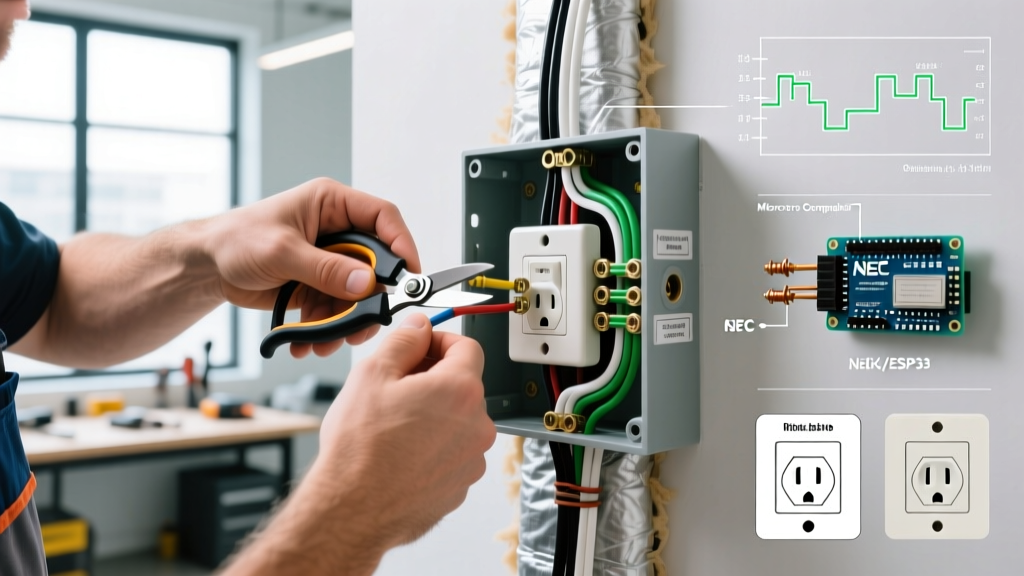
When approaching an electrical outlet repair Orlando properties demand a specialized toolkit that accounts for the region's unique environmental stressors. Central Florida is characterized by extreme summer humidity, daily lightning storms, and a diverse housing stock ranging from 1920s bungalows in College Park to modern concrete block stucco (CBS) builds in Lake Nona. Standard DIY electrical kits often fall short when dealing with corroded terminals, harmonic grid distortion, and strict local code enforcement.
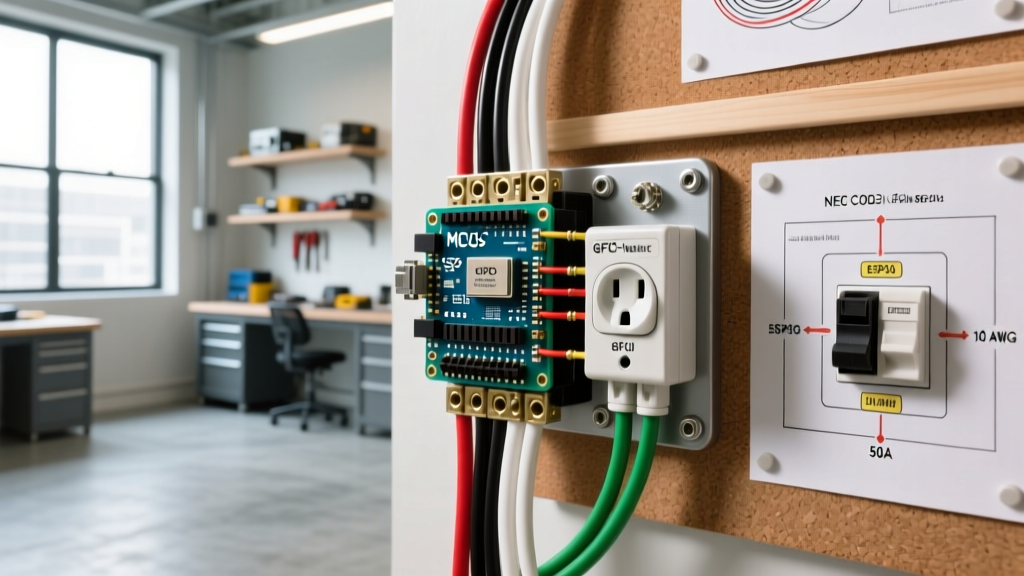
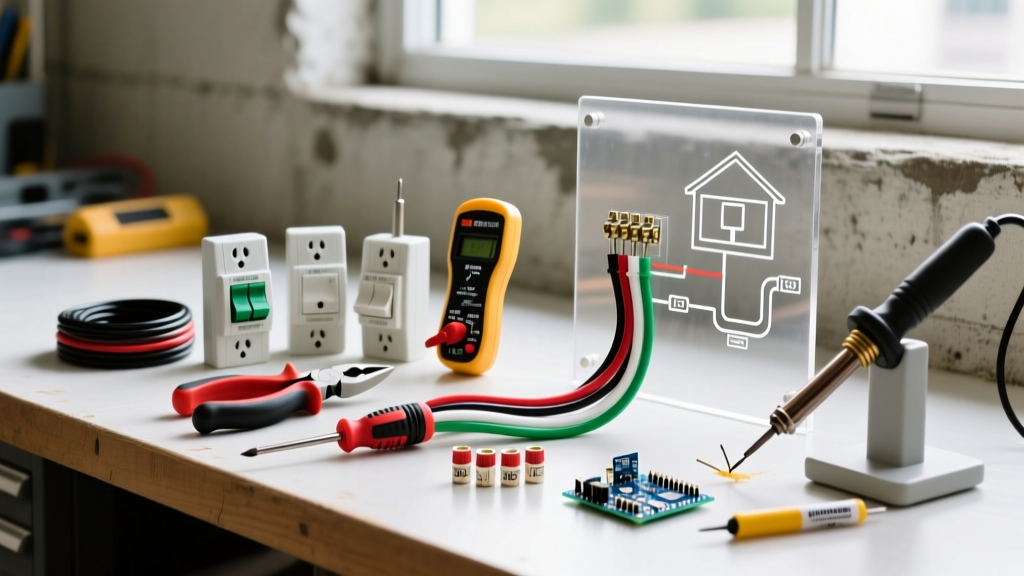
To diagnose faults accurately and safely, you must move beyond basic neon circuit testers. Here is the professional-grade diagnostic lineup required for Orlando homes in 2026:
- Fluke 117 True RMS Multimeter ($195): Older Orlando neighborhoods often experience 'dirty power' and harmonic distortion due to aging grid infrastructure and heavy HVAC loads. A True RMS meter is mandatory to get accurate voltage readings on non-linear loads, ensuring your outlet is delivering a true 120V under load.
- Klein Tools NCVT-3 Non-Contact Voltage Tester ($35): This dual-range tester detects both standard (70-1000V) and low-voltage (12-70V) signals. It is essential for tracing thermostat wires or doorbell transformers that often share gang boxes with standard receptacles in Florida homes.
- Gardner Bender GFI-3500 Receptacle Tester ($25): A heavy-duty analyzer that not only checks for standard wiring faults (open ground, reversed polarity) but features a GFCI trip test button with a 30mA trip threshold, verifying the mechanical health of existing GFCI outlets.
Pro Tip: In Orlando's older homes (pre-1980), always test the outlet with a multimeter under a physical load (like a hair dryer or heat gun). High-resistance connections caused by decades of thermal cycling in hot attics will show 120V on a meter but drop to 90V under load, indicating a failing backstab connection or corroded splice upstream.
Material Selection Matrix: Orlando-Specific Receptacles
Selecting the right receptacle is where most DIYers fail in Central Florida. The ambient humidity and frequent use of outdoor living spaces (lanais) mean that standard indoor receptacles will corrode rapidly if used in the wrong zone. Below is a material guide tailored to the 2026 Florida Building Code (FBC) and local environmental realities.
| Receptacle Type | Recommended Model | Est. Cost | Best Orlando Application |
|---|---|---|---|
| Standard Tamper-Resistant (TR) | Leviton 5320-W | $2.50 | Interior living spaces, bedrooms, hallways. |
| Weather-Resistant (WR) | Leviton 5366-W | $4.50 | Lanais, covered patios, exterior walls, garages. |
| Dual-Function AFCI/GFCI | Eaton AF2RL15 | $38.00 | Kitchens, bathrooms, and bedrooms requiring both arc and ground fault protection. |
| Point-of-Use Surge | Leviton 5280-W | $28.00 | Home offices, entertainment centers, smart home hubs. |
Why Weather-Resistant (WR) is Non-Negotiable Outdoors
The National Electrical Code (NEC) mandates that receptacles in damp or wet locations must be listed as Weather-Resistant. According to the National Fire Protection Association (NFPA), WR receptacles feature nickel-plated brass straps and UV-resistant polycarbonate thermoplastic faces. In Orlando, where afternoon UV indexes routinely exceed 10 and humidity sits above 75%, standard brass straps on cheap receptacles will develop green copper oxide (verdigris) within 18 months, leading to high-resistance arcing and potential fires.
Combating Humidity, Heat, and Stucco Construction
Orlando's building environment requires specific installation materials to ensure longevity and safety. Most residential construction in Orange and Seminole counties utilizes Concrete Block Stucco (CBS) walls. This means you are rarely dealing with standard wooden studs and drywall when replacing an outlet.
Wire Connectors and Corrosion Inhibitors
Do not use standard smooth vinyl electrical tape or cheap push-in wire connectors for permanent repairs in Florida. The thermal expansion and contraction from heavy air conditioning use can cause smooth wires to back out of push-in connectors over time.
- IDEAL Twister Wire Connectors (Model 341): These feature a live-action square-wire spring that bites into the copper and twists, creating a vibration-proof and humidity-resistant seal. Cost: ~$0.35 per nut.
- IDEAL Noalox Anti-Oxidant Paste ($8): If you are repairing an outlet in a historic Orlando neighborhood (like Winter Park or Thornton Park) and encounter older aluminum branch wiring or aluminum-to-copper pigtails, Noalox is legally and practically required to prevent galvanic corrosion and subsequent thermal failure at the terminal screw.
Old Work Boxes for CBS Walls
If an existing outlet box is cracked or damaged—a common occurrence when previous homeowners forcefully yanked cords from stiff, painted-over receptacles—you cannot simply nail a new box to a stud. You must use a masonry-rated old work box or a Madison hanger modified for block walls, securing it with Tapcon masonry screws and a high-bond construction adhesive like Liquid Nails Fuze*It Max, which cures reliably even in 90% humidity.
Lightning Protection & Point-of-Use Surge
Central Florida is the lightning capital of the United States. Data from the National Weather Service in Melbourne consistently ranks the Orlando metropolitan area among the highest in the nation for cloud-to-ground lightning strikes per square mile. While whole-home surge protectors at the main panel are the first line of defense, point-of-use surge receptacles are critical for sensitive electronics.
The Leviton 5280-W Surge Receptacle provides 720 Joules of protection directly at the outlet. Unlike plug-in power strips that degrade over time and clutter the floor, this replaces the standard duplex receptacle. It features an indicator light to confirm surge protection is active and safely diverts transient voltage spikes caused by local lightning strikes or grid switching anomalies away from expensive smart home equipment, computers, and medical devices like CPAP machines.
Navigating the 2026 Florida Building Code (FBC)
Any electrical outlet repair in Orlando that extends beyond a simple like-for-like replacement must comply with the current Florida Building Code, which heavily integrates the latest NEC standards. The Electrical Safety Foundation International (ESFI) highlights that GFCI and AFCI requirements have expanded significantly over the last decade.
Current Code Triggers for Upgrades
If your repair involves adding a new circuit, relocating an outlet, or upgrading a panel, you must adhere to the following local mandates:
- GFCI Protection: Required in all kitchens, bathrooms, garages, crawlspaces, unfinished basements, outdoors, and within 6 feet of any wet bar sink. In Orlando, this heavily impacts lanai and garage workshop outlets.
- AFCI Protection: Arc-Fault Circuit Interrupters are required in virtually all living spaces, including bedrooms, living rooms, and closets, to detect dangerous parallel and series arcing that standard breakers miss.
- Tamper-Resistant (TR): All 15A and 20A, 125V and 250V receptacles in dwelling units must be TR to prevent childhood shock hazards. The internal shutters require equal pressure on both blades to open.
Frequently Asked Questions: Orlando Outlet Specifics
Why does my outdoor lanai outlet keep tripping?
Lanai outlets are exposed to high humidity and blowing rain during summer squalls. If it trips repeatedly, moisture has likely bypassed the weatherproof cover. Ensure you are using an 'In-Use' bubble cover (like the TayMac MM540C) that allows cords to remain plugged in while sealing out moisture, and verify the receptacle itself is a WR-rated model.
Can I repair an outlet with cloth-insulated wiring?
Many homes in downtown Orlando built before 1950 feature cloth-insulated or early rubber-insulated wiring. This insulation becomes incredibly brittle. If the cloth flakes off when you pull the outlet from the box, you must use heat-shrink tubing (minimum 3M Thin-Wall) to re-insulate the exposed copper before attaching it to the new TR receptacle. Do not use liquid electrical tape, as it degrades poorly in high-heat attic-adjacent walls.
Do I need a permit for a simple outlet swap?
Under Orange County and City of Orlando jurisdiction, a direct like-for-like replacement of a receptacle does not require a permit. However, if you are adding a new receptacle, moving one, or upgrading a standard breaker to an AFCI/GFCI dual-function breaker to solve a tripping issue, an electrical permit and subsequent inspection are legally required.