
Understanding the Argentina Electric Outlet Standard
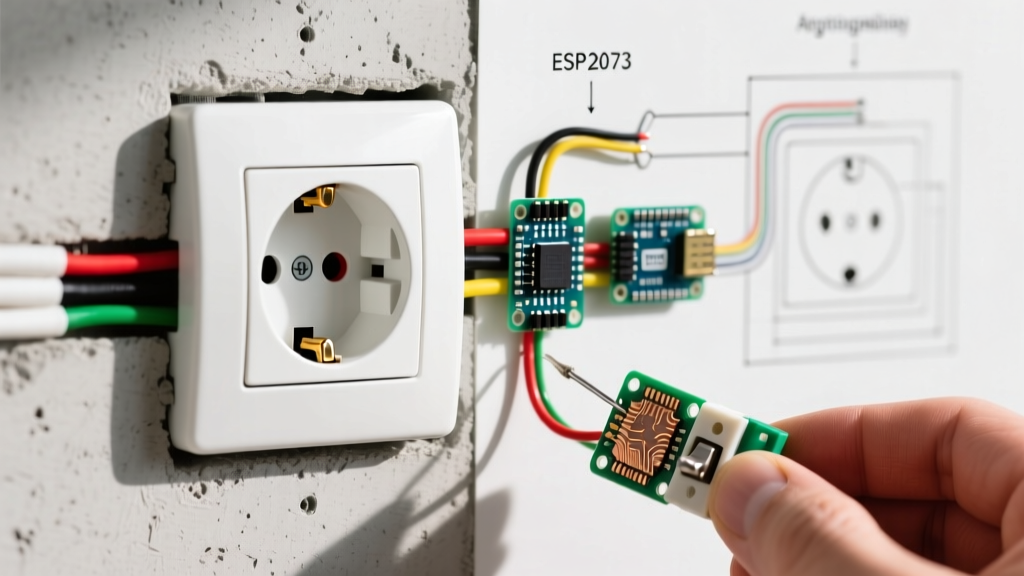
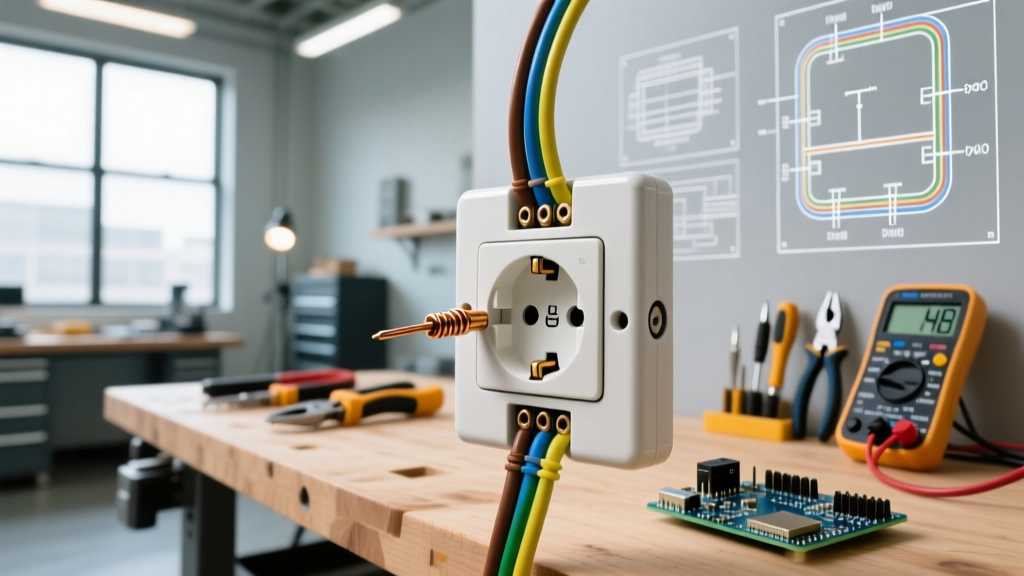
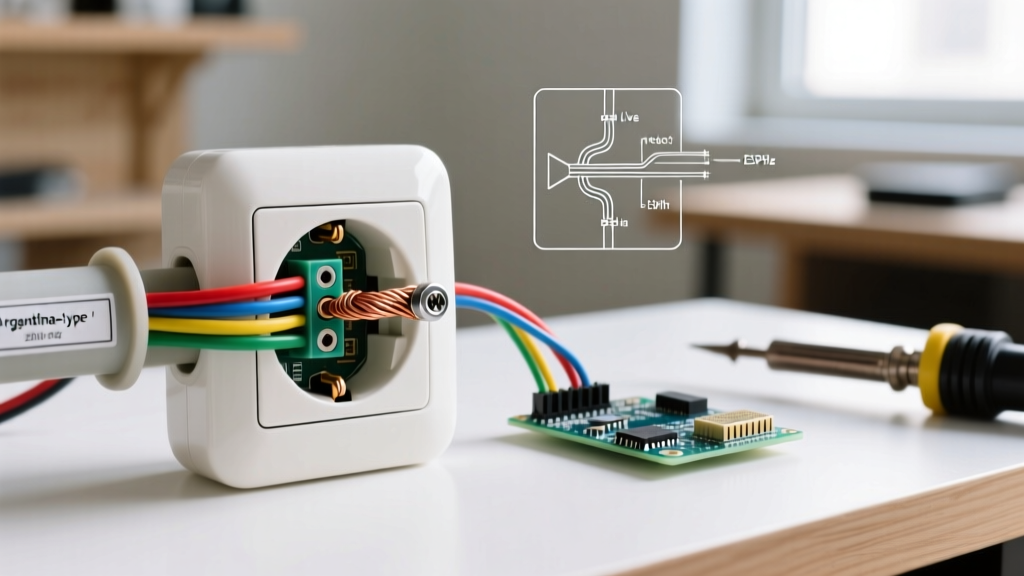
When importing specialized machinery, medical devices, or server infrastructure from South America, you will inevitably encounter the Argentina electric outlet. Governed by the IRAM 2073 standard, this receptacle operates on a 220V, 50Hz single-phase AC supply. While it visually resembles the Australian Type I (AS/NZS 3112) and Chinese Type I (GB 2099.1) plugs, the internal wiring topology and grid characteristics present unique challenges for North American and European electricians.
According to the International Electrotechnical Commission (IEC), the Argentine Type I plug features three flat pins in a triangular arrangement. The top pin is the earth (ground), while the bottom two are the active (line) and neutral. However, adapting this to a North American 240V split-phase grid requires a deep understanding of voltage vectors, frequency mismatches, and strict adherence to the National Electrical Code (NEC).
Technical Specifications Matrix
| Parameter | Argentina (IRAM 2073) | US Standard (NEMA 6-15R) | Australia (AS/NZS 3112) |
|---|---|---|---|
| Voltage | 220V AC | 240V AC | 230V AC |
| Frequency | 50 Hz | 60 Hz | 50 Hz |
| Pin Configuration | Line, Neutral, Earth | Line 1, Line 2, Earth | Line, Neutral, Earth |
| Standard Amperage | 10A / 16A / 20A | 15A / 20A | 10A / 15A / 20A |
The 'Neutral Trap': US 240V vs. Argentine 220V
The most critical failure mode when wiring an Argentina electric outlet in a US or Canadian facility is misunderstanding the neutral conductor. In Argentina, the 220V is derived from a single phase (Line) and a grounded Neutral. In North America, standard 240V receptacles (like the NEMA 6-15R or 6-20R) provide 240V across two ungrounded hot legs (Line 1 and Line 2), with no neutral present.
If you wire a North American 240V circuit to an imported Argentine machine expecting a Line-to-Neutral topology, you risk catastrophic failure if the machine's internal control board taps into the neutral for 110V logic circuits. Without a true neutral, the control board will either fail to power on or, worse, attempt to use the equipment grounding conductor as a current-carrying neutral, creating a severe shock hazard and violating NEC Article 250 grounding rules.
NEC Compliance Warning: Under NEC Article 210.5 and 210.7, you cannot legally hardwire a foreign, non-NEMA/non-UL-listed receptacle (like an IRAM 2073 socket) directly into a standard US residential or commercial wall box. The legal and safe approach requires installing a NEMA receptacle and using a passive adapter, or utilizing an industrial isolation transformer setup.
Scenario 1: The Adapter Method (Resistive & Switching Loads)
If the imported Argentine equipment utilizes modern universal switching power supplies (rated 100-240V, 50/60Hz) or pure resistive heating elements, the frequency and neutral differences are negligible. In this scenario, you do not wire an IRAM receptacle into the wall.
- Install a NEMA 6-15R or 6-20R: Wire a standard US 240V receptacle using 12 AWG THHN copper wire on a 2-pole 20A breaker (e.g., Square D QO220).
- Source a UL-Listed Adapter: Procure a high-quality, fused Type I to NEMA 6-15P adapter. Ensure the adapter's internal earth pin connects directly to the NEMA ground lug.
- Verify Polarity: Use a multimeter to confirm the adapter correctly maps the US Line 1 to the Argentine Active pin, and US Line 2 to the Argentine Neutral pin.
Scenario 2: The Isolation Transformer Method (Sensitive & Motor Loads)
For sensitive laboratory equipment, older CNC machines, or devices with internal step-down transformers that require a true Line-to-Neutral 220V supply, you must synthesize the Argentine grid topology. This requires a 240V to 220V step-down isolation transformer with a center-tapped or bonded secondary neutral.
Step-by-Step Wiring Procedure
This setup is common in industrial workshops and medical facilities housing imported LATAM machinery.
- Step 1: Primary Circuit Wiring
Run 10/3 Romex or 10 AWG THHN in EMT conduit from your main panel to a dedicated junction box. Install a 2-pole 30A breaker (e.g., Eaton BR230). Connect the black and red wires to the breaker poles, white to the neutral bar, and bare copper to the ground bar. - Step 2: Transformer Installation
Mount a Hammond Manufacturing or Acme Electric 240V/220V isolation transformer (e.g., Hammond 172E series, rated for at least 1.5x the continuous load of the machine). Wire the primary coils in series for 240V input. - Step 3: Secondary Neutral Bonding
On the secondary (output) side of the transformer, wire the coils in series to output 220V. Critical: Bond one of the secondary output lines to the transformer chassis ground. This newly bonded conductor becomes your synthetic 'Neutral', perfectly mimicking the Argentine IRAM 2073 grid topology. - Step 4: Receptacle Termination
Wire the synthetic Line, Neutral, and Earth to an industrial-grade IRAM 2073 receptacle housed in a surface-mounted, lockable steel enclosure (e.g., a Hubbell or Bryant industrial box). Label the enclosure clearly: '220V 50Hz Equivalent - Isolated Supply'.
The 50Hz vs. 60Hz Frequency Edge Case
Voltage is only half the battle. Argentina operates on a 50Hz grid, while North America operates on 60Hz. If your imported equipment contains AC induction motors, synchronous clocks, or magnetic ballasts, the 20% frequency increase will cause immediate operational shifts.
Impact of 60Hz Supply on 50Hz Equipment
| Component Type | Effect of 60Hz Grid (US) on 50Hz (Argentina) Gear | Required Mitigation |
|---|---|---|
| AC Induction Motors | Runs 20% faster; increased mechanical wear and potential overheating due to higher core losses. | Install a Variable Frequency Drive (VFD) programmed for 50Hz output. |
| Transformers | Runs cooler and more efficiently (lower core saturation), but secondary voltage may rise slightly. | Usually safe; monitor secondary voltage under load. |
| Relays & Contactors | May exhibit increased AC hum or chatter if the magnetic core is not laminated for 60Hz. | Replace AC coils with DC-equivalent solid-state relays. |
Troubleshooting Common Wiring Failures
When commissioning an Argentina electric outlet setup in a foreign facility, electricians frequently encounter the following edge cases:
- RCD/GFCI Nuisance Tripping: Argentine equipment often utilizes EMI filters that bleed a small amount of current to the earth pin. On a highly sensitive US 20mA GFCI breaker, this capacitive leakage will cause immediate tripping. Solution: Use a standard thermal-magnetic breaker and rely on equipment-ground-fault protection rather than personnel GFCI protection for hardwired industrial machinery, per NEC Article 210.8 exceptions.
- Pin Dimension Mismatches: While visually identical to Australian plugs, IRAM 2073 pins have slightly different tolerances and shear angles. Forcing an Australian-rated plug into an Argentine socket (or vice versa) can splay the internal brass contacts, leading to high-resistance arcing. Always match the exact regional standard.
- Earth Loop Impedance: Because the isolation transformer method creates a newly derived separately derived system (SDS), NEC Article 250.30 requires a proper grounding electrode system if the transformer is located outdoors or in a separate structure. Ensure the synthetic neutral-to-ground bond is the only bond on the secondary side to prevent parallel neutral currents.
Final Commissioning Checklist
Before applying power to any adapted Argentina electric outlet configuration, verify the following with a calibrated digital multimeter and earth loop impedance tester:
- Line to Synthetic Neutral reads exactly 220V (±5%).
- Line to Earth reads 220V.
- Neutral to Earth reads < 2.0V (confirming a solid bond at the isolation transformer).
- Earth continuity from the receptacle ground pin back to the main panel ground bus is less than 0.5 ohms.
By respecting the distinct topology of the IRAM 2073 standard and addressing the 50Hz/60Hz frequency delta, you can safely integrate Argentine electrical equipment into modern North American and European facilities without compromising safety or code compliance.