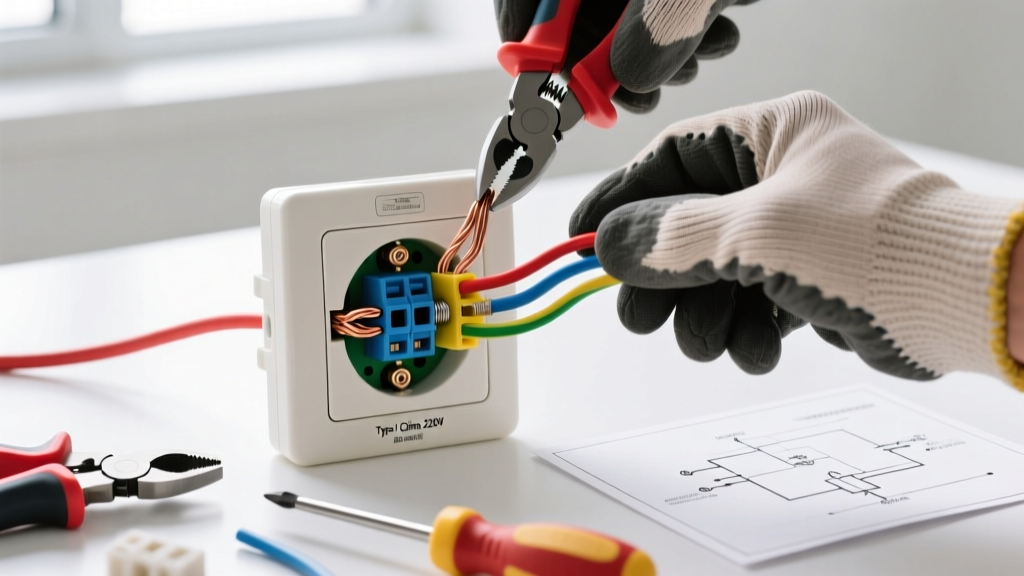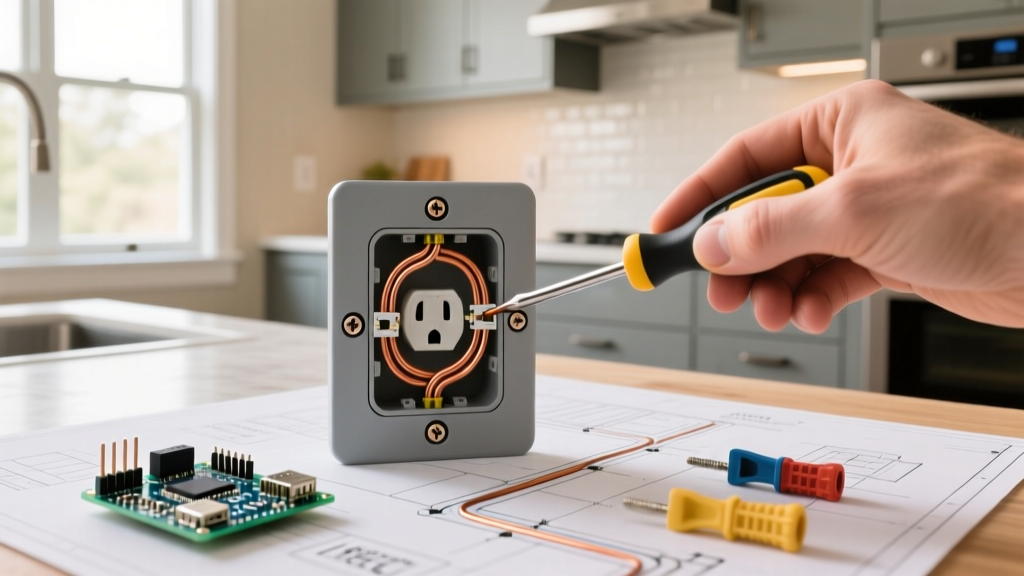

Why "Near Me" Searches Must Prioritize NEC Compliance
When you type "home electrical outlet installation near me" into a search engine, you are likely looking for a quick, convenient solution to add power to a room, upgrade an outdated receptacle, or install a dedicated circuit for a new appliance. However, proximity should never be your only filtering metric. Electrical work is strictly governed by the National Electrical Code (NEC) and your local Authority Having Jurisdiction (AHJ). Hiring a local handyman who bypasses permits or ignores code updates can lead to failed home inspections, voided insurance policies, and severe fire hazards.
In 2026, the electrical landscape has evolved. With the widespread adoption of the 2023 NEC cycle and emerging smart-home integrations, the requirements for receptacle placement, arc-fault protection, and tamper resistance are more stringent than ever. This guide breaks down the exact code requirements your local electrician must follow when performing an outlet installation in your home.
The 2026 NEC Landscape: What Your Local Electrician Must Know
The National Fire Protection Association (NFPA) NEC 70 serves as the benchmark for safe electrical design and installation. While local municipalities may have specific amendments, the core safety mandates remain universal. Below are the critical code sections that dictate how modern outlets must be installed.
1. GFCI and AFCI Protection Mandates (NEC 210.8 & 210.12)
Ground-Fault Circuit Interrupters (GFCIs) and Arc-Fault Circuit Interrupters (AFCIs) are no longer optional upgrades; they are mandatory life-safety devices. According to the Electrical Safety Foundation International (ESFI), GFCIs monitor the balance of electrical current and trip within milliseconds if a ground fault is detected, preventing lethal shocks.
- GFCI Requirements (NEC 210.8): Required in all 125-volt through 250-volt receptacles supplied by single-phase branch circuits rated 150 volts or less to ground, specifically in bathrooms, garages, outdoors, crawl spaces, unfinished basements, kitchens, laundry areas, and within 6 feet of any sink.
- AFCI Requirements (NEC 210.12): Required in all dwelling unit bedrooms, living rooms, hallways, and closets to detect dangerous arcing conditions that cause electrical fires. As detailed by the ESFI AFCI Guidelines, combination-type AFCIs (CAFCI) protect against both parallel and series arcs.
Pro-Tip for 2026 Installations: Instead of using bulky dual-function receptacles, top-tier electricians now frequently install Dual-Function CAFCI/GFCI circuit breakers at the panel (such as the Square D Homeline HOM120DF). This provides whole-circuit protection while allowing the use of standard, less expensive Tamper-Resistant receptacles at the wall, simplifying future resets.
2. Tamper-Resistant (TR) Receptacles (NEC 406.12)
If your local installer pulls standard, non-TR receptacles out of a bulk box for a bedroom or living room upgrade, halt the work immediately. NEC 406.12 mandates that all 15- and 20-ampere, 125- and 250-volt nonlocking receptacles in dwelling units must be listed as Tamper-Resistant.
Code Reality Check: Plastic outlet caps and sliding cover plates are not code-compliant substitutes for TR receptacles. TR receptacles feature internal spring-loaded shutters that only open when equal pressure is applied to both slots simultaneously, effectively neutralizing the risk of children inserting foreign objects.
When sourcing materials, ensure the face of the receptacle is stamped with the letters "TR". Premium models like the Leviton Decora T5320-W offer smoother plug insertion while maintaining strict UL compliance.
3. The 6-Foot and 12-Foot Spacing Rule (NEC 210.52)
One of the most common code violations in DIY or unpermitted "near me" installations is improper outlet spacing. NEC 210.52 dictates that no point along the floor line in any wall space can be more than 6 feet from a receptacle. Here is how the math works in practice:
- The 12-Foot Rule: Any wall space that is 2 feet or more in width must have a receptacle. Furthermore, receptacles must be spaced so that no point along the wall is more than 6 feet from an outlet (effectively requiring an outlet every 12 feet on long, unbroken walls).
- Measuring Around Obstacles: The measurement follows the floor line, wrapping around corners, doorways, and fireplaces. A doorway or hallway wider than 2 feet breaks the wall space, meaning the wall on either side is measured independently.
- Floor Receptacles: Floor outlets can only count toward the wall space requirement if they are located within 18 inches of the wall.
Kitchen and Bathroom Small Appliance Branch Circuits
Kitchens and bathrooms require specialized circuit planning that general handymen often overlook. NEC 210.11(C)(1) requires at least two 20-ampere small-appliance branch circuits (SABCs) to serve all countertop receptacles in the kitchen, pantry, and dining room.
These circuits must be dedicated. You cannot daisy-chain a kitchen countertop GFCI outlet with the dining room overhead lighting or the garbage disposal. Furthermore, NEC 210.52(C)(5) requires that countertop receptacles be installed so that no point along the wall line is more than 24 inches from a receptacle, necessitating tighter spacing than the standard 6-foot living room rule. Bathrooms require at least one 20-amp circuit dedicated solely to bathroom receptacles, with no other loads (like lighting or exhaust fans) permitted on that specific circuit unless it serves only that single bathroom.
2026 Cost Matrix: Local Outlet Installation Pricing
When evaluating quotes from local electricians found via "home electrical outlet installation near me" searches, use this 2026 pricing matrix to ensure you are receiving fair market rates. Prices include labor, standard materials, and basic drywall patching, but exclude major panel upgrades or extensive finished-wall fishing.
| Installation Type | Average 2026 Cost | Primary Code Trigger | Typical Timeframe |
|---|---|---|---|
| Standard 15A/20A TR Receptacle (Existing Box) | $125 - $175 | NEC 406.12 (Tamper-Resistant) | 1 - 2 Hours |
| New GFCI Receptacle (Point-of-Use) | $200 - $300 | NEC 210.8 (Wet/Damp Locations) | 2 - 3 Hours |
| Dedicated 20A Circuit + Outlet (e.g., Window AC) | $450 - $750 | NEC 210.23 (Appliance Load Limits) | 4 - 6 Hours |
| 240V EV Charger Outlet (NEMA 14-50) | $600 - $1,400 | NEC 625 (EV Charging Systems) | 6 - 10 Hours |
| AFCI/GFCI Dual-Function Breaker Upgrade | $250 - $400 per breaker | NEC 210.8 & 210.12 (Dual Protection) | 1 - 2 Hours per circuit |
Red Flags When Vetting Local Electricians
Finding a qualified professional requires looking past the first few sponsored search results. Protect your home by watching for these critical red flags during the consultation phase:
- Refusal to Pull Permits: If an electrician suggests skipping the local AHJ permit to "save you money," walk away. Unpermitted work will not be inspected, meaning code violations (like missing AFCI protection or improper wire gauging) will go unnoticed until a failure occurs.
- Ignoring Box Fill Calculations: NEC Article 314 dictates strict volume limits for electrical boxes. Adding a new smart receptacle or GFCI into an already crowded, shallow 1900-series box is a direct code violation and a fire risk. A pro will upgrade to a deep 4-inch box or use an extender ring.
- Using Backstab Connections: While push-in (backstab) wiring is technically permitted on some 14-AWG devices, master electricians universally avoid them due to long-term thermal loosening. Insist that your installer uses the side-terminal screw connections or, preferably, pigtails with wire nuts/Wago connectors to ensure a robust mechanical bond.
Frequently Asked Questions
Can a local handyman legally install new electrical outlets?
In most jurisdictions, a general handyman is legally restricted from performing new circuit wiring or panel modifications. While they may be allowed to swap an existing receptacle faceplate, any installation involving new wire runs, new breaker installations, or modifying the electrical box requires a licensed electrician and an AHJ permit.
Do I need a GFCI outlet if my panel already has a GFCI breaker?
No. NEC allows for either point-of-use GFCI receptacles or GFCI circuit breakers. Using both is redundant and can lead to nuisance tripping and confusion when trying to reset a tripped circuit. If your panel features a GFCI breaker for that specific zone, standard TR receptacles are code-compliant at the wall.
What happens if my local municipality hasn't adopted the 2023 NEC yet?
Electrical codes are adopted at the state or county level. Some rural municipalities may still be enforcing the 2017 or 2020 NEC. However, a reputable electrician will always install to the highest safety standard (the latest NEC cycle) regardless of local minimums, ensuring your home remains safe and future-proofed for eventual code updates and real estate inspections.