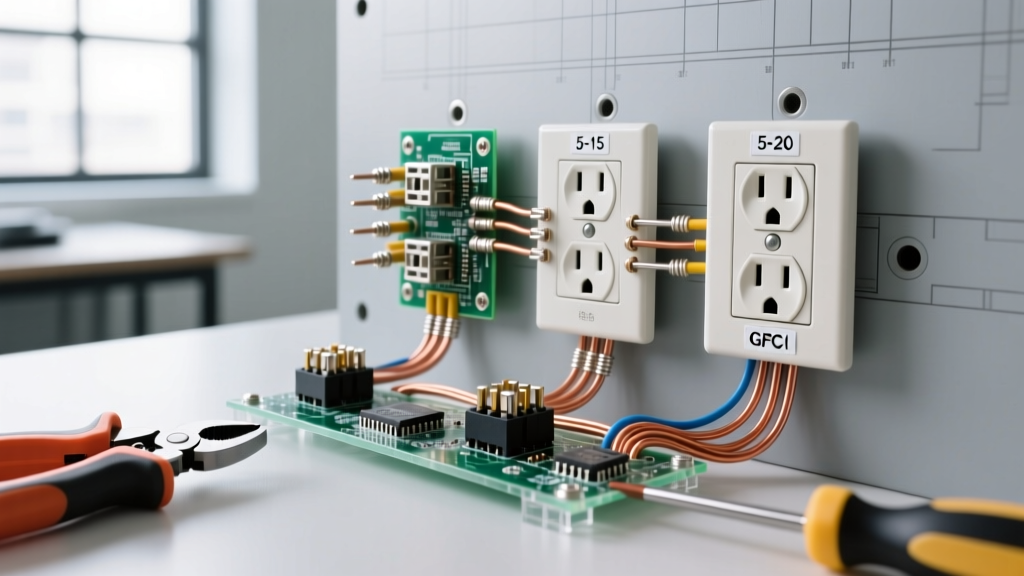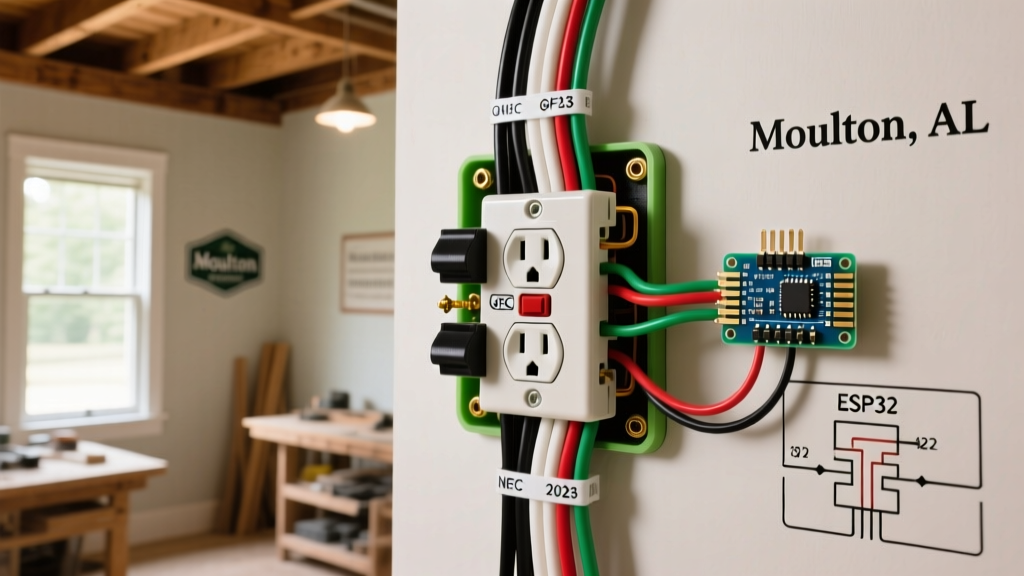

Upgrading or installing an electrical outlet Moulton Alabama residents rely on requires more than just connecting black, white, and bare copper wires. Moulton, situated in the heart of Lawrence County, presents a unique intersection of high Southern humidity, severe spring weather patterns, and strict adherence to state-amended National Electrical Code (NEC) standards. Whether you are finishing a basement on County Road 217 or replacing aging receptacles in a historic home near the Moulton town square, understanding local code compliance is critical to passing inspection and preventing electrical fires.
Navigating Moulton's Electrical Code Landscape
The state of Alabama adopts the NEC on a delayed cycle compared to the immediate release by the National Fire Protection Association (NFPA). As of 2026, most of Lawrence County and the City of Moulton enforce the 2020 NEC baseline, with specific municipal amendments regarding outdoor weatherproofing and agricultural outbuildings. The Alabama Electrical Contractors Board mandates that any individual performing electrical work for compensation must hold a valid state license, though homeowners are permitted to pull owner-builder permits for their primary residences.
When Does Moulton Require an Electrical Permit?
Not every receptacle swap requires a visit to the Moulton Building Department. However, you must pull a permit (typically costing between $50 and $85 for residential modifications) if your project involves:
- New Circuits: Running a new 12/2 or 14/2 NM-B cable from the main service panel to a new outlet location.
- Panel Upgrades: Increasing service from 100A to 200A to accommodate modern appliance loads and EV chargers.
- Detached Structures: Feeding power to a new workshop, pole barn, or detached garage, which requires a separate grounding electrode system.
- Service Relocations: Moving the exterior meter base, which requires coordination with Joe Wheeler Electric Membership Corporation (EMC).
Simple like-for-like replacements of damaged receptacles or upgrading standard outlets to GFCI models in existing boxes do not require a formal permit, provided the circuit's ampacity and wire gauge remain unchanged.
Climate-Specific Outlet Safety for North Alabama
Moulton experiences high annual humidity and is located in a region prone to severe thunderstorms and tornadoes. This environment accelerates corrosion in standard electrical components and demands rigorous weatherproofing for exterior installations.
Expert Warning: Standard indoor receptacles installed in exterior soffit boxes or patio walls will fail prematurely in North Alabama's climate due to condensation buildup inside the wall cavity. Always specify Weather-Resistant (WR) stamped receptacles for any location exposed to exterior temperature differentials.
Indoor vs. Outdoor Outlet Requirements
| Feature | Indoor Standard (Living Areas) | Outdoor / Damp Locations (Moulton Patios) |
|---|---|---|
| Receptacle Type | Standard 15A/20A Tamper-Resistant (TR) | Weather-Resistant (WR) & Tamper-Resistant |
| Enclosure Cover | Standard flat or toggle plate | Extra-Duty While-In-Use Cover (NEC 406.9) |
| Box Material | Standard PVC or metal nail-on boxes | UV-rated PVC or cast aluminum with hub |
| GFCI Protection | Required for kitchens, baths, garages | Mandatory for ALL 15A/20A 120V outdoor outlets |
| Sealing | Not required | Duct seal or silicone around conduit hubs |
GFCI and AFCI Mandates: The Code Standard
The U.S. Consumer Product Safety Commission (CPSC) heavily emphasizes the life-saving nature of Ground Fault Circuit Interrupters (GFCIs) and Arc Fault Circuit Interrupters (AFCIs). Under NEC Articles 210.8 and 210.12, Moulton inspectors will immediately fail a rough-in or final inspection if these protections are missing in mandated zones.
- GFCI Protection (Shock Hazard): Required within 6 feet of any sink (kitchen, bathroom, wet bar), in all garages, crawlspaces, unfinished basements, and outdoors. For outdoor setups near Joe Wheeler EMC transformer pads or HVAC condensers, use a 20A rated GFCI if the circuit serves heavy-duty landscaping equipment.
- AFCI Protection (Fire Hazard): Required for almost all 120V, 15A and 20A branch circuits supplying living rooms, bedrooms, hallways, and closets. The most reliable method for Moulton homes with older wiring is installing a Dual-Function (DF) breaker at the panel, such as the Siemens Q120DF, which provides both AFCI and GFCI protection in a single slot, eliminating the need for bulky GFCI receptacles downstream.
Step-by-Step: Upgrading a Non-Compliant Outdoor Receptacle
If you are replacing an old, cracked outdoor outlet on a Moulton home, follow this code-compliant procedure to ensure safety and durability.
- Kill the Power and Verify: Turn off the breaker and use a non-contact voltage tester (e.g., Klein Tools NCVT-2) to confirm the circuit is dead. Test the tester on a known live source first.
- Remove the Old Cover and Receptacle: Unscrew the weatherproof cover. Note the wiring configuration. If the ground wire is missing (common in pre-1980s Lawrence County homes), you must replace it with a GFCI receptacle labeled 'No Equipment Ground' to meet NEC 406.4(D)(2) exceptions.
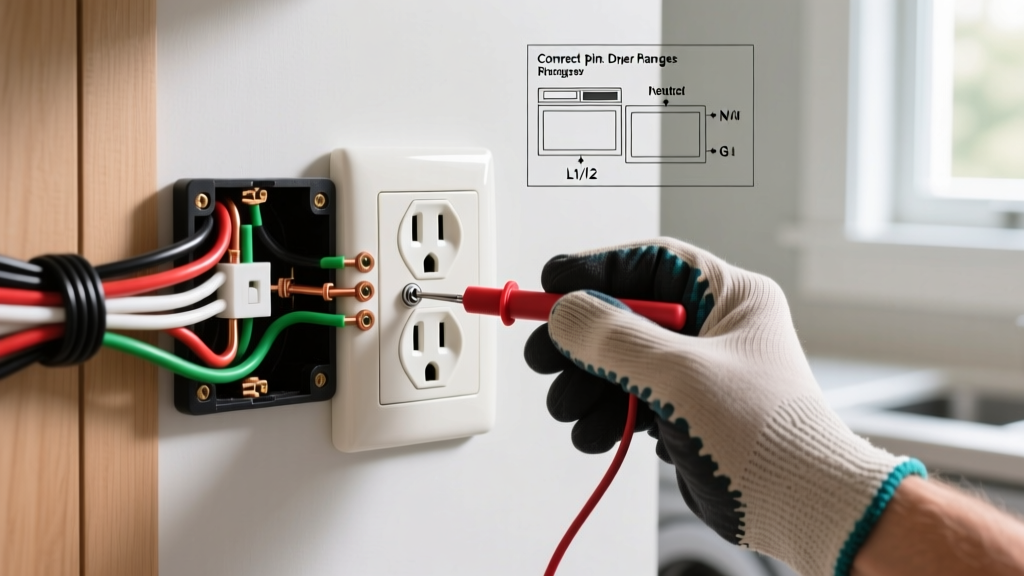
- Install a Weather-Resistant Receptacle: Wire the Hubbell WR15W (15A Weather-Resistant TR receptacle). Connect the black (hot) to the brass screw, white (neutral) to the silver screw, and bare copper to the green ground screw. Torque the terminals to the manufacturer's specification (typically 12-14 in-lbs) to prevent loose-wire arcing.
- Apply the Extra-Duty Cover: Install the TayMac MM540C while-in-use cover. This model expands to accommodate bulky power tool plugs or holiday lighting adapters while keeping the seal tight against driving rain.
- Seal the Perimeter: Apply a bead of exterior-grade, paintable silicone caulk around the top and sides of the cover plate where it meets the siding or brick. Leave the bottom unsealed to allow any internal condensation to drain (weep hole principle).
Top 5 Inspection Failures in Lawrence County
Based on common field corrections in the North Alabama region, avoid these frequent mistakes that trigger failed inspections:
- Bootleg Grounds: Using a jumper wire between the neutral and ground screw on a 3-prong outlet to trick a tester. This is a lethal code violation that will cause the appliance chassis to become energized if the neutral fails.
- Missing Knockout Seals: Leaving open 1/2-inch or 3/4-inch knockouts in metal junction boxes. Insects and moisture will enter, causing short circuits. Use metal knockout seals or plastic plugs.
- Over-stripped Conductors: Exposing more than 1/2 inch of bare copper wire past the terminal screw. This creates a shock hazard and a potential arc flash point inside the box.
- Backstabbing Wires: Pushing 14 AWG wire into the quick-connect holes on the back of a cheap receptacle. Inspectors heavily frown upon this; always use the side terminal screws or a properly torqued screw-clamp plate.
- Improper Box Fill: Cramming too many wires into a standard 18-cubic-inch single-gang box. NEC Article 314.16 dictates strict volume calculations. If you have 4 cables entering a box, upgrade to a 22-cubic-inch deep box.
Frequently Asked Questions
Does Joe Wheeler EMC require a specific grounding rod for new outbuildings?
Yes. If you are running a new feeder to a detached garage or barn in the Moulton area, the NEC requires a separate grounding electrode system at the outbuilding. This typically consists of two 5/8-inch by 8-foot copper-bonded ground rods, spaced at least 6 feet apart, connected with a solid #6 or #4 AWG bare copper wire. Joe Wheeler EMC will not energize a new service drop without the local inspector signing off on this grounding grid.
What are the average electrician rates in Moulton for outlet installation?
As of 2026, licensed electricians in Lawrence County typically charge between $85 and $125 per hour for residential service calls. A standard GFCI outlet upgrade, including parts and labor, generally ranges from $150 to $225. However, running a new dedicated 20A circuit for a kitchen island or window AC unit will cost between $350 and $550, depending on attic accessibility and drywall repair requirements.
Can I install a standard indoor outlet in my garage?
No. Under the current NEC enforced in Alabama, all 125V, 15A, and 20A receptacles in garages must be GFCI protected. Furthermore, because garages are subject to vehicle exhaust, dust, and occasional moisture, it is highly recommended to use Weather-Resistant (WR) rated receptacles even indoors, as they feature nickel-plated brass terminals that resist corrosion far better than standard zinc-plated indoor models.