
The Foundation: JIS C 8303 vs. US NEC Standards
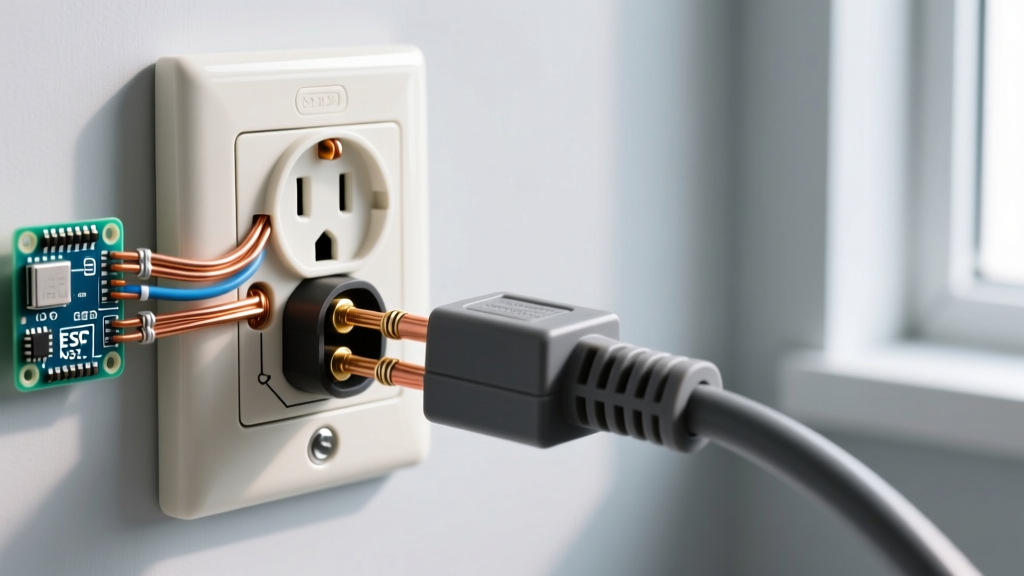
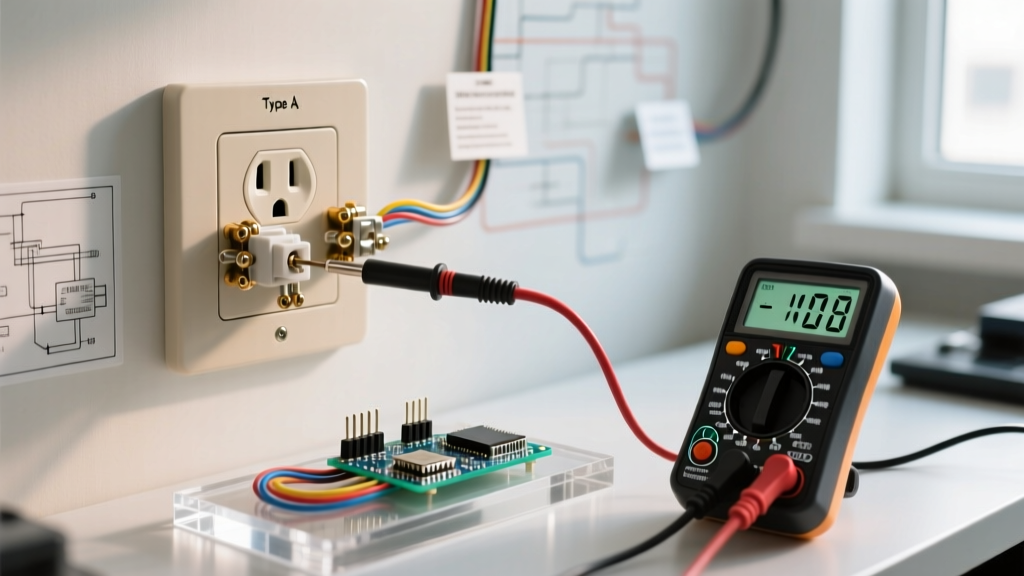
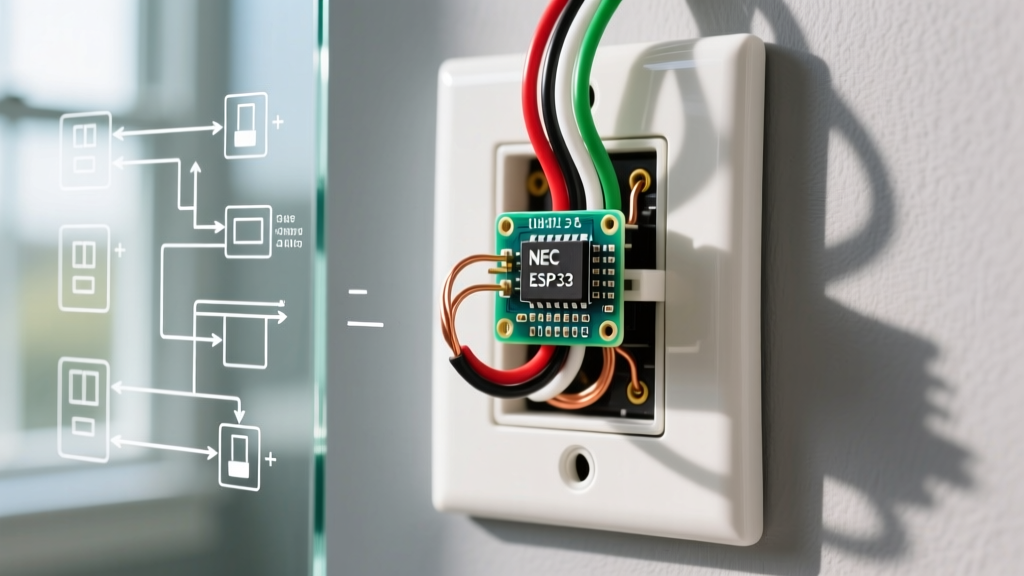
At first glance, a standard electrical outlet Japan residents use appears identical to the North American NEMA 1-15 or 5-15 receptacle. Both feature two flat, parallel pins (Type A). However, assuming that Japanese and American electrical codes are interchangeable is a critical error that can lead to equipment failure, fire hazards, or code violations. The Japanese electrical infrastructure is governed by the Japanese Industrial Standards (JIS), specifically JIS C 8303 for plugs and receptacles, and the Electrical Appliance and Material Safety Act (DENAN). In contrast, North America relies on the National Electrical Code (NEC) and NEMA standards.
While North American electricians follow NEC Article 406 for receptacle specifications, Japanese electricians must adhere to the technical standards outlined by the Ministry of Economy, Trade and Industry (METI). Below is a technical comparison matrix highlighting the core differences between the two frameworks.
| Feature | Japan (JIS C 8303 / METI) | North America (NEMA / NEC) |
|---|---|---|
| Nominal Voltage | 100V AC (±5%) | 120V AC (±5%) |
| Standard Frequency | 50Hz (East) / 60Hz (West) | 60Hz (Universal) |
| Polarization | Historically unpolarized; polarized in newer builds | Strictly polarized (NEMA 5-15R) |
| Grounding Mandate | Conditional (D-class grounding rules apply) | Universal for 15A/20A 120V receptacles |
| Cable Sizing Metric | Metric (1.6mm, 2.0mm solid wire) | AWG (14 AWG, 12 AWG) |
| Safety Certification | PSE Mark (Diamond or Circle) | UL / CSA / ETL Listing |
Voltage, Frequency, and the 100V Reality
Japan operates on a nominal 100V AC system, which is the lowest standard utility voltage in the world. According to the Japan National Tourism Organization (JNTO), this 100V standard was established in the late 19th century and remains strictly enforced. While a US 120V appliance will generally function on a 100V supply (albeit drawing slightly higher amperage and running hotter), the reverse can cause immediate damage to 100V Japanese electronics plugged into a 120V US circuit.
Furthermore, Japan is uniquely divided by frequency. Eastern Japan (including Tokyo, Yokohama, and Tohoku) operates at 50Hz, while Western Japan (including Osaka, Kyoto, and Nagoya) operates at 60Hz. This split originated from historical purchases of generators from Germany (AEG, 50Hz) and the US (GE, 60Hz) in the 1890s. When wiring or specifying motor-driven appliances (like HVAC systems or large refrigerators) across different Japanese prefectures, dual-frequency compatibility (50/60Hz) is a strict requirement to prevent motor burnout and timing clock drift.
Grounding (Earthing) Requirements in Japanese Code
The most significant code divergence for international electricians working in Japan is the approach to grounding. Under the US NEC, a grounding conductor and a 3-prong receptacle are mandatory for virtually all 120V 15A/20A branch circuits. In Japan, standard 100V duplex receptacles often feature only two unpolarized slots, lacking a dedicated third grounding hole.
When is Grounding Mandatory?
Japanese electrical code mandates D-class grounding (D種接地工事) under specific conditions rather than universally. Grounding is legally required for:
- Receptacles installed in wet or damp locations (bathrooms, kitchens, outdoor areas).
- Circuits supplying specific high-draw or water-adjacent appliances (washing machines, bidet toilets, microwaves, and dishwashers).
- Any equipment operating above 300V (though this falls under C-class or B-class grounding).
- Metal-clad wiring systems where the sheath is not inherently grounded.
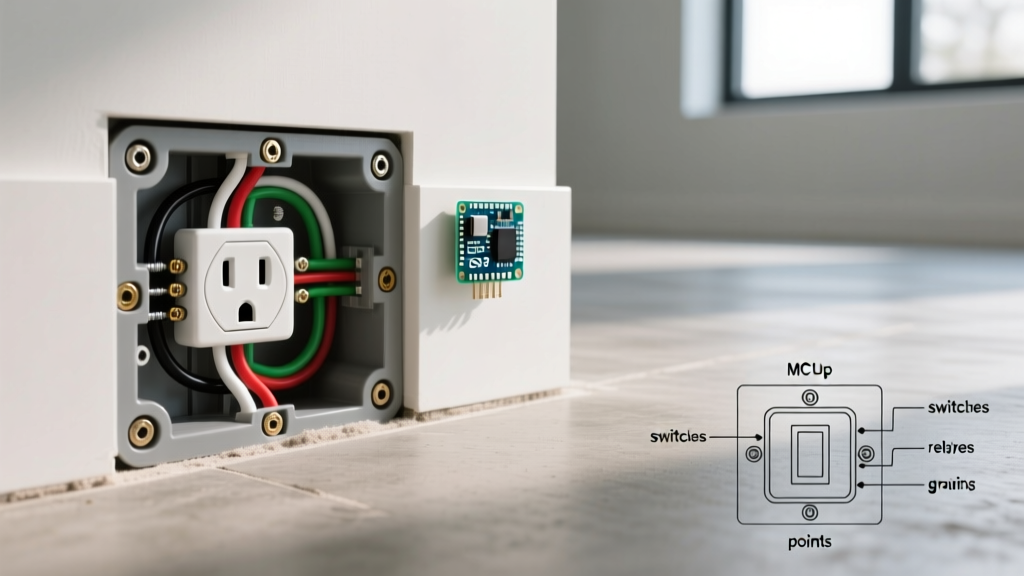
Expert Callout: When grounding is required for a standard 100V Japanese outlet, it is rarely achieved via a third slot. Instead, the receptacle faceplate includes a small, dedicated grounding screw terminal (often marked with a ground symbol or green plate). The installer must attach a ring terminal or stripped green ground wire directly to this screw, separate from the line and neutral connections.
PSE Certification and the DENAN Law
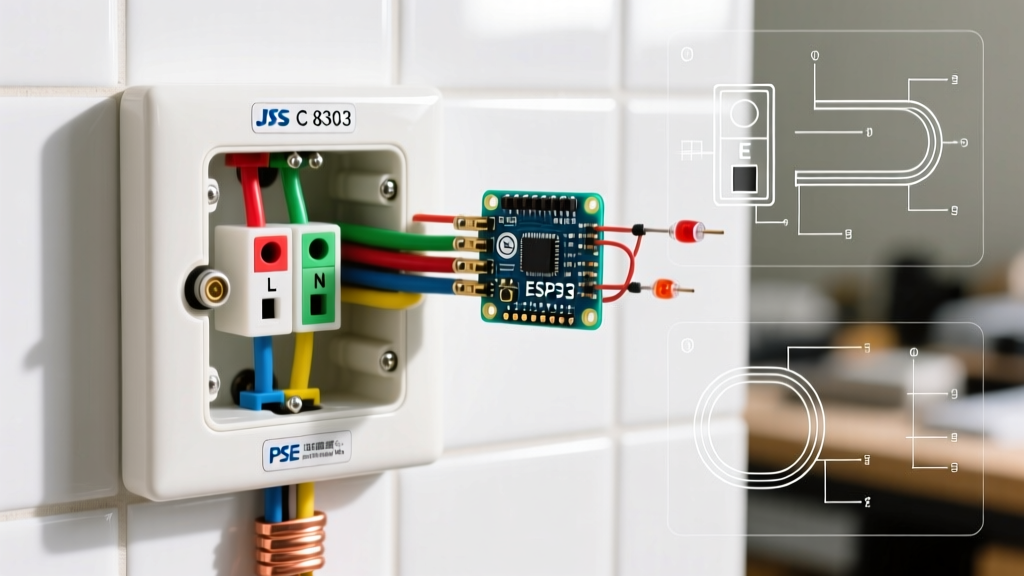
You cannot legally install or sell an electrical outlet in Japan without the proper PSE (Product Safety Electrical Appliances and Material) mark. Governed by the DENAN law, the PSE mark ensures the product has passed rigorous Japanese safety testing.
There are two distinct PSE marks you must know:
- Diamond PSE Mark: Reserved for 'Specified Electrical Appliances and Materials' (Category A). These are high-risk items like circuit breakers, specific heavy-duty receptacles, and power supplies. They require third-party testing by an approved body like UL Japan or TUV Rheinland.
- Circle PSE Mark: Used for 'Non-Specified Electrical Appliances and Materials' (Category B). Standard residential 100V duplex receptacles typically fall into this category, allowing manufacturers to self-declare compliance after internal testing, provided they maintain technical documentation.
For a comprehensive breakdown of global plug and receptacle safety frameworks, the International Electrotechnical Commission (IEC) World Plugs guide remains the definitive reference for cross-border compatibility and Type A physical dimensions.
Step-by-Step: Wiring a Standard Japanese Duplex Receptacle
Wiring a JIS-compliant receptacle requires specific tools and adherence to metric measurements. Japanese residential wiring predominantly uses VVF (Vinyl Insulated Vinyl Flat) cable. The most common sizes are 1.6mm (equivalent to roughly 14 AWG) and 2.0mm (roughly 12 AWG) solid copper conductors.
Preparation and Stripping
Unlike the US where wire strippers are calibrated in AWG, Japanese electricians use metric cable strippers. For a standard JIS C 8303 15A receptacle:
- Outer Sheath Stripping: Remove exactly 20mm to 25mm of the outer vinyl sheath, being meticulously careful not to nick the inner 1.6mm or 2.0mm solid conductors. Nicking solid metric wire creates a severe fracture point that will snap under terminal torque.
- Conductor Stripping: Strip exactly 12mm of insulation from the black (line) and white (neutral) wires. Most modern Japanese receptacles feature a physical 12mm gauge marker molded into the back of the polycarbonate housing.
Termination and Torque Specifications
Japanese receptacles utilize either screw-and-plate terminals or push-in (speed-wire) connectors. For screw terminals, the JIS standard requires precise torque to prevent arcing without crushing the solid copper wire.
- Target Torque: 1.2 N·m to 1.5 N·m (Newton-meters).
- Tooling: Use a JIS-standard #2 Phillips screwdriver. Warning: US-standard Phillips drivers have a slightly different tip angle and will easily cam-out and strip Japanese terminal screws, which are cut to JIS B 1012 specifications.
- Wire Orientation: When using loop-and-screw termination, the loop must be routed clockwise so that tightening the screw pulls the loop closed rather than pushing it outward.
Common Edge Cases and Troubleshooting
Edge Case 1: The 200V IH Cooktop Circuit
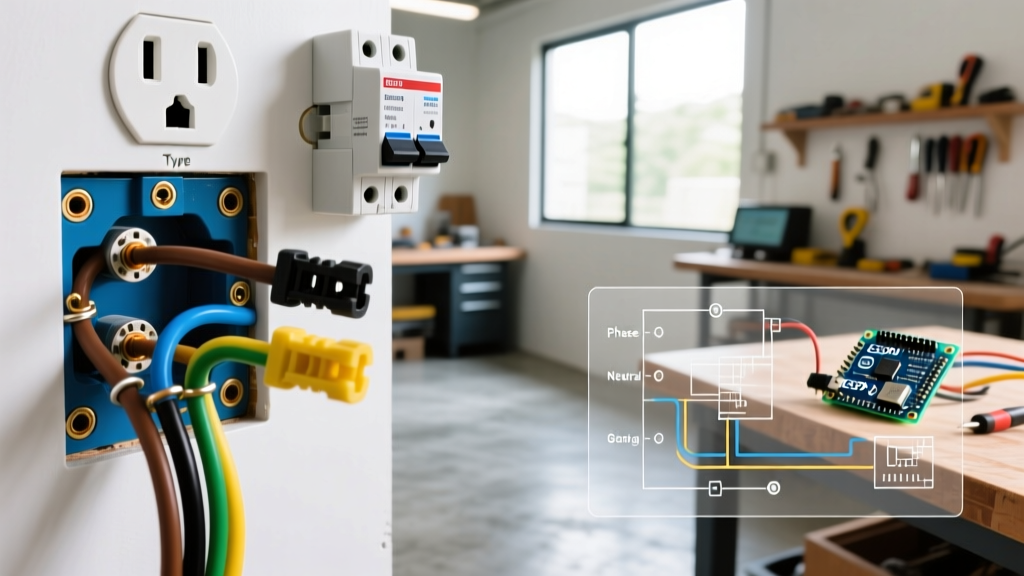
Modern Japanese homes frequently utilize 200V circuits for Induction Heating (IH) cooktops and 'EcoCute' heat-pump water heaters. These do not use standard 100V Type A outlets. They require specialized JIS 200V receptacles (often resembling NEMA 6-20 but with distinct JIS pin configurations). Wiring these requires a 2-core plus ground VVF cable (red, white, green) and a dedicated 20A or 30A 2-pole breaker in the distribution board. Never attempt to adapt a 100V plug to a 200V JIS receptacle; the physical keying exists specifically to prevent this fatal error.
Edge Case 2: Unpolarized Receptacle Failures
Because many older Japanese outlets are unpolarized, appliances with internal single-pole switches or fuses on the 'hot' side can end up with the switch on the neutral side if the plug is flipped. This leaves internal components energized at 100V even when the appliance is switched 'off', posing a shock hazard during DIY appliance repairs. Always verify line and neutral with a non-contact voltage tester before servicing equipment in Japan.
Frequently Asked Questions
Can I install a US NEMA 5-15R receptacle in a Japanese home?
No. While it may physically fit in the wall box, installing a non-PSE certified NEMA receptacle violates the DENAN law. Furthermore, the 120V rating on the NEMA device does not align with Japanese 100V system documentation, and the mandatory US grounding pin will leave you with no standardized way to connect the Japanese D-class ground wire without improper adapters.
How do I identify the ground wire in Japanese VVF cable?
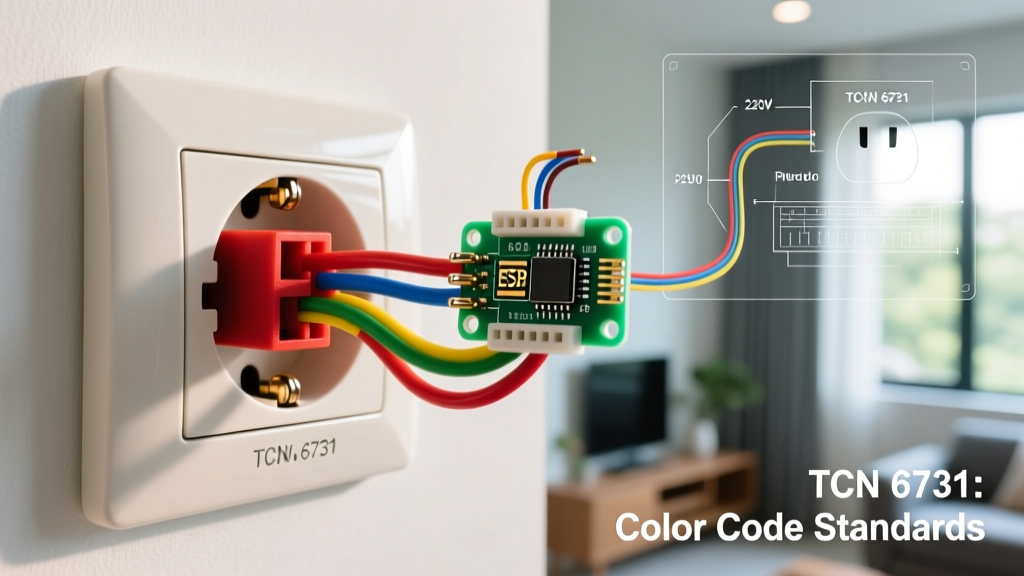
In a 3-core VVF cable used in Japan, the conductors are typically Black (Line), White (Neutral), and Green (Ground). In older 2-core installations where a separate ground was pulled, the ground wire is a bare copper or green-insulated wire routed independently to the D-class grounding busbar in the panel.
Where can I verify the safety standards for Japanese electrical components?
The National Institute of Technology and Evaluation (NITE) in Japan maintains extensive databases on product safety, recall notices, and the technical interpretations of the Electrical Appliance and Material Safety Act. It is the primary resource for verifying PSE compliance and testing methodologies.