
The Evolution of the Electrical Outlet Installation Tool in 2026
When selecting the right electrical outlet installation tool, professionals and advanced DIYers must look far beyond the traditional flathead screwdriver and basic pliers. The 2026 landscape of residential and commercial electrical work is defined by strict adherence to the National Electrical Code (NEC), specifically the rigorous enforcement of terminal torque specifications and advanced arc-fault prevention. Using outdated or improper tools is no longer just a matter of inefficiency; it is a direct pathway to failed inspections, localized hot spots, and catastrophic electrical fires.
This comprehensive guide breaks down the essential tools required for modern receptacle installation, comparing specific 2026 model numbers, real-world pricing, and the exact failure modes that occur when substandard equipment is used. Whether you are wiring a standard 15A duplex receptacle or a 20A GFCI/AFCI combo unit, having the correct precision instruments is non-negotiable.
Core Electrical Outlet Installation Tool Matrix
Before diving into the technical nuances of wire preparation and termination, review the baseline matrix below. This table outlines the primary tool categories, our top recommended models for 2026, current market pricing, and the specific risks associated with omitting them from your toolkit.
| Tool Category | Recommended 2026 Model | Approx. Price | Primary Use Case | Failure Mode if Omitted/Improper |
|---|---|---|---|---|
| Wire Stripper | Klein Tools 11055 | $28 | Stripping 10-20 AWG solid/stranded | Nicked copper conductors reducing ampacity |
| Voltage Tester | Fluke 2AC-II VoltAlert | $35 | Verifying de-energized circuits | Fatal shock hazard, false zero-energy readings |
| Torque Screwdriver | CDI Torque 401SMV2 | $145 | Calibrated terminal screw tightening | Over-torquing strips threads; under-torquing causes arcing |
| Insulated Driver | Wiha 320P-PL 11-Piece | $65 | Safe termination in live panels (if applicable) | Short circuits via exposed shaft contact |
| Receptacle Leveler | Gardner Bender GWA-85 | $12 | Aligning yokes in warped drywall | Crooked faceplates, cracked cover plates |
Precision Wire Preparation: Strippers and Cutters
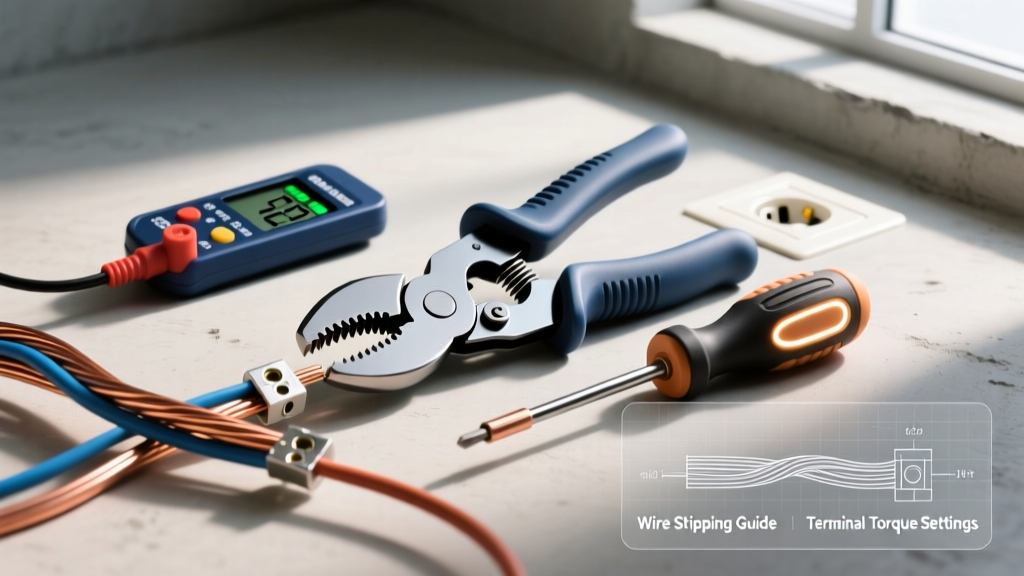
The foundation of any reliable outlet installation is the preparation of the conductor. A pristine wire termination begins with a clean strip. The Klein Tools 11055 remains the industry standard for standard residential wiring (14 AWG and 12 AWG THHN/THWN). However, for high-volume contractors in 2026, the Knipex 12 62 200 TwinGrip (approx. $85) has emerged as a premium alternative, utilizing self-adjusting jaws that prevent the accidental gouging of the copper core.
The Danger of Nicked Conductors
Why does the specific stripper matter? If you use the wrong gauge hole on a manual stripper, or rely on cheap, uncalibrated automatic strippers, you risk scoring the copper. A nick in a 12 AWG solid copper wire reduces its cross-sectional area at that exact point. Under a continuous 16A load, this localized bottleneck increases electrical resistance, generating a hot spot that can exceed 140°F inside a confined junction box. Over time, this thermal cycling degrades the THHN insulation, leading to ground faults or short circuits.
Expert Tip: Always strip exactly 3/4 of an inch of insulation for standard 15A/20A receptacles. Exposing more than 3/4 inch leaves bare copper visible outside the terminal yoke, violating NEC 110.14 and creating a shock hazard if a ground wire shifts inside the box.
Verifying Zero Energy: Advanced Testing Protocols
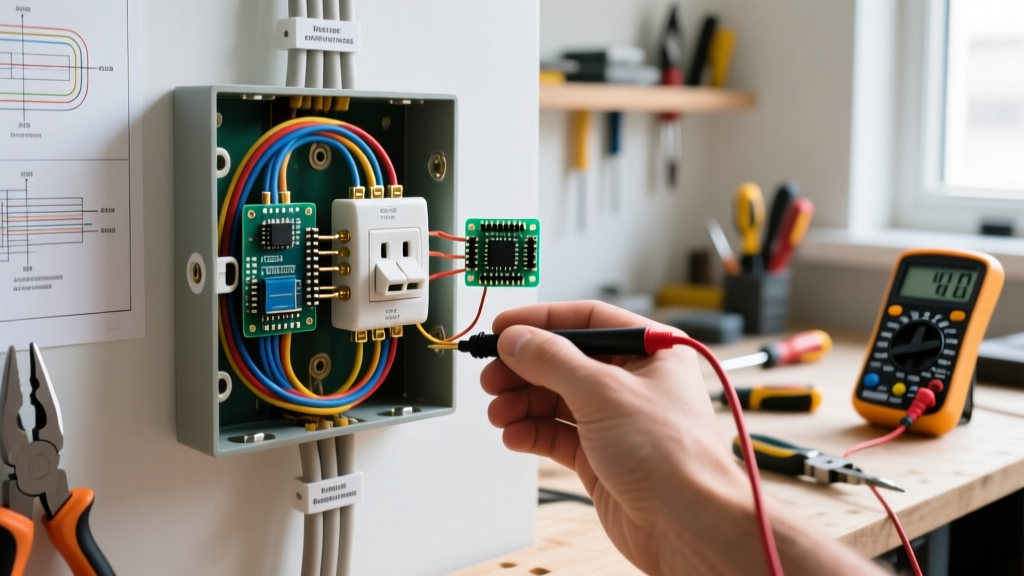
No electrical outlet installation tool kit is complete without a reliable Non-Contact Voltage Tester (NCVT) and a digital multimeter. According to OSHA electrical safety standards, verifying a zero-energy state requires testing a known live source, testing the target circuit, and re-testing the known live source (the Live-Dead-Live method).
Fluke 2AC-II vs. Klein NCVT-2
- Fluke 2AC-II ($35): Features a 90-1000V AC range and a continuous self-test function. The self-test is critical; if the internal battery drops below the threshold to detect 120V, the tool will not power on, preventing false-negative readings that plague cheaper models.
- Klein NCVT-2 ($25): Offers dual-range capability (12-1000V and 70-1000V). The low-voltage mode is invaluable in 2026 smart homes where you need to differentiate between 120V line voltage and 24V doorbell or HVAC thermostat wiring sharing the same multi-gang box.
Edge Case Warning: NCVTs can be fooled by 'phantom voltage' induced by adjacent live wires in a multi-cable staple. Always confirm your NCVT reading with a contact voltage tester or a solenoid tester (wiggy) before touching bare conductors.
The 2026 NEC Torque Mandate: Why You Need a Calibrated Driver
The most significant shift in modern receptacle installation is the universal enforcement of NFPA NEC Section 110.14(D). This code explicitly requires that electrical connections be tightened using a calibrated torque tool to the manufacturer's specified values. Inspectors in 2026 routinely carry their own torque screwdrivers to audit newly installed panels and high-draw receptacles.
Applying the Correct Torque to Duplex Receptacles
Most standard Leviton, Pass & Seymour, and Eaton 15A and 20A commercial-grade receptacles require between 12 in-lbs and 14 in-lbs of torque on their brass terminal screws. The CDI Torque 401SMV2 (adjustable 10-50 in-lbs) is the gold standard for this task.
Failure Modes of Improper Torquing
- Under-Torquing (Below 10 in-lbs): The wire is not fully compressed against the brass contact plate. Thermal expansion and contraction from daily load cycles cause the wire to loosen. This creates micro-arcing, which generates immense heat and is a leading cause of residential electrical fires.
- Over-Torquing (Above 18 in-lbs): The brass threads on the receptacle yoke strip out, or the screw head snaps. Furthermore, excessive pressure can cold-flow the copper wire, deforming it and reducing the surface contact area, ironically creating the same high-resistance hot spot as an under-torqued connection.
Alignment and Mechanical Finishing
Once the electrical connections are made and torqued, the physical mounting of the receptacle presents its own challenges. Warped drywall, over-tightened mud rings, and stacked boxes often result in crooked outlets. The Gardner Bender GWA-85 Receptacle Leveler uses precision-machined shims that slide over the mounting screws between the yoke and the drywall. This allows you to perfectly plumb the receptacle without bending the metal yoke, which can stress the internal contacts and cause premature failure of the ground slot tension.
Troubleshooting Common Tool-Related Edge Cases
Even with the best equipment, field conditions can compromise your tools. Here is how to troubleshoot common issues encountered during outlet installations:
- Stripped Terminal Screws: If a Phillips #2 bit slips and strips the brass screw on a new GFCI outlet, do not attempt to grip it with pliers. The yoke is likely compromised. Cut the wires, discard the $25 GFCI unit, and start over. Using a damaged receptacle violates NIOSH electrical safety guidelines regarding listed equipment integrity.
- Worn Stripper Blades: If your Klein 11055 begins leaving copper shavings on the wire, the cutting notches are dull. Do not attempt to sharpen them with a file; the precise tolerances will be ruined. Replace the tool immediately.
- NCVT False Positives: If your Fluke tester alarms on a disconnected wire, it is detecting capacitive coupling from a live wire in the same Romex cable. Use a multimeter set to AC Voltage, placing one probe on the suspect wire and the other on a known ground. A reading below 5V confirms phantom voltage.
Final Thoughts on Tool Investment
Building a professional-grade electrical outlet installation tool kit requires an upfront investment of roughly $300 to $500. However, when weighed against the cost of failed inspections, damaged smart-home electronics, or the catastrophic liability of an electrical fire, precision tools are the cheapest insurance policy an electrician or DIYer can buy. Prioritize calibrated torque drivers, self-testing voltage detectors, and precision wire strippers to ensure every 2026 installation is safe, durable, and fully code-compliant.