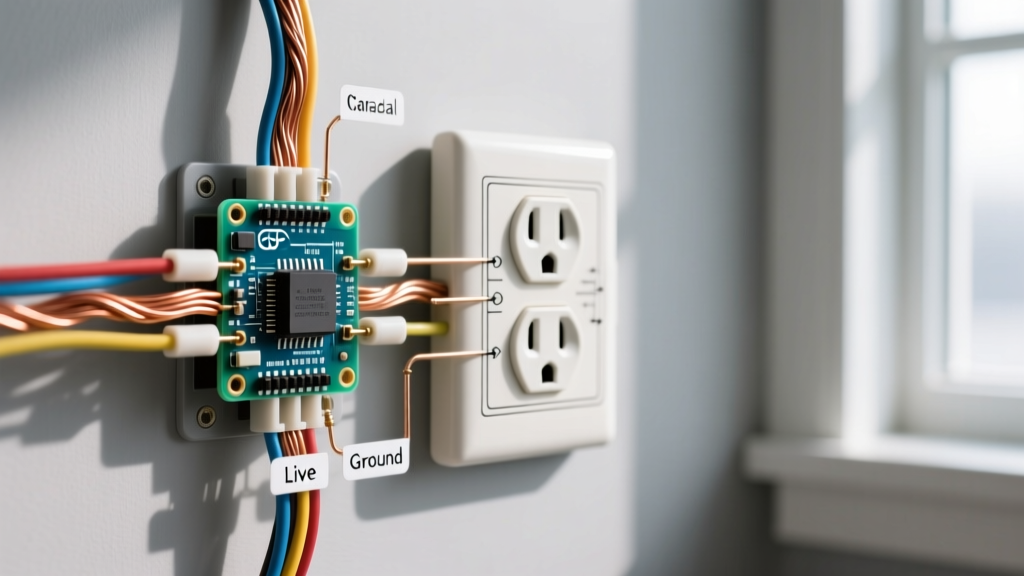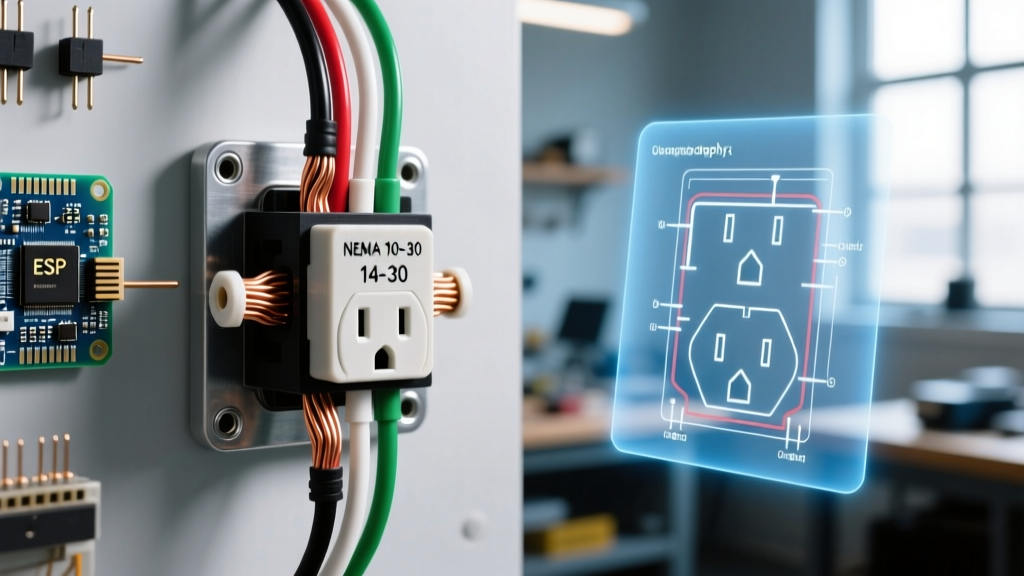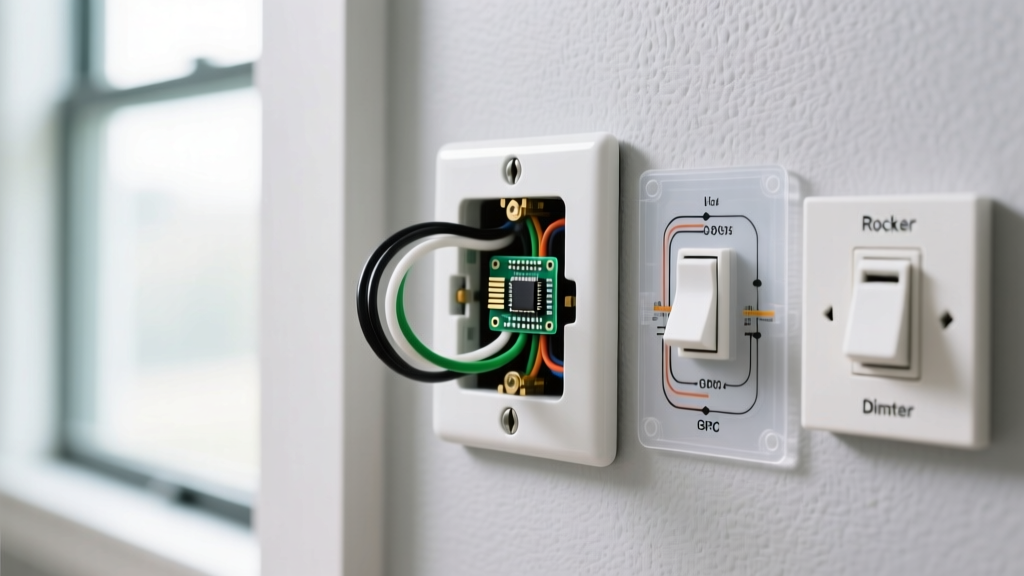

The True Electrical Outlet Installation Cost: Beyond the $3 Receptacle
When homeowners begin planning a renovation or an addition, they often glance at a hardware store shelf, see a standard 15-amp duplex receptacle priced at $2.50, and assume the electrical outlet installation cost will be negligible. This is one of the most expensive misconceptions in residential construction. The reality is that the physical receptacle accounts for less than 5% of the total project cost. The true financial driver is the National Electrical Code (NEC).
As a Code Requirement Explainer, we must emphasize that every new outlet installed in 2026 must comply with the latest adopted NEC cycle (typically the 2023 or 2026 edition, depending on your local jurisdiction). These codes mandate advanced safety features, specific circuit topologies, and rigorous grounding standards that drastically alter material requirements and labor hours. According to the National Fire Protection Association (NFPA), the NEC is adopted in all 50 states, though local municipalities often append their own amendments. Understanding these code triggers is the only way to accurately forecast your budget.
How NEC Code Requirements Dictate Your Bottom Line
The NEC is not a suggestion; it is the legal baseline for safe electrical design. When you install a new outlet, you are not just connecting wires—you are satisfying specific code articles. Here is how the major code requirements impact the electrical outlet installation cost.
GFCI Protection (NEC Article 210.8)
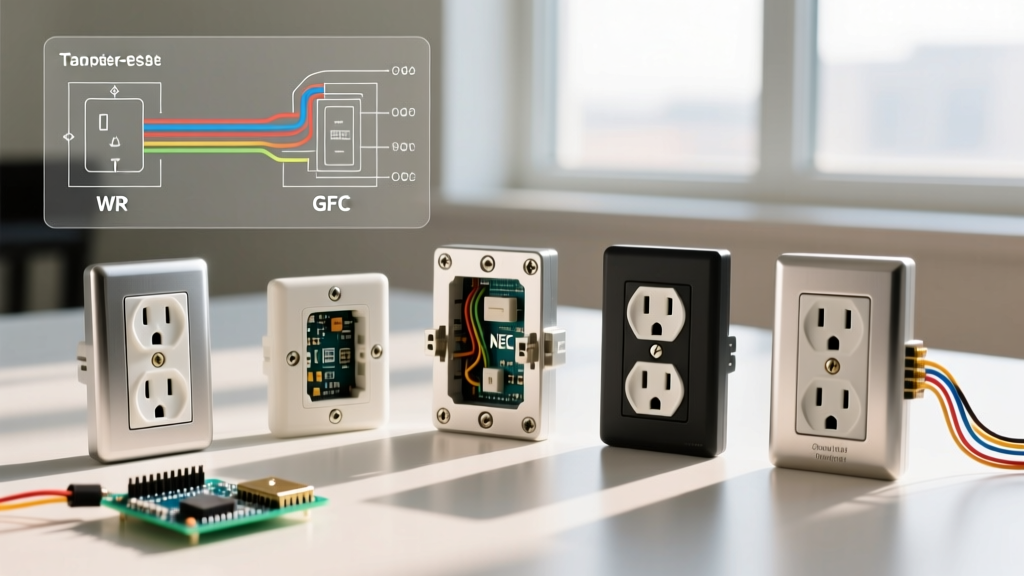
Ground-Fault Circuit Interrupter (GFCI) protection is mandatory in all wet or potentially damp locations. This includes kitchens, bathrooms, garages, unfinished basements, crawlspaces, outdoors, and within 6 feet of a sink. The Electrical Safety Foundation International (ESFI) notes that GFCIs have prevented thousands of electrocutions by tripping the circuit when a ground fault as small as 4 to 6 milliamps is detected.
- Material Cost Impact: A standard 15A TR receptacle costs about $2.50. A 20A GFCI receptacle (like the Leviton GFNT2-W) costs between $18.00 and $24.00. Alternatively, installing a GFCI circuit breaker (e.g., Square D HOM120GFI) costs around $45.00 to $55.00.
- Labor Impact: Wiring a GFCI receptacle requires careful attention to the LINE and LOAD terminals to protect downstream outlets, adding roughly 10-15 minutes of labor per device compared to a standard receptacle.
AFCI Protection (NEC Article 210.12)
Arc-Fault Circuit Interrupters (AFCIs) are designed to detect dangerous electrical arcs that can cause fires. Under NEC 210.12, AFCI protection is required in almost all living areas, including bedrooms, living rooms, hallways, and closets. As highlighted by ESFI's AFCI safety guidelines, combination-type AFCIs protect against both parallel and series arcing.
- Material Cost Impact: AFCI protection is almost always handled at the breaker panel rather than the receptacle. A 15A or 20A Combination AFCI breaker (such as the Square D QO120CAFI) costs between $40.00 and $65.00. If you are adding a new circuit for a bedroom addition, this breaker cost is a mandatory addition to your electrical outlet installation cost.
- Labor Impact: Minimal at the outlet itself, but requires proper neutral and hot wire routing at the panel, which must be done meticulously to prevent nuisance tripping.
Tamper-Resistant (TR) Mandates (NEC Article 406.12)
All 15-amp and 20-amp, 125-volt and 250-volt non-locking receptacles installed in residential dwellings must be Tamper-Resistant. These feature internal shutter mechanisms that prevent children from inserting foreign objects.
- Material Cost Impact: TR receptacles cost roughly $0.50 to $1.00 more than legacy non-TR models. While minor per unit, in a whole-home rewire requiring 60+ outlets, this adds $30 to $60 to the material bill.
Kitchen & Laundry 20A Dedicated Circuits (NEC Article 210.11)
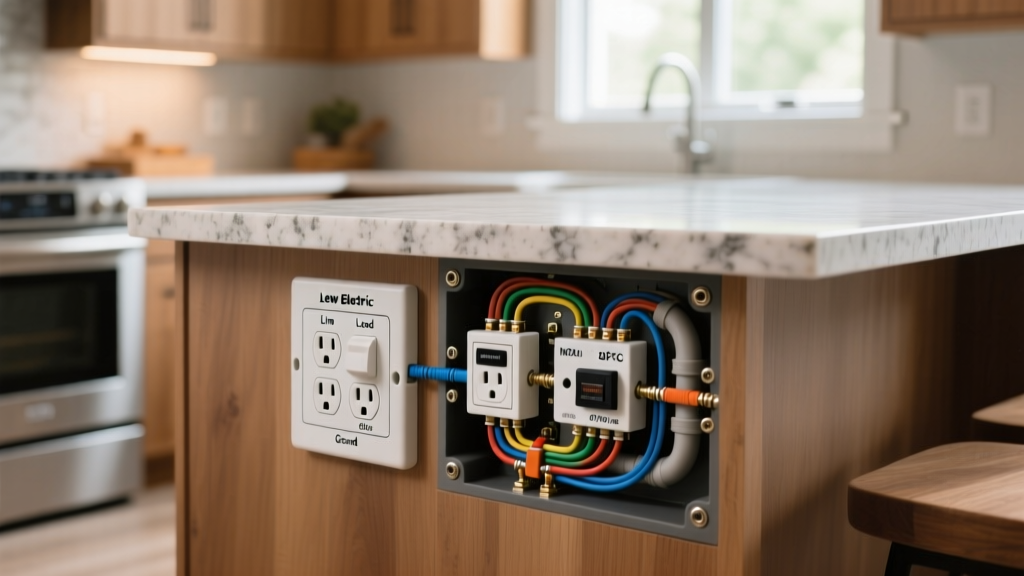
The NEC requires at least two 20-amp small-appliance branch circuits for kitchen countertop outlets, and a dedicated 20-amp circuit for the laundry room. You cannot use standard 14 AWG wire and 15-amp breakers for these areas.
- Material Cost Impact: 12 AWG Romex (NM-B) wire is approximately 30% more expensive than 14 AWG. Furthermore, 20A receptacles (which feature a T-shaped neutral slot) cost about $3.50 each, and 20A breakers cost $8.00 compared to $6.00 for 15A breakers.
- Labor Impact: 12 AWG wire is significantly stiffer and harder to bend into standard single-gang electrical boxes, increasing physical fatigue and installation time for the electrician.
2026 Cost Breakdown: Materials vs. Labor vs. Code Compliance
To provide a realistic picture of the electrical outlet installation cost in 2026, we must separate simple replacements from new, code-compliant circuit installations. Professional electrician labor rates in 2026 average between $95 and $145 per hour, depending on regional markets.
| Installation Scenario | NEC Code Trigger | Material Cost (Avg) | Labor Time | Total Estimated Cost |
|---|---|---|---|---|
| Like-for-Like Swap (Grounded) | 406.12 (TR) | $3.00 | 0.25 Hours | $30 - $45 |
| New Kitchen Countertop Outlet | 210.8 (GFCI), 210.11 (20A) | $25.00 (GFCI + 12AWG) | 1.5 - 2 Hours | $175 - $315 |
| New Bedroom Addition Circuit | 210.12 (AFCI Breaker) | $65.00 (AFCI + Wire + Boxes) | 3 - 5 Hours | $350 - $790 |
| Outdoor Patio Receptacle | 210.8 (GFCI), 210.52 (Weatherproof) | $40.00 (In-use cover + GFCI) | 2 - 3 Hours | $230 - $475 |
Hidden Cost Triggers: When Old Wiring Meets New Code
The most severe budget overruns occur when homeowners attempt to upgrade outlets in older homes (pre-1970s) and trigger legacy wiring remediation.
The 2-Prong Ungrounded Dilemma (NEC 406.4(D))
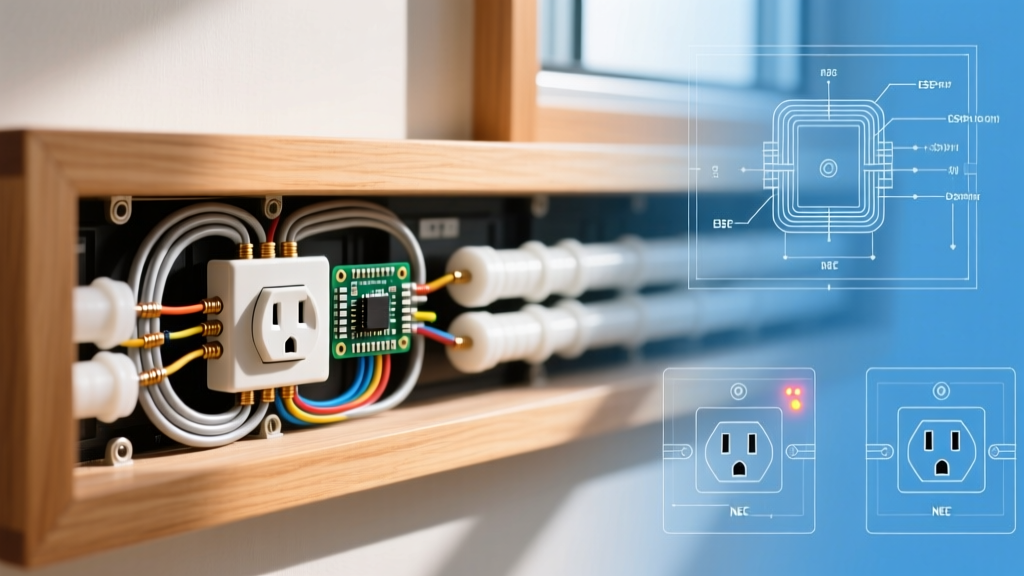
If your home has ungrounded 2-prong outlets, the NEC does not force you to tear open your walls and run new equipment grounding conductors. Under NEC 406.4(D)(2), you are legally permitted to replace an ungrounded 2-prong receptacle with a GFCI receptacle, provided you apply the included "No Equipment Ground" and "GFCI Protected" sticker labels to the faceplate. This allows the GFCI to protect against shock, even without a ground wire. This code exception saves thousands of dollars in drywall repair and rewiring, capping the electrical outlet installation cost at roughly $35 to $50 per drop.
Panel Capacity and the "Full Box" Problem
Adding new outlets often requires new circuits. If your main electrical panel has no available physical slots, you must either install tandem breakers (if the panel bus bar allows it) or install a subpanel. A subpanel installation adds $800 to $1,500 to your project cost before a single new outlet is wired.
Permitting, Inspections, and the "Open Wall" Rule
Do you need a permit to change an outlet? Generally, like-for-like replacements do not require a permit. However, installing new outlets, running new circuits, or altering the panel requires an electrical permit. Permit fees typically range from $50 to $150. Skipping this step to save money is a massive financial risk; if an unpermitted circuit causes a fire, insurance companies routinely deny claims. Furthermore, if you are selling the home, unpermitted electrical work can derail the inspection process and force you to open up finished walls for an invasive municipal inspection.
Frequently Asked Questions
Can I install a 20-amp receptacle on a 15-amp circuit?
No. NEC Article 210.21(B)(3) strictly dictates receptacle ratings based on circuit size. A 20-amp receptacle (with the T-shaped neutral slot) cannot be installed on a 15-amp circuit. However, you can install standard 15-amp receptacles on a 20-amp circuit, provided there is more than one receptacle on that circuit.
Why does my new AFCI breaker keep tripping immediately?
Nuisance tripping on AFCI breakers is a common failure mode caused by shared neutrals (multi-wire branch circuits wired incorrectly), damaged wire insulation caused by drywall screws, or even incompatible dimmer switches and LED drivers on the same circuit. Troubleshooting this requires an electrician with an AFCI diagnostic tool, adding 1-2 hours of labor to your final bill.
Does smart home integration increase outlet installation costs?
Yes. Installing smart receptacles (like the Leviton DW15R) requires a neutral wire in the electrical box. In older homes where switch loops or certain outlet drops lack a neutral wire, pulling a new neutral conductor can double the labor time and significantly increase the overall electrical outlet installation cost.