
Navigating the Complexities of Electrical Outlet Installation in Boulder
Boulder, Colorado, presents a unique intersection of strict municipal building codes, high-altitude climate extremes, and rugged outdoor landscapes. Whether you are wiring a new outdoor kitchen into a natural rock retaining wall or updating indoor receptacles to meet the latest local amendments, electrical outlet installation in Boulder requires precise adherence to both the National Electrical Code (NEC) and local safety ordinances. As of 2026, local inspectors have heavily tightened enforcement on outdoor weatherproofing, GFCI/AFCI integration, and energy-ready circuits. This guide provides the exact technical specifications, code frameworks, and masonry-mounting techniques required for safe, compliant installations in this specific region.
CRITICAL PERMIT WARNING: The City of Boulder Building Permits department requires an electrical permit for almost all new circuit runs, panel upgrades, and outdoor receptacle installations. Simple like-for-like replacements do not require a permit, but adding a new outdoor outlet to a boulder retaining wall or extending a circuit for EV readiness absolutely does. Failing to pull a permit can result in fines exceeding $1,000 and voided home insurance claims.
Boulder County Electrical Codes vs. Standard NEC 2023
While Boulder adopts the baseline NEC guidelines, local amendments often exceed national minimums, particularly regarding outdoor safety and energy efficiency. Understanding these nuances is critical before you strip your first wire.
| Code Requirement | Standard NEC 2023 Baseline | Boulder Local Amendment / Enforcement Focus |
|---|---|---|
| Outdoor GFCI Protection | Required for all 125V/250V, 15A-50A outdoor receptacles (Article 210.8). | Strict enforcement of 'readily accessible' placement; GFCI devices must not be mounted behind fixed lattice or heavy boulder obstructions. |
| Weather-Resistant (WR) Devices | Required for damp/wet locations (Article 406.9). | Inspectors mandate UV-stabilized WR receptacles (e.g., Hubbell WR520R) and extra-duty in-use covers, rejecting standard indoor TR receptacles even if under a covered porch. |
| AFCI Protection | Required in bedrooms, living rooms, kitchens, etc. | Boulder frequently requires combination-type AFCI/GFCI dual-function breakers for outdoor circuits that feed indoor living spaces to prevent nuisance tripping from snowmelt. |
| EV Readiness | Not explicitly mandated in base NEC. | New construction and major exterior additions often require a dedicated 240V, 40A+ conduit stub-out for future Level 2 EV charging. |
Climate-Specific Installation: Surviving the Freeze-Thaw Cycle
Boulder experiences over 300 freeze-thaw cycles annually. This extreme thermal expansion and contraction is the number one enemy of outdoor electrical enclosures. When moisture enters a poorly sealed outlet box, it freezes, expands, and compromises the terminal connections, leading to arcing or catastrophic GFCI failure.
Selecting the Right Enclosures and Sealants
Do not use standard die-cast aluminum boxes for surface-mounted boulder or masonry installations. Instead, opt for heavy-duty, non-metallic polycarbonate enclosures like the Carlon E989R-RR or use deep weatherproof metal boxes with integral hub seals.
- The In-Use Cover: The TayMac MX1000 Extra Duty In-Use Cover ($28-$35) is the industry standard for Boulder installations. Its 2-7/8 inch depth accommodates bulky smart plugs and heavy outdoor extension cords while maintaining a NEMA 3R weather rating.
- Sealants: Avoid cheap acrylic caulks. Use GE Silicone II Kitchen & Bath or DAP 3.0 Crystal Clear to seal the top and sides of the mounting flange to the stone. Pro-Tip: Never seal the bottom edge of the box. Leaving the bottom unsealed allows internal condensation to weep out, a vital defense against internal ice damming.
Step-by-Step: Drilling and Mounting in Masonry and Boulders
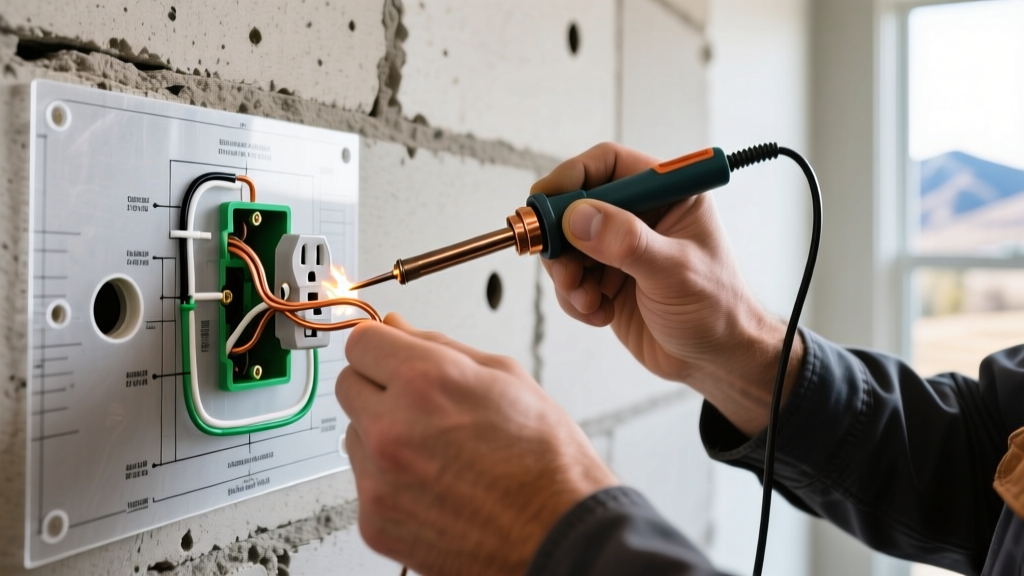
Installing an outlet directly into a landscape boulder, stone retaining wall, or natural rock formation requires specialized masonry techniques. Standard drill bits will shatter, and improper anchoring will cause the box to rip out under the weight of heavy outdoor cords.
Tools Required
- SDS-Plus Rotary Hammer Drill (e.g., Bosch 11255VSR Bulldog Xtreme)
- 1/4-inch or 3/16-inch carbide-tipped masonry bit
- Simpson Strong-Tie SET-3G epoxy adhesive (for uneven natural rock)
- Stainless steel masonry anchors or threaded rod
The Mounting Procedure
- Locate and Mark: Hold the weatherproof box against the boulder. Use a masonry marker to dot the mounting holes. Avoid drilling within 2 inches of the boulder's natural edge to prevent spalling (chipping).
- Drill the Holes: Set the rotary hammer to 'hammer-drill' mode. Drill straight into the rock to a depth 1/2 inch deeper than your anchor length. Keep the bit cool by pulling it out every 3 seconds to clear silica dust.
- Clean the Bore: Use a wire brush and a blow-out bulb to remove all dust from the hole. Epoxy will fail if silica dust remains in the bore.
- Inject Epoxy: For natural, uneven boulders, mechanical Tapcon screws often fail due to micro-fractures in the rock. Inject Simpson SET-3G epoxy into the hole from the bottom up.
- Set the Anchors: Insert stainless steel threaded rod or specialized masonry anchors into the wet epoxy. Allow 45 minutes to cure at 70°F (longer in Boulder's chilly shoulder seasons).
- Mount and Seal: Attach the box using stainless steel nuts and washers. Apply your silicone bead to the top and sides, leaving the bottom open for drainage.
Cost Breakdown: Materials and Permit Fees in Boulder
Budgeting for a compliant outdoor installation requires factoring in both premium weather-rated materials and local municipal fees. Below is a realistic 2026 cost estimate for a single, code-compliant outdoor receptacle run extending up to 25 feet from an interior panel.
| Item / Service | Estimated Cost | Notes |
|---|---|---|
| Boulder Electrical Permit | $110 - $160 | Base fee for minor residential electrical additions. |
| Hubbell WR520R (WR/TR Receptacle) | $7.50 - $9.00 | Weather-resistant, tamper-resistant 20A duplex. |
| TayMac MX1000 In-Use Cover | $28.00 - $35.00 | Extra duty, NEMA 3R rated. |
| 12/2 UF-B Wire (25 ft) | $35.00 - $45.00 | Underground feeder for direct burial or conduit. |
| Leviton 20A Dual-Function GFCI/AFCI | $45.00 - $55.00 | Required if breaker panel does not support dual-function. |
| Masonry Bits & Epoxy | $30.00 - $40.00 | Bosch SDS bits and Simpson SET-3G. |
| Total DIY Material & Permit Cost | $255.50 - $344.00 | Excludes tool rental and trenching labor. |
Common Failure Modes and Troubleshooting
Even with perfect installation, Boulder's environment can cause specific electrical failures. Here is how to troubleshoot the most common local issues.
GFCI Nuisance Tripping in Winter
The Problem: Your outdoor outlet trips randomly during cold snaps, even with no load attached.
The Diagnosis: Micro-condensation is forming inside the receptacle housing due to rapid temperature drops, bridging the line and load terminals just enough to trigger the 5mA ground-fault threshold.
The Fix: Ensure the bottom weep hole of the enclosure is completely clear of debris. Replace the standard receptacle with a premium Hubbell WR520R, which features internal corrosion-resistant nickel-plated brass contacts and tighter internal seals. Verify that the in-use cover gasket is not compressed or cracked from UV exposure.
Voltage Drop on Long Landscape Runs
The Problem: Outdoor power tools or holiday lighting setups run poorly or overheat.
The Diagnosis: Extending 14 AWG or 12 AWG wire over 75+ feet to a remote boulder installation results in a voltage drop exceeding the CPSC recommended 3% threshold for branch circuits.
The Fix: Upsize the conductors. For runs exceeding 60 feet, use 10 AWG THWN-2 wire inside a 3/4-inch PVC conduit, stepping down to a 12 AWG pigtail only inside the final outlet box.
Frequently Asked Questions (FAQ)
Can I run an outdoor outlet circuit from an existing indoor living room receptacle?
While the National Fire Protection Association (NFPA) NEC does not explicitly forbid tapping an indoor circuit for a single outdoor receptacle, Boulder inspectors heavily discourage it. Tapping an indoor AFCI-protected living room circuit for an outdoor load often leads to nuisance tripping when outdoor moisture interacts with the circuit. Best practice is to run a dedicated 20A circuit from the main panel or tap from an existing kitchen/bathroom GFCI load side only if local amendments permit.
Do I need rigid metal conduit (RMC) for the wire running up the boulder wall?
Yes, if the wire is exposed to physical damage. Schedule 80 PVC is acceptable for many outdoor applications, but if the conduit is running up a retaining wall near a driveway, walkway, or landscaping zone where string trimmers and rocks might impact it, Boulder code typically mandates Rigid Metal Conduit (RMC) or Intermediate Metal Conduit (IMC) below 8 feet.
How deep must I bury the UF-B cable leading to the outdoor boulder outlet?
Under NEC Article 300.5, direct-buried UF-B cable supplying a residential 120V/20A GFCI-protected outdoor receptacle must be buried at a minimum depth of 12 inches. However, if the circuit is not GFCI protected at the breaker, the burial depth requirement increases to 24 inches. Always use a warning ribbon 6 inches above the buried cable.