
The Anatomy of an Electrical Outlet Hum: Code Violations vs. Physics
Hearing a buzz or hum from a standard 15A or 20A duplex receptacle is never a normal operating characteristic. While a faint 60Hz hum from a plugged-in smart home hub or dimmer switch might be dismissed as a nuisance, a hum originating from the electrical outlet itself is an audible warning of a severe National Electrical Code (NEC) violation. According to the U.S. Consumer Product Safety Commission (CPSC), electrical arcing and loose connections are primary catalysts for residential branch-circuit fires, causing billions in property damage annually.
As a code requirement explainer, we must separate benign acoustic phenomena from dangerous thermal failures. When an outlet hums, it is typically suffering from one of three issues: micro-arcing due to loose terminal screws, failing push-in (backstab) connectors, or harmonic distortion from non-linear loads. Let us break down the exact NEC articles these symptoms violate and how to remediate them to 2026 standards.
NEC Article 110.14: The Torque Mandate and Loose Connections
The most common cause of a buzzing receptacle is a loose wire connection. When a wire is not seated tightly against the brass (hot) or silver (neutral) terminal plate, the electrical current must jump the microscopic air gap. This creates a series arc, which rapidly heats the surrounding air and vibrates at the frequency of the alternating current (60Hz in North America), producing an audible buzz or crackle.
What the Code Dictates
Under NFPA 70 (NEC) Article 110.14(A), electrical connections must be tight. However, the critical enforcement mechanism is Article 110.14(D), which mandates that terminals marked with torque values must be tightened using a calibrated torque screwdriver.
For a standard residential 15A receptacle (like the Leviton Decora 5262-W), the manufacturer typically specifies a torque value between 12 and 14 inch-pounds. Hand-tightening with a standard screwdriver often results in under-torquing (leading to the hum) or over-torquing (which strips the brass terminal plate or crushes the copper conductor, creating a high-resistance hot spot).
Code Compliance Alert: As of the widespread adoption of the 2023 and 2026 NEC editions, local AHJs (Authorities Having Jurisdiction) actively require electricians to use calibrated torque tools (such as the Klein Tools 32500 or Wiha 40201 VDE) for all terminations. If your outlet is humming due to a loose screw, it is a direct violation of 110.14(D).
Diagnostic Matrix: Identifying the Source of the Hum
Not all hums are created equal. Use the following diagnostic matrix to cross-reference the auditory symptom with the specific NEC code violation and required remediation.
| Auditory Symptom | Probable Physical Cause | NEC Code Violation | Required Remediation |
|---|---|---|---|
| Low, steady 60Hz/120Hz hum | Harmonic distortion from cheap smart plugs or non-linear LED drivers on the same circuit. | None (if devices are UL-listed), but may violate IEEE 519 harmonic limits on commercial panels. | Install a power conditioner or isolate non-linear loads on a dedicated circuit. |
| Intermittent crackling or sharp buzz | Loose terminal screw causing micro-arcing. | 110.14(A) & 110.14(D) | Retorque terminal to manufacturer spec (e.g., 14 in-lbs) using a calibrated torque driver. |
| Loud buzz accompanied by heat or PBT plastic odor | Failing push-in (backstab) wire connector losing spring tension. | 110.14(A) (Failure to maintain a tight connection over thermal cycling). | Remove backstabbed wire, strip to 5/8", and terminate on the side-binding screw. |
| Buzzing followed by breaker trip | Severe arc fault or neutral-to-ground fault. | 210.12 (AFCI Protection) or 210.8 (GFCI Protection). | Replace standard breaker with AFCI/GFCI; replace melted receptacle. |
The Backstabbing Controversy and NEC Compliance
Many contractors utilize the push-in (backstab) connectors on the rear of 15A and 20A receptacles to save time. While the NEC does not explicitly ban push-in connectors for 14 AWG and 12 AWG solid wire, UL 498 testing standards reveal that these internal brass spring clips are highly susceptible to thermal cycling failure.
When high-draw appliances (like a 1500W space heater pulling 12.5A) are used, the terminal heats up and cools down. Over months, this expansion and contraction causes the spring clip to lose tension. The resulting high-resistance connection generates intense localized heat—often melting the Polybutylene Terephthalate (PBT) thermoplastic face of the receptacle—and produces a distinct, loud buzzing sound. If an inspector finds a backstabbed connection that has caused thermal degradation, it will be cited as a failure to maintain a secure connection under 110.14.
AFCI Protection: NEC Article 210.12
If your electrical outlet humming is caused by arcing, your circuit should theoretically be protected by an Arc Fault Circuit Interrupter (AFCI). Under NEC Article 210.12, nearly all 120V, single-phase, 15A and 20A branch circuits supplying outlets in residential living spaces must have AFCI protection.
However, a persistent hum might indicate a "series arc" that falls below the detection threshold of older, first-generation AFCI breakers. If you hear arcing but the breaker does not trip, the breaker may be outdated or defective. Upgrading to a modern dual-function AFCI/GFCI breaker (such as the Eaton BRPD120GFCI, retailing around $55-$75) ensures compliance with the latest 210.12 and 210.8 mandates, providing both arc and ground fault protection.
Step-by-Step Code-Compliant Remediation
If you have isolated the hum to a specific receptacle, follow these steps to bring the termination back into NEC compliance. Note: Always verify local codes and pull required permits before altering branch circuits.
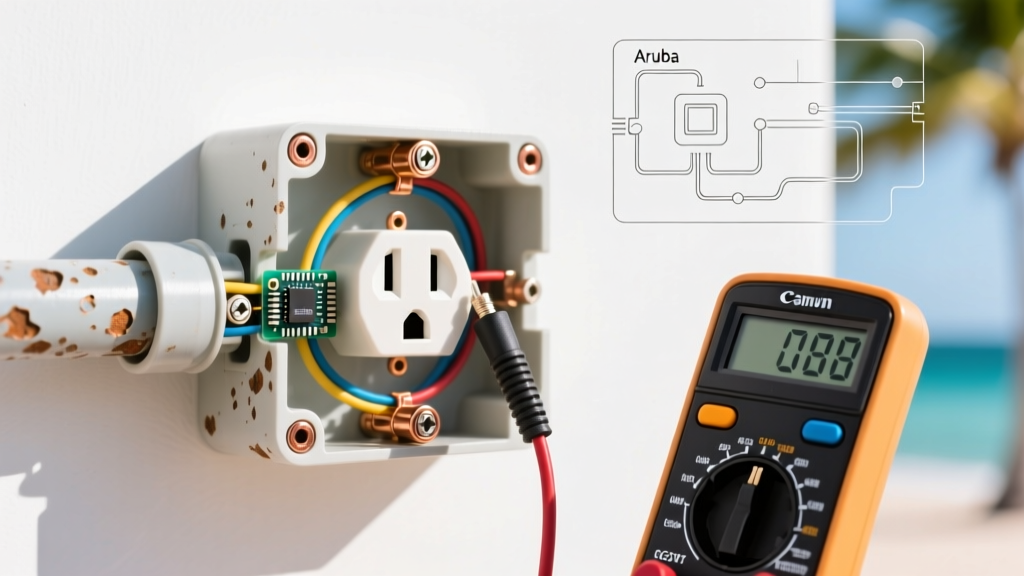
- De-energize and Verify: Turn off the branch circuit breaker. Use a non-contact voltage tester and a digital multimeter (like the Fluke 117 True-RMS, approx. $200) to confirm 0V between hot-to-neutral and hot-to-ground.
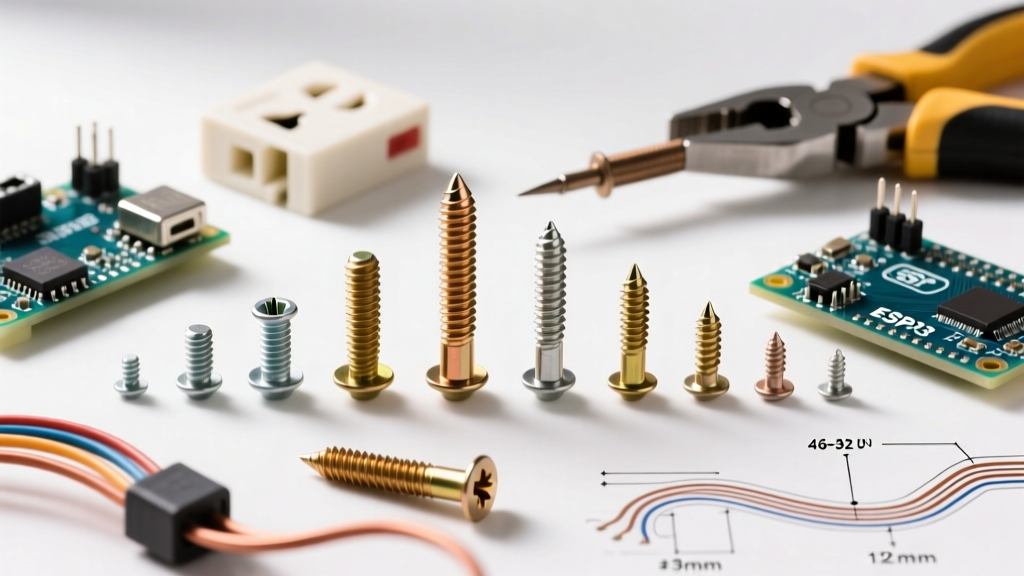
- Extract and Inspect: Remove the 6-32 UNC cover plate screw and the mounting straps. Pull the receptacle from the junction box. Inspect the PBT housing for brown scorch marks or deformation. If present, the receptacle must be discarded.
- Prepare the Conductors: If the wires were backstabbed, pull them out using the release slot. Cut off the damaged ends. Use a wire stripper to strip exactly 5/8" of insulation from 12 AWG or 14 AWG solid copper wire.
- Terminate on Side Screws: Form a J-hook in the wire using needle-nose pliers. Loop the wire clockwise around the terminal screw. This ensures that tightening the screw pulls the loop tighter rather than pushing it out.
- Apply Calibrated Torque: Set your torque screwdriver to the value stamped on the back of the receptacle (typically 14 in-lbs). Tighten until the tool clicks or slips. Do not over-tighten.
- Secure and Test: Push the wires neatly into the box, mount the receptacle using the 6-32 mounting screws, and restore power. The hum should be entirely eliminated.
Cost Breakdown: DIY vs. Professional Remediation (2026 Estimates)
Addressing a humming outlet is highly cost-effective when caught early, but costs escalate if thermal damage has spread to the junction box or branch wiring.
- DIY Material Cost: $5 - $15 (Premium spec-grade receptacle like Hubbell 5362) + $45 (Klein torque driver).
- Electrician Diagnostic Fee: $150 - $250 (Includes panel inspection, circuit tracing, and thermal imaging).
- Full Circuit Rewire (if insulation is melted): $800 - $1,500+ (Requires pulling new THHN/THWN-2 conductors and drywall repair).
Frequently Asked Questions (FAQ)
Can a humming outlet cause a fire?
Yes. A hum caused by loose connections or failing backstab terminals indicates electrical arcing. Arcing generates temperatures exceeding 10,000°F at the microscopic fault point, which can easily ignite surrounding wood framing, paper-faced drywall, or insulation. The Occupational Safety and Health Administration (OSHA) and NFPA consistently rank loose connections as a top cause of electrical fires.
Why does my outlet only hum when I plug in my vacuum or space heater?
High-current appliances (drawing 12A to 15A) force maximum current through the receptacle's internal bus. If the internal brass contacts are worn or loose, the increased amperage exacerbates the voltage drop and thermal expansion, triggering an audible buzz. Standard 15A residential receptacles should be upgraded to 20A commercial-spec receptacles (like the Hubbell 5362) if they frequently serve high-draw portable appliances, provided the branch circuit is wired with 12 AWG wire and protected by a 20A breaker.
Is it normal for smart outlets to hum?
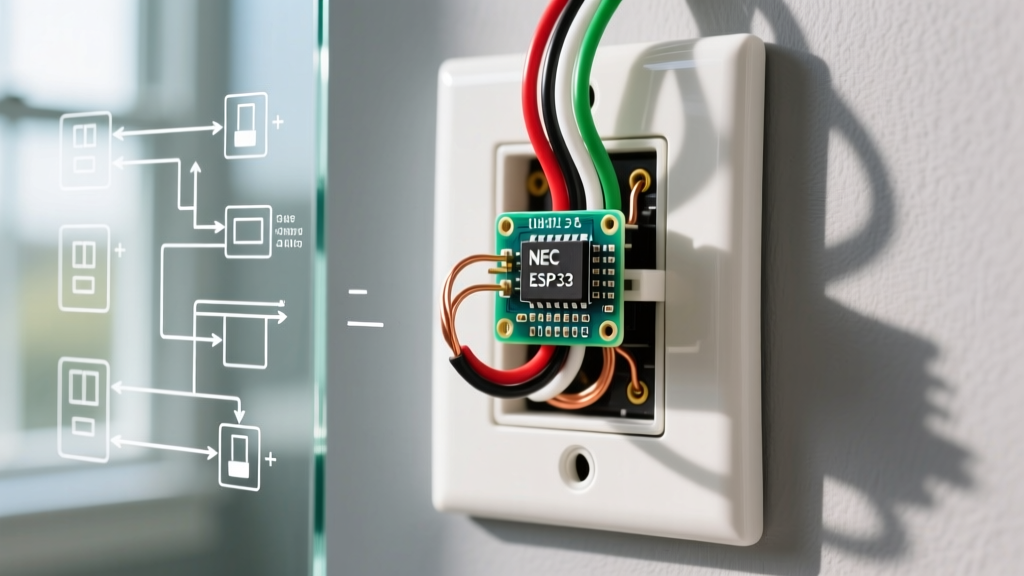
Smart receptacles (e.g., Leviton Decora Smart Wi-Fi) contain internal relays, Wi-Fi radios, and step-down transformers. A very faint, high-pitched whine or low 60Hz hum can be normal due to magnetostriction in the internal inductors. However, if the hum is loud, accompanied by heat, or smells like ozone, the internal relay is failing, and the device must be replaced immediately to comply with UL safety listings.