
The Core NEC Mandate: Why 4-Prong Replaced 3-Prong
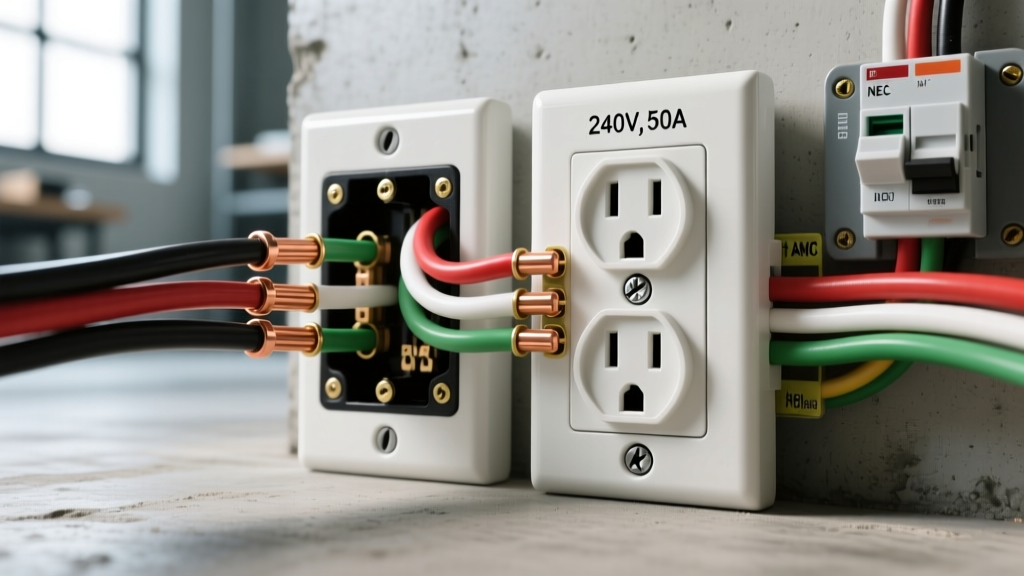
Wiring an electric stove outlet is one of the most demanding residential electrical tasks due to the massive continuous load these appliances draw. Modern electric ranges typically require a 240-volt, 50-amp circuit. However, the most critical code requirement governing your electric stove outlet isn't just about amperage—it is about grounding and bonding.
Prior to the 1996 National Electrical Code (NEC), ranges and dryers were permitted to use a 3-prong configuration (NEMA 10-50). In this obsolete setup, the appliance frame was bonded to the neutral wire. This created a severe shock hazard: if the neutral wire ever broke or developed high resistance, the metal chassis of the stove would become energized with 120 volts.
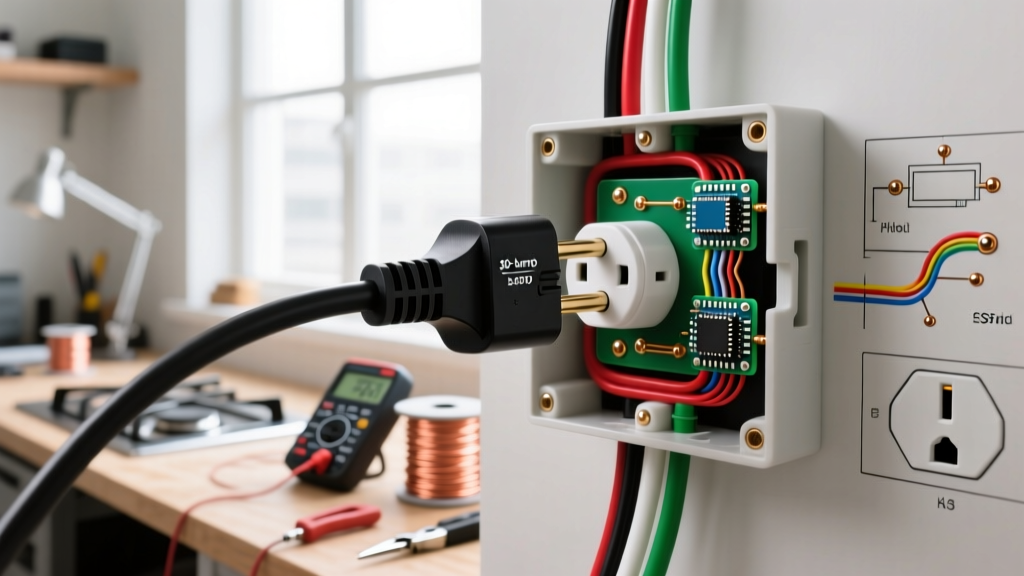
Today, NEC Article 250.140 strictly mandates that new installations must use a 4-prong receptacle (NEMA 14-50R). This separates the current-carrying neutral from the equipment grounding conductor, ensuring stray voltage has a dedicated, safe path back to the panel.
CRITICAL SAFETY WARNING: Never adapt a 4-prong stove cord to fit a 3-prong wall outlet by removing the ground pin. Conversely, if you install a new 4-prong outlet, you MUST remove the neutral-to-ground bonding jumper on the stove's terminal block. Leaving the jumper in place on a 4-wire circuit creates a parallel neutral path, violating NEC 250.142 and posing a lethal electrocution risk.
Sizing the Breaker and Wire for Your Electric Stove Outlet
Sizing your conductors and overcurrent protection requires referencing NEC Article 220.55, which outlines demand factors for electric ranges. Because a range rarely uses all its heating elements at maximum capacity simultaneously, the NEC allows for a calculated demand load rather than a straight wattage sum. However, standard practice for almost all modern freestanding electric ranges (typically rated between 9 kW and 12 kW) is a 50-amp circuit.
| Range Nameplate kW Rating | Breaker Size (2-Pole) | Wire Gauge (Copper NM-B) | Receptacle Type |
|---|---|---|---|
| Up to 8.75 kW | 40A | 8 AWG | NEMA 14-50R (or 14-30R) |
| 8.75 kW to 12 kW | 50A | 6 AWG | NEMA 14-50R |
| Over 12 kW (Commercial/Induction) | 50A - 60A+ | 4 AWG or 6 AWG THHN | Hardwired or NEMA 14-60R |
Note: As of 2026, 6/3 NM-B (Romex) cable costs approximately $3.50 to $4.50 per foot. If you are running wire through unfinished basements or commercial spaces where NM-B is prohibited, you must pull individual 6 AWG THHN/THWN-2 conductors through a minimum 3/4-inch EMT conduit.
The Grandfather Clause: Can You Keep a NEMA 10-50?
If you are replacing an old stove in a home built before 1996, you might still have a 3-prong NEMA 10-50 outlet. Under NEC Exception 1 to 250.140, existing 3-prong installations are 'grandfathered' in and legally permitted to remain if no new wiring is being pulled. You can buy a 3-prong range cord and bond the neutral to the frame as the manufacturer's instructions dictate.
However, from an electrical safety perspective, upgrading to a 4-wire system is highly recommended. Furthermore, if you are remodeling the kitchen, adding a new circuit, or selling the home, most local inspectors and real estate contracts will require an upgrade to a 4-prong NEMA 14-50R.
Step-by-Step Installation & Code Compliance Checklist
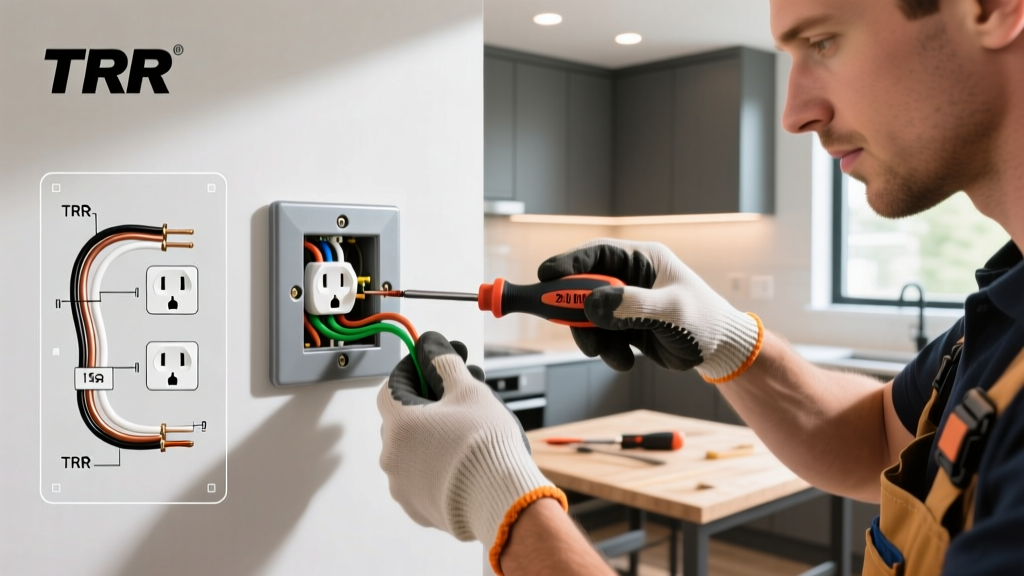
Installing a new NEMA 14-50R receptacle requires precision. Follow these steps to ensure your electric stove outlet meets modern code requirements:
- Shut Off and Verify: Turn off the main breaker or the specific 2-pole feeder breaker. Use a non-contact voltage tester and a multimeter to confirm 0V across all hot-to-hot and hot-to-ground combinations.
- Prepare the 6/3 NM-B Cable: Strip back 10 inches of the outer sheath. Leave at least 1/4 inch of insulation on the individual conductors. The bare copper ground must be continuous and unspliced.
- Terminate the Ground First: Connect the bare copper wire to the green grounding screw on the receptacle. For metal boxes, you must also run a 6 AWG grounding pigtail from the receptacle to the metal box to ensure box continuity.
- Connect the Neutral: Terminate the white wire (ensure it is re-identified with white tape if using THHN, though NM-B is pre-colored) to the silver/white terminal. This is the centered, straight blade on a NEMA 14-50.
- Terminate the Hots: Connect the black and red wires to the two brass/hot terminals. Polarity between the two hots does not matter for a standard 240V resistive heating load, but keeping them symmetrical ensures clean panel dressing.
- Apply Torque: Use a calibrated torque screwdriver. NEC 110.14(D) requires terminations to be tightened to the manufacturer's specified torque. For a standard Leviton 279-S00 50A receptacle, this is typically 45 in-lbs. Under-torquing causes arcing; over-torquing strips the lug.
2026 Code Updates: GFCI and AFCI Considerations
A frequent question among electricians and DIYers is whether an electric stove outlet requires Ground Fault Circuit Interrupter (GFCI) or Arc Fault Circuit Interrupter (AFCI) protection.
- GFCI Protection: Under recent NEC cycles, GFCI protection has been heavily expanded for kitchen countertops (120V). However, a dedicated 240V, 50A receptacle for a range is generally exempt from standard kitchen countertop GFCI rules because it is not considered a 'countertop receptacle.' Always verify with your local Authority Having Jurisdiction (AHJ), as some municipalities adopt stricter local amendments.
- AFCI Protection: NEC Article 210.12 requires AFCI protection for most 120V kitchen branch circuits. A dedicated 240V range circuit is typically exempt from AFCI requirements, as the high inrush currents of heating elements and large motors can cause nuisance tripping on standard AFCI breakers.
Expert Troubleshooting & Common Code Violations
When inspecting or troubleshooting an electric stove outlet, look out for these frequent, dangerous violations:
- Double-Tapped Breakers: Sharing a 50A breaker lug with another circuit is a direct violation of NEC 110.14(A). The range must have a dedicated circuit.
- Using 8 AWG Wire on a 50A Breaker: While 8 AWG copper is rated for 40A (and sometimes 50A in specific THHN conduit derating scenarios), standard NM-B 8 AWG is strictly limited to 40A. If your breaker is 50A, you MUST use 6 AWG copper.
- Missing Strain Relief: If you are hardwiring the range or using a flexible metal whip, the cable must be secured with a proper conduit connector or NM-B strain relief clamp within 12 inches of the terminal box.
- Aluminum Wire Oxidation: If your home was wired in the 1970s with aluminum feeders, the receptacle must be rated 'CO/ALR'. Furthermore, the aluminum wire must be treated with an antioxidant compound (like Noalox) before termination to prevent thermal expansion and eventual arcing.
By adhering strictly to NEC Article 250 and 210 guidelines, you ensure your electric stove outlet provides reliable, fire-safe power for decades. When in doubt regarding local amendments or load calculations, consult a licensed master electrician.