
Why Your Electric Outlet Is Not Working: The Code Compliance Perspective
When an electric outlet is not working, the immediate assumption is usually a tripped standard breaker or a loose wire. However, in modern electrical systems governed by the National Electrical Code (NEC), a dead receptacle is frequently the result of a code-mandated safety device doing exactly what it was designed to do. As of the 2023 and 2026 NEC adoption cycles, the integration of Ground Fault Circuit Interrupter (GFCI), Arc Fault Circuit Interrupter (AFCI), and Tamper-Resistant (TR) technologies has fundamentally changed how power is delivered—and interrupted—in residential wiring.
Understanding the intersection between electrical failure and code requirements is critical for safe troubleshooting. According to the National Fire Protection Association (NFPA 70), improper troubleshooting of these protective devices can lead to severe shock hazards or electrical fires. This guide breaks down the specific NEC articles that cause outlets to lose power and provides an expert, code-compliant protocol for restoring it.
1. GFCI Nuisance Tripping and Downstream Daisies (NEC 210.8)
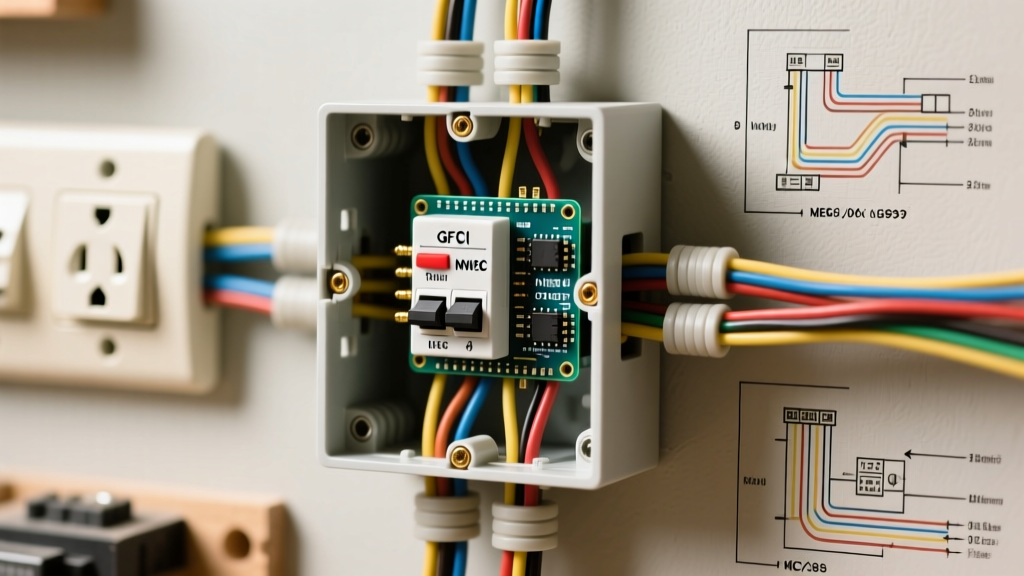
NEC Article 210.8 mandates GFCI protection for all 15- and 20-amp, 125-volt receptacles in kitchens, bathrooms, garages, crawlspaces, and outdoor areas. A GFCI monitors the current balance between the hot and neutral conductors, tripping within 15 to 20 milliseconds if a leakage of 5 milliamps (mA) or more is detected.
The 'Downstream' Illusion
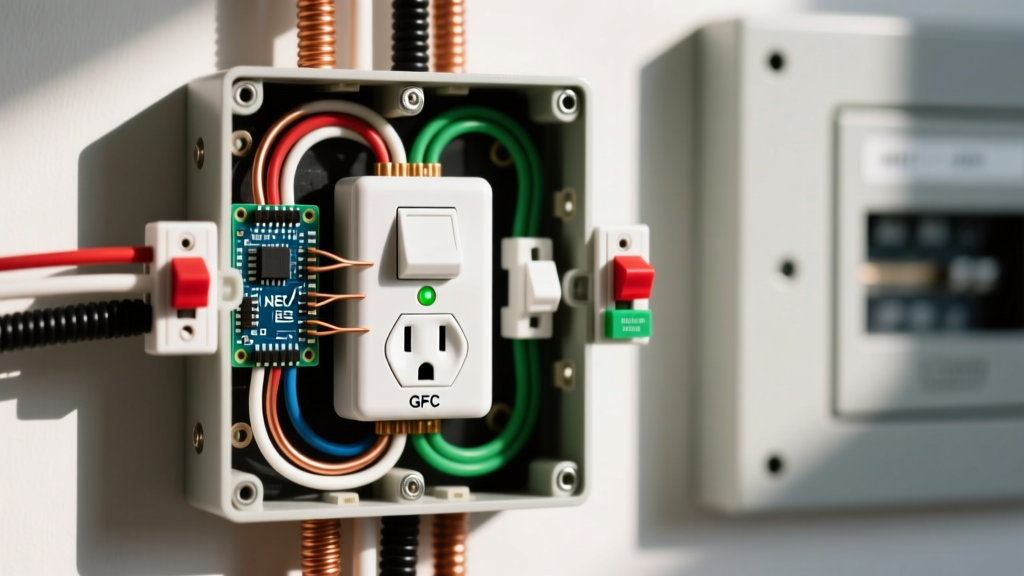
The most common reason a standard-looking electric outlet is not working is that it is wired to the LOAD terminals of an upstream GFCI receptacle. If the upstream GFCI trips due to moisture, a failing appliance, or even a deteriorating wire insulation, every outlet downstream will lose power.
- Common Culprit: Leviton SmartLockPro (Model R926-W2) installed in a master bathroom, protecting a downstream guest bathroom and garage receptacle.
- Failure Mode: Condensation in an exterior outlet box causes a 6mA leakage, tripping the master bath GFCI.
- Code-Compliant Fix: Identify the tripped GFCI. If it refuses to reset, test the line voltage with a Fluke T6-1000. If 120V is present on the line but it won't reset, the internal solenoid has failed. Replace with a new UL-listed GFCI (typically $18–$24 for parts).
2. AFCI Branch Circuit Interruption (NEC 210.12)
NEC Article 210.12 requires Combination-Type AFCI protection for nearly all 120-volt, single-phase, 15- and 20-amp branch circuits supplying outlets in living rooms, bedrooms, and hallways. Unlike GFCIs, which protect against shock, AFCIs protect against fire by detecting hazardous arcing conditions.
Decoding the AFCI Breaker
If an entire circuit of outlets is dead, the AFCI breaker in the main panel has likely tripped. Modern AFCI breakers feature diagnostic LEDs that blink to indicate the exact fault type. For example, on an Eaton BR115AF Combination AFCI breaker ($45–$65):
| LED Blink Pattern | Fault Type | Common Cause |
|---|---|---|
| 1 Blink | Arc Fault | Damaged cord, loose terminal, pierced wire in wall |
| 2 Blinks | Ground Fault | Neutral touching ground wire downstream (5mA+) |
| 3 Blinks | Short Circuit | Hot wire directly contacting neutral or ground |
| 4 Blinks | Overcurrent | Circuit overloaded beyond 15A/20A rating |
Note: If the breaker immediately trips upon resetting with a 2-blink code, you likely have a shared neutral violation or a pinched cable behind a drywall screw. This requires professional tracing.
3. Tamper-Resistant (TR) Receptacle Binding (NEC 406.12)
NEC 406.12 requires all non-locking 15- and 20-amp receptacles in dwelling units to be Tamper-Resistant. TR receptacles feature internal spring-loaded shutters that only open when equal pressure is applied to both the hot and neutral slots simultaneously.
Mechanical Failure vs. Electrical Failure
Sometimes, an electric outlet is not working simply because the plug cannot make physical contact with the bus bars. During new construction or renovations, fine drywall dust and joint compound can infiltrate the receptacle slots, jamming the TR shutters. Furthermore, cheap, non-UL-listed TR receptacles often suffer from spring fatigue, causing one shutter to stick.
Expert Tip: Never force a plug into a stuck TR receptacle or attempt to clear it with a metal object. Use a can of compressed air to blow out debris. If the shutters remain bound, the $3 receptacle must be replaced with a high-quality spec-grade TR model, such as the Pass & Seymour 5362-TR.
4. Code Violations That Cause Outlet Failure
Many dead outlets are the delayed result of legacy wiring methods that violate current NEC standards. The U.S. Consumer Product Safety Commission (CPSC) notes that improper terminations are a leading cause of residential electrical fires.
| Code Violation | NEC Reference | Symptom | Compliant Remedy |
|---|---|---|---|
| Push-In Backstabbing | 110.14 (Terminations) | Outlet works intermittently or dies under high load (thermal cycling breaks the internal spring grip). | Remove backstabbed wires. Form a J-hook and secure under the side terminal screws torqued to manufacturer specs. |
| Bootleg Ground | 250.148 / 406.4(D) | Receptacle tester shows 'Correct' but GFCI tester fails to trip the outlet. Shock hazard present. | Remove the neutral-to-ground jumper. Install a GFCI receptacle and label it 'No Equipment Ground' per NEC 406.4(D)(4). |
| Missing MWBC Handle Tie | 210.4(B) | Half of a split-wired outlet is dead, but the breaker appears on. High risk of neutral overload. | Install a listed handle tie on the two adjacent breakers or replace with a 2-pole breaker. |
5. Step-by-Step NEC-Compliant Troubleshooting Protocol
When faced with a dead outlet, follow this systematic diagnostic flow to ensure safety and code compliance. Always assume wires are live until proven otherwise.
- Verify with a Non-Contact Tester: Use a Klein Tools NCVT-3 to check for the presence of voltage at the receptacle face. Warning: NCVT tools can yield false negatives on shielded cables or TR shutters.
- Test with a Receptacle Analyzer: Plug in a Klein Tools RT210. If the lights indicate 'Open Hot', the failure is upstream. If it indicates 'Open Neutral', the return path is broken.
- Trace the GFCI Daisy Chain: Inspect all kitchens, bathrooms, garages, and exterior walls. Press the 'TEST' and 'RESET' buttons on every GFCI you find.
- Inspect the Panel: Check for tripped AFCI breakers. Read the diagnostic LED blink codes before attempting to reset. If it trips instantly, do not force it.
- Open the Receptacle (Power Off): Turn off the breaker, verify zero voltage with a Fluke multimeter, and remove the yoke screws. Inspect for melted insulation, backstab failures, or loose wire nuts in the junction box.
6. The Multi-Wire Branch Circuit (MWBC) Edge Case
If you are troubleshooting a kitchen or living room outlet that is split-wired (the top half is hot, the bottom half is dead), you are likely dealing with a Multi-Wire Branch Circuit (MWBC). Under NEC 210.4, an MWBC uses two hot wires (on opposite phases) sharing a single neutral wire.
If the bottom half of your outlet is not working, the breaker for that specific leg has tripped. However, if you are replacing the receptacle, you must break the hot-side brass fin tab. If you fail to break this tab on an MWBC, you will create a direct 240-volt dead short the moment the breakers are turned on, resulting in an explosive arc flash. Furthermore, if the circuit has been upgraded to an AFCI breaker, sharing a neutral on a standard single-pole AFCI will cause immediate tripping. You must install a 2-pole AFCI breaker to handle the shared neutral properly.
When to Call a Licensed Electrician
While replacing a standard or GFCI receptacle is a common DIY task, certain scenarios require professional intervention. According to the Electrical Safety Foundation International (ESFI), working inside main panels or diagnosing hidden arc faults poses severe risks. Expect to pay a diagnostic fee of $150–$250 for a licensed electrician to trace a persistent AFCI fault or repair a damaged cable inside a finished wall. Do not bypass AFCI or GFCI protection to 'fix' a nuisance trip; doing so violates the NEC and voids your home insurance coverage in the event of a fire.