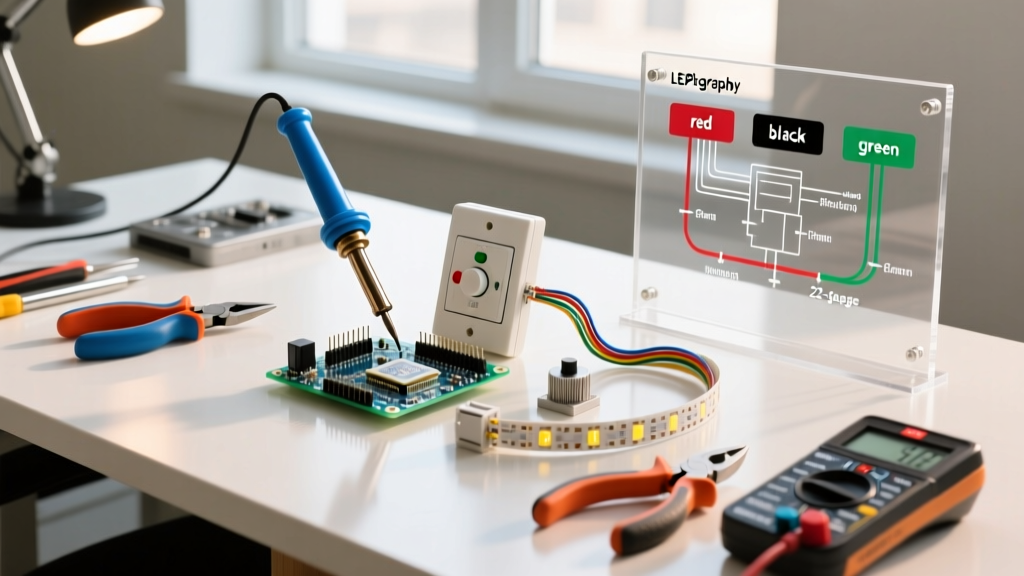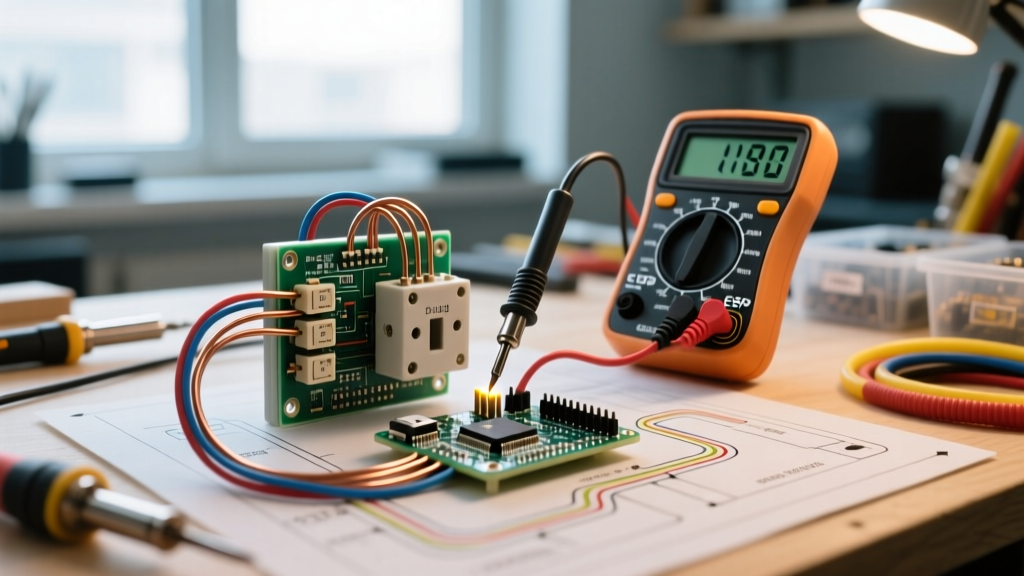

The Misconception: Do Outlets Actually 'Draw' Current?
When homeowners search for solutions to an electric outlet drawing too much power, they are usually experiencing one of three symptoms: a repeatedly tripping circuit breaker, a warm-to-the-touch receptacle faceplate, or a GFCI outlet that refuses to reset. From a strict electrical engineering perspective, an outlet itself does not 'draw' current. Current draw (measured in Amperes) is dictated entirely by the downstream load—the appliance or device plugged into the circuit. However, a failing outlet can introduce high-resistance faults, leakage currents, or parallel arcing, which mimic the symptoms of an overloaded circuit. According to the U.S. Consumer Product Safety Commission (CPSC), faulty receptacles and degraded wiring connections are leading culprits in residential electrical fires. Diagnosing the true root cause requires moving beyond basic receptacle testers and utilizing true-RMS multimeters and thermal diagnostics.
Essential Diagnostic Toolkit for 2026
To accurately troubleshoot modern circuits equipped with AFCI (Arc-Fault Circuit Interrupter) and GFCI protections, you need precision tools. Standard $15 neon testers are insufficient for identifying voltage drop or milliampere leakage.
- True-RMS Digital Multimeter: The Fluke 117 (approx. $210) or Klein Tools MM700 (approx. $65). True-RMS is mandatory for measuring non-linear loads from modern smart appliances.
- GFCI/AFCI Receptacle Tester: The Klein Tools RT250 (approx. $45) verifies wiring and trips the GFCI test circuit to confirm proper millisecond response times.
- Thermal Imaging Camera: The FLIR C5 (approx. $450) or an InfiRay P2 Pro smartphone attachment. High-resistance connections generate heat before they trip a breaker.
- Torque Screwdriver: Klein Tools 32500 (approx. $35). NEC 110.14(D) requires terminations to be tightened to manufacturer specifications, typically 14 in-lbs for standard 15A/20A duplex receptacles.
Troubleshooting Matrix: Symptom to Root Cause
Use this diagnostic matrix to isolate whether the 'draw' issue is actually a load fault, a leakage fault, or a termination failure.
| Observed Symptom | Probable Root Cause | Diagnostic Test | NEC / UL Reference |
|---|---|---|---|
| Breaker trips immediately upon plugging in a high-wattage appliance (e.g., space heater). | Circuit overcurrent or short circuit. The outlet is fine; the circuit limit is exceeded. | Measure amp draw with a clamp meter. Check for 15A/20A circuit limits. | NEC 210.20 (Overcurrent Protection) |
| GFCI outlet trips randomly, even with low-draw devices like LED lamps. | Cumulative leakage current from multiple appliances or a failing EMI filter. | Measure mA leakage to ground using a multimeter in series with the ground wire. | UL 943 (Trips at 4mA - 6mA) |
| Receptacle faceplate is hot to the touch; voltage drops significantly under load. | High-resistance connection, usually a failed 'backstab' push-in terminal. | Perform a voltage drop test under a known 12A-15A load. | NEC 110.14 (Electrical Connections) |
| AFCI breaker trips when a vacuum or drill is plugged in. | Series arcing at a loose terminal screw or damaged cord. | Inspect wire terminations for pitting, black soot, or loose strands. | NEC 210.12 (AFCI Protection) |
Step-by-Step: The Voltage Drop Test (Identifying the 'Phantom Draw')
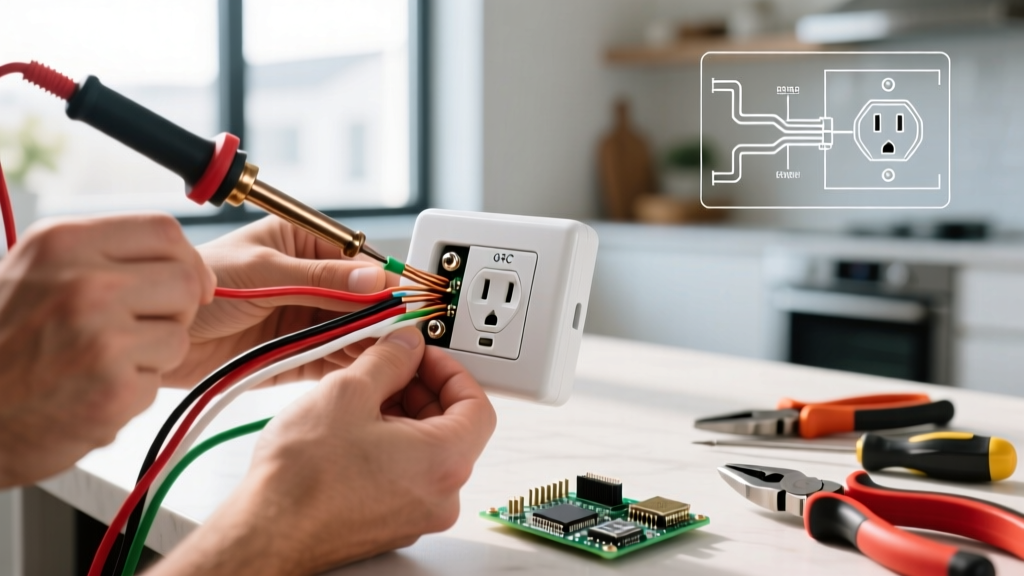
When an outlet feels warm or appliances underperform, DIYers often assume the outlet is 'drawing' power and wasting it. In reality, a loose neutral or degraded hot wire connection is acting as a resistor, dissipating power as heat. This is incredibly common with 'backstabbed' (push-in) connections, which rely on a spring-metal wedge that loses tension after years of thermal cycling.
- Establish Baseline Voltage: With no load plugged in, insert your multimeter probes into the hot (short slot) and neutral (long slot) of the receptacle. A healthy 120V circuit in 2026 should read between 118V and 122V.
- Apply a Known Load: Plug in a resistive load that draws close to the circuit maximum, such as a 1500W space heater (which draws roughly 12.5 Amps).
- Measure Under Load: While the heater is running, measure the voltage at the receptacle again. If the voltage drops below 114V (a drop of more than 5%), you have a high-resistance fault upstream or at the termination.
- Isolate the Fault: Turn off the breaker, remove the receptacle, and inspect the wiring. If 14 AWG or 12 AWG solid copper wires are pushed into the backstab holes, cut them off, strip them back, and terminate them on the side screw terminals. Torque the screws to 14 in-lbs to prevent 'cold flow' loosening over time.
GFCI Leakage: When Smart Appliances Cause Nuisance Trips
Modern kitchens and garages are protected by GFCI receptacles. A frequent complaint is that a GFCI outlet 'draws' a fault and trips when a smart refrigerator or variable-frequency drive (VFD) HVAC unit is running. This is rarely a failing outlet; it is a cumulative leakage issue.
Expert Insight: Under UL 943 standards, a Class A GFCI device is designed to trip when ground-fault leakage current reaches between 4mA and 6mA. Modern smart appliances utilize EMI (Electromagnetic Interference) filters that intentionally leak 1mA to 2mA to ground to reduce electrical noise. If you have a smart fridge (2mA leakage) and a microwave with a degraded door interlock switch (2.5mA leakage) on the same downstream GFCI circuit, the cumulative leakage (4.5mA) will trip the outlet, even though no single appliance is faulty.
The Fix: Do not replace the GFCI with a standard receptacle—that is a lethal code violation. Instead, map the circuit to ensure high-leakage smart appliances have dedicated circuits, or upgrade to a 2026-compliant smart panel that provides branch-level leakage monitoring.
Thermal Imaging: Seeing the Invisible Draw
If your voltage drop test is inconclusive but the breaker feels warm, use a thermal camera. A healthy outlet carrying 15 Amps should remain within 5°F of ambient room temperature. If your FLIR or InfiRay camera shows a localized hotspot of 120°F+ at the terminal screw or the backstab insertion point, the connection is actively arcing on a micro-level. This micro-arcing generates carbon buildup, which increases resistance, which generates more heat—a runaway thermal event that precedes electrical fires. The National Fire Protection Association (NFPA 70 / NEC) strictly mandates that all terminations be made tight and secure to prevent these exact thermal failures.
Upgrading to 2026 NEC Standards
If your troubleshooting reveals that the outlet is part of an aging, ungrounded, or aluminum-wired branch circuit, patching the terminal is insufficient. The U.S. Department of Energy recommends comprehensive upgrades for older homes to handle modern electrical loads safely. When replacing the receptacle:
- TR (Tamper-Resistant) Receptacles: Mandatory in all dwelling units (NEC 406.12). Ensure the internal shutters operate smoothly; cheap knock-offs often jam, causing users to force plugs in, bending the prongs and creating high-resistance hotspots.
- CO/ALR Rated: If your home was built in the late 1960s or early 1970s and features aluminum branch wiring, you must use CO/ALR rated receptacles or pigtail the aluminum to copper using AlumiConn lugs before connecting to a standard copper-rated device.
- AFCI Integration: If the outlet is in a living room, bedroom, or hallway, the branch circuit must be AFCI protected. If replacing an old outlet, verify the upstream breaker is a Combination-Type AFCI, which detects both parallel and series arcing faults that standard thermal breakers miss.
Final Diagnostic Takeaway
An 'electric outlet drawing' excessive current is a symptom, not the disease. By shifting your diagnostic focus from the receptacle itself to the circuit's voltage drop, leakage current, and termination torque, you can accurately identify whether you are dealing with a simple loose wire, a failing appliance filter, or a dangerous arcing fault. Always de-energize the circuit at the main panel and verify zero voltage with a CAT III or CAT IV rated multimeter before removing any faceplate.