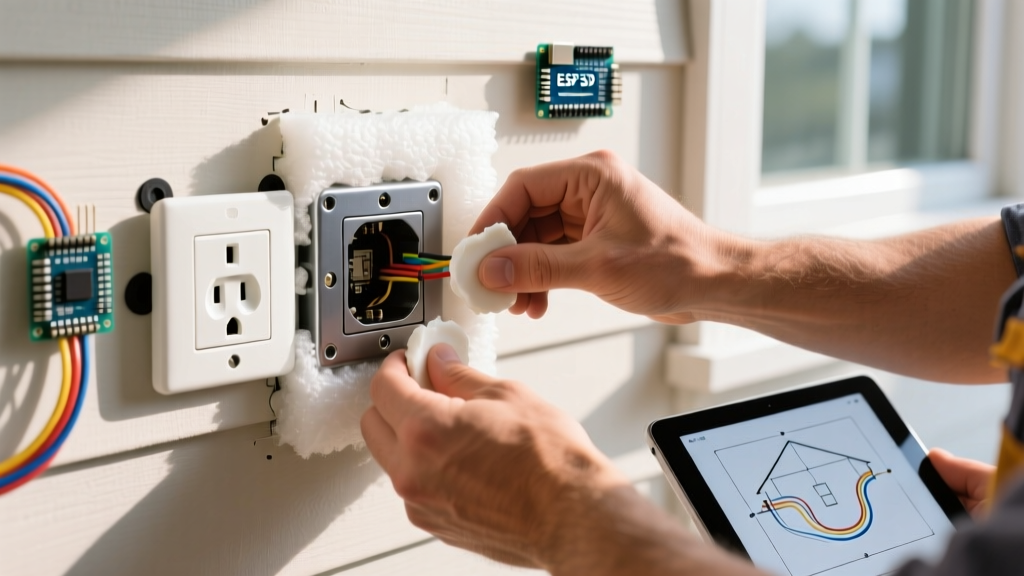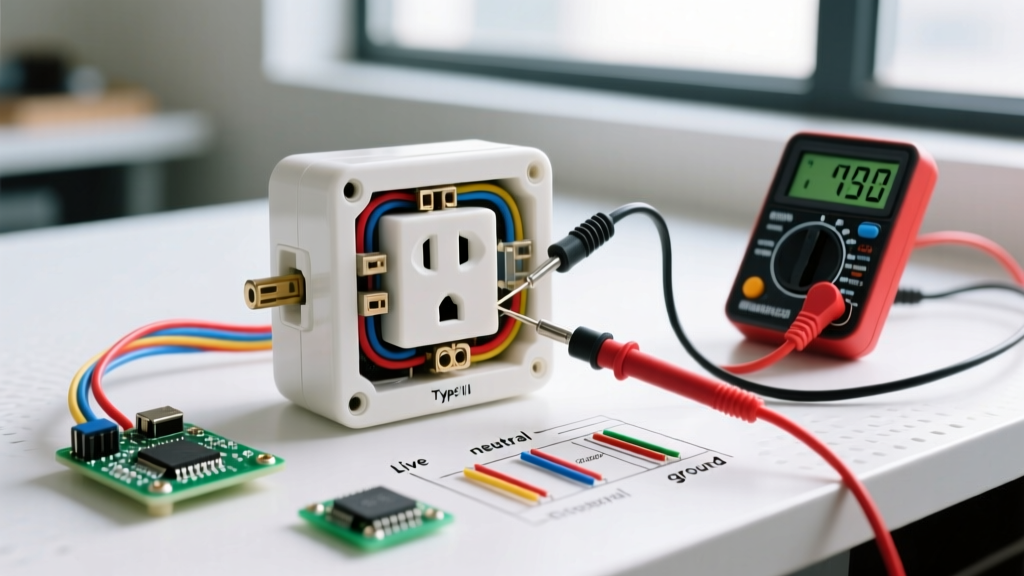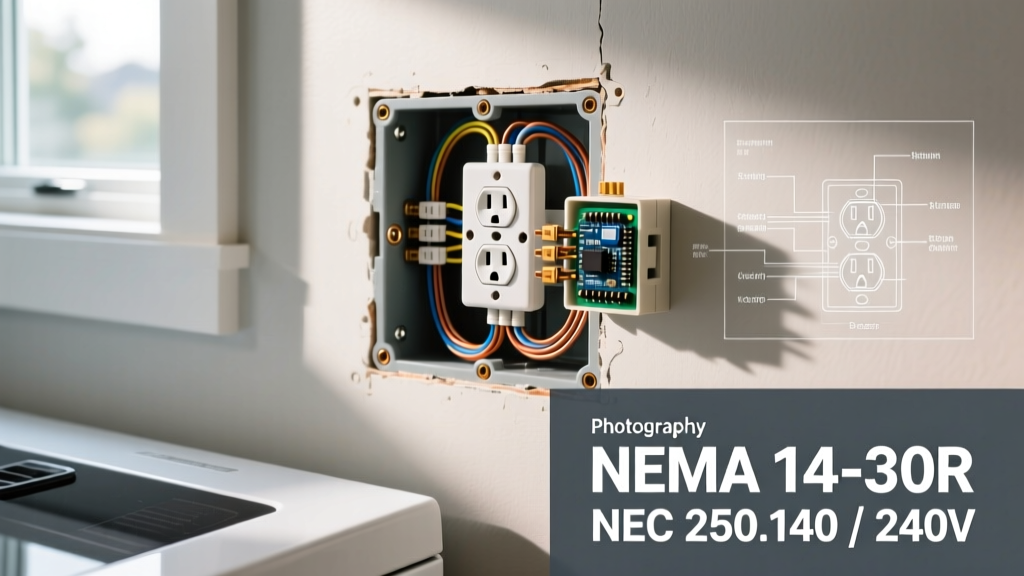

Wiring an electric dryer requires strict adherence to the National Electrical Code (NEC) and a deep understanding of high-amperage 240-volt circuits. The electric dryer outlet box is not just a housing for the receptacle; it is a critical safety component that manages heat dissipation, physical strain, and conductor bending space. Improper installation of a NEMA 14-30R receptacle in an undersized or improperly mounted box is a leading cause of terminal arcing, melted insulation, and residential fires.
This guide provides a comprehensive, code-compliant framework for selecting, sizing, and installing an electric dryer outlet box in 2026, ensuring your installation meets the rigorous demands of modern laundry appliances and NEC safety standards.
The 4-Prong Mandate: NEC Article 250 & 210
Prior to the 1996 NEC revision, electric dryers were permitted to use a 3-prong NEMA 10-30R configuration. This older setup relied on the neutral wire to carry both unbalanced return current and fault current, bonding the appliance frame to the neutral. This created a severe shock hazard if the neutral connection failed, as the dryer chassis could become energized at 120 volts.
Today, NEC Article 250.140 explicitly prohibits using the grounded (neutral) conductor for equipment grounding in new branch circuit installations. Modern electric dryers require a 4-prong NEMA 14-30R receptacle, which separates the neutral (carrying only 120V unbalanced load for timers and motors) from the equipment grounding conductor (providing a dedicated fault path).
Code Alert: While existing 3-prong setups in older homes are often 'grandfathered' in if the cord is replaced, any new electric dryer outlet box installation or circuit extension must utilize a 4-wire configuration (two hots, one neutral, one ground) fed by 10/3 NM-B or 10/3 MC cable. For more on appliance grounding transitions, refer to the NFPA National Electrical Code guidelines.
Sizing the Electric Dryer Outlet Box: Box Fill Calculations
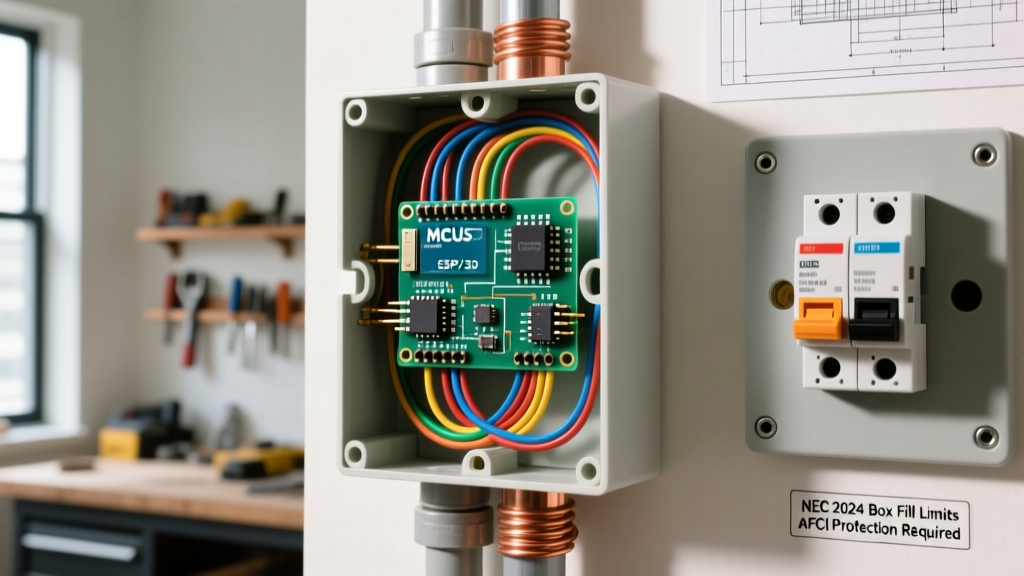
The most common code violation in DIY and rushed contractor installations is using an undersized outlet box. NEC Article 314.16 dictates strict volume requirements based on the size of the conductors entering the box. Electric dryers require 10 AWG copper wire, which demands significantly more internal volume than standard 15A or 20A lighting circuits.
NEC Box Fill Math for 10 AWG Conductors
According to NEC Table 314.16(B), each 10 AWG conductor requires 3.0 cubic inches of box volume. Here is the exact calculation for a standard 10/3 NM-B cable feeding a NEMA 14-30R receptacle:
- Hot 1 (Black): 3.0 cu in
- Hot 2 (Red): 3.0 cu in
- Neutral (White): 3.0 cu in
- Equipment Ground (Bare): 3.0 cu in (Counts as 1 conductor based on largest wire)
- Internal Cable Clamps: 3.0 cu in (Counts as 1 conductor)
- Receptacle Yoke (Device): 6.0 cu in (Counts as 2 conductors)
- Total Minimum Required Volume: 24.0 cubic inches
Approved Box Types for Dryer Receptacles
| Box Type & Dimensions | Internal Volume | NEC Compliant for 10 AWG? | Best Application |
|---|---|---|---|
| 4' x 4' x 1-1/2' Square Metal | 21.0 cu in | NO (Violates 314.16) | None for dryers |
| 4' x 4' x 2-1/8' Square Metal | 30.3 cu in | YES | Flush mount with mud ring |
| 4-11/16' x 2-1/8' Square Metal | 42.0 cu in | YES (Ideal) | Surface mount or deep flush |
| Standard 1-Gang Non-Metallic | 18.0 - 22.0 cu in | NO (Violates 314.16) | None for dryers |
| Deep 2-Gang Non-Metallic | 35.0+ cu in | YES | Retrofit / Drywall surface |
Step-by-Step NEMA 14-30R Receptacle Wiring
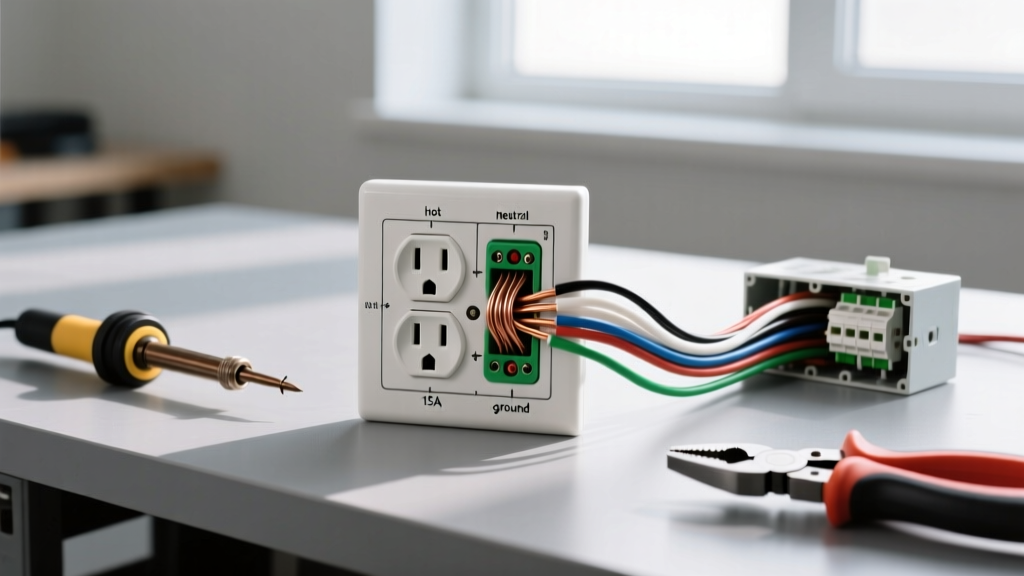
When wiring the Leviton 278-S00 or Hubbell HBL278SR NEMA 14-30R receptacle, precision and proper tooling are non-negotiable. The physical forces exerted by the heavy, stiff 10/3 cable require meticulous conductor management.
- Strip the Outer Jacket: Remove exactly enough NM-B jacket to allow the individual conductors to reach their terminals without pulling the jacket inside the box. The internal cable clamps must bite down on the outer jacket, not the individual wire insulation.
- Strip the Conductors: Use a precision wire stripper to remove exactly 3/4 inch of insulation from the 10 AWG wires. Do not nick the copper; nicks create hot spots that degrade over time under a 24-amp continuous load.
- Form the Hook: Bend the stripped ends into a tight 'J-hook' using needle-nose pliers. The hook must wrap clockwise around the terminal screw so that tightening the screw pulls the hook closed rather than pushing it out.
- Terminate Neutral & Ground: Connect the white wire to the silver 'W' (Neutral) terminal and the bare copper to the green 'G' (Ground) terminal. Never bond neutral and ground at the receptacle.
- Terminate the Hots: Connect the black and red wires to the two brass 'X' and 'Y' terminals. Polarity between the two hots does not matter for standard 240V heating elements, but consistency is best practice.
The Torque Mandate: NEC 110.14(D)
One of the most heavily enforced code updates in recent years is NEC 110.14(D), which requires the use of a calibrated torque tool (torque screwdriver or wrench) for all terminations on 14 AWG through 10 AWG conductors. Relying on 'hand-tight' or 'wrist-torque' is now a direct code violation.
Most 30-amp NEMA 14-30R receptacles specify a torque range of 14 to 18 inch-pounds. Under-torquing leads to micro-arcing and thermal runaway, melting the outlet box. Over-torquing strips the brass threads or shears the screw head. Invest in a calibrated inch-pound torque screwdriver (such as the Klein Tools 60174) before starting the job.
Physical Mounting & Strain Relief
An electric dryer cord is heavy, stiff, and subjected to continuous vibration during the spin cycle. The outlet box must be anchored securely to the building structure.
- Stud Mounting: Always screw the metal or non-metallic box directly into a wooden or metal stud using #10 or #12 structural screws.
- No Drywall Anchors: Never rely solely on drywall 'old-work' ears or toggle bolts to support a dryer outlet box. The repeated pulling force when moving the dryer for maintenance will eventually rip the box out of the drywall, exposing live 240V terminals.
- Strain Relief Connector: If using a surface-mounted metal box, you must use a proper NM-B strain relief connector (Romex connector) with a locknut. Pushing the bare cable through a knockout hole will allow the sharp metal edge to slice into the 10 AWG insulation over time, causing a dead short.
Common Failure Modes & Edge Cases
Understanding how dryer circuits fail helps in designing a more resilient installation. According to the Consumer Product Safety Commission (CPSC), electrical wiring and outlets are primary culprits in appliance-related fires.
Melted Terminal Blocks
This is almost always caused by loose connections (failure to use a torque screwdriver) or using the 'back-stab' push-in terminals. Never use push-in terminals for 10 AWG wire. Always use the screw-terminal plates. If the receptacle has back-wire clamps operated by the screw, those are acceptable, but side-wire screw termination is preferred for 30A circuits.
GFCI and AFCI Nuances in Laundry Areas
Under NEC 210.8(F), all 125-volt, single-phase, 15- and 20-ampere receptacles in laundry areas require GFCI protection. However, the 250-volt, 30-ampere NEMA 14-30R dryer receptacle is exempt from this specific GFCI mandate unless it is installed within 6 feet of a laundry sink or wet bar edge. Always check local 2026 municipal amendments, as some jurisdictions adopt stricter proximity rules.
Aluminum Wire Edge Cases
If you are retrofitting an older home wired with 8 AWG aluminum (which was historically used to carry 30A), you must use a receptacle explicitly rated 'CO/ALR' or use a proper AlumiConn lug adapter to transition to copper pigtails. Standard brass terminals on modern NEMA 14-30R receptacles will suffer from galvanic corrosion and cold creep if terminated directly with aluminum wire.
Frequently Asked Questions
Can I use a 50-amp NEMA 14-50R box for a 30-amp dryer?
No. The NEC prohibits 'upsizing' the receptacle rating beyond the branch circuit breaker. If your breaker is 30A, you must use a 30A NEMA 14-30R receptacle. Installing a 50A receptacle on a 30A circuit is a code violation because a faulty appliance could draw 45 amps, overheating the 10 AWG wire before the 30A breaker trips.
Does the dryer outlet need to be on an AFCI breaker?
NEC 210.12 requires Arc-Fault Circuit Interrupter (AFCI) protection for laundry areas. However, many manufacturers of 30A dual-function (AFCI/GFCI) breakers note compatibility issues with the high-inrush currents of older dryer motors. Always verify the specific breaker manufacturer's compatibility list, or use an AFCI-compatible outlet box setup as dictated by your local inspector.
How high should the electric dryer outlet box be mounted?
The NEC does not specify a mandatory height for dryer receptacles. However, industry standard practice places the center of the outlet box between 30 and 36 inches above the finished floor. This height aligns with the factory-installed cord strain relief on most standard 27-inch wide dryers, preventing the cord from kinking or resting on the floor where it could be crushed when the unit is pushed against the wall.
For further reading on appliance efficiency and electrical load management, consult the U.S. Department of Energy's Clothes Dryer guidelines. Proper installation of your electric dryer outlet box ensures not only code compliance but the long-term safety and efficiency of your home's most demanding appliances.