
The True Cost to Add an Electrical Outlet in 2026
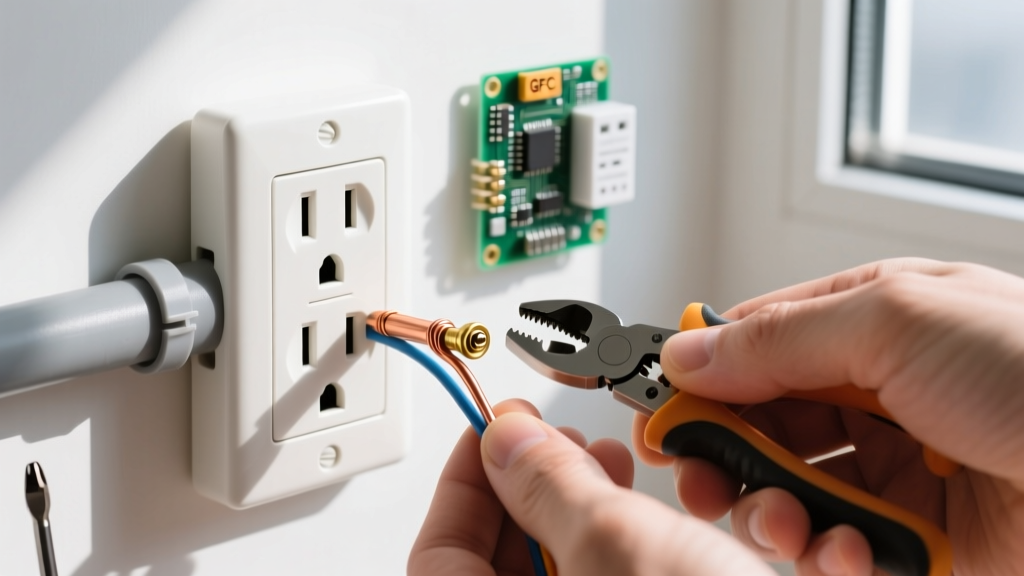
Whether you are mounting a new television, setting up a home office, or adding a kitchen appliance, lacking a nearby receptacle is a common frustration. If you are researching how much to add an electrical outlet to your existing walls, the answer depends entirely on your route: DIY installation versus hiring a licensed electrician. In 2026, material costs have stabilized, but skilled trades labor rates continue to climb, making the DIY vs. Pro decision more critical than ever for your budget.
For a standard interior drywall installation on an existing circuit, a DIY approach will cost between $25 and $65 in materials and specialized tools. Conversely, hiring a professional electrician typically ranges from $175 to $350 per outlet, factoring in hourly labor, trip charges, and drywall patching. Below, we break down the exact SKUs, labor rates, and National Electrical Code (NEC) requirements you need to know before cutting into your drywall.
DIY Material & Tool Breakdown: The Budget Route
Adding an outlet yourself is highly achievable for beginners, provided you are extending an existing, non-overloaded circuit (like a living room or bedroom general lighting circuit). Here is the exact shopping list and 2026 pricing from major hardware suppliers for a standard 15-amp, 120-volt receptacle installation.
Core Materials
- Southwire 14/2 NM-B Romex (25 ft coil): $18.50. You must match the wire gauge to the breaker. A 15-amp breaker requires 14 AWG; a 20-amp breaker requires 12 AWG.
- Leviton 15-Amp Tamper-Resistant Duplex Receptacle (SKU: R52-05320-00W): $1.85. The NEC mandates tamper-resistant (TR) shutters in all dwelling units to prevent childhood shock hazards.
- Carlon 1-Gang Old Work PVC Box (SKU: B114B): $2.15. This 14-cubic-inch box features flip-out wings that clamp securely to the back of existing drywall without needing a stud.
- Ideal Industries Wire-Nuts (Tan/Red assorted): $4.50 for a multi-pack. Alternatively, Wago 221 Lever-Nuts ($8.00 for a 10-pack) are highly recommended for beginners due to their push-in reliability and easy maintenance.
- Pass & Seymour 1-Gang Nylon Wall Plate: $1.20.
Essential Beginner Tools
If you do not already own electrical tools, factor these into your initial budget. According to the Electrical Safety Foundation International (ESFI), using properly rated testing equipment is non-negotiable to prevent arc flashes and fatal shocks.
- Klein Tools NCVT-3 Non-Contact Voltage Tester: $34.00. Tests for 12V to 1000V AC.
- Klein Tools 11063W Wire Stripper/Cutter: $22.00. Precision strips 14 and 12 AWG solid copper without nicking the conductor.
- Stanley FatMax Drywall Keyhole Saw: $11.00.
Total DIY Cost: ~$95 (if buying all tools) or ~$28 (materials only if tools are owned).
Professional Electrician Rates & Hidden Fees
If your home has plaster walls, lacks accessible attics or basements for wire fishing, or requires a new dedicated circuit run directly from the breaker panel, hiring a pro is mandatory. In 2026, licensed electricians charge an average hourly rate of $95 to $145, depending on your metropolitan area.
The Professional Cost Matrix
| Installation Scenario | Average Pro Cost (2026) | Time Required | Complexity Factors |
|---|---|---|---|
| Simple Extension (Existing Circuit, Drywall) | $175 - $225 | 1 - 1.5 Hours | Easy attic/crawlspace access, standard 15A circuit. |
| New Dedicated Circuit (e.g., Kitchen/Workshop) | $350 - $600 | 3 - 5 Hours | Requires new breaker, 12/2 wire, panel space availability. |
| Plaster & Lath Walls (Pre-1950s Homes) | $400 - $750+ | 4 - 8 Hours | High risk of wall damage, requires fish tapes, extensive patching. |
| GFCI/AFCI Upgrades in Wet Locations | $225 - $300 | 1.5 - 2 Hours | Code-mandated protection for kitchens, bathrooms, outdoors. |
Beginner Installation Workflow & NEC Compliance
Understanding the cost is only half the battle; executing the work to code ensures your home passes inspection and, more importantly, prevents electrical fires. The National Fire Protection Association (NFPA 70) outlines strict rules for outlet additions.
Step 1: Verify Circuit Capacity and AFCI Requirements
Before tapping into an existing outlet, calculate the load. A standard 15-amp circuit should not exceed 80% continuous load (1,440 watts). Furthermore, NEC Article 210.12 requires Arc-Fault Circuit Interrupter (AFCI) protection for all 120-volt, single-phase, 15- and 20-amp branch circuits supplying outlets in dwelling unit living rooms, bedrooms, and hallways. If the existing circuit is not AFCI protected, you must either install an AFCI breaker at the panel or use an AFCI receptacle at the first outlet in the daisy chain.
Step 2: Box Fill Calculations (NEC Article 314)
Beginners often cram wires into boxes that are too small, causing heat buildup and short circuits. You must calculate box fill. For 14 AWG wire, the NEC assigns a volume allowance of 2.0 cubic inches per conductor.
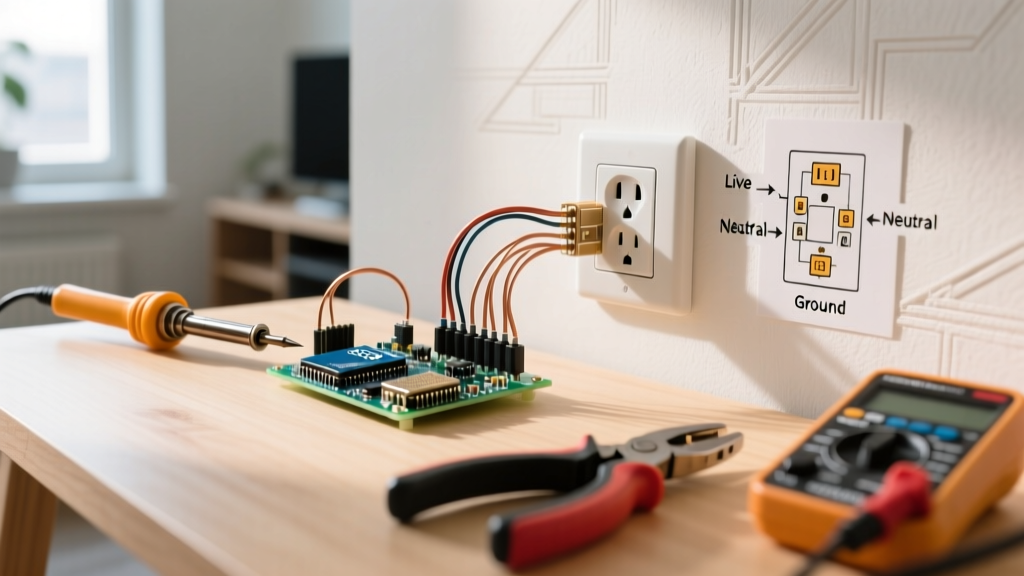
- Hot (Black): 1 conductor (2.0 cu in)
- Neutral (White): 1 conductor (2.0 cu in)
- Ground (Bare): Counts as 1 conductor total, regardless of how many grounds enter the box (2.0 cu in)
- Device (Receptacle): Counts as 2 conductors (4.0 cu in)
- Internal Clamps: Counts as 1 conductor (2.0 cu in)
Total Required: 12.0 cubic inches. The Carlon B114B Old Work box provides 14 cubic inches, making it perfectly code-compliant for this setup.
Step 3: Safe Wiring Practices
The U.S. Consumer Product Safety Commission (CPSC) reports that loose connections are a leading cause of residential electrical fires. When terminating wires on the Leviton receptacle, strip exactly 3/4 inch of insulation. Form a tight J-hook and loop it clockwise around the brass (hot) and silver (neutral) terminal screws so the tightening action pulls the wire inward, rather than pushing it out. Torque the screws firmly, but avoid stripping the brass threads.
Safety Warning: Never rely solely on a wall switch being 'off' to assume a circuit is dead. Always shut off the main breaker for the specific circuit at the service panel and verify zero voltage at the wires using a calibrated non-contact tester and a multimeter before touching any bare copper.
Edge Cases That Destroy Your Budget
When estimating how much to add electrical outlet infrastructure, beware of these hidden home anomalies that can instantly double or triple your costs:
- Knob and Tube Wiring: Found in homes built before 1940. You cannot legally splice into active knob-and-tube wiring in most jurisdictions. You will be forced to run a completely new circuit from the panel, pushing costs past $600.
- Full Breaker Panels: If your main service panel has no open slots, adding a dedicated circuit requires installing a tandem breaker (if the panel allows) or performing a sub-panel upgrade, which costs $1,200 to $2,500.
- Fire Blocks and Diagonal Bracing: When fishing wire down a wall cavity, hidden horizontal fire blocks can halt your progress. Pros use flexible drill bits and borescopes to navigate these, but a beginner might end up cutting multiple exploratory holes in the drywall, leading to expensive finishing and painting repairs.
- Permitting Fees: Most municipalities require a permit for adding new receptacles or circuits. Permit fees generally range from $50 to $150. Skipping a permit can result in fines and voided home insurance claims in the event of a fire.
Frequently Asked Questions
Can I daisy-chain a new outlet from an existing light switch?
Generally, no. Most standard light switch boxes only contain the hot (line and load) wires, lacking a neutral wire required to complete a 120V receptacle circuit. Furthermore, placing a receptacle on a lighting circuit can overload the breaker if you plug in high-draw devices like vacuums or space heaters.
Do I need a GFCI outlet for my new garage receptacle?
Yes. NEC Article 210.8 mandates Ground-Fault Circuit Interrupter (GFCI) protection for all 125-volt through 250-volt receptacles installed in garages, outdoors, crawlspaces, bathrooms, and kitchens. A Leviton 20-Amp GFCI receptacle (SKU: GFNT2-W) costs approximately $18.00 and is a mandatory material cost for these zones.
How long does a DIY outlet installation take?
For a beginner working on a standard interior drywall wall with attic access above, expect the process to take 2 to 3 hours. This includes 30 minutes of power verification and prep, 45 minutes of cutting and fishing the Romex cable, and 45 minutes of careful stripping, terminating, and testing the connections.