
Understanding the Egyptian Electrical Standard (220V/50Hz)
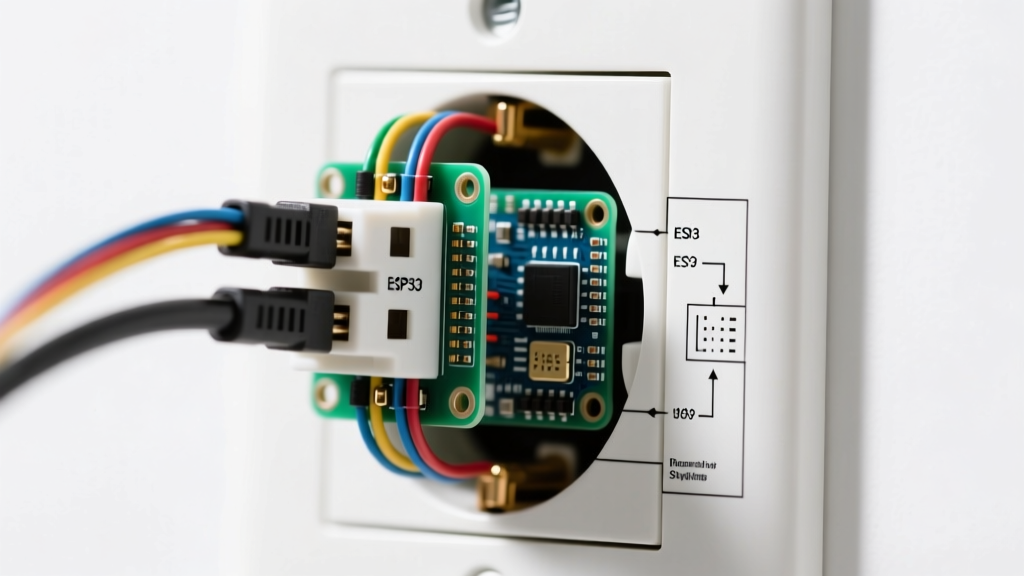
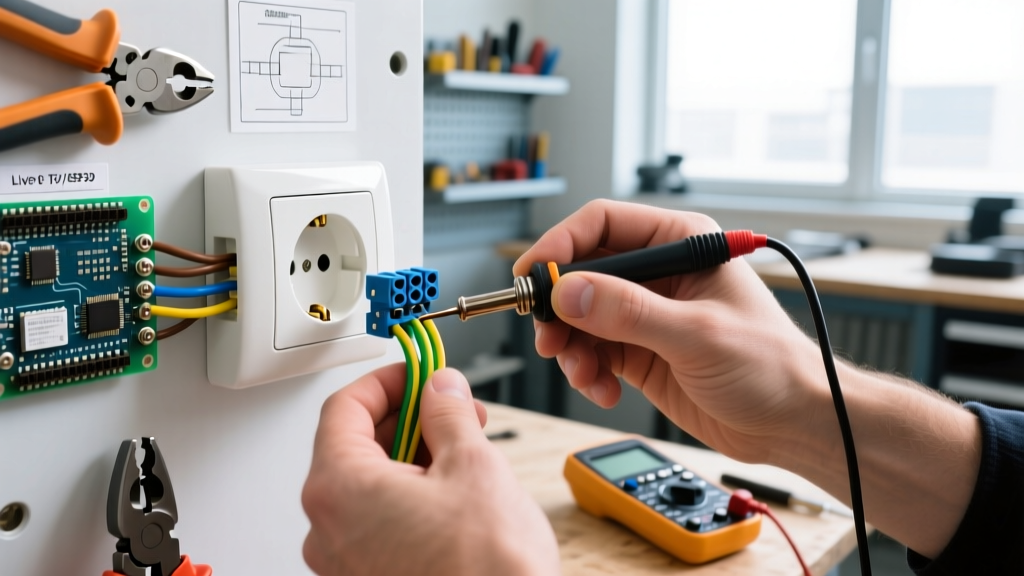
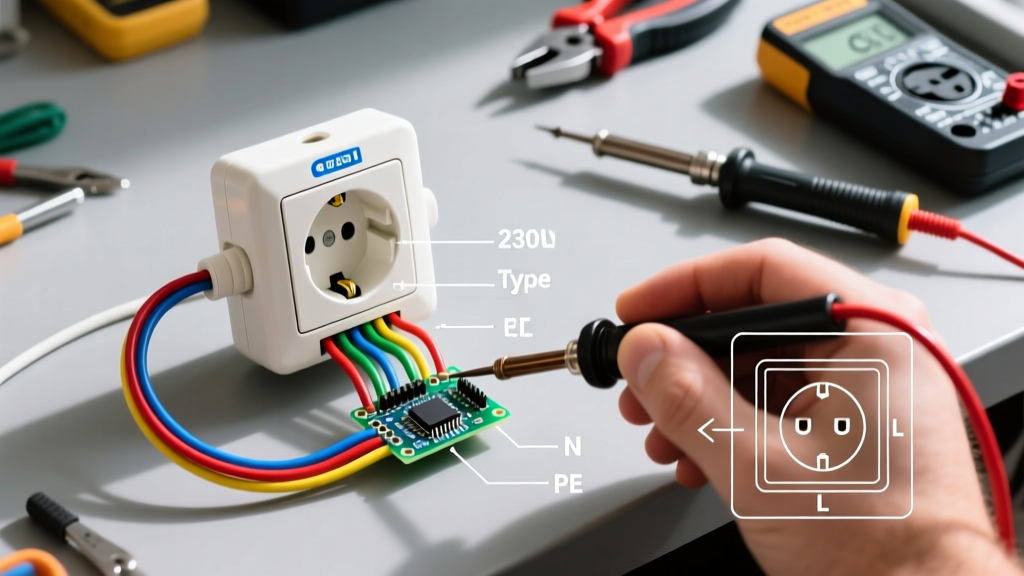
When installing, upgrading, or troubleshooting an Egypt electrical outlet, understanding the local grid parameters and safety codes is non-negotiable. Egypt operates on a nominal 220V (harmonized to 230V in modern standards) alternating current system at 50Hz. According to the International Electrotechnical Commission (IEC), Egypt primarily utilizes Type C (ungrounded Europlug) and Type F (grounded Schuko) receptacles.
While Type C is common for low-draw appliances like phone chargers, modern Egyptian Code for Electrical Installations (ECEE) strictly mandates Type F (Schuko) outlets for all general-purpose and high-draw circuits. The Schuko standard provides two 4.8mm line and neutral pins alongside dual grounding clips on the sides, ensuring a secure earth connection before the live pins make contact. Using ungrounded Type C outlets for appliances requiring earthing (like washing machines or refrigerators) is a severe code violation and a primary cause of electrical shock in residential settings.
Egyptian Wire Color Codes: Legacy vs. Modern ECEE Standards
One of the most dangerous aspects of upgrading an Egypt electrical outlet in older properties (particularly in Cairo and Alexandria) is the clash between legacy wiring colors and modern IEC-aligned standards. Electricians must always verify wires with a multimeter, as visual identification can be misleading and lethal.
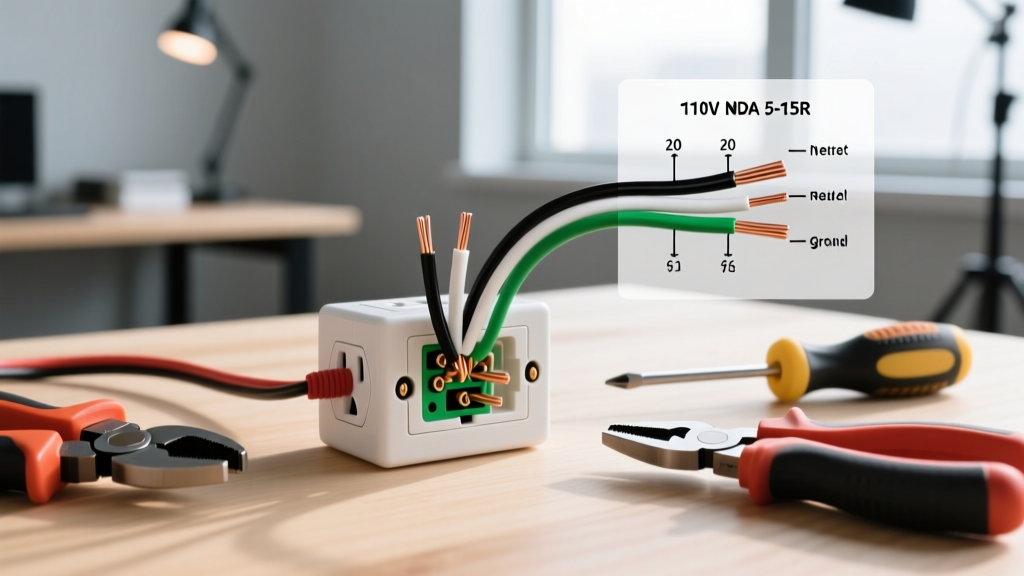
| Conductor | Legacy Egyptian Code (Pre-2010) | Modern ECEE / IEC 60446 | Safety Note |
|---|---|---|---|
| Line (Phase) | Red, Yellow, or Blue | Brown, Black, or Grey | Always test for voltage; legacy blue can be confused with modern neutral. |
| Neutral | Black | Blue | Black is now a phase color. Miswiring black as neutral causes short circuits. |
| Earth (Ground) | Green or Bare Copper | Green/Yellow Stripe | Bare copper is no longer code-compliant for insulated runs. |
The 'False Ground' Hazard in Older Egyptian Buildings
⚠️ CRITICAL SAFETY WARNING: In many older Egyptian apartment buildings, a true earth electrode system was never installed. To pass superficial inspections or satisfy tenants, unscrupulous contractors create a 'bootleg ground' by jumpering the Neutral and Earth terminals directly on the back of the outlet. If a neutral wire ever becomes disconnected upstream, the metal chassis of any plugged-in appliance will become energized at 220V, creating a lethal shock hazard.How to Test for a Bootleg Ground
Before replacing or relying on any Egypt electrical outlet in a building constructed before 2005, perform this mandatory multimeter test:
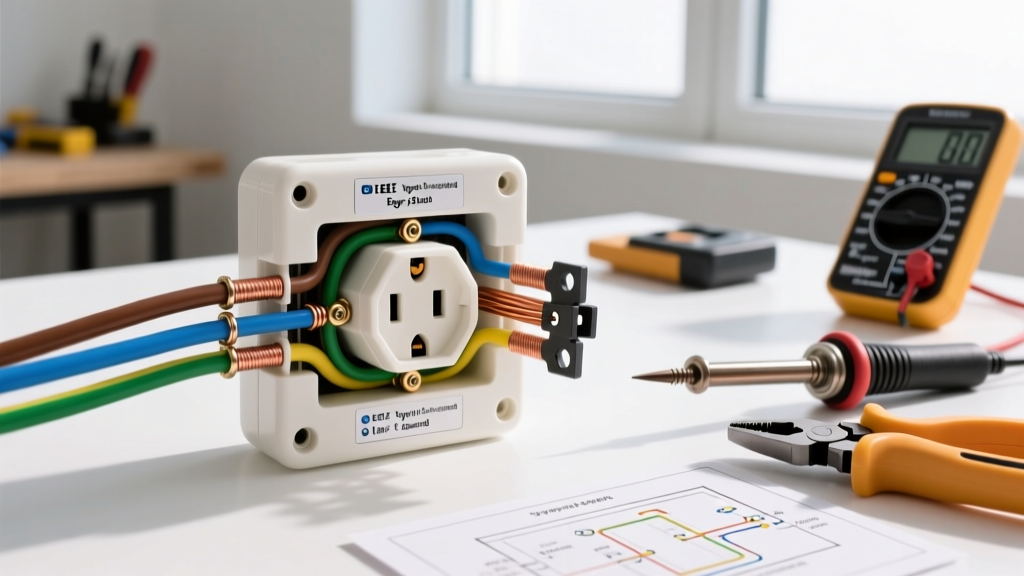
- Visual Inspection: Remove the outlet faceplate. If you see a small wire connecting the neutral (blue/black) terminal to the earth (green/yellow) terminal, immediately disconnect it and tag the circuit as 'Ungrounded'.
- Voltage Drop Test (Live): Set your multimeter to AC Voltage (V~). Measure Line-to-Neutral (expect ~220V) and Line-to-Earth (expect ~220V). Then measure Neutral-to-Earth. A reading of exactly 0.0V under load is highly suspicious of a jumpered ground.
- Continuity Test (Dead): Turn off the main distribution board breaker. Set the multimeter to continuity (beep mode). Place probes on the outlet's Neutral and Earth terminals. If the meter beeps, you have a bootleg ground. A true ground will only show continuity back to the main earth busbar, not the neutral busbar (unless bonded at the main service entrance, which should be verified at the panel, not the receptacle).
Coastal Corrosion and IP Ratings
Egypt's geography presents unique environmental challenges. In coastal cities like Alexandria, Hurghada, and Sharm El-Sheikh, high salinity and humidity accelerate galvanic corrosion inside standard IP20 rated outlets. This corrosion increases contact resistance, leading to localized heating, voltage drops, and eventual receptacle melting.
For any exterior or semi-exposed installations (balconies, ground-floor patios, or coastal properties), the Egyptian Electric Utility and Consumer Protection Regulatory Agency (EgyptERA) requires a minimum of IP44 rating with spring-loaded flap covers. For areas subject to direct washing or heavy sea spray, IP65 rated enclosures are mandatory. Always use nickel-plated brass contacts rather than standard tin-plated contacts in these regions to resist salt-induced oxidation.
Upgrading to Modern Safety: RCD Integration
The most significant update in modern ECEE regulations is the mandatory use of Residual Current Devices (RCDs) for all socket outlet circuits. An RCD monitors the current balance between Line and Neutral. If it detects a leakage as small as 30mA (indicating current is flowing through a person or faulty insulation to earth), it trips the circuit in under 40 milliseconds.
Recommended RCD and Outlet Brands in Egypt (2026 Market)
When sourcing components locally, stick to certified brands that meet IEC 61008/61009 standards. Avoid unbranded imports found in informal markets like Al-Ataba, as they frequently fail thermal and magnetic trip tests.
- Schneider Electric (Acti9 Series): The gold standard in Egypt. A 40A, 30mA Type A RCD module (e.g., Acti9 iID) costs approximately 2,800 to 3,500 EGP. Pair with Schneider Unica or Zencelo Type F outlets (150 - 250 EGP each).
- ABB (Formula & System Pro M): Highly reliable with excellent short-circuit withstand ratings. Expect to pay around 2,500 EGP for a comparable 40A RCD.
- Elsewedy Electric: The premier local manufacturer. Their E-Protect RCD line offers excellent value and guaranteed compliance with Egyptian grid fluctuations, typically priced between 1,200 and 1,800 EGP. Their standard Schuko receptacles are highly durable and cost around 80 - 120 EGP.
Step-by-Step Guide: Wiring a Compliant Type F Outlet
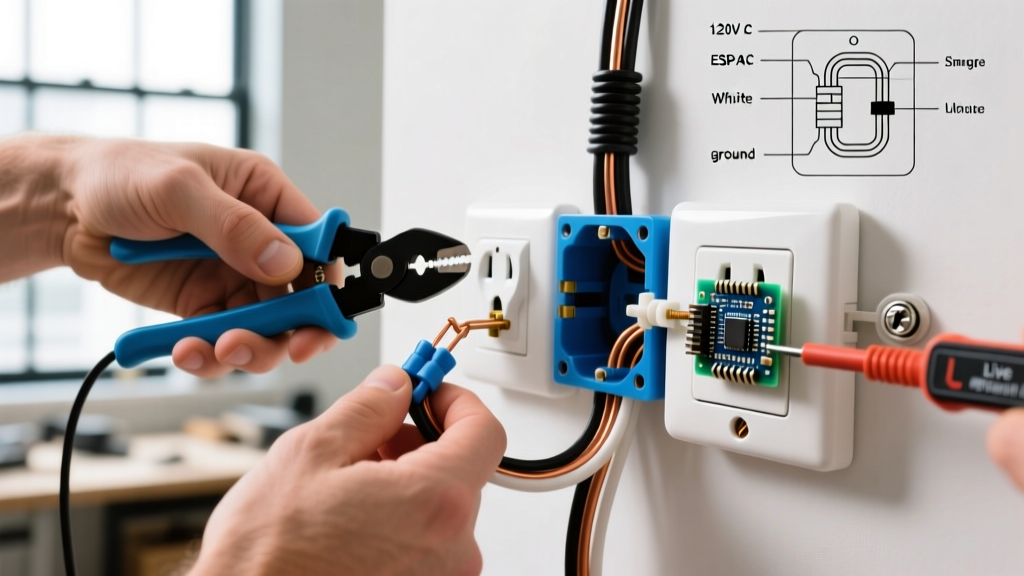
- Isolate and Verify: Switch off the MCB at the distribution board. Use a non-contact voltage tester (NCVT) and a multimeter to confirm 0V at the workspace.
- Prepare Conductors: Strip exactly 12mm of insulation from the 2.5mm² copper conductors. Do not score the copper, as this creates a weak point prone to snapping under screw tension.
- Terminate: Insert the Brown (Line) wire into the right terminal, Blue (Neutral) into the left, and Green/Yellow (Earth) into the center top/bottom terminal. Ensure no bare copper is exposed outside the terminal block.
- Torque: Tighten the terminal screws to the manufacturer's specified torque (usually 0.8 to 1.2 Nm for standard 16A receptacles). Undertightening causes arcing; overtightening crushes the wire strands.
- Mount and Test: Secure the outlet to the flush box using the provided M3.5 screws. Restore power and test with a dedicated Type F receptacle tester to confirm correct polarity and earth presence.
Frequently Asked Questions
Can I use a US 110V appliance in an Egypt electrical outlet?
No. Egypt operates on 220V/50Hz. Plugging a 110V appliance directly into a Type F outlet will instantly destroy the appliance and may cause a fire. You must use a step-down transformer rated for at least 1.5 times the appliance's wattage, alongside a physical plug adapter.
Why does my outlet feel warm to the touch?
A warm outlet indicates high resistance. This is usually caused by loose terminal screws, undersized wiring (using 1.5mm² instead of the required 2.5mm² for socket rings), or internal contact corrosion. Turn off the circuit immediately and inspect the terminations. For more local product specifications and safety bulletins, consult Schneider Electric Egypt or your local certified electrician.
Are GFCI outlets used in Egypt?
Egypt does not use the North American 'GFCI' receptacle format. Instead, ground fault protection is achieved by installing a 30mA RCD module in the main distribution board, which protects the entire downstream circuit. This is the code-compliant equivalent and offers superior whole-circuit protection.