
The True Cost to Add an Electrical Outlet: A Wiring Diagram Perspective
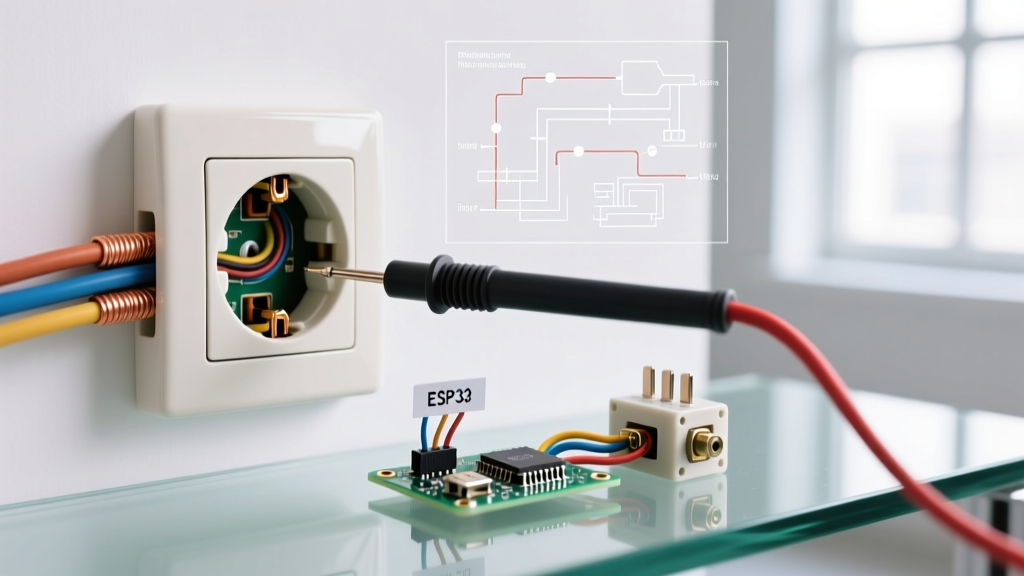
When homeowners ask, how much does it cost to add an electrical outlet, the answer is rarely a single flat rate. In 2026, the national average for professional installation ranges from $150 to $350 per receptacle. However, from a wiring diagram and schematic perspective, the cost is entirely dictated by the circuit topology you choose. Are you extending an existing parallel circuit, tapping into a GFCI load-side schematic, or running a dedicated 20A home-run back to the main service panel?
Understanding the underlying wiring diagrams is the only way to accurately estimate your material and labor costs. Below, we break down the exact pricing, specific material SKUs, and schematic complexities for the three most common outlet installation methods.
Cost Breakdown by Wiring Diagram Complexity
| Wiring Scenario | Schematic Complexity | DIY Material Cost | Pro Labor Cost (2026) | Best Use Case |
|---|---|---|---|---|
| Parallel Extension (Daisy-Chain) | Low | $15 - $35 | $150 - $225 | Living rooms, bedrooms, hallways |
| GFCI Downstream Protection | Medium | $35 - $60 | $200 - $280 | Kitchens, bathrooms, garages |
| Dedicated 20A Home Run | High | $80 - $150+ | $350 - $600+ | Window AC units, microwaves, workshops |
Scenario 1: Extending an Existing Circuit (Parallel Schematic)
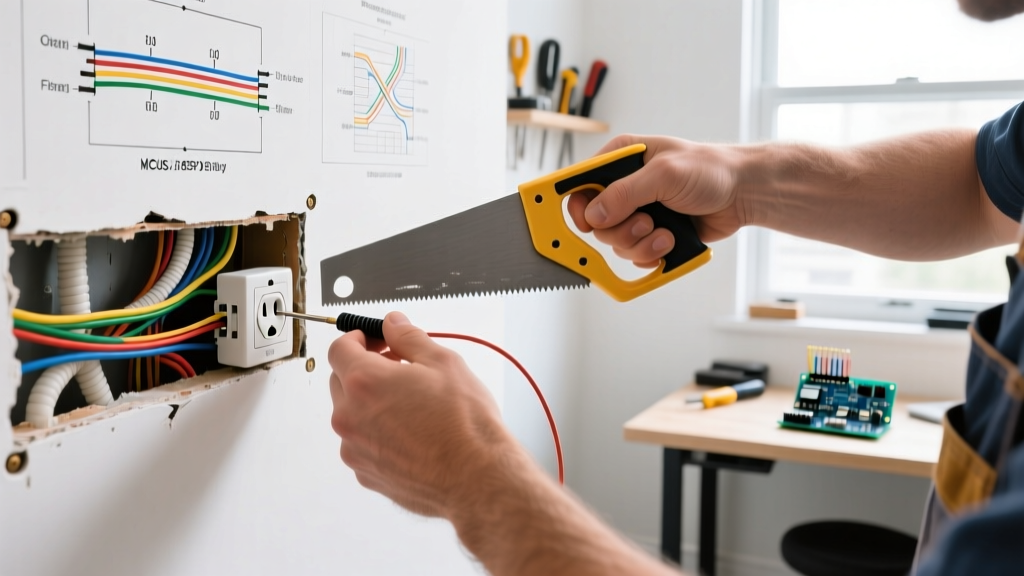
The most cost-effective way to add an outlet is to extend an existing 15A or 20A general-purpose circuit. This involves tapping into an upstream receptacle or junction box and running a new length of NM-B (Romex) cable to a new old-work box.
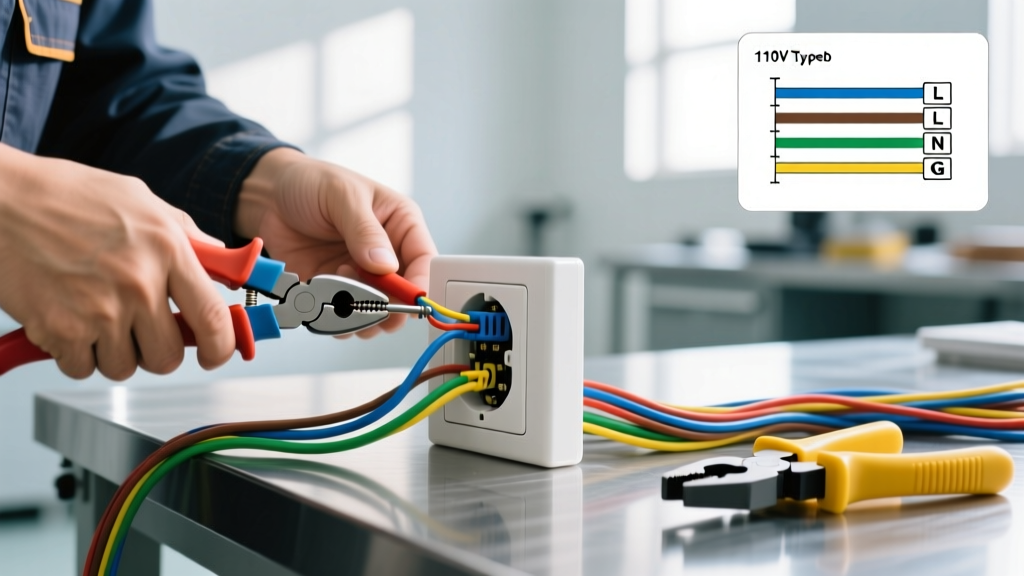
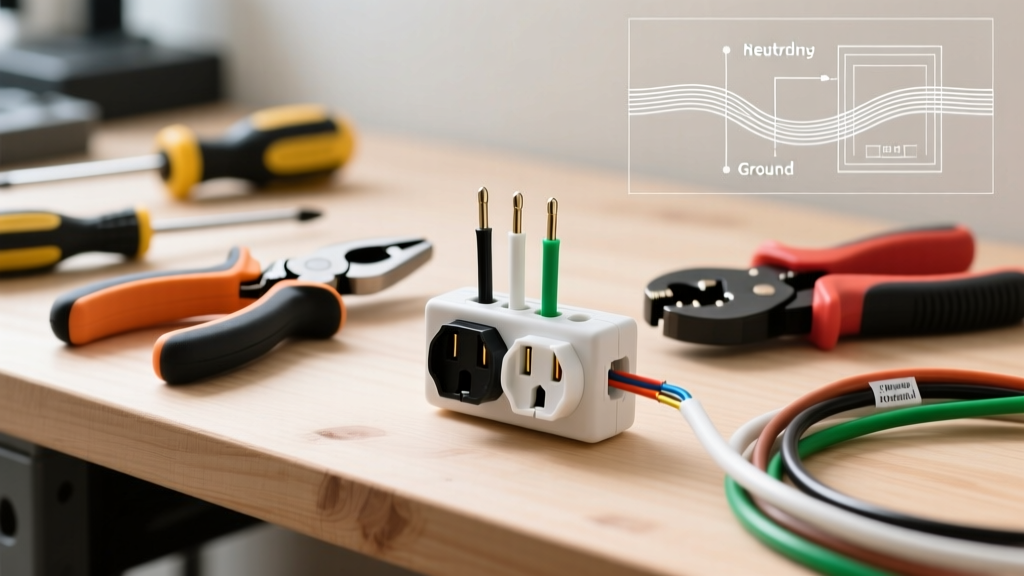
- Wiring Diagram Reference: You will wire the new receptacle in parallel. The black (hot) wire connects to the brass terminal, the white (neutral) to the silver terminal, and the bare copper (ground) to the green grounding screw.
- Expert Tip: Never rely on the receptacle's internal metal jumper tabs to pass power to the next device in the chain. According to ESFI Home Electrical Safety guidelines and standard electrician best practices, you should always use wire nuts to create 'pigtails.' This ensures that if the receptacle fails or is removed, the downstream outlets do not lose power.
- Material Needs: 14/2 or 12/2 NM-B wire (approx. $0.65/ft), one single-gang old-work bracket box ($1.20), wire nuts, and a 15A Tamper-Resistant (TR) duplex receptacle like the Leviton 5362-W ($2.50).
Scenario 2: GFCI Protection Downstream (Line/Load Schematic)
If you are adding an outlet in a kitchen, bathroom, or unfinished basement, the National Electrical Code (NEC 210.8) mandates Ground Fault Circuit Interrupter (GFCI) protection. You can either install a GFCI breaker at the panel (expensive) or wire a GFCI receptacle at the first point of use and protect downstream standard outlets via the 'LOAD' terminals.
- Wiring Diagram Reference: The incoming power from the panel connects strictly to the LINE terminals on the GFCI. The cable running to your newly added standard outlet connects to the LOAD terminals. This extends the ground-fault protection envelope without requiring a second $45 GFCI device.
- Cost Factor: A high-quality 20A GFCI receptacle (e.g., Eaton GFTR2-20W) costs around $22-$28, raising your DIY material cost slightly, but saving hundreds compared to panel-level upgrades.
Scenario 3: New Dedicated 20A Circuit (Home Run Schematic)
Adding an outlet for a high-draw appliance (like a microwave, air compressor, or window AC) requires a dedicated circuit. This is the most expensive scenario because it involves opening the main service panel, installing a new breaker, and routing a continuous, unspliced cable directly to the new receptacle.
- Wiring Diagram Reference: This is a radial schematic with no intermediate nodes. You must use 12 AWG copper wire (12/2 NM-B) and terminate it on a 20A breaker (like the Eaton BR120, approx. $6.50). The receptacle must be a 20A-rated device (featuring the T-slot neutral configuration), such as the Leviton 5366-W.
- Code Requirement: Per NFPA Codes and Standards (NEC 210.12), if this dedicated circuit feeds a bedroom or living area, you must install an Arc Fault Circuit Interrupter (AFCI) breaker, which increases the panel material cost by $40 to $55.
2026 Material Cost Matrix: What You Actually Pay
To budget accurately, you need real-world pricing for the specific components required in these wiring diagrams. Below is a snapshot of average retail costs at major electrical suppliers in 2026.
| Component | Specific SKU / Type | Average Unit Cost |
|---|---|---|
| Wire (15A Circuits) | 14/2 NM-B (Southwire) - per foot | $0.55 - $0.70 |
| Wire (20A Circuits) | 12/2 NM-B (Southwire) - per foot | $0.75 - $0.95 |
| Standard Receptacle | 15A TR Duplex (Leviton 5362) | $2.50 |
| 20A Receptacle | 20A TR Duplex (Leviton 5366) | $3.85 |
| GFCI Receptacle | 20A TR GFCI (Eaton GFTR2-20) | $24.00 |
| Standard Breaker | 20A Single Pole (Eaton BR120) | $6.50 |
| AFCI Breaker | 20A Combination AFCI (Eaton BRCAF120) | $48.00 |
| Old-Work Box | Single Gang Remodel Box (Carlon B114R) | $1.35 |
Hidden Costs: Drywall, Fireblocks, and Remediation
When calculating how much it costs to add an electrical outlet, DIYers frequently forget the structural variables that dictate labor time. Professional electricians will factor these into their quotes:
- Drywall Cutting and Patching ($50 - $150): Fishing wire through finished walls often requires cutting access holes. If you cannot fish the wire cleanly, drywall repair and painting will add to the final bill.
- Fireblock Drilling ($75 - $200): Modern framing includes horizontal fireblocks between studs. Drilling through these from an attic or crawlspace using a flexible auger bit adds significant labor time.
- Knob-and-Tube Remediation ($500+): If you open a wall in a pre-1950s home and discover active knob-and-tube wiring, the NEC prohibits extending it. You will be forced to abandon the circuit and run a completely new home-run, drastically altering your budget.
Step-by-Step: Wiring the Most Cost-Effective Outlet Extension
If you are extending a 15A living room circuit (the lowest cost method), follow this precise schematic workflow to ensure safety and code compliance:
- Kill the Power: Turn off the 15A breaker and verify zero voltage at the upstream receptacle using a non-contact voltage tester (e.g., Klein Tools NCVT-2).
- Prep the Upstream Box: Remove the existing receptacle. If the box is too cramped to accommodate three cables (incoming, outgoing to new box, and pigtails), upgrade to a deep old-work box.
- Create Pigtails: Cut three 6-inch pieces of 14 AWG THHN wire (black, white, green). Strip 3/4 inch of insulation from each end.
- Join the Neutrals: Wire-nut the upstream white wire, the new cable's white wire, and your white pigtail together. Connect the free end of the white pigtail to the silver terminal on the upstream receptacle.
- Join the Hots: Repeat the process with the black wires, terminating the pigtail on the brass terminal.
- Join the Grounds: Repeat with the bare/green wires, terminating on the green grounding screw.
- Terminate the New Outlet: At the new old-work box, strip the new cable and connect black to brass, white to silver, and ground to green. Secure the drywall tabs on the old-work box and mount the faceplate.
Expert Verdict: DIY vs. Professional Installation
If your wiring diagram involves a simple parallel extension in an unfinished basement or accessible attic, the DIY material cost is under $30, making it a highly rewarding weekend project. However, if your schematic requires opening the main service panel to install a new AFCI breaker or fishing 12/2 wire through insulated exterior walls, the complexity and risk of arc-fault hazards dictate hiring a licensed electrician. In 2026, paying $350 for a dedicated circuit is a worthwhile investment in your home's fire safety infrastructure.
Frequently Asked Questions
Do I need a permit to add a single electrical outlet?
In most municipalities, adding a single receptacle to an existing circuit does not require a permit. However, running a new dedicated circuit from the main panel almost always requires an electrical permit and a subsequent inspection to ensure the breaker sizing and wire gauge match NEC standards.
Can I use 14 AWG wire on a 20A breaker to save money?
Absolutely not. This is a severe fire hazard and a direct violation of NEC 240.4. 14 AWG copper is rated for a maximum of 15 amps. If you are wiring a 20A circuit, you must use 12 AWG wire, regardless of the cost savings of the thinner gauge.
Why does my new outlet trip the GFCI immediately?
If you wired a new outlet downstream of a GFCI and it trips immediately, you likely have a neutral-to-ground fault. Ensure that the bare ground wire is not touching the silver neutral terminal or the white wire anywhere in the new box. Furthermore, verify that you connected the downstream cable to the LOAD terminals, not the LINE terminals, of the GFCI.