
Understanding the Mexico Electrical Outlet Standard
When diagnosing a faulty Mexico electrical outlet, you must first understand the baseline infrastructure. The Comisión Federal de Electricidad (CFE) officially standardized the national grid to a nominal 127V at 60Hz. While many older buildings and legacy appliances still reference 110V or 120V, modern diagnostic expectations must be calibrated to 127V, with an acceptable tolerance band of 114V to 133V.
Physically, Mexico utilizes the same International Electrotechnical Commission (IEC) Type A (ungrounded, two-prong) and Type B (grounded, three-prong) receptacles found in the United States and Canada. These correspond to the National Electrical Manufacturers Association (NEMA) 1-15R and 5-15R standards. However, the installation quality, internal metallurgy of the receptacles, and adherence to the Norma Oficial Mexicana (NOM-001-SEDE) vary wildly depending on the region and the age of the property.
The "Loose Plug" Epidemic: Diagnosing Worn Contacts
The most frequently reported issue with a Mexico electrical outlet is severe mechanical fatigue, resulting in plugs that fall out of the receptacle under their own weight. This is not merely an annoyance; it is a severe fire hazard.
The Metallurgy Failure
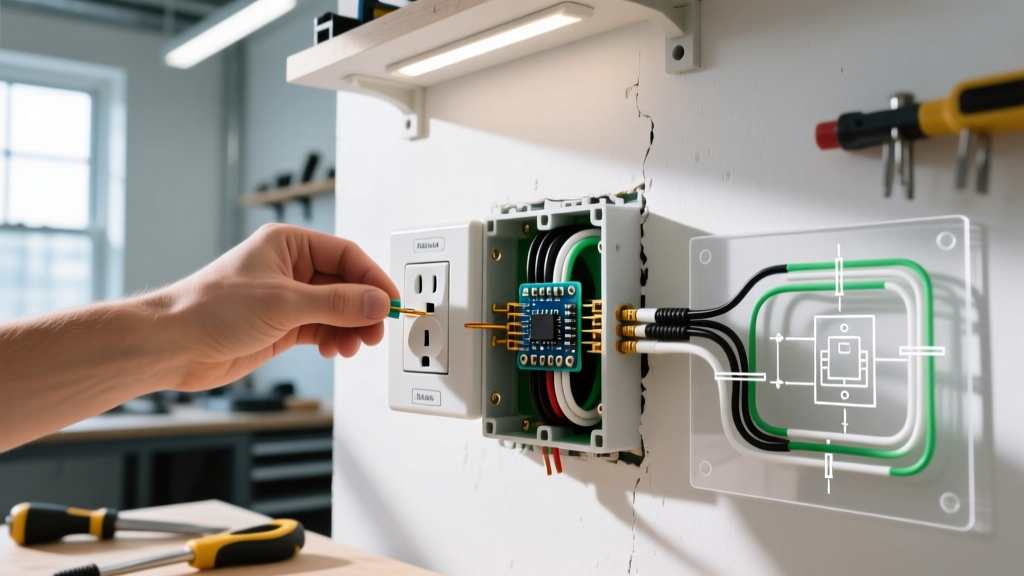
Budget-grade receptacles commonly installed in Mexican residential builds utilize thin, stamped brass for the internal wiper contacts. Over time, the heat generated by normal resistive loads (like a 1500W space heater or hair dryer) anneals the brass, causing it to lose its spring tension. Once the wipers lose their grip on the plug blades, micro-arcing occurs. This arcing creates localized temperatures exceeding 1,000°C, which eventually melts the nylon or polycarbonate faceplate of the outlet.
Diagnostic Step: Do not rely solely on a visual inspection. Use an infrared thermometer or a thermal imaging camera (like the FLIR ONE) while a high-draw appliance is running. If the outlet faceplate exceeds 45°C (113°F), the internal wipers are compromised and the receptacle must be replaced immediately.
Phantom Grounds and Bootleg Wiring
While NOM-001-SEDE strictly mandates equipment grounding for all 15A and 20A branch circuits, enforcement in older or informally constructed homes is notoriously lax. A common edge case is the "bootleg ground," where a DIY installer places a jumper wire between the neutral terminal and the ground screw on a Type B (NEMA 5-15R) outlet to trick a standard 3-light tester into showing a "correct" wiring status.
This creates a lethal shock hazard. If the neutral wire becomes disconnected upstream, the metal chassis of any plugged-in appliance will become energized at 127V.
How to Expose a Bootleg Ground
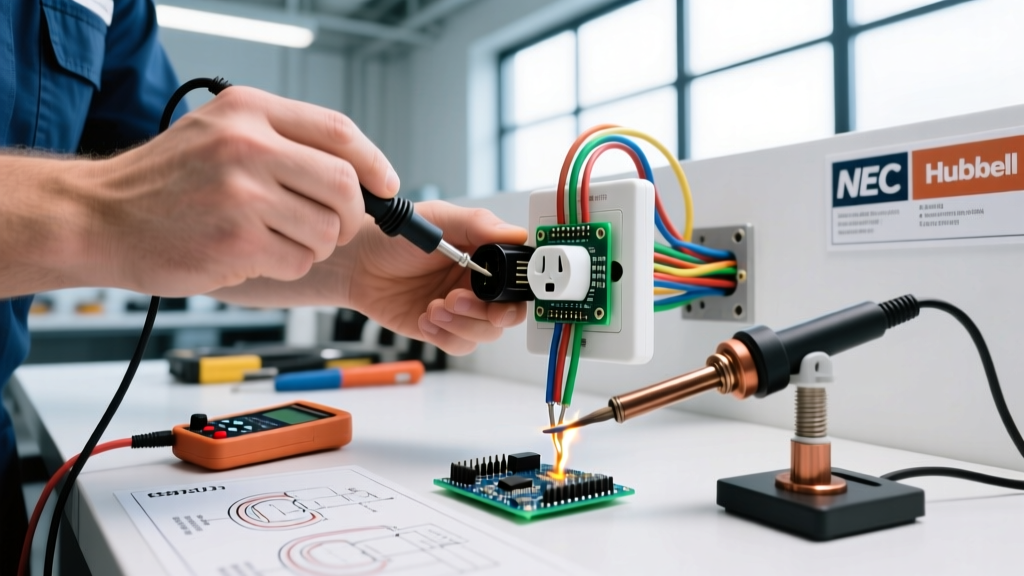
- Step 1: Set your True-RMS multimeter (e.g., Fluke 117) to AC Voltage.
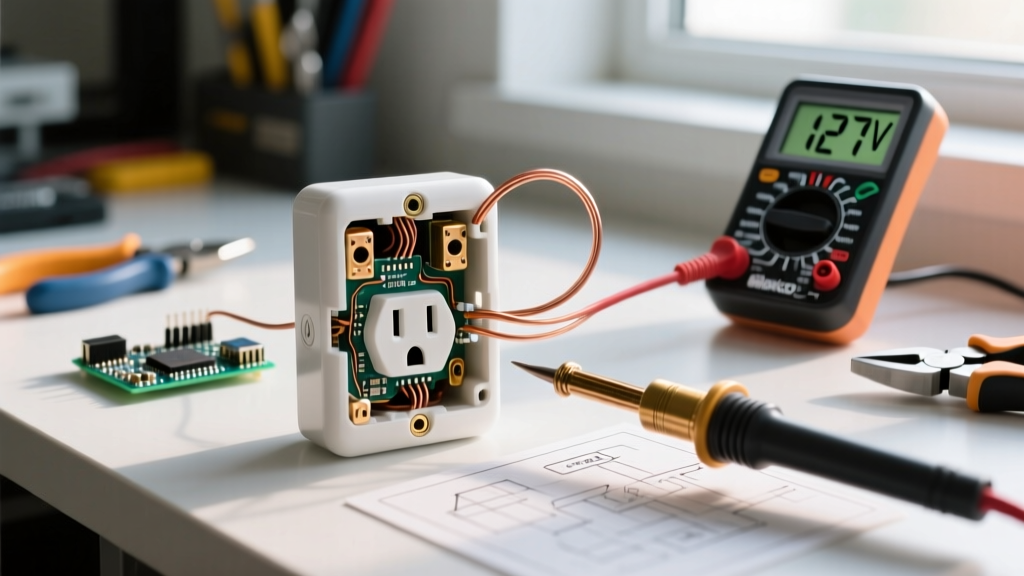
- Step 2: Measure Hot-to-Neutral (H-N). It should read ~127V.
- Step 3: Measure Hot-to-Ground (H-G). It should also read ~127V.
- Step 4: Measure Neutral-to-Ground (N-G). In a properly wired system with current flowing, N-G will read a small voltage drop (0.5V to 2.0V). If the N-G reading is exactly 0.0V while a load is running, or if H-N and H-G readings are identical down to the decimal, you likely have a bootleg ground jumper installed at the receptacle.
Diagnostic Matrix: Common Mexico Outlet Faults
Use this troubleshooting matrix to quickly isolate the failure mode of your Mexico electrical outlet.
| Symptom | Probable Cause | Multimeter Reading | Corrective Action |
|---|---|---|---|
| Plug falls out easily | Wiper fatigue / Annealed brass | N/A (Mechanical) | Replace with spec-grade NEMA 5-15R (e.g., Bticino Sfera) |
| Appliance shocks user | Bootleg ground or reversed polarity | H-G: 127V, N-G: 0.0V | Remove neutral-ground jumper; verify panel grounding bar |
| Intermittent power loss | Backstabbed wire connections | Fluctuating 90V-127V under load | Move wires from push-in terminals to side screw terminals |
| Breaker trips instantly | Short circuit or degraded GFCI | 0V (Tripped state) | Check for moisture ingress; replace GFCI if internal relay failed |
Step-by-Step Troubleshooting with a Multimeter
Before opening the receptacle, always perform a non-contact voltage test and verify the CFE main breaker is off. Lockout/tagout procedures are critical, as Mexican residential panels often lack clear circuit labeling.
1. Verify Polarity (Polaridad Invertida)
Reversed polarity is common when local electricians swap the hot and neutral wires at the breaker or the receptacle. Using your multimeter, insert the black probe into the neutral slot (the wider slot) and the red probe into the hot slot (the narrower slot). If you read -127V or if your neon tester illuminates on the neutral side, the polarity is inverted. This bypasses the internal safety switches of appliances, leaving them energized even when turned off.
2. Inspect the Backstab Connections
Many contractors in Mexico utilize the push-in "backstab" wiring holes on the rear of cheap receptacles to save time. These connections rely on a tiny internal spring that frequently loosens due to thermal expansion and contraction cycles. Never reuse backstabbed connections. When replacing the outlet, strip the 12 AWG or 14 AWG copper wire to exactly 3/4 inch and loop it clockwise around the brass and silver terminal screws. Torque the screws to 14 in-lbs to prevent cold-flow loosening.
Sourcing Compliant Replacements in Mexico
If your diagnosis requires a replacement, avoid the unbranded, counterfeit receptacles sold in informal street markets. As of 2026, you should source NOM-001 certified receptacles from established hardware chains like Home Depot Mexico, Sodimac, or local electrical distributors (ferreterías). Here are the top-tier brands and their approximate market costs:
- IUSA (Model 11810): The standard for mid-tier residential builds. Made of durable thermoplastic with solid brass wipers. Cost: ~45 - 65 MXN ($2.50 - $3.50 USD).
- Bticino (Sfera or Living Now lines): Premium, European-engineered receptacles widely adopted in high-end Mexican developments. Features superior phosphor bronze contacts and modern aesthetic profiles. Cost: ~120 - 180 MXN ($6.50 - $10.00 USD).
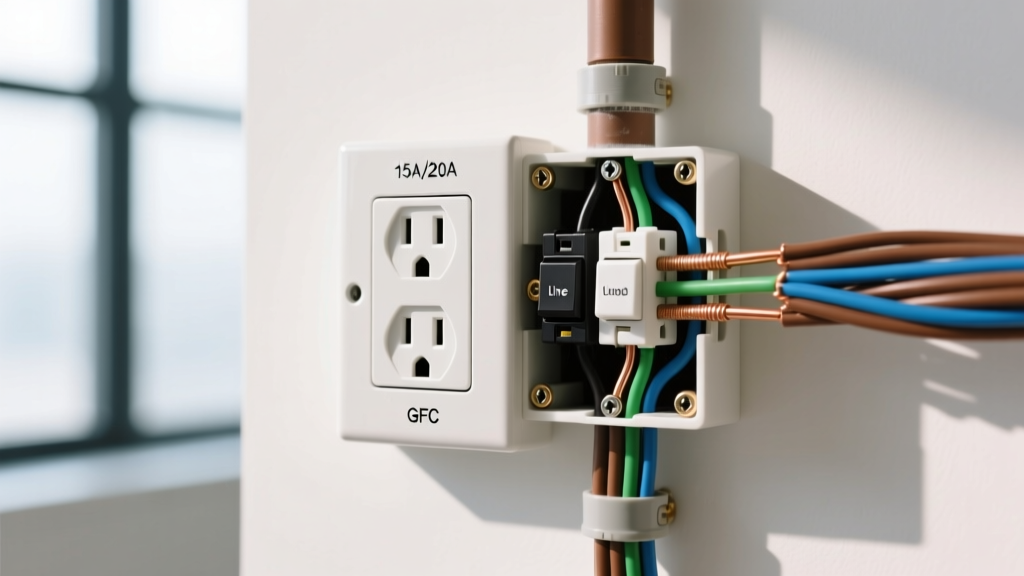
- Square D by Schneider Electric (GFCI): Essential for kitchens, bathrooms, and outdoor patios where moisture is prevalent. Look for the 20A feed-through models. Cost: ~450 - 600 MXN ($25.00 - $33.00 USD).
⚠️ Safety Warning: Never install a standard 15A NEMA 5-15R receptacle on a 20A circuit breaker. While US and Mexican codes allow 15A receptacles on 20A circuits only if there are multiple receptacles on the branch, many Mexican homes run a single 20A breaker to a single outlet. In this scenario, you must install a 20A NEMA 5-20R receptacle to match the breaker rating and prevent the wiring from overheating before the breaker trips.
Frequently Asked Questions (FAQ)
Can I use a US surge protector on a Mexico electrical outlet?
Yes, but with caveats. Ensure the surge protector is rated for 127V/60Hz. Many older US surge protectors utilize Metal Oxide Varistors (MOVs) clamped at 150V, which may degrade prematurely on a Mexican grid that experiences frequent voltage swells up to 135V during low-load nighttime hours. Look for a protector with a 330V or 400V MOV clamping rating for longevity in Mexico.
Why does my outlet spark when I plug in my laptop?
A small blue spark when plugging in a laptop or phone charger is usually normal inrush current as the device's internal capacitors charge. However, if the spark is large, yellow/orange, or accompanied by a melting plastic smell, it indicates severe wiper oxidation or loose internal wiring causing an arc flash. Stop using the outlet immediately and replace it.
Are AFCI breakers required in Mexican bedrooms?
While the US NEC has mandated Arc Fault Circuit Interrupters (AFCIs) for bedrooms for years, the Mexican NOM-001-SEDE has been slower to enforce AFCI requirements in standard residential builds, focusing primarily on GFCI protection for wet areas. However, new luxury developments and commercial builds in 2026 are increasingly adopting AFCI breakers to mitigate fire risks from damaged cords.