
Why Your Dryer Electrical Outlet Might Be Dead
When you press the start button and your clothes dryer fails to spin or heat up, the immediate assumption is often a broken appliance. However, a significant percentage of these failures originate at the dryer electrical outlet. Electric dryers require a dedicated 240-volt, 30-amp circuit to operate correctly. Because these circuits carry high voltage and high current, they are uniquely susceptible to thermal degradation, loose connections, and split-phase imbalances.
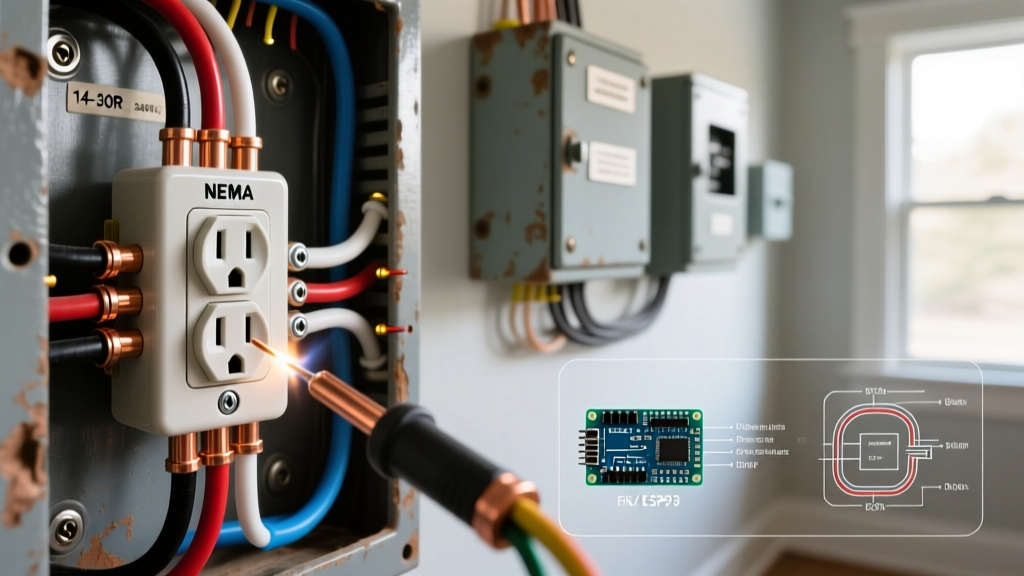
Troubleshooting a 240V receptacle requires a methodical approach. You cannot simply swap parts; you must verify the electrical delivery from the main panel to the terminal block. This guide provides a professional-grade diagnostic framework for testing NEMA 14-30R (4-prong) and NEMA 10-30R (3-prong) configurations, identifying breaker faults, and resolving code violations.
⚠️ CRITICAL SAFETY WARNING: A 240V circuit carries lethal amperage. An arc flash from a shorted 30A double-pole breaker can cause severe burns or death. Never touch bare wire ends while the circuit is energized. Always wear ANSI Z87.1 safety glasses and insulated gloves when testing live terminals with a multimeter.
Phase 1: Visual and Physical Inspection
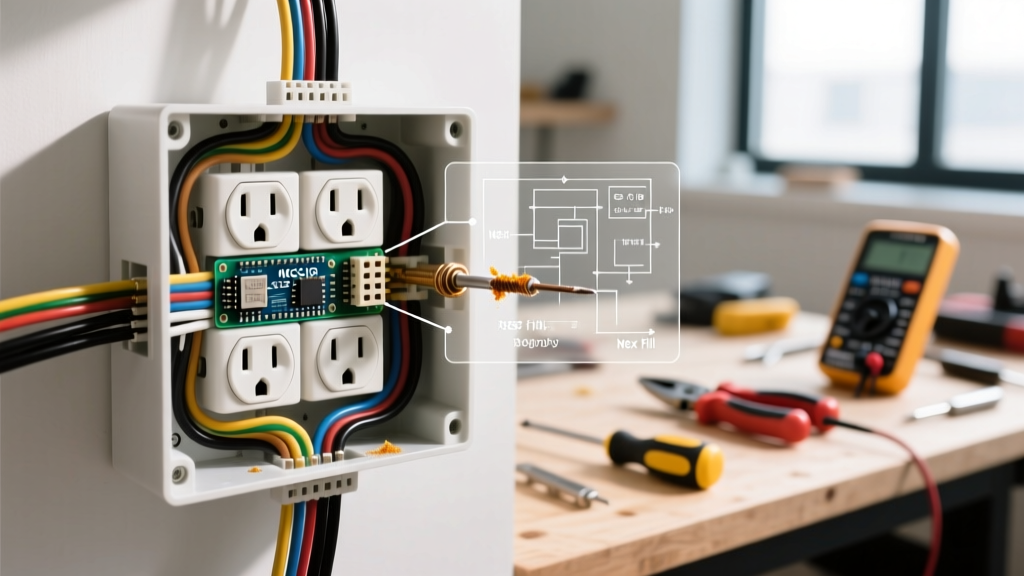
Before pulling out a multimeter, perform a rigorous physical inspection of the receptacle and the dryer cord. High-resistance connections generate immense heat, which slowly destroys the outlet over years of use.
Inspecting the Receptacle Face
- Thermal Discoloration: Look for brown or black scorch marks around the L-shaped neutral slot or the two vertical hot slots. This indicates arcing.
- Faceplate Warping: If the plastic cover plate feels brittle or warped, the internal thermoplastic of the receptacle (commonly a Leviton 278-S00 or Pass & Seymour 2620) has likely melted, reducing terminal tension.
- Plug Fitment: Insert the dryer plug. It should require firm pressure to seat fully and should not sag. A plug that slides in easily indicates worn internal brass wipers, which will cause voltage drop under a 25-amp load.
Checking the Cord and Strain Relief
Verify that the 10 AWG copper cord is securely fastened to the dryer's terminal block. The strain relief clamp must grip the thick outer jacket of the cord, not the individual inner wires. If the clamp is loose, the heavy cord pulls on the terminal screws every time the dryer vibrates, eventually loosening the hot or neutral connection.
Phase 2: Multimeter Diagnostics (Live Testing)
To accurately diagnose the dryer electrical outlet, you need a True-RMS digital multimeter rated for CAT III 600V or higher. Set the dial to AC Voltage (V~). Carefully insert the probes into the NEMA 14-30R slots according to the matrix below.
Expected Voltage Readings for a Healthy NEMA 14-30R
| Probe 1 (Red) | Probe 2 (Black) | Expected Reading | Diagnostic Meaning if Incorrect |
|---|---|---|---|
| Hot 1 (Right Slot) | Hot 2 (Left Slot) | 240V (230V-250V) | Lost phase, tripped breaker, or broken 10 AWG wire. |
| Hot 1 (Right Slot) | Neutral (L-Shape) | 120V | Open neutral or lost L1 leg. |
| Hot 2 (Left Slot) | Neutral (L-Shape) | 120V | Open neutral or lost L2 leg. |
| Hot 1 (Right Slot) | Ground (U-Shape) | 120V | Missing equipment ground or bonded neutral/ground fault. |
| Neutral (L-Shape) | Ground (U-Shape) | 0V (or < 2V) | Readings above 2V indicate a loose neutral bus bar in the main panel. |
The 'Lost Leg' Phenomenon
A common edge case occurs when a homeowner measures 120V from Hot 1 to Neutral, and 0V from Hot 2 to Neutral, but measures 120V from Hot 1 to Hot 2. This 'phantom voltage' is caused by the dryer's internal 120V components (like the timer motor or control board) back-feeding voltage through the neutral path. This confirms one of the two 120V legs from the double-pole breaker has failed or tripped independently.
Phase 3: Breaker and Panel Troubleshooting
If your multimeter readings at the outlet are abnormal, the fault likely lies in the electrical panel. Modern dryers require a 30-Amp, double-pole breaker. Common models include the Square D HOM230 (Homeline), Siemens Q230, or Eaton BR230.
- Check the Toggle Position: A tripped breaker often rests in the middle position, not fully in the 'OFF' position. Firmly push the toggle to 'OFF' until you hear a click, then reset to 'ON'.
- Test Breaker Output (Dead Front Off): If resetting fails, remove the panel cover. Set your multimeter to AC Voltage. Place one probe on the panel's ground bus bar and the other on the breaker's terminal screw. You should read 120V on both terminal screws. If one reads 0V, the breaker's internal bimetallic strip has permanently failed, or the bus stab is corroded.
- Inspect the Neutral Bus Bar: The white 10 AWG neutral wire must be tightly secured under a dedicated screw on the neutral bus bar. A loose neutral here will cause the dryer's 120V control circuits to fail while the 240V heating element might still partially energize, leading to erratic behavior.
Phase 4: Code Compliance and GFCI Requirements
Electrical codes evolve to address fire and shock hazards. According to the National Fire Protection Association (NFPA), the National Electrical Code (NEC) has strict rules regarding laundry circuits.
The 3-Prong vs. 4-Prong Transition
The NEC banned the installation of new NEMA 10-30R (3-prong) outlets in 1996. The 3-prong design bonds the neutral and ground at the appliance, meaning if the neutral wire breaks, the dryer's metal chassis becomes energized at 120V. If your home still has a 3-prong outlet, you must upgrade to a NEMA 14-30R and install a 4-prong cord on the dryer, removing the internal bonding strap.
GFCI Protection in Laundry Areas
While standard NEC GFCI rules (Article 210.8) primarily target 125V/15-20A receptacles, many municipal adoptions for the 2023 and upcoming 2026 code cycles now mandate 250V GFCI protection for laundry areas due to the proximity of water sources. If you are replacing a panel or installing a new circuit, you may be required to use a 250V GFCI breaker (such as the Square D HOM230GFIC, which retails around $115) rather than a standard thermal-magnetic breaker. Always consult local CPSC fire safety guidelines and your local Authority Having Jurisdiction (AHJ) before modifying panel components.
2026 Cost Breakdown: Repair vs. Replace
Understanding the financial scope of your repair helps in deciding whether to DIY (if legally permitted in your municipality) or hire a licensed electrician. Below are average market rates for 2026.
| Service / Part | Estimated Cost (USD) | Notes |
|---|---|---|
| NEMA 14-30R Receptacle (Leviton/Hubbell) | $14 - $28 | Must be rated for 125/250V, 30A. |
| Standard 30A Double-Pole Breaker | $12 - $25 | Must match panel brand (Siemens, Eaton, Square D). |
| 30A 250V GFCI Breaker | $95 - $140 | Required in jurisdictions adopting strict laundry GFCI codes. |
| Electrician Diagnostic Fee | $150 - $225 | Covers the first hour and truck roll. |
| Full Outlet Replacement (Labor + Parts) | $275 - $450 | Assumes existing 10 AWG wire is in good condition. |
Frequently Asked Questions (FAQ)
Can I use a 50A range outlet (NEMA 14-50R) for my 30A dryer?
No. Under NEC Article 210.23, a 30A appliance cannot be plugged into a 50A receptacle circuit. If the dryer develops an internal short drawing 40 amps, the 50A breaker will not trip, causing the 10 AWG dryer cord to overheat and potentially catch fire. The receptacle and breaker must match the appliance's rated draw.
Why does my outlet measure 240V, but the dryer drum won't spin?
The dryer's heating element uses 240V, but the timer, control board, and drum motor run on 120V (derived from one hot leg and the neutral). If your outlet measures 240V across the hot slots, but 0V from either hot slot to the neutral slot, you have an open neutral. The 240V components might heat up, but the 120V logic and motors will remain dead.
Is it safe to use aluminum wire for a dryer electrical outlet?
Yes, provided it is sized correctly and terminated properly. Because aluminum has higher resistance than copper, a 30A circuit requires 8 AWG aluminum wire (compared to 10 AWG copper). Furthermore, the receptacle must be explicitly marked CO/ALR (Copper/Aluminum Revised). Never use standard brass-only terminals with aluminum wire, as galvanic corrosion and thermal expansion will cause the connection to fail and arc over time. For more on appliance efficiency and electrical requirements, refer to the U.S. Department of Energy's laundry appliance guidelines.
Final Diagnostic Thoughts
Troubleshooting a dead dryer electrical outlet is a process of elimination, moving from the appliance cord to the receptacle face, and finally to the breaker panel. By utilizing a True-RMS multimeter and understanding the split-phase nature of residential 240V power, you can accurately pinpoint whether the failure is a simple worn-out NEMA 14-30R receptacle or a deeper panel-level fault. Always prioritize safety, respect the arc-flash boundaries of 240V systems, and ensure all repairs meet current NEC standards.