
Navigating the Costa Rica Electrical Outlet Landscape
Whether you are an expat renovating a beachfront property in Guanacaste, a DIYer building an off-grid eco-lodge in the Osa Peninsula, or a traveling technician troubleshooting local infrastructure, understanding the Costa Rica electrical outlet ecosystem is critical. Costa Rica operates on a 120V / 60Hz electrical grid, largely mirroring the United States and Canada. However, the physical realities of tropical humidity, salt-air corrosion, and rural grid fluctuations demand a specialized approach to material selection and tool deployment.
This comprehensive tool and material guide moves beyond basic travel adapters. We dive deep into the National Electrical Manufacturers Association (NEMA) standards enforced locally, the specific hand tools required for safe installation, and the exact wiring materials needed to pass inspections under Costa Rica's Reglamento Electrotécnico para Instalaciones de Interconexión (RETI).
Quick Specs: Costa Rica Power Grid
- Voltage: 120V (Nominal)
- Frequency: 60Hz
- Primary Outlet Types: NEMA 1-15R (Type A, ungrounded legacy) & NEMA 5-15R (Type B, grounded standard)
- Governing Code: RETI (Reglamento Electrotécnico para Instalaciones de Interconexión)
Decoding Outlet Types: What You Will Encounter
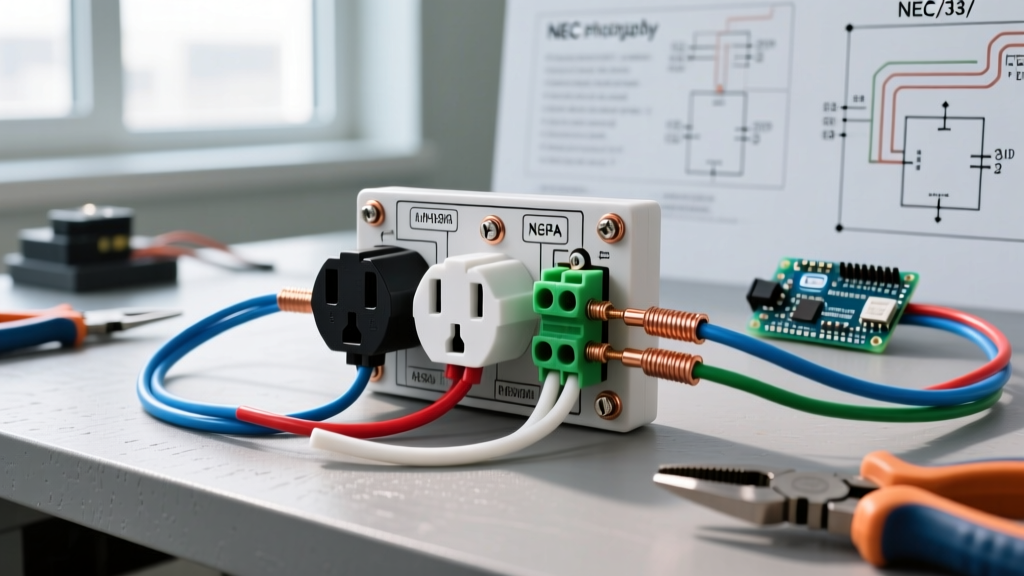
According to the International Electrotechnical Commission (IEC), Costa Rica officially utilizes Type A and Type B plugs. While modern construction strictly mandates grounded Type B outlets, older buildings in San José or rural farmhouses often still feature ungrounded Type A receptacles. For heavy-duty workshop tools, NEMA 5-20R outlets are increasingly common in modern expat builds.
| Outlet Type | NEMA Designation | Amperage / Voltage | Application & RETI Code Status |
|---|---|---|---|
| Type A | NEMA 1-15R | 15A / 125V | Legacy ungrounded. Prohibited in new RETI-compliant builds. |
| Type B | NEMA 5-15R | 15A / 125V | Standard grounded residential. Required for all general lighting and receptacle circuits. |
| Type B (Heavy) | NEMA 5-20R | 20A / 125V | Kitchen small-appliance circuits, workshop power tools, and heavy AC units. |
Essential Tools for Installation & Troubleshooting
Working with electrical systems in Costa Rica requires tools that can handle not just standard installations, but also diagnose "dirty power" and voltage sags common during the dry season (December to April) when hydroelectric reservoirs run low and the grid is stressed.
1. Diagnostic & Testing Equipment
- Fluke 117 True RMS Multimeter: Essential for accurate voltage readings in environments with non-linear loads or voltage fluctuations. A standard average-responding meter may give false readings if the local grid is experiencing harmonic distortion. ($180 - $210 USD)
- Klein Tools RT250 GFCI Receptacle Tester: Ground Fault Circuit Interrupters (GFCIs) are mandatory in wet locations (bathrooms, kitchens, outdoor patios) under RETI. The RT250 tests GFCI trip functionality and identifies miswired neutrals, a common issue in older Costa Rican homes where bootleg grounds were historically used. ($35 - $45 USD)
- Non-Contact Voltage Tester (NCVT): The Fluke 2AC-II is critical. In many older Costa Rican homes, switches may break the neutral rather than the hot leg due to legacy wiring errors. Always verify dead circuits with an NCVT and a multimeter before touching a wire. ($30 USD)
2. Hand Tools for Tropical Environments
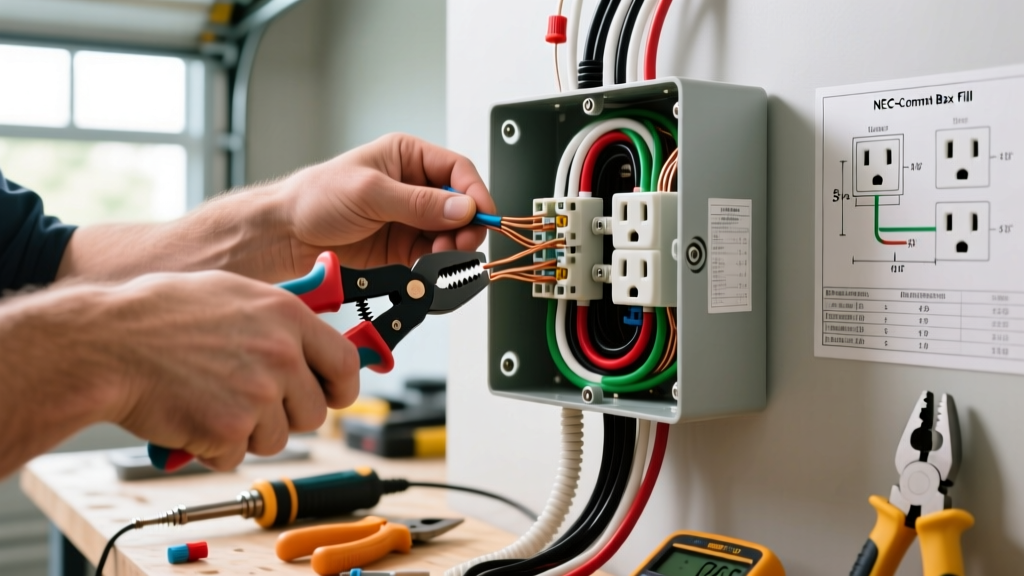
- Milwaukee 48-22-0156 Wire Strippers: Handles 14 to 10 AWG solid and stranded wire. Crucial for prepping THHN wire without nicking the copper, which can lead to hot spots in high-ambient-temperature environments.
- Klein Tools 11055 Wire Stripper/Cutter: A reliable backup for precision stripping on 12 AWG and 14 AWG conductors.
- Wago 221 Series Lever Nuts: While wire nuts (marretas) are standard, Wago connectors are highly recommended in Costa Rica. The high humidity and temperature swings can cause standard wire nuts to loosen over time if not torqued perfectly. Wago lever nuts provide a gas-tight, maintenance-free connection. ($0.40 - $0.60 per connector)
Material Sourcing & Wiring Best Practices
Sourcing materials locally requires knowing the difference between big-box hardware stores (like EPA or Colono) and specialized electrical distributors (like Saret or Naranjo). For critical infrastructure, always source UL-listed or RETI-approved materials.
Conduit: PVC vs. EMT
In the United States, EMT (Electrical Metallic Tubing) is standard for exposed residential and commercial wiring. In Costa Rica, PVC Schedule 40 conduit is the undisputed standard. The combination of extreme humidity, heavy rainfall, and corrosive salt air in coastal towns like Jacó, Tamarindo, and Puerto Viejo will rust EMT and standard steel junction boxes within a few years. Always use PVC conduit with PVC-solvent cement, and ensure all outdoor junction boxes are rated NEMA 3R or NEMA 4X (fiberglass or polycarbonate).
Wire Specifications
Costa Rica follows standard NEC color-coding for wire insulation, enforced by RETI:
- Phase (Hot): Black or Red (THHN/THWN-2, 90°C rated)
- Neutral: White or Gray
- Ground: Green, Green with Yellow Stripe, or Bare Copper
Expert Tip: Always use THWN-2 rated wire rather than standard THHN. THWN-2 is rated for wet locations, which is a vital precaution in Costa Rica where conduit runs can occasionally accumulate condensation or water ingress during the intense rainy season (May to November).
Receptacle Selection
For standard 15A circuits, specify Leviton Decora 5-15R or Hubbell 5262 commercial-grade receptacles. Avoid the cheapest "builder-grade" outlets found in local hardware bins; their internal brass contacts degrade quickly under the heavy loads of modern appliances, leading to arcing and fire hazards. For 20A kitchen circuits, use the Leviton 5362 (NEMA 5-20R).
Managing "Dirty Power" and Voltage Sags
The Costa Rican grid is heavily reliant on hydroelectric power. During dry years, or in remote areas fed by long, undersized distribution lines, voltage sags (brownouts) are common. According to NEMA standards for wiring devices, receptacles and connected equipment are designed to operate within specific voltage tolerances. Sustained operation below 108V can burn out compressor motors in refrigerators and AC units.
Recommended Protection Materials
- Whole-House Surge Protective Device (SPD): Install a Siemens QSA2020SPD or Eaton CHSPT2ULTRA at the main breaker panel. Lightning strikes are frequent in the Central Valley and Caribbean slope, making panel-level surge protection non-negotiable.
- Point-of-Use UPS: For sensitive electronics (routers, NAS drives, medical equipment), deploy an APC Back-UPS Pro 1500VA with Automatic Voltage Regulation (AVR). The AVR will boost low voltage during sags without draining the battery.
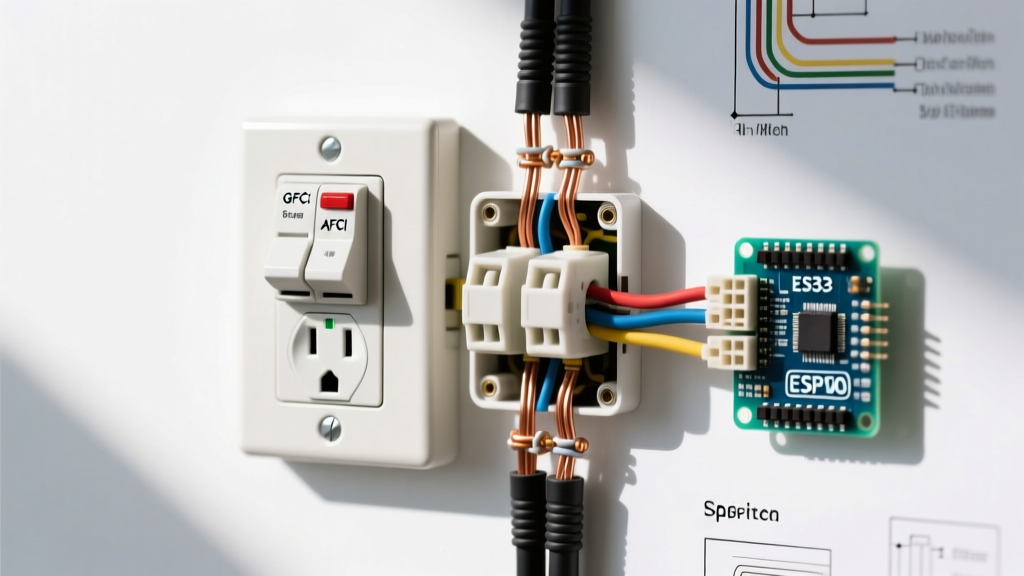
- GFCI/AFCI Breakers: RETI increasingly mandates Arc Fault Circuit Interrupters (AFCIs) in bedrooms and living areas. Use Square D Homeline CAFI breakers, ensuring your panel is compatible, as mixing brands in Costa Rican panels can lead to bus-bar arcing.
Step-by-Step Outlet Testing Flow for Existing Homes
If you are auditing an existing property, follow this Fluke-certified testing methodology to ensure safety:
- Visual Inspection: Check for cracked faceplates, scorch marks, or rust on the mounting yoke (indicating moisture intrusion).
- NCVT Scan: Scan the outside of the faceplate and the cord of any plugged-in device to check for induced voltage or hot/neutral reversal.
- RT250 Insertion: Plug in the Klein RT250. Verify the LED sequence indicates "Correct Wiring". If it indicates "Open Ground," the outlet must be replaced or rewound to the main grounding bus.
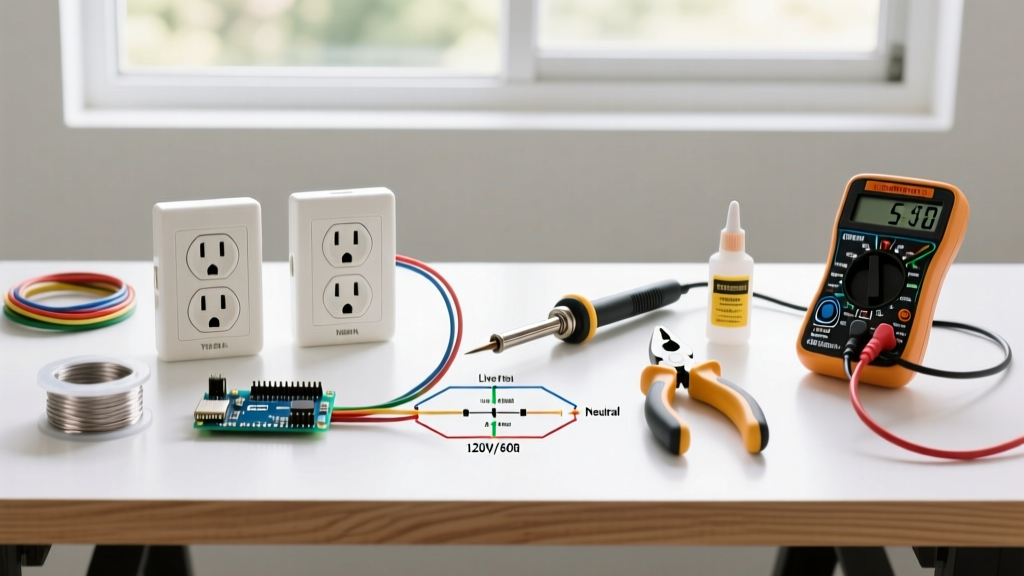
- Multimeter Verification: Insert Fluke 117 probes into Hot-Neutral (should read ~120V), Hot-Ground (~120V), and Neutral-Ground (should read < 2V). A Neutral-Ground reading above 3V indicates an overloaded neutral or a loose connection upstream.
Frequently Asked Questions (FAQ)
Do I need a voltage converter for my US appliances in Costa Rica?
No. Costa Rica uses the exact same 120V / 60Hz standard as the US and Canada. Your appliances will work natively. However, if you are importing 220V/50Hz appliances from Europe, you will need a heavy-duty step-down transformer, as the local grid cannot support 50Hz natively.
Are European Type C or Type G outlets ever found in Costa Rica?
Very rarely. You might find a stray Type C outlet in an older home previously owned by European expats, but it is entirely non-standard. If you encounter one, it is highly recommended to have a licensed electrician replace it with a standard NEMA 5-15R to maintain code compliance and safety.
Can I use standard US wire nuts (marretas) in Costa Rica?
Yes, UL-listed wire nuts are legal and widely used. However, due to the high ambient temperatures and humidity, many local master electricians prefer Wago lever connectors or crimp sleeves for junction boxes to prevent thermal expansion/contraction from loosening the connections over time.
Where can I buy commercial-grade Leviton or Hubbell outlets in Costa Rica?
While standard builder-grade outlets are available at EPA or El Colono, commercial-grade (spec-grade) NEMA 5-15R and 5-20R receptacles usually need to be sourced from specialized electrical supply houses in the greater San José area, such as Saret, Naranjo, or direct importers in the Barrio México industrial zone.