
Understanding the Modern Double Electrical Outlet
When homeowners, DIYers, and even some apprentice electricians refer to a double electrical outlet, they are technically talking about a duplex receptacle. This standard device houses two distinct 120-volt sockets in a single yoke, designed to fit into a standard single-gang electrical box. As of 2026, the National Electrical Code (NEC) strictly mandates that all new and replaced residential duplex receptacles be Tamper-Resistant (TR) per Article 406.12, featuring internal shutters that prevent foreign objects from being inserted into the slots.
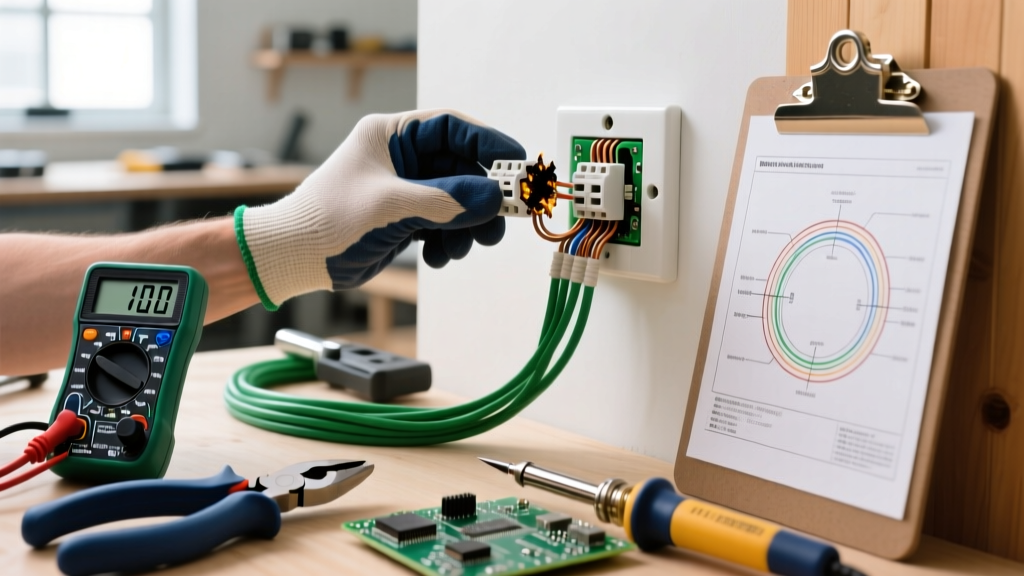
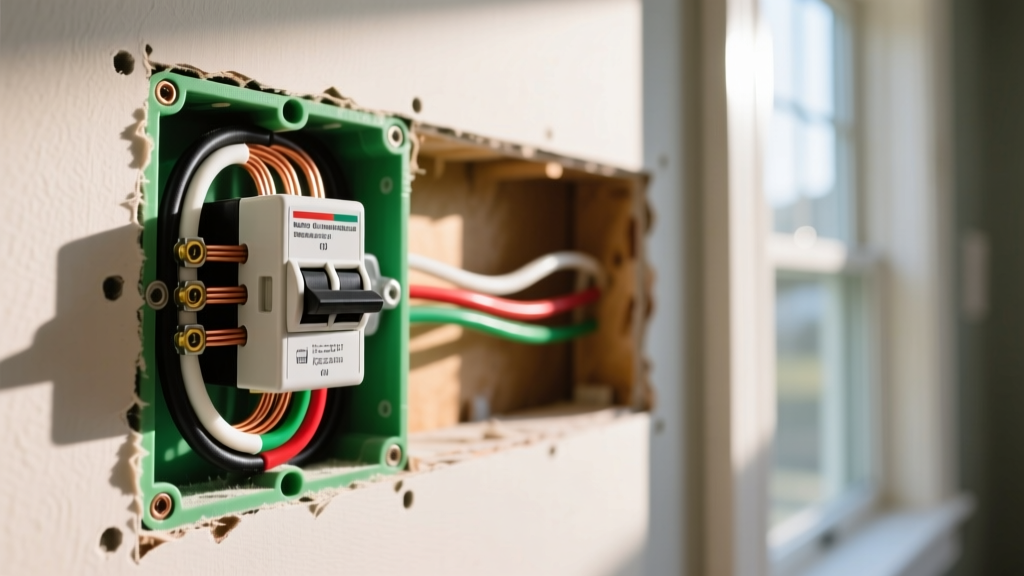
While replacing a standard outlet seems straightforward, the wiring scenarios behind the wall plate vary dramatically depending on the room's function. A kitchen double outlet is wired entirely differently than a living room outlet controlled by a wall switch. In this guide, we break down the four most common wiring scenarios for double electrical outlets, providing exact product recommendations, NEC code requirements, and professional torque specifications to ensure a safe, fire-resistant installation.
Scenario 1: The Standard Daisy-Chain (Feed-Through)
The most ubiquitous wiring scenario in bedrooms, hallways, and general living spaces is the standard daisy-chain, also known as a feed-through configuration. In this setup, power enters the box from the breaker panel (the Line) and continues onward to the next outlet in the circuit (the Load).
Pigtailing vs. Feed-Through Wiring
Historically, electricians would connect the incoming hot and outgoing hot wires directly to the two brass screws on the side of the receptacle. While this is code-compliant, it places the continuity of the entire downstream circuit at the mercy of a single outlet's internal brass strap. If the outlet fails or is removed, every downstream outlet loses power.
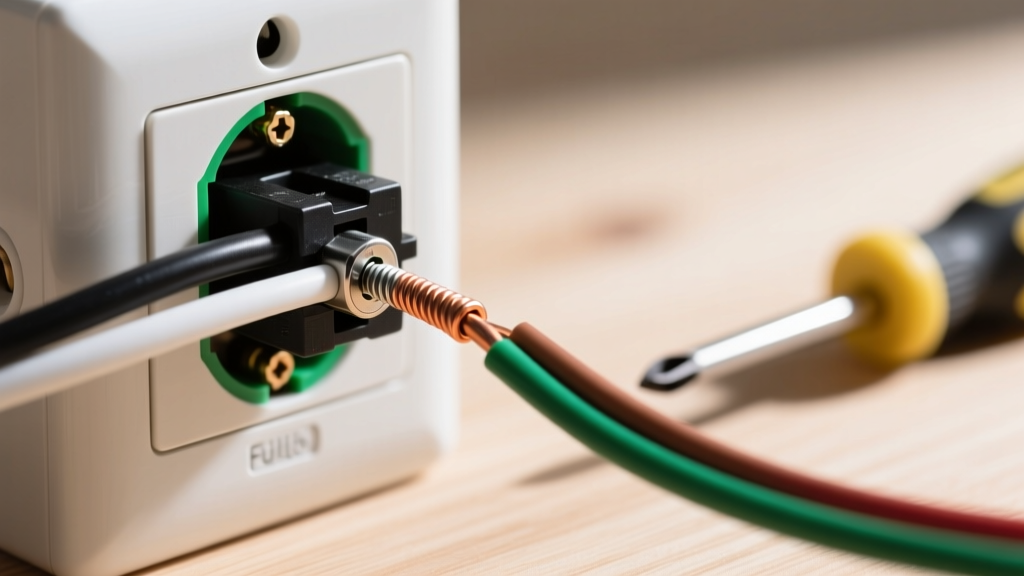
The Professional Standard: Master electricians use pigtailing. You connect the incoming hot, the outgoing hot, and a 6-inch pigtail wire together using a WAGO 221 lever nut or a standard wire nut. The single pigtail is then terminated on the brass screw of the double electrical outlet. This ensures that removing the receptacle does not interrupt the downstream circuit.
Pro-Tip: Avoid using the push-in "back-stab" holes found on cheap builder-grade receptacles. The internal spring contacts loosen over time due to thermal expansion and contraction, leading to arcing and fires. Always use the side-wiring terminal screws or, if available, the screw-and-clamp back-wiring plates found on spec-grade models like the Eaton TR7745 (approx. $3.80 per unit).
Scenario 2: The Split-Wired Kitchen Receptacle
In modern kitchen designs, countertop double electrical outlets are often "split-wired." This means the top socket is powered by one circuit breaker, and the bottom socket is powered by a completely different breaker. This is done to distribute the heavy electrical load of appliances (like microwaves, blenders, and coffee makers) across two separate 20-amp circuits, preventing nuisance tripping.
Breaking the Brass Tab
To achieve a split-wired outlet, you must physically break the small brass connecting tab on the hot (black/brass screw) side of the receptacle using a pair of needle-nose pliers. Do not break the silver tab on the neutral side unless you are working with a specific multi-wire branch circuit (MWBC) setup that requires isolated neutrals, which is rare in modern residential kitchen wiring.
Code Requirement (NEC 210.4): If you are using a Multi-Wire Branch Circuit (sharing a single neutral wire between two hot legs), the two breakers supplying the split outlet must be equipped with a handle tie or be a single 2-pole breaker. This ensures that if a homeowner turns off one breaker to work on the top socket, the other breaker is simultaneously disconnected, preventing a lethal shock hazard from the shared neutral's return current.
Scenario 3: The Switched Half Outlet
In living rooms and bedrooms, the NEC requires a wall switch to control lighting. If a room lacks a hardwired ceiling fixture, a "switched half" double electrical outlet satisfies this code requirement. In this scenario, the bottom socket is always hot (for vacuums or phone chargers), while the top socket is controlled by a wall switch (for floor lamps).
Wiring the Switch Loop
- Break the Hot Tab: Just like the kitchen scenario, snap off the brass connecting tab to isolate the top and bottom sockets.
- Constant Hot: Connect the continuous power feed from the panel to the bottom brass screw.
- Switched Hot: Connect the "switch leg" (the wire returning from the wall switch) to the top brass screw.
- Neutral and Ground: The silver neutral screws remain bridged. Connect all neutral wires together and pigtail to the receptacle. Bond the bare copper ground to the green screw.
For this application, a standard 15-amp Tamper-Resistant duplex receptacle like the Leviton T5320-W (approx. $2.15) is perfectly adequate and widely available.
Scenario 4: GFCI Protection Downstream
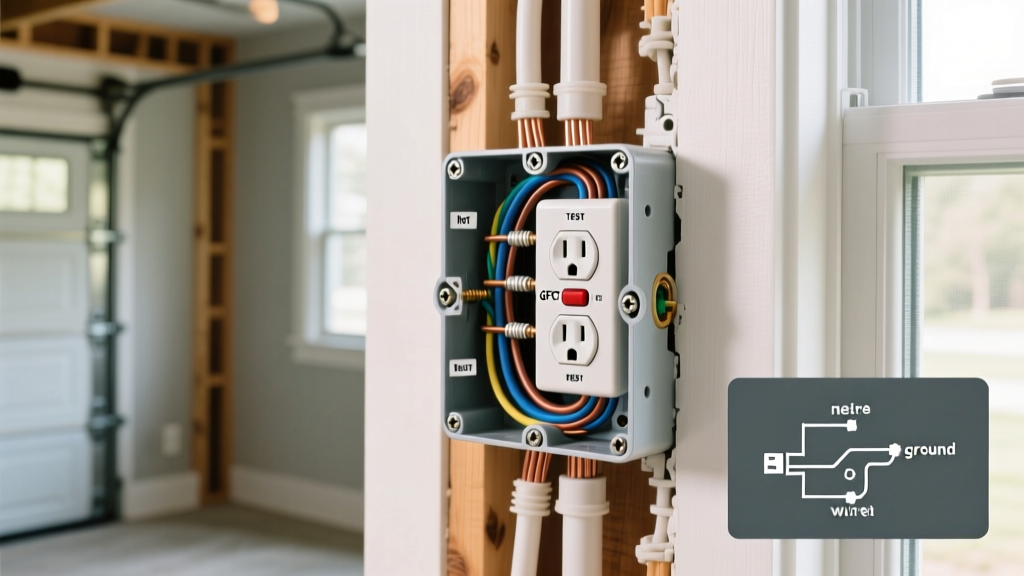
Bathrooms, garages, and outdoor patios require Ground Fault Circuit Interrupter (GFCI) protection. While you can install a GFCI double electrical outlet at every location, it is far more cost-effective to wire one primary GFCI receptacle and use its "LOAD" terminals to protect standard duplex outlets further down the circuit.
When wiring the primary GFCI, the power from the panel goes to the LINE terminals. The wires feeding the downstream standard double outlets connect to the LOAD terminals. If a ground fault occurs at a downstream standard outlet, the primary GFCI will detect the imbalance and trip, cutting power to the entire protected sequence. Always use the yellow tape included with the GFCI to wrap the LOAD wires, signaling to future electricians that these wires carry protected power.
Wiring Matrix: Which Scenario Fits Your Room?
| Wiring Scenario | Brass Tab Status | Silver Tab Status | Typical Room Application | Breaker Configuration |
|---|---|---|---|---|
| Standard Daisy-Chain | Intact | Intact | Bedrooms, Hallways, Dining | Single Pole (15A or 20A) |
| Split-Wired (MWBC) | Broken | Intact | Kitchen Countertops | 2-Pole or Handle-Tied |
| Switched Half | Broken | Intact | Living Rooms, Bedrooms | Single Pole (15A) |
| GFCI Downstream | Intact (on std outlet) | Intact (on std outlet) | Bathrooms, Garages, Exteriors | Single Pole (20A GFCI/AFCI) |
Critical Installation Specs and Torque Requirements
One of the most overlooked aspects of wiring a double electrical outlet is terminal screw torque. A loose connection creates high electrical resistance, which generates excessive heat and is a leading cause of residential electrical fires. Per NEC 110.14(D), conductors must be torqued to the manufacturer's specified values using a calibrated tool.
- 15-Amp Receptacles: Typically require 14 inch-pounds (in-lbs) of torque.
- 20-Amp Commercial/Spec Grade: Often require up to 16 in-lbs of torque.
- Tool Recommendation: Do not guess by hand. Use a calibrated torque screwdriver like the Wiha 60681 (approx. $130) or a more budget-friendly dial torque driver from Klein Tools.
- Wire Stripping: Use precision strippers like the Klein Tools 11055 to ensure you do not nick the copper conductor, which creates a weak point that can snap under the terminal screw pressure.
Frequently Asked Questions (FAQ)
Can I replace a 15-amp double outlet with a 20-amp outlet?
Only if the circuit wiring is 12 AWG copper and the breaker is rated for 20 amps. If your home has 14 AWG wire and a 15-amp breaker, installing a 20-amp receptacle (which features a T-shaped neutral slot) is a code violation and a fire hazard, as the wire could overheat before the breaker ever trips.
Why does my double outlet have four screws on the sides plus a ground?
Standard duplex receptacles have two brass (hot) screws and two silver (neutral) screws. This is to facilitate the daisy-chain feed-through method mentioned in Scenario 1. However, as noted, professional electricians prefer pigtailing, which utilizes only one brass and one silver screw, leaving the other two empty but available if needed.
Do I need an AFCI breaker for my bedroom double outlets?
Yes. Modern NEC codes require Arc-Fault Circuit Interrupter (AFCI) protection for almost all 120-volt, single-phase, 15- and 20-amp branch circuits supplying outlets in dwelling unit bedrooms, living rooms, and hallways. This is typically handled at the breaker panel rather than the outlet itself, though combination AFCI/GFCI outlets do exist for specific retrofit scenarios.
Authoritative References and Code Standards
To ensure your electrical projects meet the highest safety standards, always consult the latest code cycles and manufacturer guidelines. The following resources were utilized to verify the technical specifications and safety protocols outlined in this guide:
- National Fire Protection Association (NFPA): For comprehensive access to the National Electrical Code (NEC) standards, including Articles 210 and 406 regarding receptacle placement and tamper resistance.
- U.S. Consumer Product Safety Commission (CPSC): For critical safety data on electrical fire prevention and the importance of proper residential wiring and outlet safety.
- NFPA Technical Blogs: For in-depth engineering explanations on the necessity of calibrated tools, specifically regarding torque screwdrivers and NEC compliance.