
The Rise of the DC Electrical Outlet in Modern Off-Grid Systems
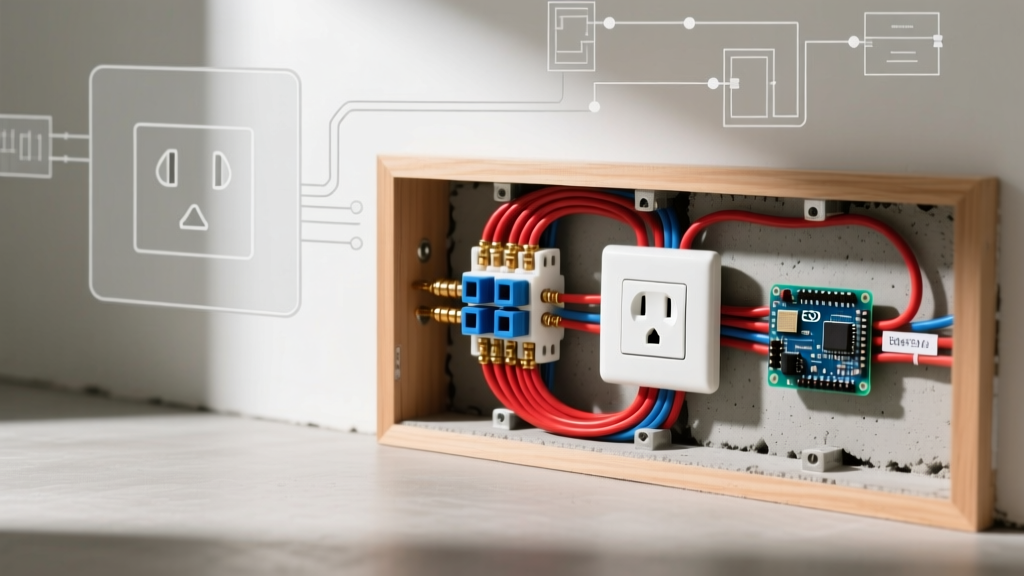
While the standard NEMA 5-15 AC receptacle dominates residential wiring, the dc electrical outlet has become a critical component in modern off-grid cabins, camper vans, marine vessels, and solar-powered workshops. As high-capacity LiFePO4 (Lithium Iron Phosphate) battery banks become the standard in 2026, running native DC appliances—such as 12V diesel heaters, 24V water pumps, and USB-C PD charging stations—directly from the battery bank eliminates the massive efficiency losses associated with DC-to-AC inversion.
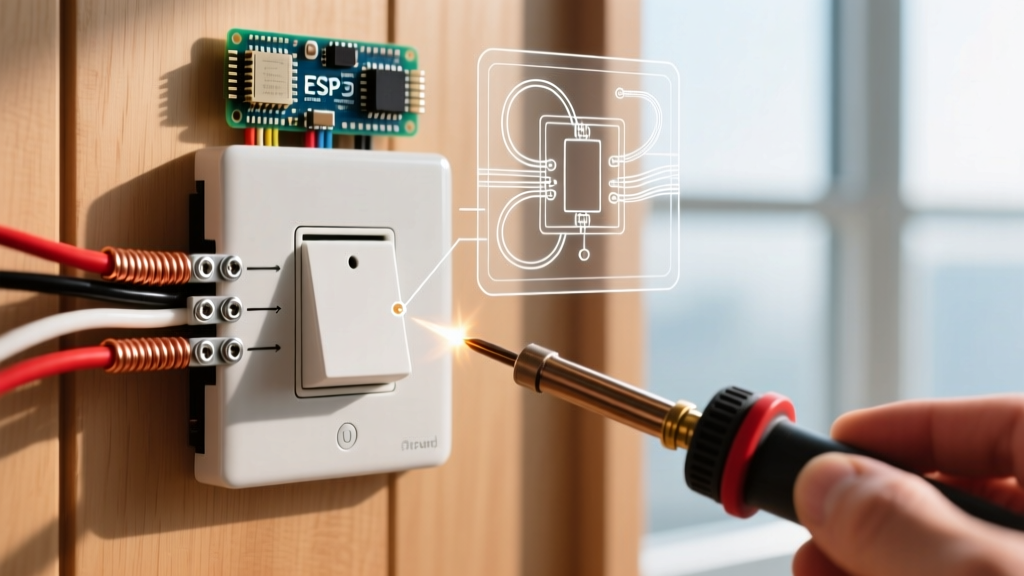
However, wiring a DC electrical outlet requires a fundamentally different approach than standard 120V AC wiring. DC arcs are notoriously difficult to extinguish, voltage drop is a severe limitation at low voltages, and polarity protection is entirely dependent on the installer. This guide breaks down the most common wiring scenarios, exact component specifications, and critical failure modes you must avoid.
Core Differences: AC Receptacles vs. DC Electrical Outlets
You cannot safely use a standard AC wall receptacle for DC power. The National Electrical Code (NEC), specifically outlined in NFPA 70 guidelines, warns against mixing AC and DC infrastructure due to the risk of plugging a 120V AC appliance into a 12V or 48V DC source, which can cause catastrophic equipment failure or fire.
| Feature | Standard AC Receptacle (NEMA 5-15) | Dedicated DC Electrical Outlet |
|---|---|---|
| Arc Extinction | AC crosses zero 120 times/sec, naturally extinguishing arcs. | DC is continuous; requires specialized contacts or magnetic blowouts to prevent arcing. |
| Polarity | Hot/Neutral/Ground (Polarity matters for safety, but AC devices often tolerate reversal). | Positive/Negative (Reversal will instantly destroy sensitive DC electronics). |
| Common Connectors | NEMA 5-15, NEMA L5-30 | Anderson Powerpole, SAE, Blue Sea Systems, XLR, USB-C PD |
| Overcurrent Protection | Thermal-magnetic AC breakers | Class T, ANL, or MIDI DC-rated fuses (must interrupt high DC fault currents) |
Scenario 1: Wiring a 12V DC Electrical Outlet in a Camper Van
In a camper van build, you frequently need a 12V DC outlet to power portable fridges (like the Dometic CFX3 series), CPAP machines, or high-wattage 12V air compressors. The standard "cigarette lighter" socket is a poor choice for high-current devices due to its weak internal spring contacts, which often melt under continuous 10A+ loads.
The Blueprint: Blue Sea Systems Marine-Grade Setup
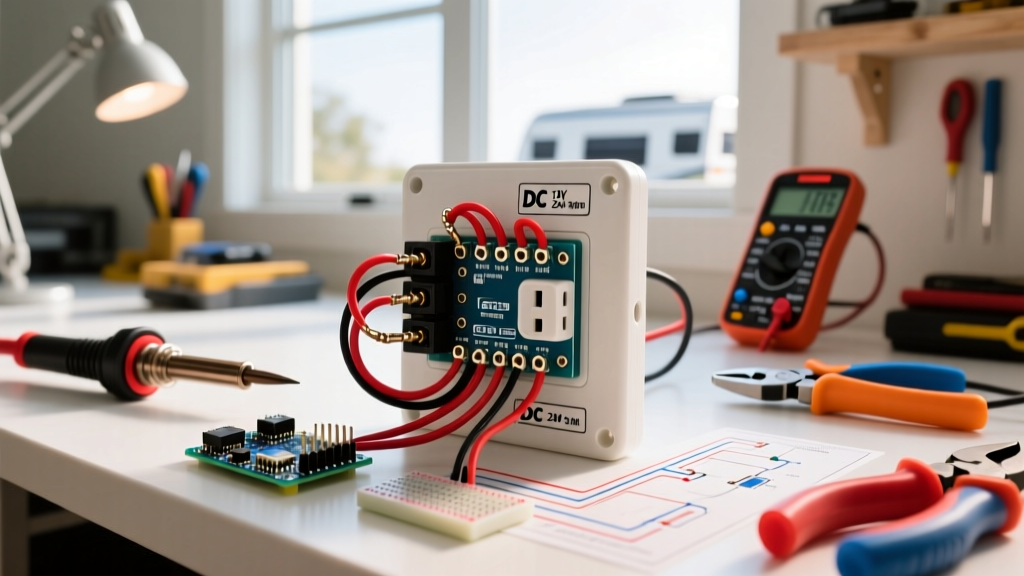
For a robust 12V DC electrical outlet, we recommend using a Blue Sea Systems 1011 or similar weatherproof, panel-mount DC receptacle paired with an integrated fuse panel. Here is the exact wiring protocol for a 15A continuous 12V circuit:
- Wire Selection: Use 10 AWG stranded, tinned marine wire (THHN is acceptable for dry indoor cabins, but tinned copper resists the galvanic corrosion common in vehicles). Cost: ~$1.10 per foot.
- Overcurrent Protection: Install a 20A MIDI fuse on the positive lead within 7 inches of the battery bank's positive terminal. This complies with ABYC and Blue Sea Systems circuit protection standards.
- Termination: Strip exactly 5/16" of insulation. Use a ratcheting crimper (like the Titan Power Crimper) to attach adhesive-lined heat-shrink ring terminals. The adhesive lining melts during shrinking, creating a waterproof seal that prevents wicking corrosion.
- Connection: Bolt the positive terminal to the receptacle's brass post and the negative to the nickel-plated post. Torque to 2.5 Nm to prevent loosening from vehicle vibration.
Expert Warning: Never rely on the socket's internal friction to hold a high-draw plug. If powering a 65L 12V compressor fridge, hardwire the fridge directly to a fused DC bus bar rather than using a plug-in DC electrical outlet, as the startup surge (often 15A-20A for milliseconds) can trip poorly matched inline fuses.
Scenario 2: 48V Solar Battery Bank to 12V DC Receptacle Step-Down
Many modern off-grid solar arrays in 2026 utilize 48V server-rack batteries (e.g., EG4 or SOK 48V 100Ah LiFePO4) to keep wire gauges manageable for high-wattage inverters. However, most auxiliary DC loads still operate at 12V or 24V. Wiring a 12V DC electrical outlet directly to a 48V bus bar will instantly vaporize 12V appliances.
The Step-Down Wiring Architecture
To safely bridge this gap, you must use an isolated DC-DC buck converter. The Victron Energy Orion-Tr Smart 48/12-30 is the industry benchmark for this scenario, capable of outputting a continuous 30A (420W) at 12V.
- Input Side (48V): Run 8 AWG wire from the 48V battery bus bar to the Orion-Tr input. Protect this line with a 40A Class T fuse. Class T fuses are mandatory here because LiFePO4 batteries can deliver 10,000+ amps of short-circuit current, which will shatter standard ANL fuses and sustain a DC arc.
- Output Side (12V): The output of the Orion-Tr acts as your new 12V "battery." Wire the output to a dedicated 12V DC bus bar.
- The Outlet Run: From the 12V bus bar, run 12 AWG wire to your 12V DC electrical outlet, protected by a 15A automotive blade fuse or MIDI fuse at the bus bar.
For deeper architectural guidelines on integrating DC-DC converters with battery management systems (BMS), refer to the Victron Energy Wiring Wiki, which provides exhaustive schematics for multi-voltage DC networks.
Critical Failure Modes in DC Outlet Wiring
DC wiring is unforgiving. When troubleshooting a failed DC electrical outlet, these are the three most common edge cases and failure modes encountered in the field:
1. Voltage Drop and the 3% Rule
Unlike 120V AC, where a 3-volt drop is negligible (2.5%), a 3-volt drop on a 12V DC system represents a massive 25% loss. If your 12V fridge requires 11.5V to trigger its low-voltage disconnect (LVD), excessive voltage drop across undersized wires will cause the fridge to shut off, even if the battery is fully charged.
2. Reverse Polarity Catastrophes
If you accidentally swap the positive and negative leads at the back of a DC receptacle, any plugged-in device with solid-state logic boards will be destroyed instantly. Always use a multimeter to verify +12V on the center pin (or designated positive post) and continuity to ground on the negative post before plugging in any load.
3. Thermal Runaway at the Terminal
Stranded wire that is overtightened under a screw terminal without a ferrule or ring terminal will "splay" out. This reduces the contact surface area, increases electrical resistance, and generates localized heat. Over time, this melts the plastic housing of the DC electrical outlet.
Wire Sizing and Voltage Drop Matrix (12V DC Systems)
Use this matrix to size your wire for a 12V DC electrical outlet. This table assumes a maximum allowable voltage drop of 3% (0.36V) at the specified amperage, which is the standard for sensitive electronics and compressor motors.
| Target Load (Amps) | Recommended Wire Gauge (AWG) | Max One-Way Run Length (Feet) | Required Fuse Rating |
|---|---|---|---|
| 5A (USB Hubs, LED Lights) | 14 AWG | 11 ft | 7.5A or 10A |
| 10A (Laptops, Small Pumps) | 12 AWG | 11 ft | 15A |
| 15A (Portable Fridges, CPAP) | 10 AWG | 14 ft | 20A |
| 20A (Air Compressors, Winches) | 8 AWG | 12 ft | 25A or 30A |
| 30A (Heavy Inverters, Heaters) | 6 AWG | 14 ft | 40A |
Note: If your physical run exceeds the "Max One-Way Run Length" listed above, you must step up to the next thickest wire gauge (lower AWG number) to maintain the 3% voltage drop threshold.
Frequently Asked Questions (FAQ)
Can I use a standard AC toggle switch to control a DC electrical outlet?
No. Standard AC toggle switches are not rated to break DC circuits. When you flip an AC switch off, the alternating current naturally drops to zero, extinguishing the internal spark. DC current is continuous; flipping an AC switch under a heavy DC load will draw a sustained plasma arc inside the switch housing, eventually melting the contacts and causing a fire. Always use switches specifically rated for DC voltage and amperage, or use a DC-rated relay controlled by a low-amp switch.
Are Anderson Powerpole connectors better than SAE connectors for DC outlets?
For high-current applications (30A+), absolutely. Anderson Powerpole connectors use a genderless housing and heavy-duty copper contacts that resist arcing and voltage drop. SAE connectors (the standard two-prong trailer plug) are only suitable for low-current applications (under 10A) like battery tenders or small LED light bars. Pushing 20A through an SAE connector will result in severe overheating.
Do I need to ground the chassis of a metal DC electrical outlet?
In a vehicle or marine environment, the chassis often serves as the negative return path. However, best practice in modern off-grid and RV builds is to run a dedicated negative wire back to a centralized negative bus bar (an isolated ground system). If your DC outlet has a metal faceplate, ensure it is isolated from the positive terminal to prevent a short circuit if the internal wiring vibrates loose.