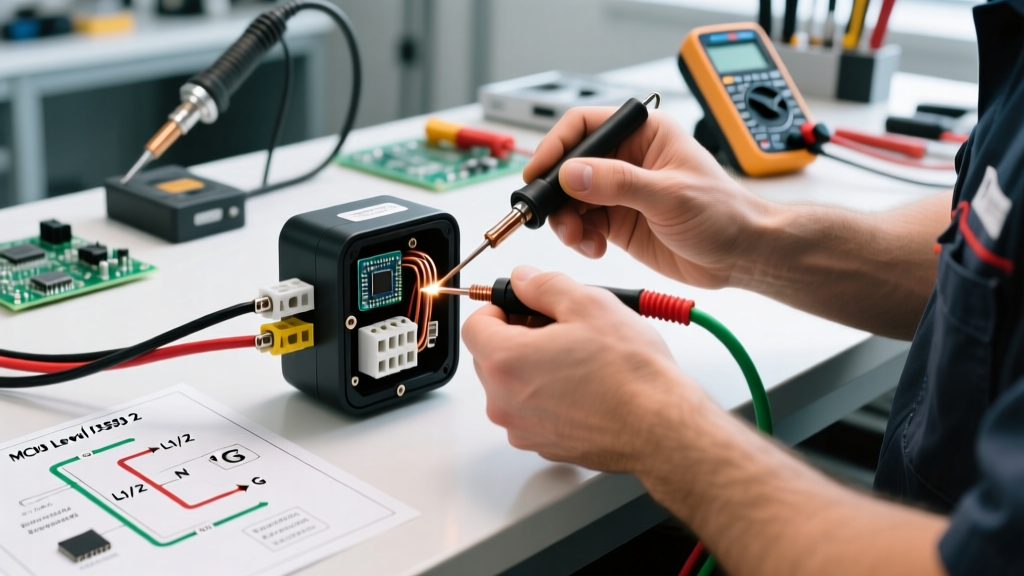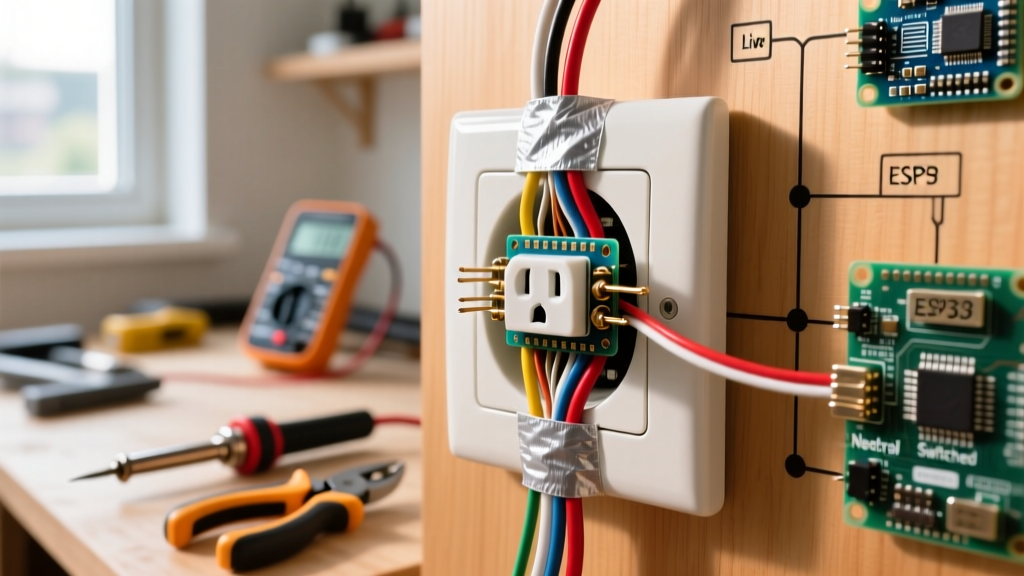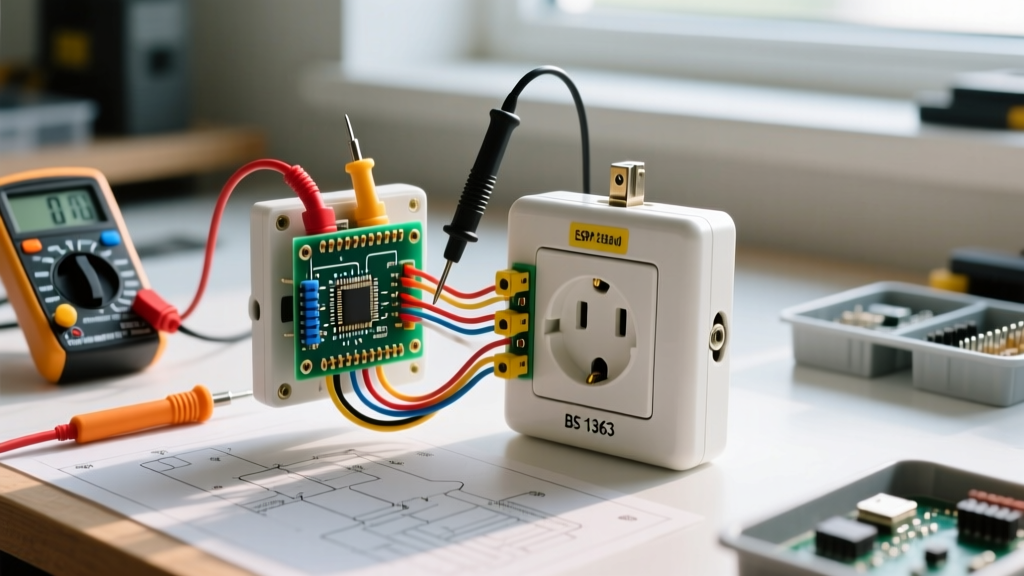

The Critical Importance of Inspecting Chinese Receptacles
Working with or troubleshooting a china electrical outlet requires a firm understanding of the country's unique electrical infrastructure and national standards. China operates on a 220V/50Hz AC grid, utilizing the Type I plug and receptacle configuration. While modern installations in tier-one cities like Shanghai and Shenzhen adhere strictly to updated safety codes, older buildings, rural installations, and counterfeit products present significant shock and fire hazards. According to the International Electrotechnical Commission (IEC), China's Type I standard (GB 1002 for plugs and GB 2099.1 for receptacles) shares physical similarities with Australian and Argentine standards, but features distinct dimensional tolerances and mandatory safety shutter requirements that demand specific inspection protocols.
This comprehensive inspection and testing guide provides electrical professionals and advanced DIYers with the exact procedures to verify compliance, test circuit integrity, and identify dangerous failure modes in Chinese electrical outlets.
Decoding the GB 1002 and GB 2099.1 Standards
Before touching a multimeter, you must understand the physical architecture of the receptacle. China primarily utilizes two variations of the Type I outlet:
- 10A Standard Receptacles: Rated for 250V/10A (2,500W max). These feature three flat pins in an inverted triangular pattern (Line, Neutral, and Earth) or two flat unpolarized pins. The Line and Neutral pins are angled at 30 degrees from the vertical.
- 16A High-Power Receptacles: Rated for 250V/16A (4,000W max). Designed exclusively for heavy loads like split-system air conditioners and electric water heaters. The pins are physically wider and spaced further apart than the 10A variant, making it impossible to accidentally plug a 10A device into a 16A socket without an adapter.
CRITICAL SAFETY WARNING: In 2010, China officially banned the manufacture and sale of 'Universal' sockets—receptacles with complex, overlapping slot designs meant to accept Type A, C, and I plugs simultaneously. Under GB 2099.3-2008, these were deemed severe fire hazards due to reduced contact surface area and internal arcing. If you encounter a universal outlet during an inspection, it is non-compliant and must be replaced immediately.
Phase 1: Visual and Physical Inspection Checklist
A rigorous visual inspection will eliminate 80% of potential hazards before you ever introduce a live testing instrument.
1. Verify the CCC Mark
All legitimate electrical outlets sold in China must bear the China Compulsory Certification (CCC) mark. Look for the distinct oval CCC logo embossed on the front face or printed on the rear chassis. Counterfeit outlets often feature poorly printed, asymmetrical, or easily scratched-off logos.
2. Material Flame Retardancy Test
High-quality Chinese receptacles from top-tier brands like Bull (公牛), Chint (正泰), or Schneider Electric use high-grade Polycarbonate (PC) or Urea-formaldehyde resins, which are inherently flame retardant and can withstand temperatures up to 850°C without igniting. Cheap, non-compliant outlets use ABS plastic, which melts and propagates fire. Field Test: PC plastic feels dense, has a slight gloss, and does not easily scratch with a fingernail. ABS feels lighter, overly glossy, and brittle.
3. Safety Shutter Verification
Under the revised GB 2099.1 standard, child-proof safety shutters are mandatory. Insert a non-conductive probe (like a wooden toothpick) into the Line slot only. The shutter must not open. The internal mechanism requires simultaneous, equal pressure on both the Line and Neutral slots to disengage the locking cam. If a single-slot insertion opens the shutter, the receptacle is defective or counterfeit.
Phase 2: Multimeter and Circuit Testing
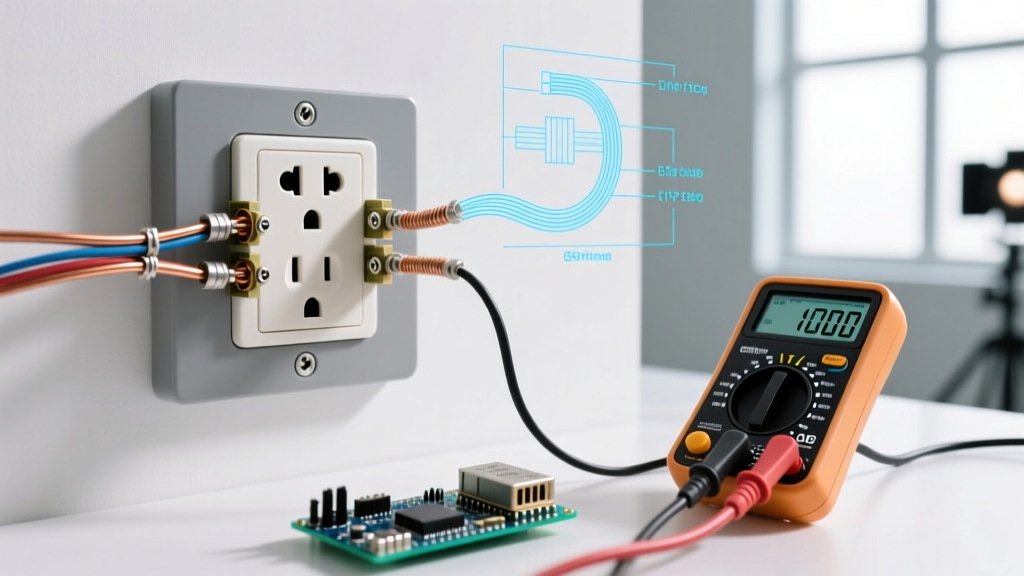
Once visual integrity is confirmed, proceed to electrical testing. Always wear appropriate PPE and use a Category III (CAT III) or Category IV (CAT IV) rated Digital Multimeter (DMM), as recommended by the Electrical Safety Foundation International (ESFI), to protect against transient voltage spikes common in developing grids.
Step-by-Step DMM Testing Procedure
- Set the DMM: Switch your multimeter to AC Voltage (V~), ensuring the range is set to at least 600V.
- Line to Neutral (L-N): Insert probes into the bottom two angled slots. Expected reading: 215V to 235V.
- Line to Ground (L-G): Insert one probe into the top vertical Earth slot and the other into the bottom-right Line slot. Expected reading: 215V to 235V.
- Neutral to Ground (N-G): Insert probes into the top Earth slot and the bottom-left Neutral slot. Expected reading: 0V to 2V (ideally < 0.5V).
Diagnostic Data Table: Interpreting DMM Readings
| Test Points | Normal Reading | Abnormal Reading | Probable Fault / Failure Mode |
|---|---|---|---|
| Line - Neutral | ~220V | < 200V or > 250V | Severe voltage drop, loose neutral bus, or transformer tap issue. |
| Line - Ground | ~220V | 0V | Open ground (Earth wire disconnected or broken at the panel). |
| Neutral - Ground | < 2V | > 5V | Shared neutral overload, poor grounding electrode, or bootleg ground. |
| Line - Neutral | ~220V | ~0V (with breaker ON) | Tripped breaker, blown fuse, or severed line conductor. |
Common Failure Modes in Chinese Installations
When inspecting older properties or budget commercial builds in China, be on high alert for these specific wiring anomalies:
- Reversed Polarity (Swapped L and N): Because older Type A/C legacy wiring in China was unpolarized, many electricians historically treated Line and Neutral as interchangeable. While a 220V appliance will still function, swapped polarity means the internal switch of the appliance only breaks the Neutral path, leaving internal components energized at 220V even when turned off. Use a dedicated Type I receptacle tester with LED indicators to quickly verify correct L/N orientation.
- The 'Bootleg' Ground: To pass superficial inspections without running a dedicated earth wire, some contractors install a jumper wire between the Neutral terminal and the Ground terminal inside the receptacle. This is incredibly dangerous; if the Neutral wire breaks upstream, the metal chassis of any plugged-in appliance becomes energized at 220V. Test: Measure N-G voltage. If it reads exactly 0.0V under heavy load, or if an outlet tester shows 'Correct' but the ground pin has no continuity to the main panel earth bus, suspect a bootleg ground.
- Undersized Conductors on 16A Circuits: A 16A air conditioning outlet requires a minimum of 2.5mm² (approx. 13 AWG) copper wire. Inspectors frequently find 1.5mm² wire improperly terminated into 16A receptacles, leading to thermal degradation of the insulation inside the wall box.
Sourcing Compliant Replacements in 2026
If an outlet fails inspection, replace it immediately with a certified unit. Avoid unbranded receptacles sold in open-air hardware markets. As of 2026, expect to pay between $3.00 and $8.00 USD for a premium 10A smart or standard receptacle, and $6.00 to $15.00 USD for a heavy-duty 16A unit.
Recommended Compliant Brands:
- Bull (公牛): The G07 and G12 series are the gold standard for residential durability in China, featuring thick tin-phosphor bronze internal contacts that resist arcing.
- Chint (正泰): The NEW2D series offers excellent commercial-grade reliability and strict adherence to the latest GB 2099.1 shutter mandates.
- Schneider Electric (施耐德): The AvatarOn series provides high-end aesthetic finishes while maintaining rigorous IEC and GB safety tolerances.
Frequently Asked Questions
Can I use a US 110V appliance in a China electrical outlet?
No. China's grid supplies 220V. Plugging a strict 110V/120V North American appliance into a Chinese Type I outlet without a step-down voltage transformer will result in immediate catastrophic failure, likely destroying the appliance's power supply and creating a fire hazard. Always check the appliance's power brick for an 'Input: 100-240V' rating; if present (common for laptop chargers and phone adapters), you only need a physical Type I plug adapter, not a voltage converter.
Why does my Type I plug feel loose in the receptacle?
Worn internal contacts are a primary cause of electrical fires. Chinese standards mandate specific insertion and withdrawal force tolerances. If a plug slides in without resistance, the internal phosphor bronze contacts have lost their spring tension due to thermal cycling or cheap manufacturing. The entire receptacle must be replaced; do not attempt to bend the plug pins to compensate.