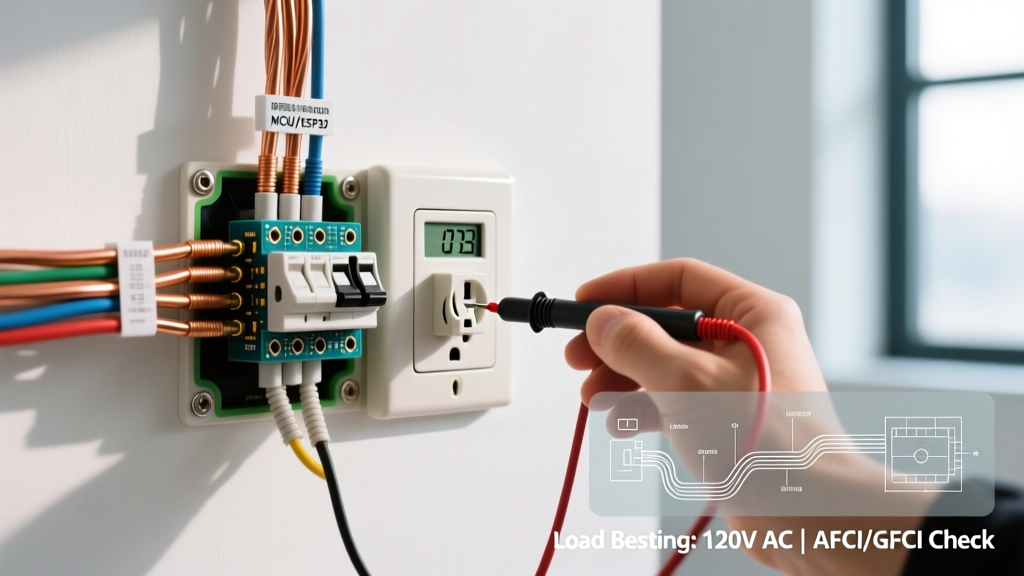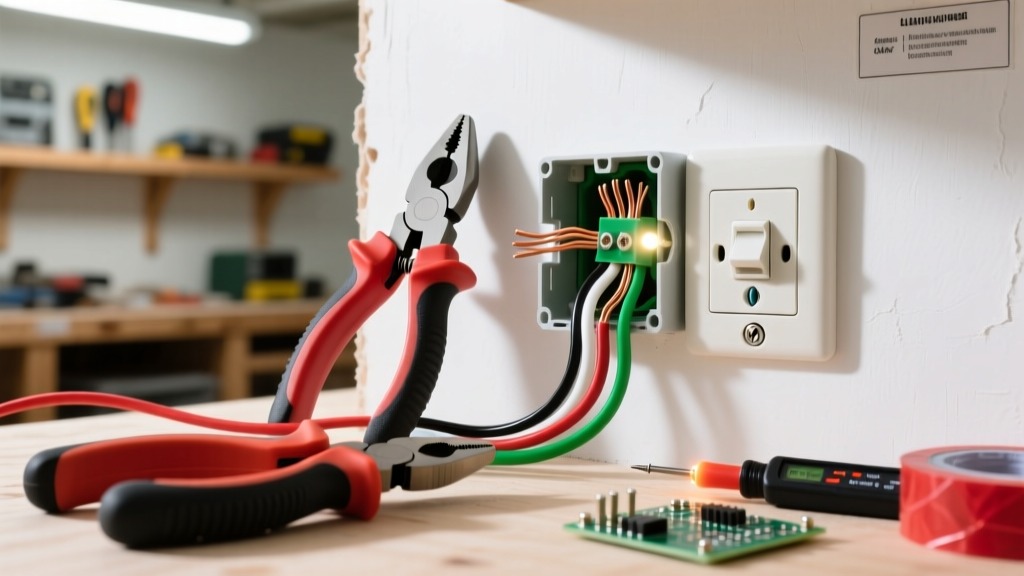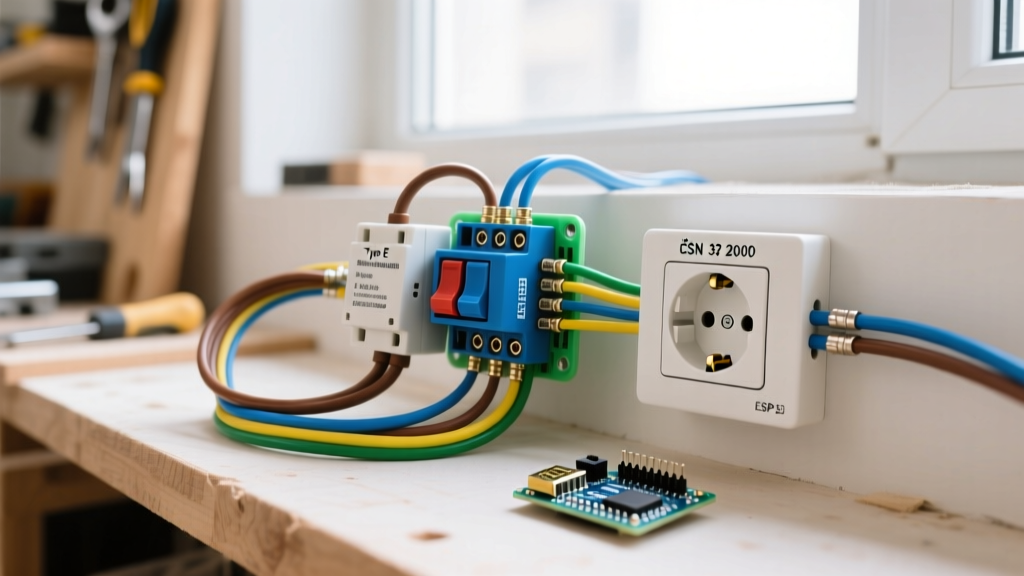

Navigating the Czech Republic Electrical Outlet Landscape
For international electricians, expats undertaking DIY renovations, or electrical engineers working across European borders, understanding the specific code requirements for a Czech Republic electrical outlet is critical. While the Czech electrical grid operates on the harmonized European standard of 230V/50Hz, the national wiring codes—governed by the ČSN (České technické normy) framework—dictate strict installation, protection, and hardware specifications. Ignoring these localized nuances can lead to failed inspections, voided insurance, or severe shock hazards.
This comprehensive code explainer breaks down the exact standards, circuit protection mandates, and physical installation requirements for residential and commercial receptacles in Czechia as of current 2026 practices.
The Core Standard: ČSN 33 2000 and IEC Alignment
Electrical installations in the Czech Republic are governed by the ČSN 33 2000 series. This national standard is a direct adoption of the international IEC 60364 standard, with specific national annexes addressing local grid topographies and historical infrastructure. According to the Czech Office for Standards, Metrology and Testing (ÚNMZ), compliance with ČSN 33 2000-4-41 (Protection for Safety - Protection Against Electric Shock) is legally mandatory for all new builds and major renovations.
The Earthing System Shift: TN-C to TN-S
One of the most vital code distinctions in Czechia involves the earthing system. Older apartment buildings (paneláky) built before the 1990s frequently utilize a TN-C system, where the neutral and protective earth are combined into a single PEN conductor. Modern Czech code strictly mandates a TN-S system for new installations, requiring separate Neutral (N) and Protective Earth (PE) conductors from the main distribution board to the outlet. If you are retrofitting an older Czech property, the PEN conductor must be split into separate N and PE lines at the main sub-distribution board, never at the outlet itself.
Anatomy of the Type E Receptacle
The physical standard for a Czech Republic electrical outlet is the Type E socket (often referred to locally as the "French" or "Belgian" style, though it is the national standard). As documented by the European Committee for Electrotechnical Standardization (CENELEC), this socket features two 4.8mm round holes for Line and Neutral, and a protruding male earth pin at the top.
- Voltage/Frequency: 230V / 50Hz
- Current Rating: 16 Amps (Standard residential)
- Child Safety Shutters: Mandatory on all modern Type E receptacles sold in Czechia. The shutters only open when equal pressure is applied to both the Line and Neutral pins simultaneously, preventing foreign object insertion.
- Plug Compatibility: Accepts Type E plugs and the hybrid CEE 7/7 plug (which features both the female earth hole for Type E and side grounding strips for the German Type F Schuko).
Expert Warning: Never attempt to install a German Type F (Schuko) flush-mount socket in a standard Czech residential build. While hybrid plugs will fit both, building inspectors will flag the lack of the protruding earth pin as a code violation under ČSN 33 2000-5-55.
Circuit Protection Mandates: RCDs and MCBs
Under ČSN 33 2000-4-41, protection against fault currents is non-negotiable. Every general-purpose 16A socket circuit must be protected by both an Overcurrent Protective Device (MCB) and a Residual Current Device (RCD).
RCD (Residual Current Device) Requirements
A 30mA RCD is mandatory for all socket outlets intended for general use by ordinary persons. In 2026, while Type AC RCDs were historically common, the industry has heavily shifted toward Type A or Type F RCDs to handle the pulsating DC fault currents generated by modern inverter-driven appliances (like washing machines and EV chargers).
Overcurrent Protection (MCB Sizing)
Socket circuits are universally protected by 16A MCBs. The preferred tripping characteristic in Czechia is Type B or Type C. Type B is increasingly favored in modern residential builds to prevent nuisance tripping and ensure rapid disconnection times, especially where fault loop impedance (Zs) might be marginally high at the end of long cable runs.
Czech Outlet Circuit Protection Matrix
| Circuit Type | Wire Gauge (Cu) | MCB Rating & Curve | RCD Requirement | Max Continuous Load |
|---|---|---|---|---|
| General Sockets (Living/Bedroom) | 2.5 mm² | 16A (Type B or C) | 30mA (Type A) | 3,680W |
| Kitchen Appliance (Dedicated) | 2.5 mm² | 16A (Type C) | 30mA (Type A) | 3,680W |
| Electric Oven/Hob (3-Phase) | 2.5 mm² (5-wire) | 16A or 20A (Type C) | 30mA (Type A or F) | 11,040W (at 16A) |
| Bathroom (Shaver Socket) | 1.5 mm² | 10A (Type B) | 30mA + SELV Isolating Transformer | 20W - 50W |
Wet Area Zoning and IP Ratings (ČSN 33 2000-7-701)
Bathroom installations are strictly regulated to prevent electrocution in high-moisture environments. The standard divides the bathroom into specific zones:
- Zone 0 (Inside the bathtub/shower tray): No standard outlets permitted. Only SELV (Separated Extra Low Voltage, max 12V AC or 30V DC) equipment rated IPX7 is allowed.
- Zone 1 (Directly above Zone 0 up to 2.25m): No standard 230V outlets. Only specific water heaters or ventilation fans rated IPX4 are permitted, provided they are protected by a 30mA RCD.
- Zone 2 (60cm radius outside Zone 1): Standard 230V outlets are generally prohibited unless they are shaver supply units incorporating an isolating transformer to IEC 61558-2-5.
- Outside Zones (Safe Zone): Standard Type E outlets may be installed, provided they are at least 60cm horizontally from the edge of the bathtub/shower and protected by a 30mA RCD. IPX4 rating is highly recommended.
Physical Installation: Backboxes and Mounting Heights
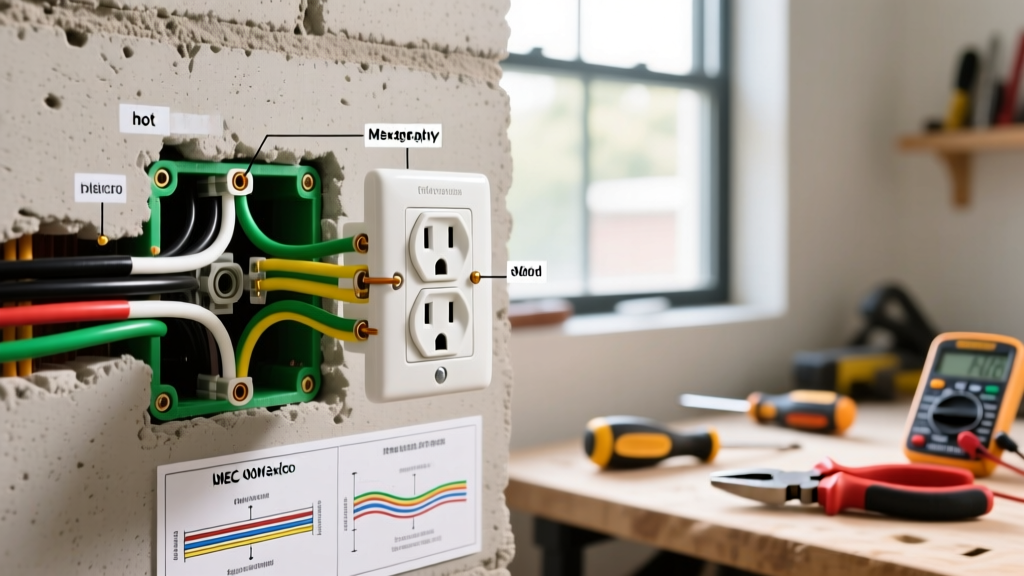
Unlike the US (which uses rectangular gang boxes) or the UK (which uses square or rectangular drywall boxes), the standard flush-mount backbox in the Czech Republic is the KU 68 (Krabice Ústavní 68). This is a round, deep plastic or metal box with a 68mm outer diameter, designed to fit into standard core-drilled holes in brick or aerated concrete (Ytong).
Standard Mounting Heights
- Living Areas & Bedrooms: 200mm to 300mm from the finished floor level (FFL) to the center of the socket.
- Kitchen Worktops: 1,100mm from FFL (typically 100mm to 150mm above the countertop surface).
- Washing Machine/Dishwasher: 300mm to 500mm from FFL, usually offset to the side of the appliance niche to allow the appliance to sit flush against the wall.
- Wall-mounted TVs: 1,000mm to 1,200mm from FFL, often grouped with data/coax backboxes.
Terminal Torque and Wire Stripping
When terminating 2.5 mm² solid copper wire into a modern ABB Tango or Schneider Electric Asfora socket, strip exactly 12mm to 14mm of insulation. The terminal screws must be torqued to the manufacturer's specification, typically 2.0 Nm for standard 16A receptacles. Under-torquing leads to thermal expansion cycling and eventual arcing; over-torquing can shear the brass terminal threads.
Common Code Violations to Avoid
During routine inspections, Czech electrical safety auditors frequently flag the following errors:
- Missing Child Shutters: Installing cheap, non-compliant imported sockets that lack mechanical safety shutters.
- Improper Daisy-Chaining: Looping the PE (earth) wire through the socket terminal to feed the next socket. Under ČSN codes, if a socket is removed, the earth continuity to downstream sockets must not be broken. Use WAGO 221 series lever-nuts inside the deep KU 68 backbox to create proper parallel junctions.
- Phase/Neutral Reversal: While the Type E socket is physically polarized regarding the earth pin, the Line and Neutral holes are identical. However, code dictates that the Line (Brown) should be on the right and Neutral (Blue) on the left when facing the socket with the earth pin at the top.
Frequently Asked Questions (FAQ)
Can I use a German Schuko (Type F) plug in a Czech Type E socket?
Yes, provided the plug is a modern CEE 7/7 hybrid plug, which features both the female earth hole (for the Czech pin) and the side grounding strips (for German sockets). Older, purely Type F plugs without the female hole will not ground properly and are unsafe to use.
Are ring main circuits permitted in Czechia?
No. The ring main circuit (where a socket circuit loops back to the breaker) is a distinctly British standard (BS 7671). The Czech Republic uses radial circuits exclusively. A 16A breaker protects a single radial run of 2.5 mm² cable serving a specific group of sockets.
What are the standard wire colors in Czechia?
Czechia follows the harmonized EU color code (HD 308 S2). Protective Earth (PE) is strictly Green/Yellow. Neutral (N) is strictly Blue. Line/Phase (L) is Brown (single-phase) or Brown/Black/Grey (three-phase). Using black or grey for a single-phase Line in a new installation is a code violation.