
The True Cost to Install Outdoor Electrical Outlet in 2026
Adding exterior power to your home is one of the most practical upgrades you can make, whether you are powering a pergola, setting up a holiday lighting circuit, or running equipment for an outdoor kitchen. However, exterior wiring is unforgiving. Unlike indoor receptacles, outdoor outlets are subjected to UV radiation, extreme temperature fluctuations, and direct moisture ingress. Understanding the cost to install outdoor electrical outlet circuits requires looking beyond basic labor rates and factoring in specialized weatherproof materials, trenching, and strict National Electrical Code (NEC) compliance.
In 2026, the national average cost to install a single outdoor receptacle ranges from $185 to $450 if tapping into an existing indoor circuit. If your project requires running a new dedicated 20-amp circuit from your main breaker panel to a detached patio or backyard, expect costs between $550 and $950, heavily dependent on trenching distances and hardscape restoration.
Quick 2026 Cost Summary
- National Average: $315
- Typical Range: $185 - $450 (Existing circuit tap)
- High-End Range: $550 - $950 (New circuit, 50ft+ trench)
- Permit Fees: $50 - $150 (Varies by municipality)
Detailed Cost Breakdown: Materials vs. Labor
Electrician labor rates in 2026 average between $85 and $145 per hour, depending on your regional market and the master electrician's licensing tier. Material costs for outdoor setups are inherently higher than indoor setups due to the requirement for corrosion-resistant, UV-stabilized, and weather-sealed components.
| Installation Scenario | Estimated Cost (2026) | Time Required | Primary Cost Drivers |
|---|---|---|---|
| Tap into existing interior wall outlet (back-to-back) | $185 - $275 | 1.5 - 2 Hours | Drywall patching, GFCI upgrade |
| Surface mount on masonry/stucco (tap from nearby indoor) | $250 - $400 | 2 - 3 Hours | Masonry drilling, PVC conduit bending |
| New 20A dedicated circuit (50ft trench, PVC conduit) | $650 - $950 | 5 - 8 Hours | Trenching, panel space, wire pulling |
| Replace existing non-compliant outdoor outlet | $120 - $180 | 45 - 60 Mins | GFCI swap, in-use cover installation |
NEC Code Compliance: What the Inspector Will Check
When evaluating the cost to install outdoor electrical outlet systems, you must account for code compliance. Failing an electrical inspection means paying for a second visit and potentially ripping out non-compliant work. According to the National Fire Protection Association (NFPA), exterior receptacles are governed by strict safety articles designed to prevent electrocution and fire.
1. GFCI Protection (NEC Article 210.8)
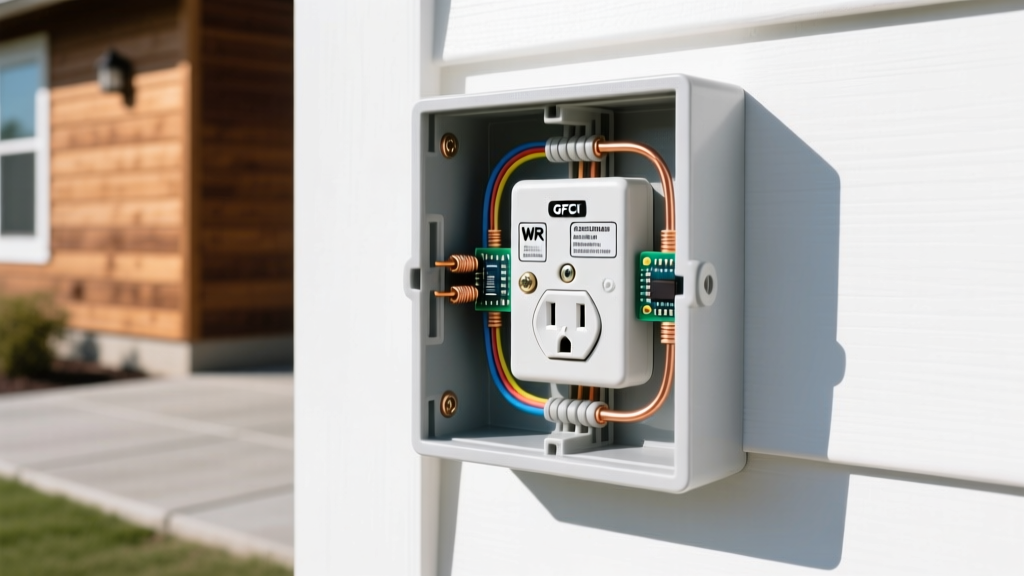
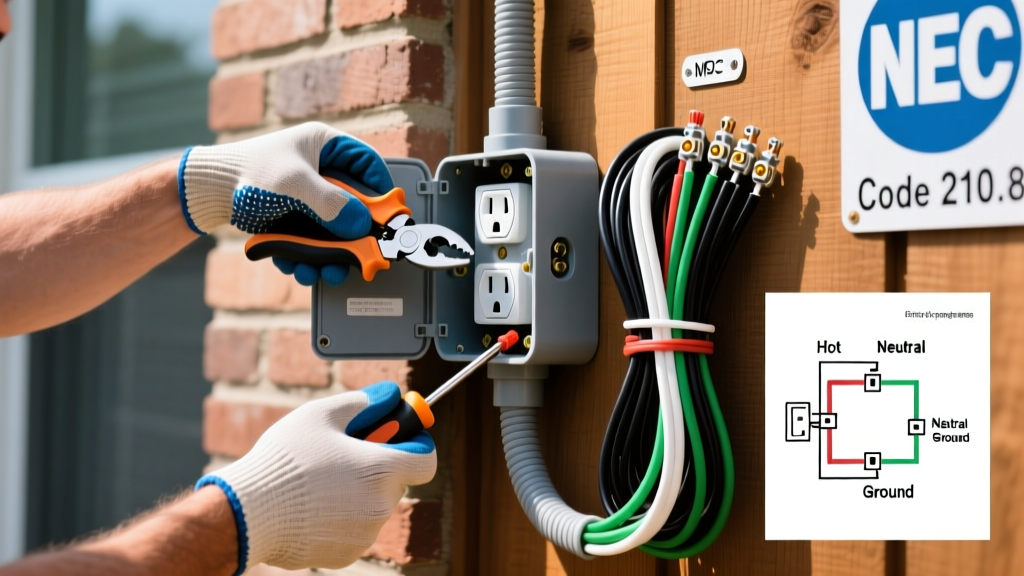
Under NEC Article 210.8(A)(3), all 15-amp and 20-amp, 125-volt receptacles installed outdoors must have Ground-Fault Circuit-Interrupter (GFCI) protection. In 2026, inspectors strictly enforce the use of Weather-Resistant (WR) rated GFCI receptacles. Standard indoor GFCIs will corrode and fail within months when exposed to outdoor humidity. Look for the 'WR' stamp on the yoke of the device, such as the Eaton GFTR20W 20A Self-Test GFCI, which utilizes UV-resistant plastics and nickel-plated brass contacts to resist corrosion.
2. Weatherproof Enclosures (NEC Article 406.9)
NEC Article 406.9(B)(1) mandates that outdoor receptacles must be housed in an enclosure that is weatherproof whether or not the attachment plug is inserted. This means standard flat flip-covers are illegal for new installations in damp or wet locations. You must install an 'Extra-Duty' or 'In-Use' weatherproof cover. The TayMac TX1600W is an industry standard, providing a deep, shatter-proof polycarbonate bubble that accommodates bulky transformer plugs while maintaining a watertight seal.
3. Circuit Sizing and Burial Depth (NEC Table 300.5)
If your installation requires running wire underground to a detached structure or a patio island, burial depths are strictly regulated. According to NEC Table 300.5:
- 18 Inches: Minimum depth for PVC conduit (Schedule 80 recommended where exposed to physical damage).
- 24 Inches: Minimum depth for direct-burial UF-B (Underground Feeder) cable without conduit.
- 12 Inches: Permitted only for residential branch circuits limited to 120V, 20A or less, that are GFCI protected and installed in PVC conduit.
Critical Safety Step: Before any trenching or drilling into exterior masonry, you must call 811 or visit call811.com to have local utility lines marked. Hitting a buried gas or main electrical line can be fatal and carries massive financial liability.
Step-by-Step Installation Flow for Code Compliance
To ensure your investment passes inspection and operates safely for decades, follow this professional workflow:
- Panel Capacity Audit: Verify your main breaker panel has space for a new 20A tandem breaker, or identify an indoor 20A small-appliance circuit that can be safely extended (do not extend lighting circuits).
- Drilling the Envelope: Use a masonry hole saw or wood spade bit to penetrate the exterior wall. Angle the drill bit slightly downward (a 5-degree pitch) toward the outside to prevent water from migrating inward through the penetration.
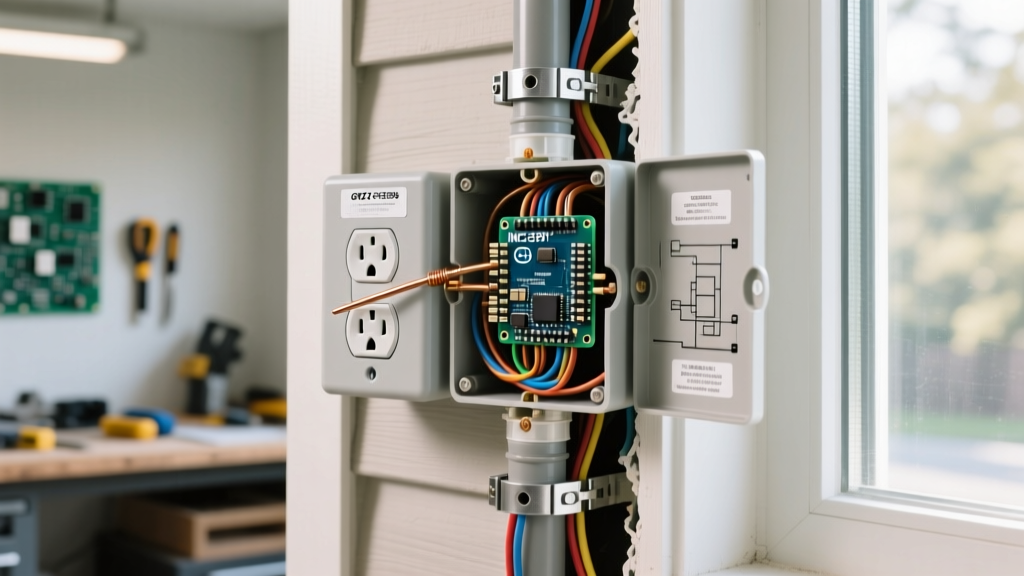
- Box Mounting & Sealing: Mount a cast aluminum or polycarbonate weatherproof box (e.g., Raco 903). Apply a continuous bead of 100% exterior-grade silicone caulk to the top and sides of the box flange. Leave the bottom uncaulked to act as a weep hole for condensation drainage.
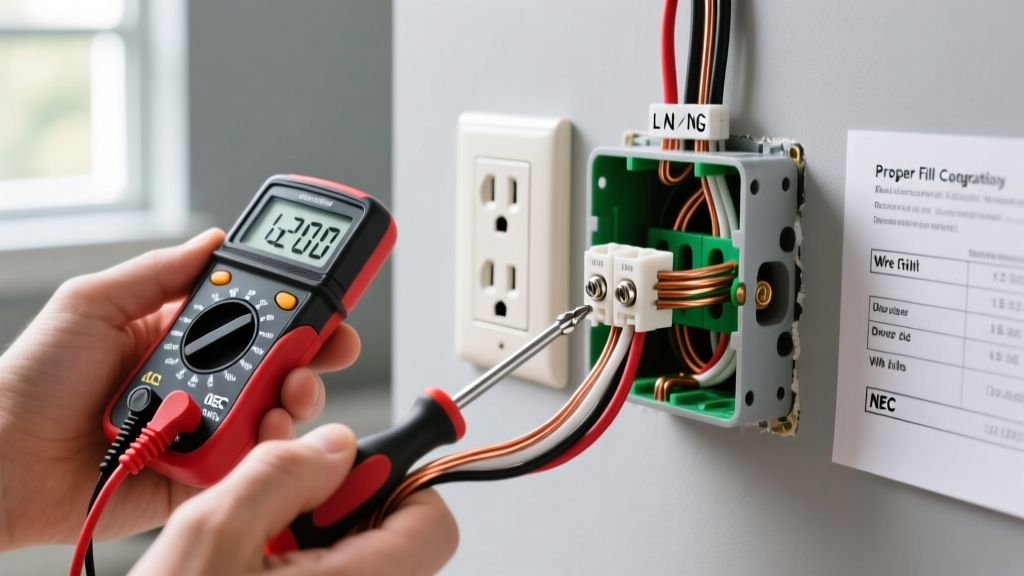
- Wire Termination: Strip THWN-2 conductors (if in conduit) or UF-B cable. Terminate on the GFCI LINE terminals (not LOAD, unless feeding a downstream device). Ensure the bare copper ground is bonded to the green grounding screw on both the GFCI and the metal weatherproof box.
- Testing: Use a UL-listed GFCI receptacle tester to verify correct wiring and trip functionality before snapping the in-use cover into place.
Common Failure Modes & Edge Cases
Even when homeowners understand the baseline cost to install outdoor electrical outlet setups, they often cut corners on the peripherals, leading to chronic issues. The Electrical Safety Foundation International (ESFI) frequently warns against the following outdoor electrical hazards:
- The 'Caulk Trap' Failure: Amateurs often caulk all four sides of an exterior junction box. When temperature swings cause condensation inside the box, the water has nowhere to go. It pools at the bottom, eventually bridging the GFCI test button contacts and causing phantom tripping. Always leave a 3/16-inch weep gap at the bottom.
- Conduit Fill Violations: When pulling wire through 1/2-inch PVC conduit, NEC Chapter 9 Table 1 limits conduit fill to 40% for three or more conductors. Overstuffing conduit damages wire insulation during the pull, creating latent short-circuit risks.
- UV Degradation of UF-B Cable: UF-B cable is rated for direct burial, but its PVC jacket is not rated for continuous sunlight exposure. If the cable exits the ground and runs up a post, it must transition into UV-rated PVC conduit or be sleeved at least 8 inches above grade.
Expert FAQ
Can I run an indoor outlet to the outside by just drilling through the wall?
Yes, this is the most cost-effective method (often keeping the project under $250). However, you must ensure the indoor circuit you are tapping is a 20A circuit with 12-AWG wire. Furthermore, the new outdoor receptacle must be a WR-rated GFCI, and the indoor receptacle you tapped from will lose power if the outdoor GFCI trips, as it will be wired to the LOAD side of the outdoor unit.
Do I need AFCI protection for outdoor receptacles?
Generally, no. NEC Article 210.12 requires Arc-Fault Circuit-Interrupter (AFCI) protection for most indoor living spaces, but outdoor receptacles, garages, and bathrooms are explicitly exempt from AFCI requirements to prevent nuisance tripping caused by outdoor moisture and heavy inductive loads (like power washers or shop vacs). GFCI protection is the mandatory standard here.
Why does my outdoor GFCI keep tripping in the winter?
Ice expansion is a common culprit. If your in-use cover has a damaged gasket, melting snow can seep into the receptacle slots. When temperatures drop, the water freezes and expands, mechanically forcing the internal contacts apart or triggering the ground-fault sensor. Inspect the cover gasket annually and replace the cover if the foam seal is compressed or cracked.