
Understanding the China Electrical Outlet Type (Type I)
When working with international electrical systems, identifying and testing the correct receptacle standard is a matter of safety and compliance. The standard China electrical outlet type is classified globally as Type I, sharing physical similarities with the AS/NZS 3112 standard used in Australia and New Zealand, but governed by distinct Chinese national standards (GB). Specifically, plug dimensions are dictated by GB 1002-2008, while outlet safety and manufacturing requirements fall under GB 2099.1-2008.
As of 2026, China's residential grid operates on a nominal single-phase voltage of 220V at 50Hz. According to the national power quality standard GB/T 12325-2008, the acceptable voltage tolerance for residential 220V circuits is +7% and -10%, meaning your multimeter readings should reliably fall between 198V and 235.4V. Whether you are inspecting a standard 10A receptacle in a Beijing apartment or a heavy-duty 16A outlet for an HVAC unit in Shanghai, rigorous inspection and testing protocols are mandatory to prevent arc faults, equipment damage, and lethal shock hazards.
Essential Toolkit for Outlet Inspection
Testing a China electrical outlet type requires tools calibrated for 220V/50Hz systems. Standard North American 120V testers will not provide accurate diagnostics and can be destroyed if plugged into a 220V circuit without the proper adapters.
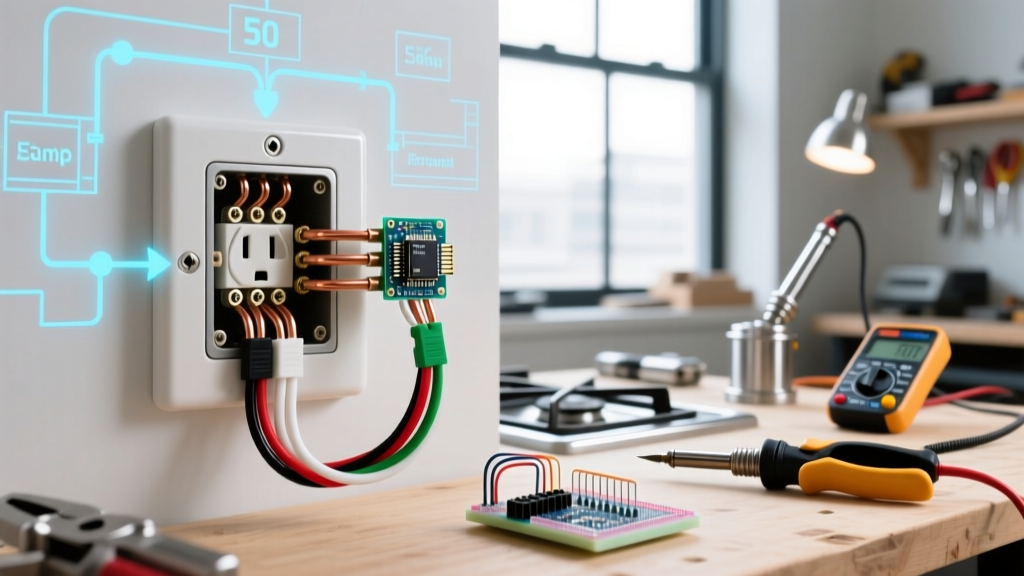
- True RMS Digital Multimeter: A high-impedance meter like the Fluke 117 (approx. $200) or Uni-T UT61E+ (approx. $65) is essential for accurate AC voltage readings, especially when dealing with non-linear loads from modern smart home devices.
- Non-Contact Voltage Tester (NCVT): The Klein Tools NCVT-3 or Fluke 2AC-II allows you to verify the presence of voltage at the faceplate before removing the cover.
- Insulation Resistance Tester (Megger): For deep diagnostics on older wiring, a 500V megohmmeter helps identify degraded wire insulation behind the wall.
- Type I Plug Adapter: To use standard receptacle testers, you will need a high-quality, grounded Type I travel adapter. Avoid unbranded, substandard adapters that lack internal earth pin continuity.
Phase 1: Mechanical and Visual Inspection
Before introducing live testing equipment, perform a thorough mechanical inspection. The GB 2099.1 standard mandates strict physical safety features that substandard or counterfeit outlets often bypass.
1. Verify Safety Shutters
Modern Chinese outlets must feature internal safety shutters over the Line and Neutral slots. These shutters are designed to open only when the longer Earth pin is inserted first, or when equal, simultaneous pressure is applied to both Line and Neutral pins. Use a non-conductive nylon probe to test the shutters. If a single slot can be easily breached with a probe, the outlet fails inspection and must be replaced immediately.
2. Faceplate and Terminal Integrity
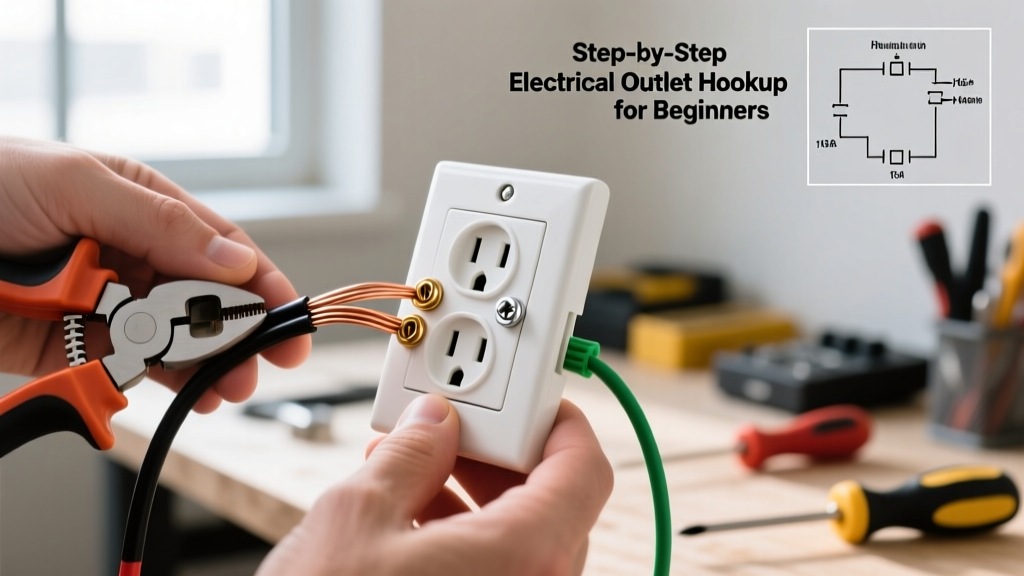
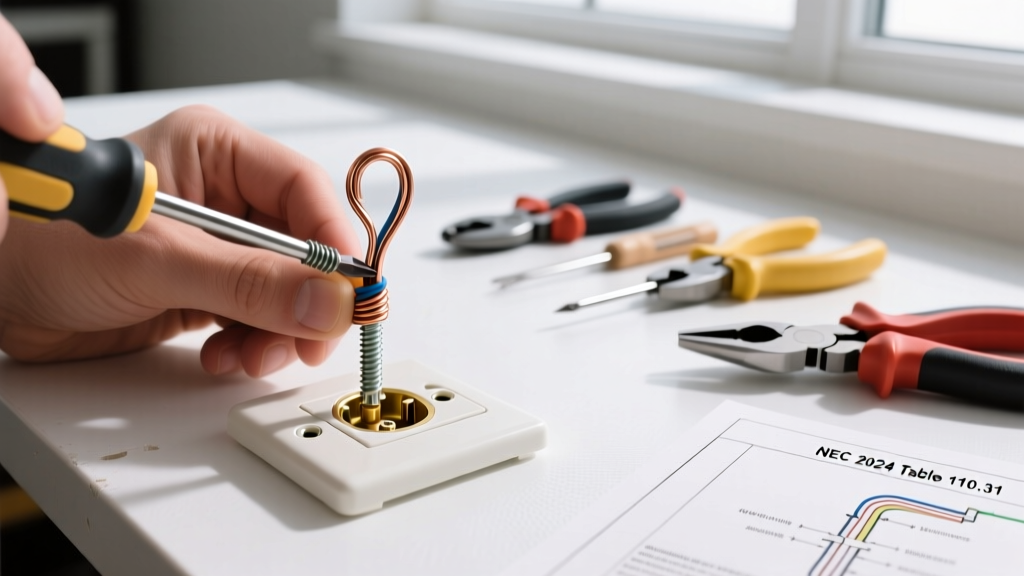
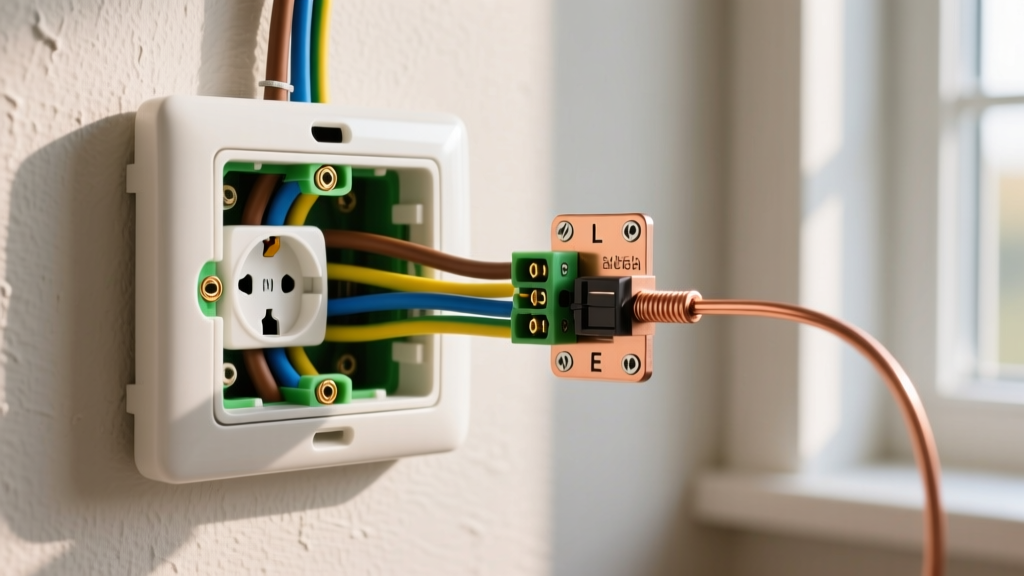
Remove the faceplate using a flathead screwdriver. Inspect the mounting yoke for corrosion or bending. Premium brands dominant in the Chinese market, such as Bull (公牛), Simon, and Schneider Electric (Hao朗 series), utilize thick, flame-retardant PC (polycarbonate) materials that pass the 850°C glow-wire test. If the plastic feels brittle, discolored, or smells strongly of cheap PVC, it is likely a counterfeit product lacking proper arc-quenching capabilities.
Phase 2: Live Electrical Testing Procedures
WARNING: Testing live 220V circuits carries a severe risk of electrocution. Always wear arc-flash-rated PPE, use insulated probes, and ensure your hands are dry. If you are not a qualified electrician, hire a licensed professional.
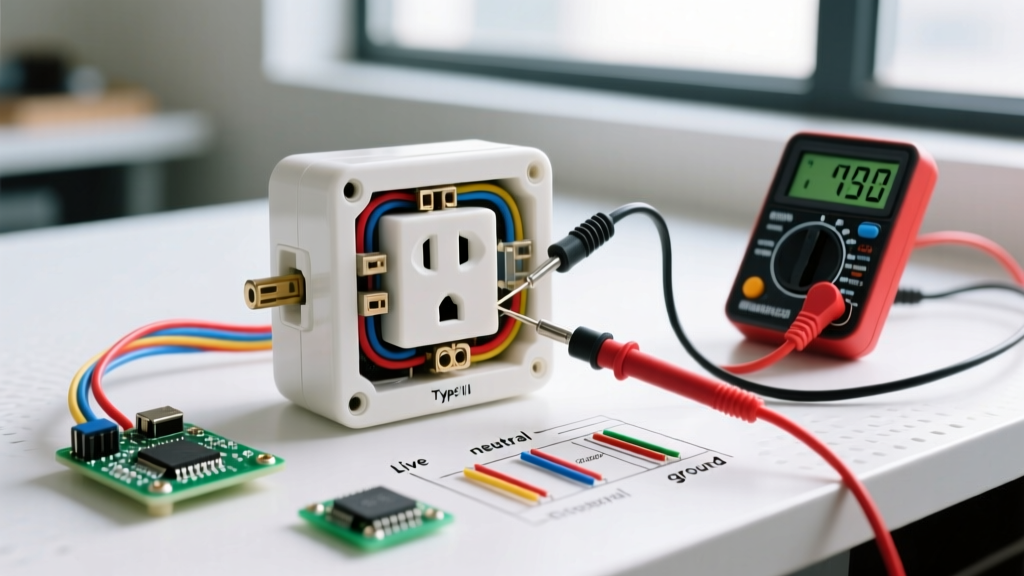
Set your True RMS multimeter to AC Voltage (V~). Insert the black probe into the COM port and the red probe into the V/Ω port. You will test three distinct junctions on the Type I outlet.
Step 1: Line to Neutral (L-N)
Insert the probes into the bottom two angled slots (Line on the left, Neutral on the right, when the Earth pin is at the top).
Expected Reading: 198V – 235.4V.
Failure Mode: A reading below 190V indicates severe voltage drop, often caused by undersized wiring (e.g., using 1.5 mm² wire on a 16A circuit) or loose terminal connections at the distribution board.
Step 2: Line to Protective Earth (L-PE)
Place one probe in the Line slot and the other in the top vertical Earth slot.
Expected Reading: 198V – 235.4V (should closely match the L-N reading).
Failure Mode: A reading of 0V indicates a missing or disconnected ground wire. A reading of ~110V suggests a floating neutral or a severed ground path acting as a capacitive voltage divider.
Step 3: Neutral to Protective Earth (N-PE)
Place the probes in the Neutral and Earth slots.
Expected Reading: < 2.0V (ideally < 1.0V).
Failure Mode: A reading above 5V indicates a high-impedance neutral, a shared neutral on a multi-wire branch circuit, or improper bonding at the main service panel. This can cause sensitive electronics to malfunction and creates a shock hazard.
Specification Matrix: 10A vs 16A China Outlets
A common mistake during inspection is misidentifying the amperage rating of the outlet. The 10A and 16A Type I outlets look similar but have different pin spacing and wire requirements.
| Feature | Standard 10A Outlet (GB 1002) | Heavy-Duty 16A Outlet (GB 1002) |
|---|---|---|
| Primary Use | General lighting, TVs, small appliances | Air conditioners, electric water heaters |
| Max Continuous Load | 2,200W (at 220V) | 3,520W (at 220V) |
| Pin Spacing | Narrower (Standard Type I) | Wider spacing (Plugs are physically larger) |
| Required Wire Gauge | 2.5 mm² copper (BV/BVR) | 4.0 mm² copper (BV/BVR) |
| Breaker Sizing | 16A or 20A MCB | 20A or 25A MCB |
Note: Forcing a 10A plug into a 16A outlet using a cheap adapter bypasses the physical safety design and can lead to overheating if the downstream circuit breaker is sized for 25A.
Troubleshooting Edge Cases and Smart Outlets
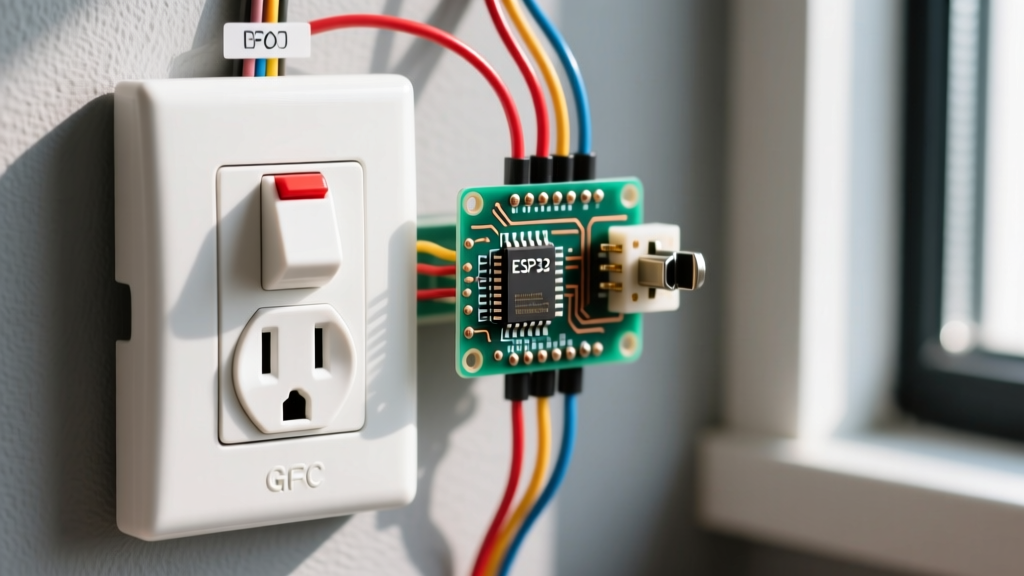
As smart home ecosystems like Xiaomi Mi Home and Huawei HarmonyOS expand in 2026, integrated smart outlets with Wi-Fi/Zigbee modules and built-in USB-C PD (Power Delivery) charging ports are ubiquitous. These introduce new testing variables.
1. USB-C PD Port Voltage Testing
Many modern Chinese wall outlets feature integrated USB-C ports rated for 20W to 65W. To test these, use a USB multimeter tester (like the MakerHive FNB58). Trigger the PD negotiation to ensure the port correctly steps up to 9V, 12V, or 20V. If the port stalls at 5V/1A, the internal switching mode power supply (SMPS) is likely failing or suffering from thermal throttling due to poor heat dissipation behind the wall plate.
2. Identifying 'Bootleg' Grounds
In older, unrenovated Chinese apartments (pre-2000s), true grounding was sometimes omitted. Unscrupulous electricians may create a 'bootleg ground' by jumpering the Neutral terminal to the Earth terminal inside the outlet.
How to catch it: While measuring N-PE, turn on a heavy load (like a 1500W space heater) on the same circuit. If the N-PE voltage jumps significantly (e.g., from 1V to 10V+), the Earth pin is tied to the load-bearing Neutral wire, which is a severe code violation and shock hazard.
Final Safety and Compliance Checks
Always verify that the circuit breaker protecting the outlet matches the wire gauge and outlet rating. According to the IEC World Plugs database, Type I systems rely heavily on correctly sized miniature circuit breakers (MCBs) at the distribution board, as the outlets themselves do not contain internal fuses (unlike the UK's Type G BS 1363 standard).
For comprehensive safety standards regarding electrical testing and PPE, always refer to guidelines established by organizations like OSHA's Electrical Safety protocols or local equivalent regulatory bodies. Furthermore, physical dimensions and regional variations can be cross-referenced via the World Standards Type I guide to ensure your testing adapters are correctly machined for mainland Chinese receptacles, which occasionally feature slightly tighter shutter tolerances than their Australian counterparts.
By adhering to this rigorous inspection and testing framework, you ensure that any China electrical outlet type you encounter is safe, compliant, and ready to handle modern electrical loads without risking fire or equipment failure.