
Understanding the Colombia Electric Outlet Standard
When designing, installing, or troubleshooting electrical systems in South America, understanding the local receptacle standards is critical for safety and code compliance. The standard Colombia electric outlet operates on a 120V supply voltage and a 60Hz frequency, aligning closely with North American standards. However, local installation practices are governed by the Reglamento Técnico de Instalaciones Eléctricas (RETIE) and the Norma Técnica Colombiana (NTC 2050), which is the Colombian adaptation of the NFPA 70 National Electrical Code (NEC).
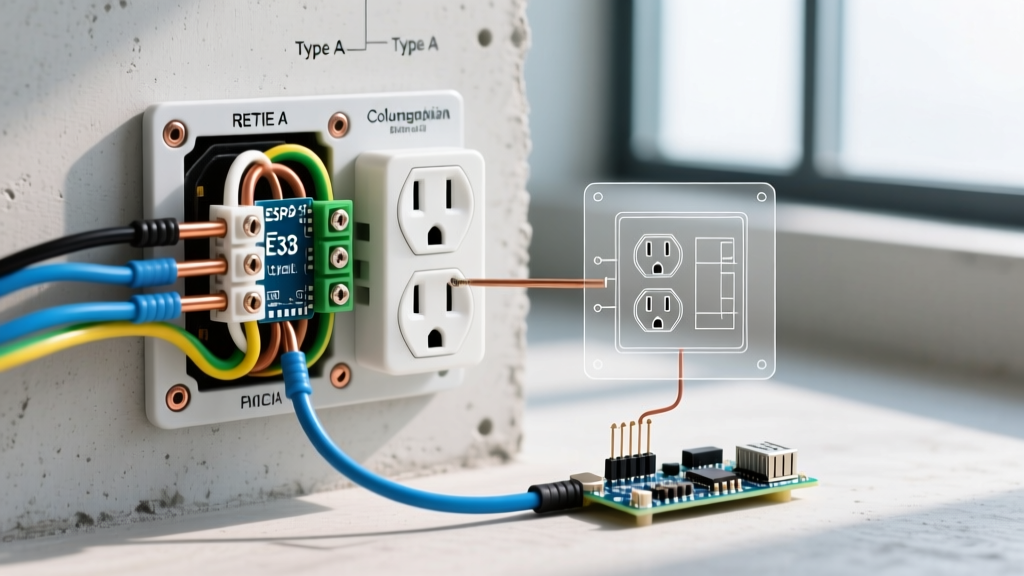
According to the International Electrotechnical Commission (IEC), Colombia primarily utilizes Type A (NEMA 1-15, ungrounded) and Type B (NEMA 5-15, grounded) plug configurations. While Type A outlets are still found in older residential buildings constructed before the early 2000s, modern RETIE regulations strictly mandate the use of Type B (grounded) receptacles for all new residential, commercial, and industrial construction to ensure proper equipment grounding and fault current clearance.
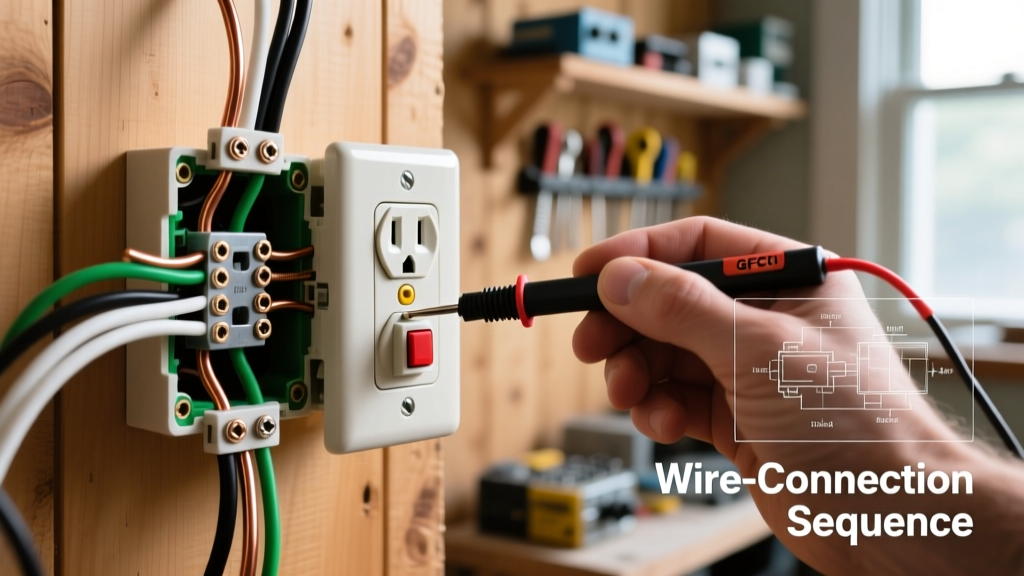
RETIE Compliance Note: Under RETIE Resolution 90708 and subsequent updates, all 120V, 15A, and 20A receptacles in wet locations (kitchens, bathrooms, outdoors) must be protected by Class A Ground Fault Circuit Interrupters (GFCIs) with a trip threshold of 4mA to 6mA. Furthermore, tamper-resistant (TR) receptacles are now mandatory in all new residential dwellings to prevent childhood electrical shock.
Colombia Outlet Technical Specifications Matrix
Before pulling wire or terminating connections, review the core electrical parameters required for a standard Colombia electric outlet installation. The table below outlines the critical specifications expected by local inspectors and dictated by NTC 2050.
| Parameter | Specification | NTC 2050 / RETIE Reference |
|---|---|---|
| Nominal Voltage | 120V (Single Phase) | Article 210.6 |
| Frequency | 60 Hz | Utility Standard |
| Standard Receptacle | NEMA 5-15R (Type B, 3-Prong) | Article 406.3 |
| Branch Circuit Rating | 15A or 20A | Article 210.21 |
| Wire Gauge (15A Circuit) | 14 AWG (2.08 mm²) | Table 310.16 |
| Wire Gauge (20A Circuit) | 12 AWG (3.31 mm²) | Table 310.16 |
| Wall Box Dimensions | 4x2 inch (100x50mm) Rectangular | Article 314 |
| Terminal Torque | 14 in-lbs (1.58 Nm) | Article 110.14 |
Wiring Diagram Reference: NEMA 5-15R (Type B)
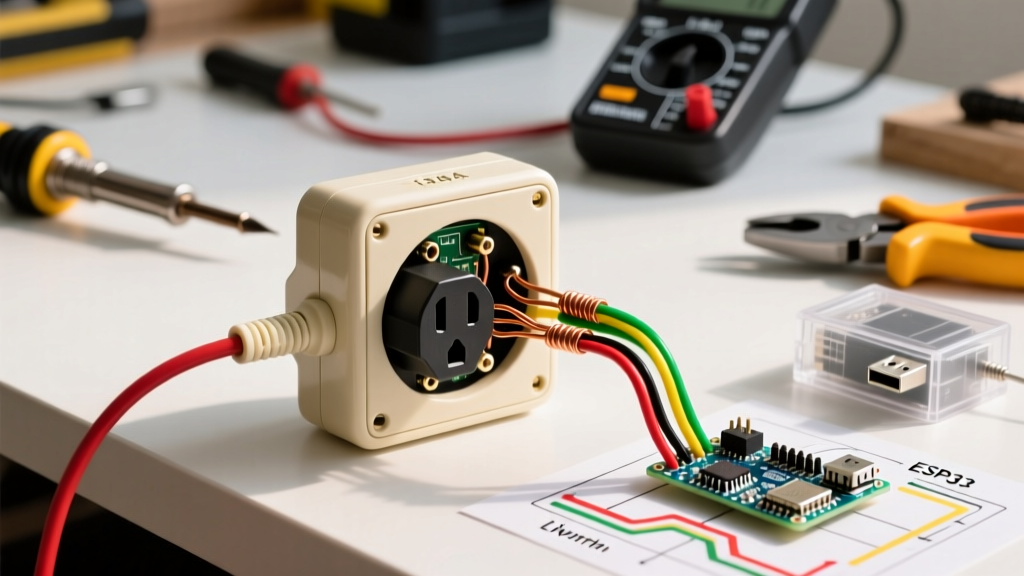
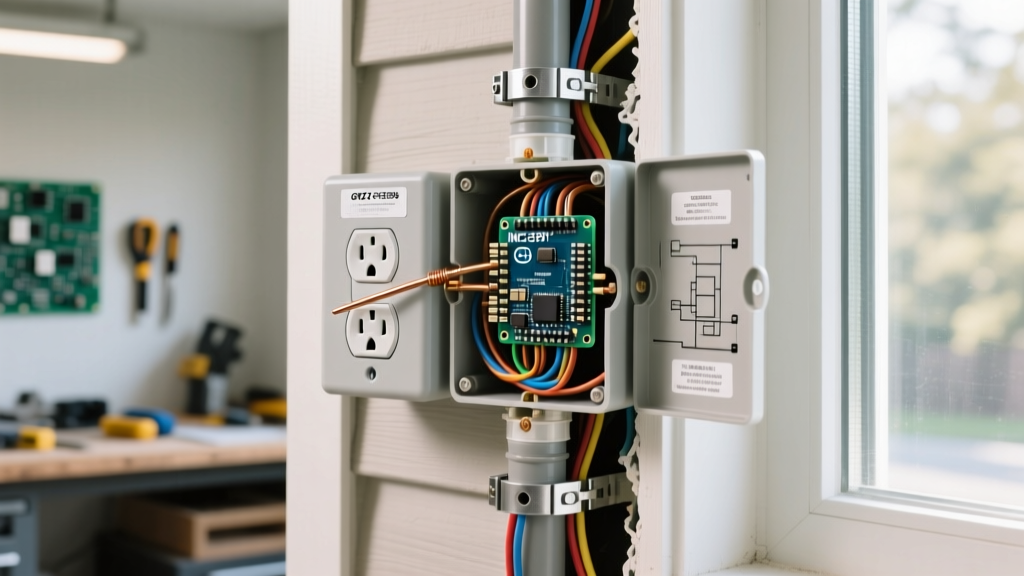
The standard Colombia electric outlet is the NEMA 5-15R duplex receptacle. Proper termination requires strict adherence to terminal mapping and the Colombian wire color code, which mirrors the US NEC but requires vigilance against legacy European color codes sometimes found in imported cables or older renovations.
Terminal Mapping and RETIE Color Codes
- Hot (Phase) Terminal: The brass-colored screw. Connect the Black (or Red) insulated wire here. This carries the 120V alternating current from the breaker panel.
- Neutral Terminal: The silver-colored screw. Connect the White (or Gray) insulated wire here. This completes the circuit back to the transformer.
- Ground Terminal: The green-colored screw (or grounding clip at the back of the metal box). Connect the Bare Copper or Green insulated wire here. This provides a low-impedance path for fault currents.
Warning: If you encounter Brown (Phase), Blue (Neutral), and Yellow/Green (Ground) wires, you are dealing with IEC/European standard cabling, sometimes used in specialized industrial equipment or older imported infrastructure. Do not mix these with NTC 2050 standard wiring within the same junction box without clear, permanent labeling.
Step-by-Step Installation: Type B Duplex Receptacle
Follow this procedure to install a standard 15A or 20A Type B receptacle in a typical Colombian residential wall box (caja rectangular). For this guide, we assume a 20A circuit using 12 AWG solid copper THHN/THWN wire.
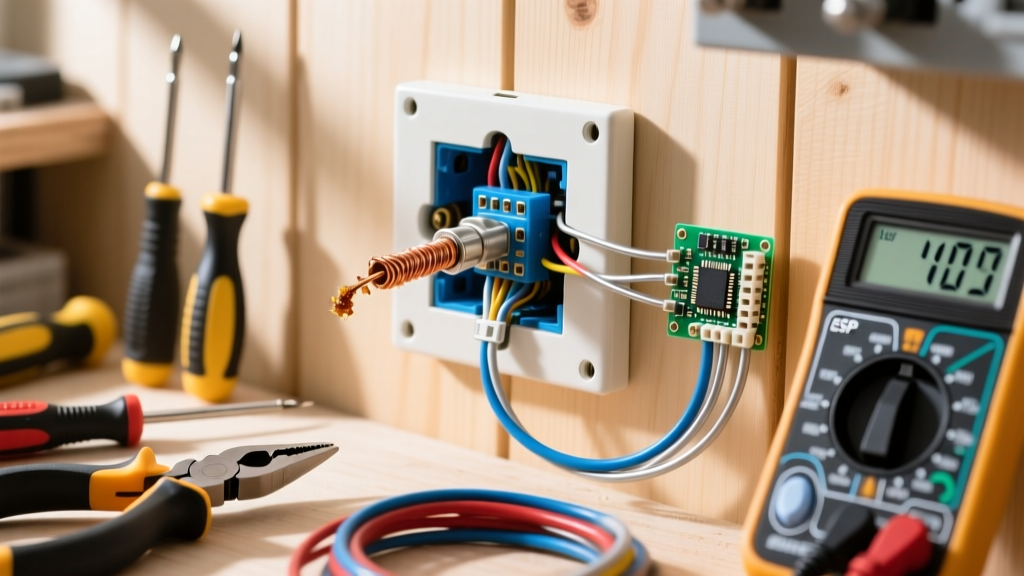
- De-energize and Verify: Turn off the 20A breaker at the main distribution panel (tablero de distribución). Use a non-contact voltage tester (NCVT) and a digital multimeter to verify 0V between the hot and neutral wires.
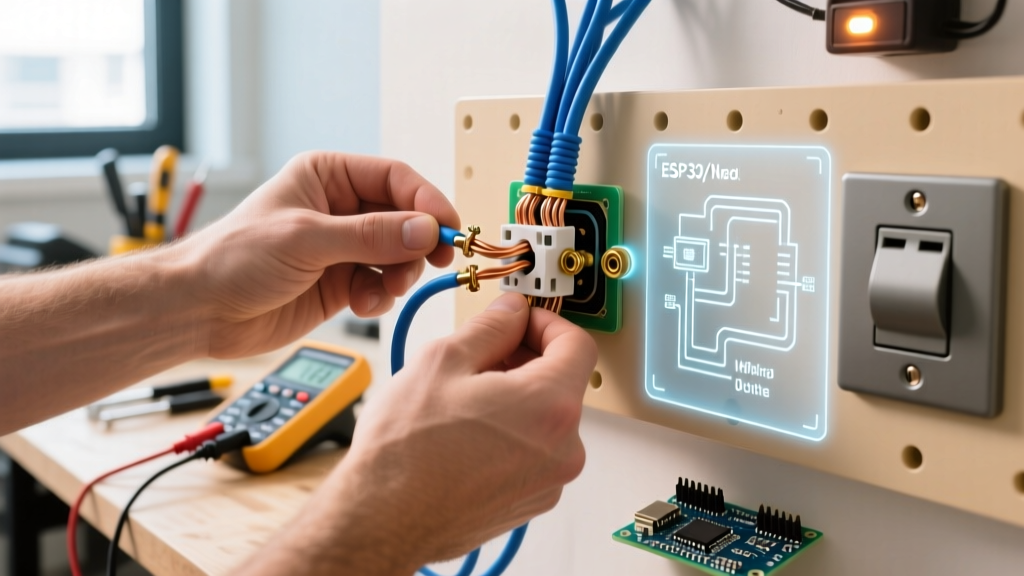
- Prepare the Conductors: Strip exactly 3/4 inch (19mm) of insulation from the Black, White, and Bare wires using a precision wire stripper. Do not nick the copper conductor, as this creates a hot spot and potential failure point.
- Pigtail the Ground: If installing multiple receptacles or terminating in a metallic wall box, use a wire nut to join the incoming ground, the outgoing ground, and a 6-inch bare copper pigtail. Connect the pigtail to the receptacle's green ground screw.
- Terminate Neutral and Hot: Form a clockwise 'J-hook' at the end of the White and Black wires. Hook the White wire around the silver screw and the Black wire around the brass screw. Tighten both screws to 14 in-lbs (1.58 Nm) using a calibrated torque screwdriver. This specific torque ensures the wire does not loosen under thermal expansion cycles.
- Secure and Test: Carefully fold the wires into the 100x50mm box, ensuring the ground wire does not touch the hot terminal. Mount the receptacle with the provided 6-32 machine screws. Attach the faceplate, restore power, and test with a standard 3-prong receptacle tester to verify correct wiring.
Edge Cases and Troubleshooting in Colombian Grids
Working on a Colombia electric outlet often involves navigating legacy wiring hazards and regional grid instabilities. Understanding these edge cases separates a novice DIYer from a seasoned electrical professional.
1. The 'Bootleg Ground' Hazard (Puente a Tierra Falso)
In older Colombian apartments (pre-1990s), true equipment grounding conductors were rarely pulled to the receptacle boxes. To pass modern inspections or trick 3-prong appliance plugs, some handymen install a jumper wire between the neutral (silver) terminal and the ground (green) terminal. This is known as a bootleg ground. This is extremely dangerous. If the neutral wire disconnects upstream, the metal chassis of any plugged-in appliance will become energized at 120V, posing a lethal shock hazard. Always test for reverse polarity and bootleg grounds using an advanced digital circuit analyzer before trusting an older outlet.
2. Voltage Drop in Rural and Peripheral Areas
While major cities like Bogotá, Medellín, and Cali maintain stable 120V grids, peripheral and rural areas often suffer from severe voltage sag, sometimes dropping to 105V under load. According to NTC 2050, voltage drop on a branch circuit should not exceed 3%. If you are installing sensitive electronics or medical equipment in these areas, specify a wider wire gauge (e.g., stepping up from 14 AWG to 12 AWG, or 12 AWG to 10 AWG) to reduce line resistance, and install a dedicated automatic voltage regulator (AVR) upstream of the receptacle.
Frequently Asked Questions
Can I use a US 240V dryer outlet in Colombia?
Yes, but the configuration differs slightly in application. Colombia utilizes a split-phase 120/240V system for heavy appliances (electric stoves, dryers, water heaters). However, the standard receptacle for these is often a NEMA 14-30R or NEMA 14-50R, identical to the US. You must ensure the breaker is a 2-pole breaker tied to opposite phases in the panel to achieve the 240V potential.
Are European Schuko (Type F) outlets legal in Colombia?
No. Under RETIE and NTC 2050, the standard for general-purpose 120V receptacles is strictly NEMA 1-15 (Type A) or NEMA 5-15 (Type B). Installing European Schuko outlets, which are rated for 230V, on a 120V circuit is a severe code violation. It creates a massive safety hazard because a user could plug in a 230V appliance that will underperform, or worse, a dual-voltage appliance set to 230V, leading to equipment damage. For a comprehensive look at global plug types, refer to the World Standards Type B guide.
What is the typical cost of a commercial-grade receptacle in Colombia?
As of 2026, a standard residential-grade NEMA 5-15R duplex receptacle from brands like Bticino or Schneider Electric costs between 12,000 and 25,000 COP (approx. $3 to $6 USD). Commercial-grade, tamper-resistant, and hospital-grade (IG - Isolated Ground) receptacles from Leviton or Hubbell typically range from 35,000 to 85,000 COP ($9 to $22 USD) at specialized electrical distributors in Bogotá or Medellín.
For further reading on the foundational safety codes that dictate these wiring practices, review the NFPA 70 National Electrical Code, which serves as the direct baseline for Colombia's NTC 2050.