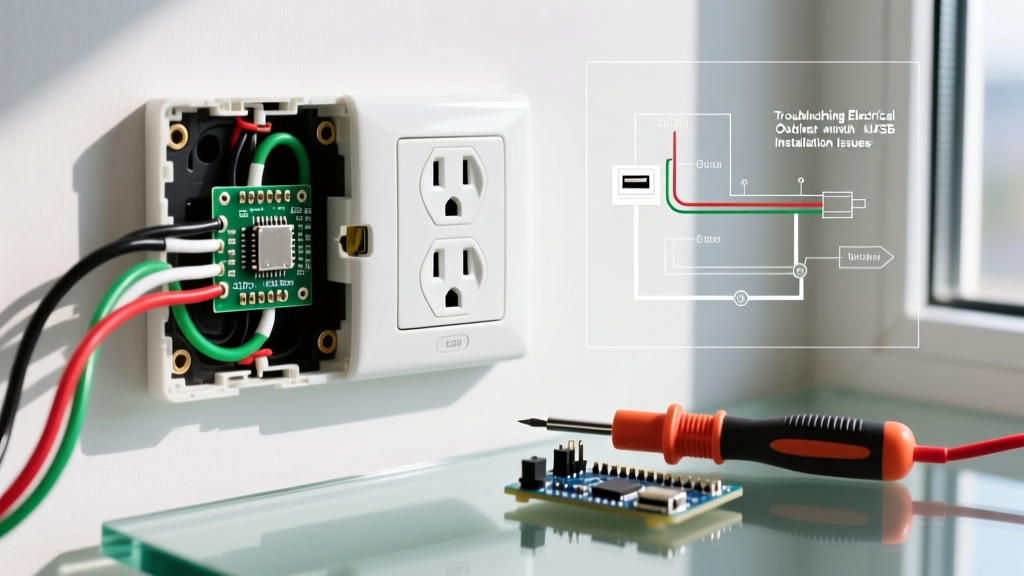

The Regulatory Framework: SEC and NCh Elec. 4/2003
When designing, installing, or troubleshooting residential and commercial electrical systems in Chile, adherence to local codes is not optional—it is a strict legal and safety mandate. The governing body overseeing these installations is the Superintendencia de Electricidad y Combustibles (SEC). The primary technical document dictating outlet wiring, conductor sizing, and protection schemes is the Norma Chilena NCh Elec. 4/2003, supplemented by the RIC (Reglamento de Instalaciones de Consumo).
Unlike North American systems that operate at 120V/60Hz, the Chilean grid delivers a nominal 220V at 50Hz. This higher voltage demands rigorous insulation standards, precise torque specifications on terminal connections, and mandatory ground-fault protection. In 2026, the SEC has further cracked down on unpermitted modifications, making it critical for DIYers and licensed electricians (instaladores eléctricos autorizados) to understand the exact specifications of the standard Chile electrical outlet.
SEC Mandate Summary: All new residential outlet circuits must be protected by a 30mA differential switch (RCD) and a thermomagnetic breaker. Ungrounded outlets are strictly prohibited in new installations and must be retrofitted during major renovations.
Anatomy of the Chile Electrical Outlet: Type L Deep Dive
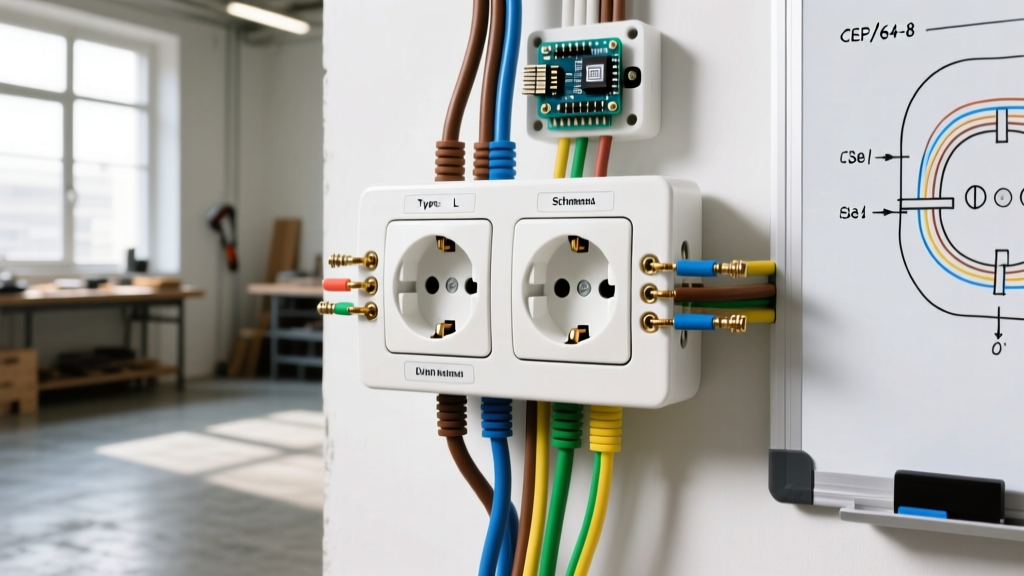
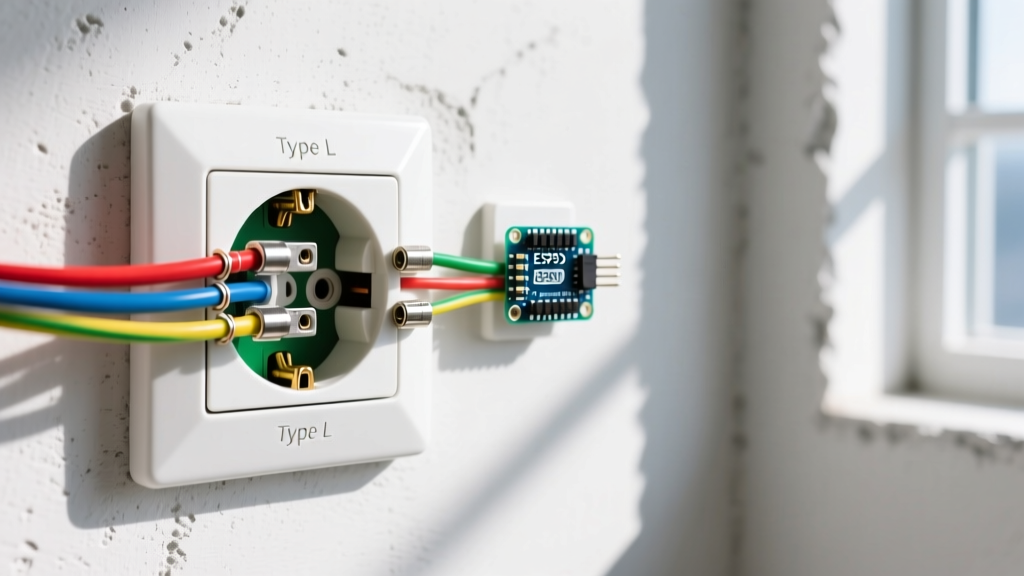
The standard Chile electrical outlet utilizes the Type L plug and socket configuration (originally derived from the Italian CEI 23-50 standard). Locally referred to as the enchufe italiano, it features three round pins arranged in a straight line. However, a common point of failure and code violation stems from confusing the two distinct amperage variants of the Type L standard.
10A vs. 16A Type L Receptacles
The physical dimensions of the pins and the spacing between them differ based on the amperage rating. Forcing a 16A plug into a 10A socket (or using non-compliant adapters) causes severe arcing and thermal degradation at the contact points.
| Specification | 10A Type L (Standard) | 16A Type L (Heavy Duty) |
|---|---|---|
| Pin Diameter | 4.0 mm | 5.0 mm |
| Pin Spacing (Center-to-Center) | 5.5 mm | 8.0 mm |
| Maximum Continuous Load | 2,200W (at 220V) | 3,520W (at 220V) |
| Required Wire Gauge | 1.5 mm² (approx. 16 AWG) | 2.5 mm² (approx. 14 AWG) |
| Breaker Rating | 10A (C-Curve) | 16A (C-Curve) |
| Average 2026 Retail Cost | $4,000 - $6,500 CLP | $5,500 - $9,000 CLP |
Expert Insight: For kitchen countertops, laundry areas, and spaces housing space heaters or microwaves, the SEC requires 16A circuits wired with 2.5 mm² THW-90 or THHN-90 copper conductors. Standard 10A circuits are restricted to lighting and low-draw general-purpose living room or bedroom receptacles.
Conductor Sizing and SEC Color Code Standards
Chile has historically experienced a transitional period regarding wire color codes, moving from older North American-influenced standards to IEC harmonized colors. According to the Instituto Nacional de Normalización (INN) and NCh Elec. 4, the following color codes are strictly enforced for 220V single-phase outlet wiring in 2026:
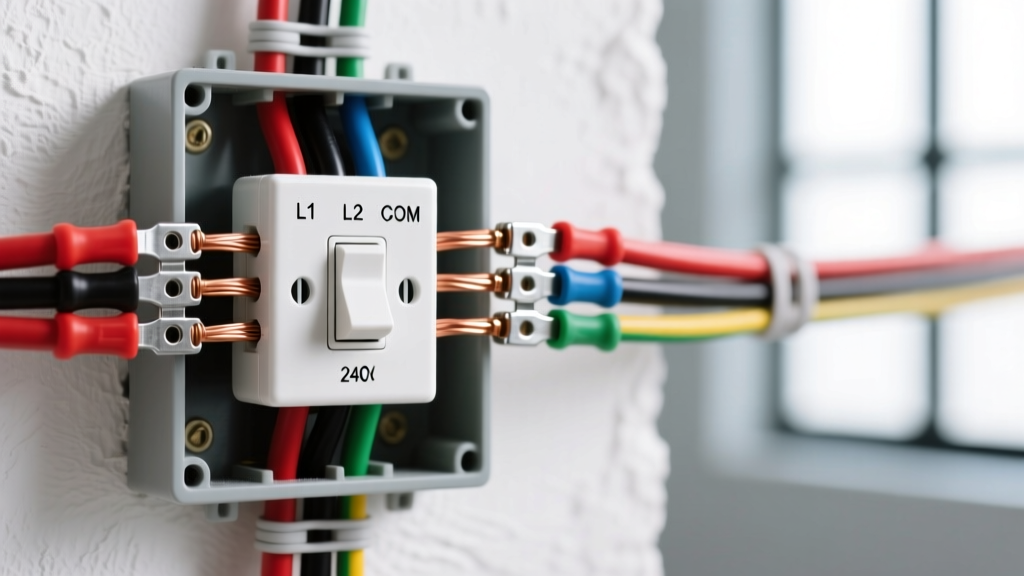
- Phase (Line): Brown, Red, or Black. (Brown is the modern IEC preference, but Red and Black are legally accepted in existing infrastructure).
- Neutral: Blue or White. (Blue is the current standard; White is frequently found in pre-2015 installations).
- Protective Earth (Ground): Green/Yellow bi-color stripe. Solid Green is only permitted in legacy systems but cannot be used in new wiring pulls.
All conductors must be pulled through rigid PVC conduit (or corrugated flexible conduit embedded in masonry) with a minimum internal diameter of 16mm for standard outlet runs. The conduit fill ratio must not exceed 33% to ensure proper heat dissipation at 220V loads.
Mandatory Circuit Protection: Interruptor Diferencial
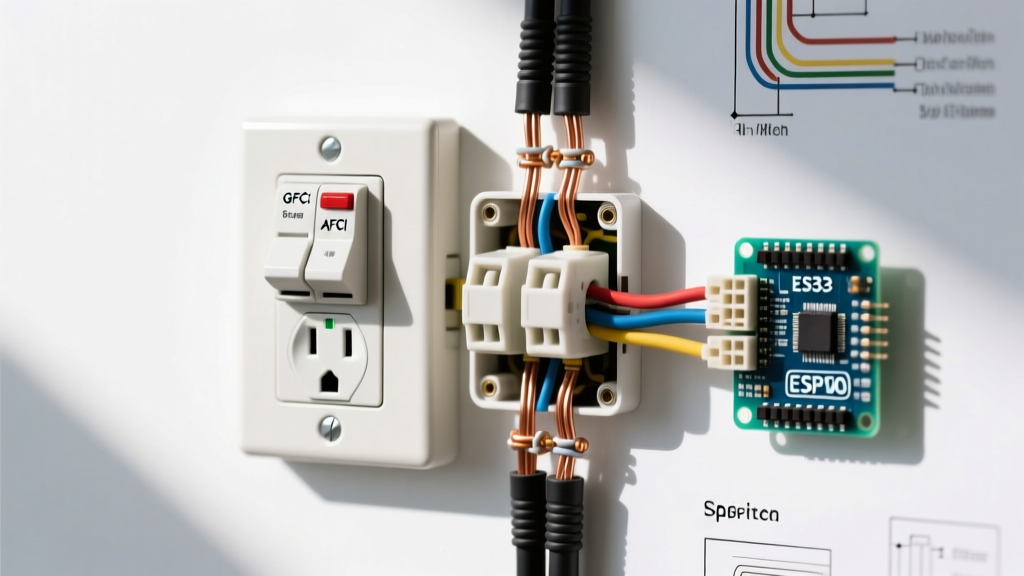
A defining feature of the Chilean electrical code is the absolute requirement for an Interruptor Diferencial (ID), known in North America as a GFCI or RCD, on every outlet circuit. Unlike the US, where GFCI protection is often localized at the receptacle level, Chile utilizes a centralized DIN-rail mounted approach in the distribution board (tablero de distribución).
The 30mA Trip Threshold
For all residential receptacles, the SEC mandates a 30mA trip threshold to prevent lethal ventricular fibrillation in the event of a ground fault. Furthermore, while older installations utilized Class AC differential switches (which only detect sinusoidal alternating fault currents), modern code updates and best practices for 2026 strongly dictate the use of Class A differential switches. Class A IDs (such as the Schneider Electric Acti9 iID or Legrand DX³) detect both AC and pulsating DC fault currents, which is critical for protecting circuits feeding modern variable-frequency drive appliances, LED drivers, and computer power supplies.
Step-by-Step Installation: Wiring a 16A Type L Receptacle
Proper mechanical execution is just as vital as electrical compliance. Follow these precise steps to install a 16A Type L outlet (e.g., Bticino LivingLight or Legrand Valena Life series):
- De-energize and Verify: Switch off the 16A thermomagnetic breaker and the 30mA ID. Use a CAT III multimeter to verify 0V between Phase, Neutral, and Ground at the work site.
- Conductor Preparation: Strip exactly 12mm of insulation from the 2.5 mm² copper conductors. Do not nick the copper strands, as this creates a localized hot-spot under high 220V loads.
- Terminal Assignment: The Type L socket is linear. The center pin is always the Protective Earth (Ground). The outer pins are Phase and Neutral. While Chilean code does not strictly enforce Phase/Neutral polarity on the outer pins for standard appliances, best practice dictates placing the Phase on the left and Neutral on the right when facing the receptacle.
- Torque Specification: Tighten the terminal screws to exactly 0.5 Nm to 0.8 Nm using a calibrated torque screwdriver. Under-torquing causes arcing; over-torquing strips the brass threads and crushes the wire strands.
- Mounting and Testing: Secure the receptacle to the flush-mount box using the provided M3.5 screws. Restore power and test with a digital multimeter: Phase-to-Neutral must read ~220V, Phase-to-Ground ~220V, and Neutral-to-Ground must read < 2V.
Common Code Violations in Chilean Residential Wiring
When auditing older properties or inspecting DIY work, SEC inspectors frequently flag the following critical violations:
- Missing Grounding Electrode: Relying solely on the utility neutral for grounding (bootleg ground). The SEC requires a dedicated physical grounding rod (jabalina) driven into the earth, connected to the main equipotential bonding bar.
- Shared Neutrals: Using a single neutral conductor for multiple 220V phase legs originating from different breakers. This causes neutral overloading and prevents the 30mA differential switch from functioning correctly.
- Splicing Inside Conduit: All wire splices must occur exclusively inside accessible junction boxes (cajas de derivación). Splices hidden inside the PVC conduit walls are a severe fire hazard and an automatic code failure.
Frequently Asked Questions
Can I use a Type C (Europlug) socket instead of Type L in Chile?
Type C sockets are ungrounded and are only legally permitted for specific, double-insulated (Class II) lighting fixtures or shaver outlets in bathrooms. For general-purpose wall receptacles, the grounded Type L is strictly required by the SEC.
What happens if my 30mA differential switch keeps tripping?
Frequent tripping indicates either a genuine ground fault (current leaking to earth through a faulty appliance or damaged wire insulation) or cumulative leakage. If multiple modern appliances with EMI filters are on the same circuit, their normal micro-leakage can add up to 30mA. The solution is to split the circuit into two separate 16A lines, each with its own dedicated ID.