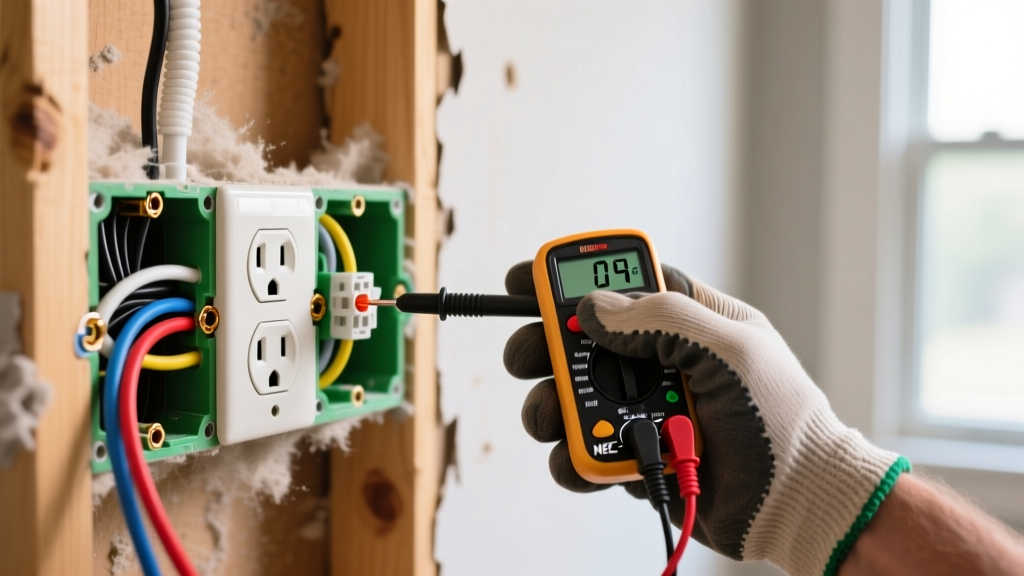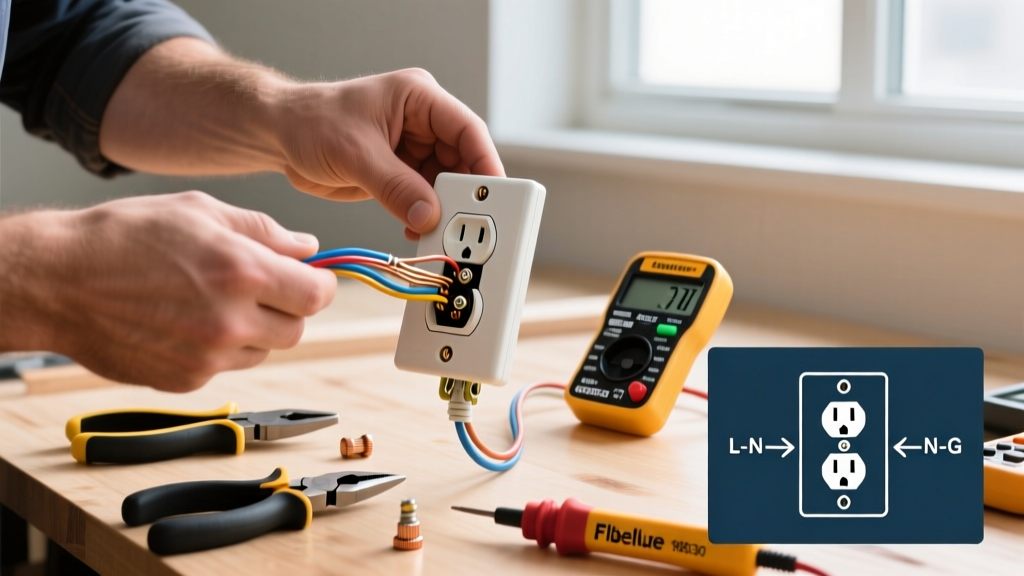

The Diagnostic & Safety Arsenal
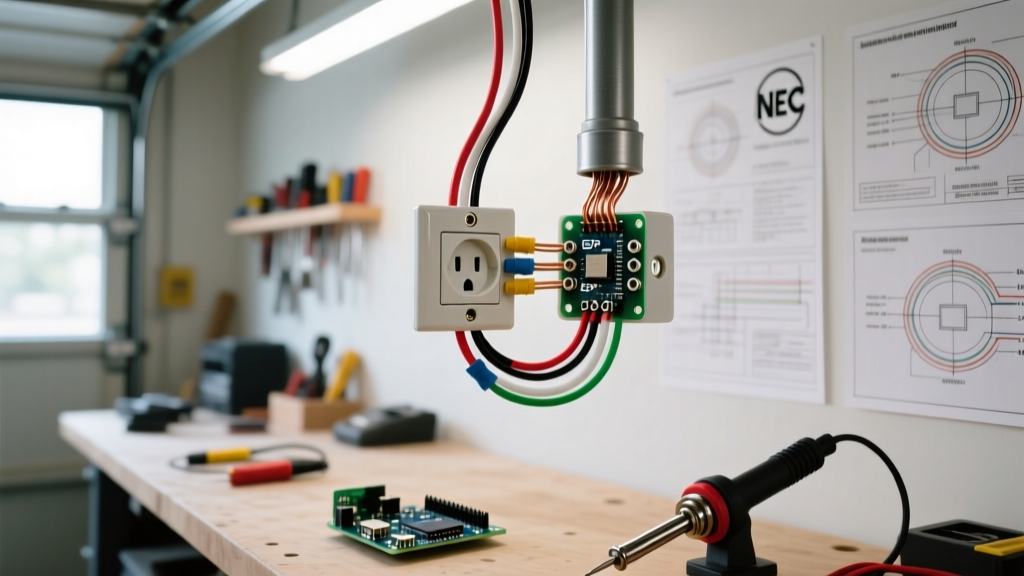
Learning how to add an electrical outlet safely requires more than just a screwdriver and some wire. The foundation of any successful electrical rough-in and finish-out is a reliable diagnostic toolkit. Before you even think about cutting into drywall, you must verify the circuit status and understand the existing wiring topology.
- Non-Contact Voltage Tester: The Fluke 1AC-II VoltAlert (approx. $35) is the industry standard. Its dual-range sensitivity allows you to detect both standard 120V branch circuits and higher voltage feeds without stripping insulation.
- Receptacle Tester: The Klein Tools RT100 (approx. $15) is essential for testing existing outlets you plan to daisy-chain from. It instantly identifies open grounds, reversed polarity, and hot/neutral swaps.
- Multimeter: For precise voltage drop testing and continuity checks, the Fluke 117 True-RMS Digital Multimeter (approx. $220) provides the accuracy needed to troubleshoot long wire runs.
CRITICAL SAFETY WARNING: Never rely solely on a non-contact voltage tester to confirm a circuit is dead. Always use a multimeter or a plug-in circuit tester to verify zero voltage between the hot, neutral, and ground terminals before touching any bare copper.
Cutting, Stripping, and Routing Tools
Once the circuit is mapped and de-energized at the breaker panel, the physical work begins. Using the correct mechanical tools prevents damage to the NM-B (non-metallic sheathed) cable insulation and ensures clean drywall cutouts.
Wire Strippers and Cutters
Ditch the generic multi-tools. The Klein Tools 11063W (approx. $25) is a dedicated 10-14 AWG wire stripper. Its precision-machined stripping holes remove the PVC insulation without nicking the copper conductor—a common failure point that creates hot spots and increases fire risk under heavy loads.
Drywall Cutout Tools
If you are installing a new old-work box, a manual drywall saw works, but for multiple outlets, the Milwaukee M18 FUEL Drywall Cutout Tool (approx. $199) saves hours. Pair it with a 1-gang outlet guide bit to route perfect 2.75" x 4.5" openings without overcutting, which compromises the box's drywall clamps.
Fish Tapes and Lubricants
Routing wire through existing walls requires a steel fish tape like the Klein Tools 56415 (50 ft, approx. $45). To reduce friction when pulling Southwire Romex through tight stud bays, use a wire-pulling lubricant like Ideal 31-091 Yellow 77.
Material Matrix: Selecting the Right Components
Choosing the correct materials is dictated by the amperage of the breaker protecting the circuit. Below is a breakdown of the exact components required for a standard 15-amp or 20-amp branch circuit.
| Component | 15-Amp Circuit Spec | 20-Amp Circuit Spec | Recommended Model | Est. Cost |
|---|---|---|---|---|
| NM-B Cable | 14/2 AWG (with ground) | 12/2 AWG (with ground) | Southwire Romex SIMpull | $0.45 - $0.65 / ft |
| Receptacle | 15A Tamper-Resistant (TR) | 20A Tamper-Resistant (TR) | Leviton T5320-W (15A) / T5262-W (20A) | $3.50 - $5.00 |
| Old-Work Box | Single Gang (18 cu. in.) | Single Gang (20.25 cu. in.) | Carlon B618R / B220R | $2.00 - $3.50 |
| Wire Connectors | Yellow (14 AWG) | Red or Tan (12 AWG) | Ideal Wire-Nut 305 / 314 | $0.10 / ea |
| Nail Plate | 1-1/2" Steel | 1-1/2" Steel | Carlon E9721B | $0.75 / ea |
Box Fill Calculations: The Math Behind the Walls
A common DIY mistake is cramming too many wires into a standard electrical box, violating NEC Article 314. Overcrowded boxes trap heat and make it impossible to safely fold the wires behind the receptacle. Use this formula to calculate minimum box volume:
- 14 AWG Wire: Requires 2.0 cubic inches per conductor.
- 12 AWG Wire: Requires 2.25 cubic inches per conductor.
- The Device (Receptacle): Counts as 2 conductors.
- All Ground Wires Combined: Count as 1 conductor.
- Internal Clamps: Count as 1 conductor.
Example: If you are passing a 14/2 cable through a box to daisy-chain to another outlet (2 cables in, 1 device, 1 ground, 1 clamp), you have 4 current-carrying conductors + 1 device (2) + 1 ground + 1 clamp = 8 volume allowances. 8 x 2.0 cu in = 16.0 cubic inches minimum. An 18 cu. in. box (like the Carlon B618R) is required.
Step-by-Step Material Deployment
- Kill the Power: Turn off the breaker and verify with the Fluke 1AC-II and RT100.
- Cut the Opening: Trace the old-work box on the drywall and cut using the drywall router. Avoid cutting deeper than 1/2 inch to prevent slicing hidden Romex or plumbing.
- Route the Cable: Feed the SIMpull NM-B cable through the knockout of the old-work box before inserting it into the wall. Leave at least 8 inches of slack protruding from the box.
- Strip and Prep: Use the Klein 11063W to strip exactly 3/4 inch of insulation from the black and white wires. Strip 1 inch from the bare copper ground.
- Terminate the Receptacle: Form a "J-hook" with the stripped wires using needle-nose pliers. Hook them clockwise around the brass (hot) and silver (neutral) terminal screws. This ensures the screw pulls the wire tighter as it is driven in.
- Secure the Box: Insert the box into the drywall hole and tighten the mounting screws, which will flip the internal wings securely against the back of the drywall.
Code Compliance & Edge Cases (NEC 2023/2026)
When adding an outlet, you must adhere to the latest National Electrical Code (NEC) standards, which prioritize shock and fire prevention.
Tamper-Resistant (TR) Mandate
Under NEC Article 406.12, all 15-amp and 20-amp, 125V and 250V non-locking receptacles in dwelling units must be Tamper-Resistant. According to the U.S. Consumer Product Safety Commission (CPSC), TR receptacles feature internal spring-loaded shutters that only open when equal pressure is applied to both slots simultaneously, preventing children from inserting foreign objects. Standard non-TR receptacles are illegal for new installations in living spaces.
AFCI and GFCI Requirements
Depending on where you are adding the outlet, you may need specialized protection:
- GFCI (Ground Fault Circuit Interrupter): Required in kitchens, bathrooms, garages, outdoors, and within 6 feet of any sink. Use a Leviton GFTNL-W for these zones.
- AFCI (Arc Fault Circuit Interrupter): Required in almost all living areas, including bedrooms, living rooms, and hallways. If your main breaker panel does not have an AFCI breaker for that specific circuit, you must install an AFCI receptacle at the first outlet in the chain.
For comprehensive safety guidelines regarding electrical installations and workplace safety standards, always refer to the Occupational Safety and Health Administration (OSHA) electrical safety protocols.
Frequently Asked Questions
Can I use push-in (backstab) connectors on the back of the outlet?
While technically legal and faster, professional electricians strongly advise against backstabbing. The internal spring-metal contacts degrade over time due to thermal expansion and contraction, leading to arcing and high-resistance connections. Always use the side-binding screw terminals and torque them firmly.
Do I need to staple the Romex inside an existing finished wall?
When fishing wire through existing finished walls, the NEC provides an exception (Article 300.4) that waives the standard 4.5-foot stapling requirement, provided the cable is properly secured at the box and protected by nail plates where it passes through framing members within 1.25 inches of the stud edge.
What if the existing wire is too short to reach the new outlet?
NEC code strictly prohibits burying wire splices inside a wall cavity without an accessible junction box. If your wire is too short, you must install a blank-covered junction box in the drywall, make your wire nut splices inside it, and run a new continuous length of Romex to your new outlet location.