
Pinpointing the Electrical Outlet on Canyon Truck Bed Location
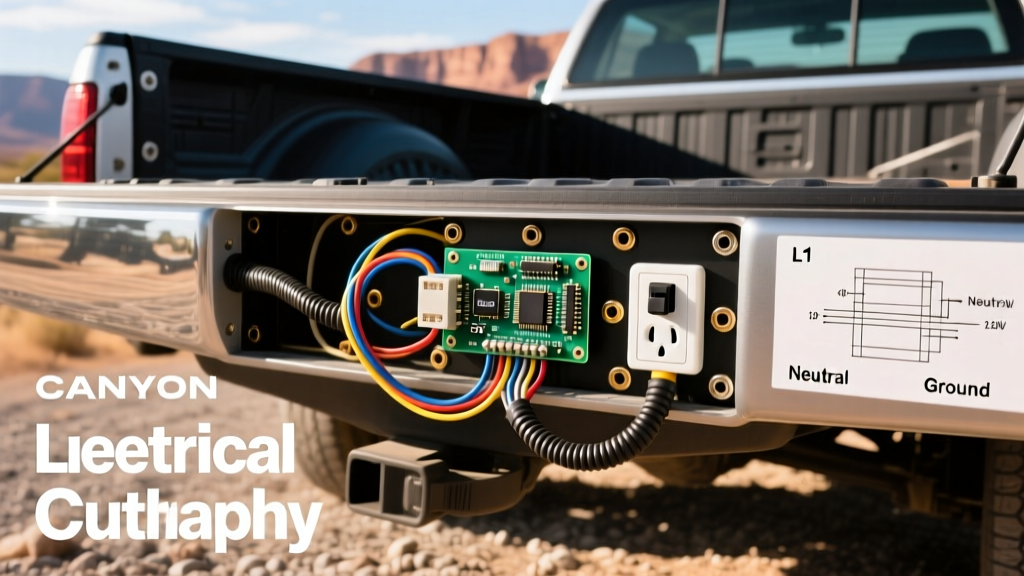
For contractors, overlanders, and DIY enthusiasts, the GMC Canyon is a premier midsize truck platform. A major draw for this vehicle is its integrated 120V AC power supply. However, when searching for the exact electrical outlet on Canyon truck bed location, owners often make a critical diagnostic mistake: they assume the power inverter is housed inside the bed wall alongside the receptacle. It is not.
The physical AC receptacle is merely a weatherproof termination point. The heavy-duty 12V DC to 120V AC inverter module is actually mounted inside the cabin to protect it from extreme temperature fluctuations and water ingress. Understanding this separation is the first step in effectively troubleshooting, testing, or upgrading your truck bed power system.
Generational Receptacle Placements (2015–2026)
- 2015–2022 (Second Generation): The 120V outlet is located on the driver-side bed wall, positioned just behind the rear wheel well. It is recessed into a molded plastic pocket with a spring-loaded weather cover. The inverter is typically mounted under the rear passenger seat or beneath the center console.
- 2023–2026 (Third Generation & Refresh): GMC redesigned the bed architecture. The outlet remains on the driver side but is often integrated lower into the bed rail or near the tailgate hinge for easier access when the bed is loaded. The inverter has been relocated to a dedicated, ventilated enclosure under the driver-side rear seating area to improve thermal management.
Essential Diagnostic Tools for 120V Bed Receptacles
Testing automotive AC circuits requires specialized equipment. The factory GMC Canyon inverter outputs a modified sine wave (MSW) rather than a pure sine wave. Standard, inexpensive multimeters use average-responding circuitry that will yield wildly inaccurate voltage readings when measuring MSW power. To accurately diagnose the electrical outlet on your Canyon truck bed, you need True RMS tools.
1. True RMS Digital Multimeter
The Fluke 117 True RMS Multimeter (approx. $210) is the industry standard for this task. Its True RMS sensor accurately calculates the heating value of the modified sine wave, giving you a reliable 120V reading. Use this to verify voltage at the bed receptacle and to test the 12V DC feed at the inverter under the seat. For a deeper understanding of proper probing techniques, refer to Fluke's official multimeter guide.
2. AC/DC Voltage and Continuity Tester
The Klein Tools ET45 (approx. $35) is an excellent secondary tool. It features a built-in GFCI test button. Since the Canyon bed outlet is GFCI-protected, the ET45 allows you to instantly verify if the ground fault circuit interrupter is functioning correctly without needing to plug in a bulky appliance.
3. Automotive Circuit Probe
To test the high-amperage 12V DC supply feeding the inverter, use a Power Probe Hook (approx. $230). This tool allows you to pierce wires safely and apply direct battery voltage or ground to test the inverter's internal relays without back-probing delicate GM CAN-bus connectors.
Material List: Upgrading to a High-Capacity Aftermarket Outlet
The factory Canyon outlet is limited to 400 watts (roughly 3.3 amps at 120V). This is sufficient for charging laptops or running a small box fan, but it will immediately trip the internal breaker if you plug in a 15-amp job-site miter saw or a heavy-duty air compressor. If your workflow demands more power, you must bypass the factory system and install a dedicated aftermarket pure sine wave inverter.
The 2000W Job-Site Upgrade Matrix
| Component | Factory Canyon Setup | Aftermarket 2000W Upgrade |
|---|---|---|
| Max Continuous Wattage | 400W (3.3A) | 2000W (16.6A) |
| Inverter Type | Modified Sine Wave | Pure Sine Wave (e.g., Victron Phoenix) |
| Primary Wire Gauge | 8 AWG (Factory DC Feed) | 2/0 AWG OFC Welding Cable |
| Overcurrent Protection | 40A ATM Fuse (Cabin) | 250A ANL Fuse (Engine Bay) |
| Bed Receptacle | GM Proprietary 15A GFCI | Marinco 20A Marine-Grade Weatherproof |
| Estimated Material Cost | N/A (Included in Truck) | $650 - $850 |
Why 2/0 AWG Wire is Mandatory
A 2000W inverter pulling from a 12V alternator system will draw up to 175 amps under peak load. The distance from the Canyon's battery to the rear bed is approximately 15 feet. Using standard 4 AWG wire will result in a voltage drop exceeding 8%, causing the inverter to shut down prematurely and creating a severe fire hazard. You must use 2/0 AWG Oxygen-Free Copper (OFC) cable to keep the voltage drop under 3%. Pair this with a Blue Sea Systems 250A ANL fuse block mounted within 18 inches of the battery positive terminal.
Step-by-Step Troubleshooting the Factory Inverter Circuit
If your factory bed outlet is dead, do not immediately assume the inverter is fried. Follow this diagnostic sequence to isolate the failure point.
- Verify the Ignition State: The Canyon's 120V outlet is ignition-switched. It will only output power when the engine is running or the ignition is in the 'Run/Accessory' position. Start the truck before testing.
- Test the GFCI Reset: Press the 'Reset' button on the bed receptacle. If it immediately trips again without a load plugged in, moisture has breached the weather seal. You will need to replace the receptacle head.
- Locate the Cabin Inverter Fuse: Consult your specific year's owner manual (available via the GMC Canyon official specifications portal). The 12V feed to the inverter is protected by a 40A or 50A fuse in the under-hood fuse block (often labeled 'PWR INV' or 'AC INVERTER'). Pull and inspect this fuse for a blown element.
- Check the Chassis Ground: The inverter grounds to the vehicle chassis under the rear seat. Corrosion here is a common failure mode. Disconnect the ground bolt, wire-brush the metal to bare steel, apply dielectric grease, and torque to 15 lb-ft.
- Measure DC Input at the Inverter: Using your True RMS multimeter, probe the heavy 12V and Ground wires entering the inverter module. If you read 12.5V+ but the AC output at the bed is zero, the internal inverter board has failed and requires replacement.
Pro-Tip for Sensitive Electronics: If you are using the factory Canyon outlet to power CPAP machines, drones, or high-end camera battery chargers, be aware that the modified sine wave can cause power bricks to overheat or emit a buzzing sound. For sensitive lithium-ion charging circuits, always use a small, standalone 300W Pure Sine Wave inverter plugged directly into the 12V cigarette lighter, bypassing the bed outlet entirely.
Weatherproofing and Long-Term Maintenance
The bed of a pickup is a hostile environment. The factory weather cover on the Canyon's 120V outlet relies on a foam gasket that degrades under UV exposure after 3 to 4 years. Once this gasket fails, driving rain or car wash water will ingress into the receptacle, causing the internal copper contacts to oxidize and the GFCI mechanism to seize.
To prevent this, inspect the gasket annually. If it is cracked or flattened, apply a thin bead of Permatex Dielectric Grease to the mating surface of the cover to improve the water seal. For trucks kept outdoors year-round, consider installing an aftermarket marine-grade cover with a neoprene seal over the factory housing to ensure your power is available exactly when you need it on the job site.