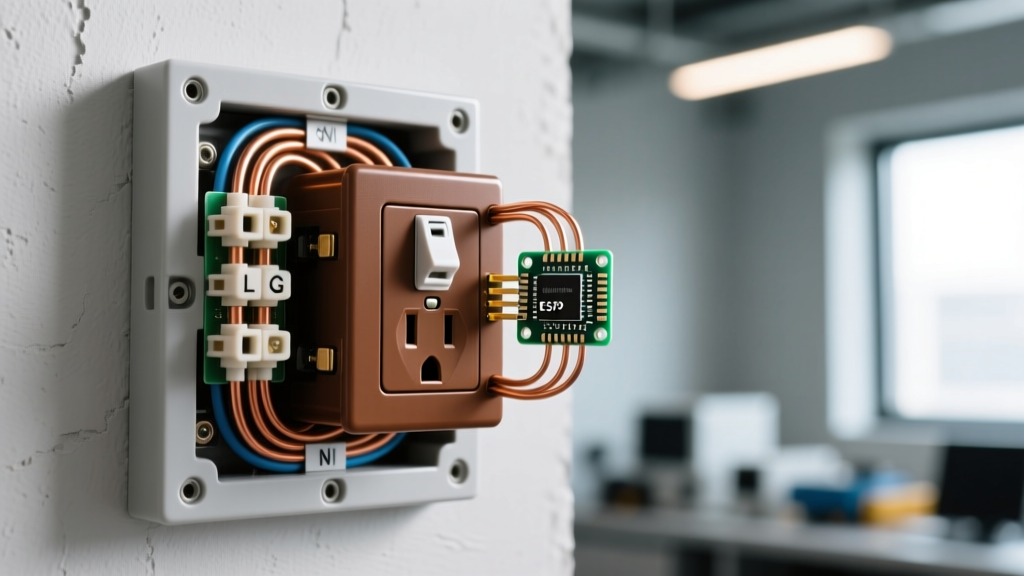

The Dual Identity of the Brown Electrical Outlet
When an electrician, facility manager, or homeowner encounters a brown electrical outlet, it immediately triggers a critical safety question: Is this a standard 125V residential receptacle chosen for aesthetic reasons, or is it a 277V commercial circuit? In the electrical trade, color is never just a decorative choice; it is a primary safety indicator governed by strict National Electrical Code (NEC) mandates. Misidentifying a brown receptacle can lead to catastrophic equipment failure, arc flashes, and severe electrical shock.
This comprehensive safety and code compliance guide dissects the dual identity of the brown electrical outlet. We will explore the NEC phase color-coding matrix, the severe hazards of 277V miswiring, and the exact testing protocols and procurement SKUs required to ensure your electrical infrastructure remains safe and code-compliant in 2026.
NEC Code Compliance: Phase Color Coding Explained
The confusion surrounding brown outlets stems from the intersection of residential design trends and commercial power distribution. In residential settings, brown is simply a manufacturer color option for standard NEMA 5-15R (15A, 125V) duplex receptacles, used to match dark wood trim or accent walls. However, in commercial and industrial environments, brown is a mandatory phase identifier.
According to NEC Articles 210.5(C) and 215.12, branch circuits and feeders must be identified by phase or line and system at all termination, connection, and splice points. For facilities utilizing a 480Y/277V 3-phase power system (common in large commercial buildings, warehouses, and manufacturing plants), the phase-to-neutral voltage is 277V. The NEC strictly mandates the following color matrix for these systems:
| System Voltage | Phase A | Phase B | Phase C | Neutral / Ground |
|---|---|---|---|---|
| 120/208V (3-Phase Wye) | Black | Red | Blue | White / Green |
| 277/480V (3-Phase Wye) | Brown | Orange | Yellow | Gray / Green |
Note: In a 277/480V system, the neutral wire must be gray (not white) to prevent dangerous mix-ups with 120/208V systems. If you open a junction box and see a brown THHN wire paired with a gray neutral, you are dealing with 277V.
Severe Safety Hazards: The 277V Miswiring Threat
The most dangerous scenario in commercial electrical maintenance is the installation of a standard 125V decorative brown receptacle (like a Leviton 5262-B) onto a 277V branch circuit. This typically happens when an unqualified handyman or a fatigued contractor assumes the brown outlet is just a 'colored' 120V outlet.
CRITICAL HAZARD WARNING: Plugging a standard 125V appliance, laptop charger, or power strip into a miswired 277V brown outlet will instantly overvolt the device's Metal Oxide Varistor (MOV). This causes a violent short circuit, resulting in an explosive component failure, molten plastic ejection, and a high-probability arc flash. According to OSHA electrical safety guidelines, exposure to 277V significantly increases the risk of fatal ventricular fibrillation compared to standard 120V residential shocks.
Failure Mode Analysis: 125V Devices on 277V Circuits
- Switch-Mode Power Supplies (SMPS): The input bridge rectifier and bulk capacitors (typically rated for 250V DC max) will experience dielectric breakdown within milliseconds, venting electrolytic fluid and shattering the casing.
- Incandescent/LED Lighting: Filaments will vaporize instantly; LED drivers will experience thermal runaway and catch fire.
- Surge Protectors: The MOVs will clamp aggressively, drawing massive fault current until they physically explode or the branch breaker trips (if the breaker is sized correctly for the fault current).
Step-by-Step Verification & Testing Guide
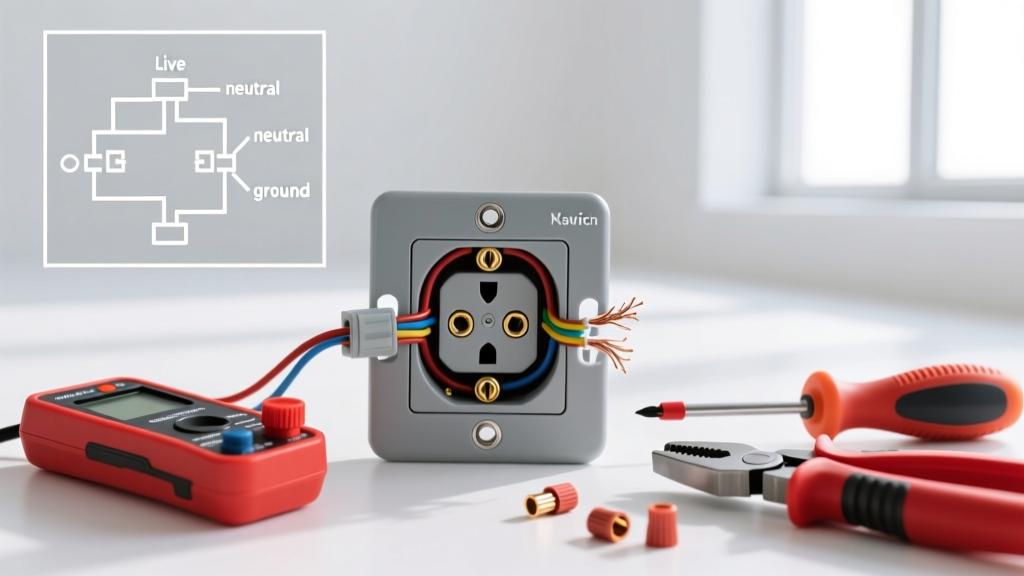
Never assume the voltage of a brown electrical outlet based on its physical appearance. Always verify using a properly rated digital multimeter (DMM). For 2026 commercial environments, a CAT III 600V or CAT IV 600V True-RMS meter (such as the Fluke 117 or Klein Tools MM600) is mandatory.
- Visual Blade Inspection: Examine the receptacle face. A standard NEMA 5-15R has two parallel vertical blades and a U-shaped ground. If the receptacle has a twisted locking blade configuration (e.g., NEMA L7-15R), it is explicitly rated for 277V.
- PPE Donning: Put on ANSI-rated safety glasses and voltage-rated gloves if the panel is exposed. Treat all brown circuits as energized 277V until proven otherwise.
- Meter Setup: Set your True-RMS DMM to AC Voltage (V~). Insert the black probe into the COM jack and the red probe into the V/Ω jack.
- Measurement (Hot to Ground): Insert the red probe into the shorter (hot) slot and the black probe into the U-shaped (ground) slot.
- Reading ~120V (114V-126V): Safe. This is a standard 125V residential/commercial circuit utilizing a brown decorative face.
- Reading ~277V (265V-285V): DANGER. This is a commercial lighting or equipment circuit. Ensure the receptacle is a proper NEMA L7 locking type.
- Measurement (Hot to Neutral): Verify the hot-to-neutral reading matches the hot-to-ground reading to confirm a solid neutral bond and rule out a floating ground scenario.
Approved Receptacle Models & 2026 Procurement Guide
When specifying or replacing a brown electrical outlet, you must select the correct NEMA configuration and voltage rating. Below is a procurement matrix featuring industry-standard models available through major distributors like Graybar and Platt Electric in 2026.
| Manufacturer & SKU | Rating & NEMA | Application | Est. 2026 Price |
|---|---|---|---|
| Leviton 5262-B | 15A / 125V (5-15R) | Residential decorative, dark wood trim matching. | $1.95 |
| Hubbell HBL5262BR | 15A / 125V (5-15R) | Commercial grade, high-impact nylon, 120V circuits. | $4.10 |
| Pass & Seymour L7-15R | 15A / 277V (L7-15R) | Commercial 277V lighting or HVAC control circuits (Locking). | $22.50 |
| Hubbell HBL2610 | 20A / 125V (L5-20R) | Heavy duty 120V locking (Brown body option available). | $18.75 |
Advanced Code Compliance: GFCI and AFCI Requirements
The NEC continues to tighten ground-fault and arc-fault protection requirements. When dealing with brown outlets, you must apply the correct protection based on the verified voltage:
- 125V Brown Outlets (Residential/Light Commercial): Must comply with standard AFCI (bedrooms, living areas) and GFCI (kitchens, bathrooms, outdoors, garages) requirements per NEC 210.8 and 210.12.
- 277V Brown Circuits (Commercial): GFCI protection is now strictly required for 277V single-phase receptacles rated 15A to 50A in specific commercial locations, including commercial kitchens, rooftops, and damp locations. Standard residential GFCI receptacles will explode if wired to 277V; you must use specialized 277V-rated GFCI breakers or heavy-duty industrial GFCI receptacles (e.g., Hubbell GF520 series adapted for higher voltage, or specific 277V GFCI breakers from Square D/Schneider Electric).
Frequently Asked Questions (FAQ)
Can I paint a standard white outlet brown to match my wall?
No. The NEC and UL (Underwriters Laboratories) standards strictly prohibit painting electrical receptacles. Paint can seep into the internal contacts, increasing resistance, causing overheating, and creating a fire hazard. Furthermore, paint can obscure the UL listing mark and voltage ratings. Always purchase factory-molded brown receptacles (like the Leviton 5262-B).
Why does my commercial building use 277V for outlets?
Commercial buildings utilize 480V 3-phase power for heavy machinery and HVAC systems to reduce current and wire gauge requirements. The 277V is derived from the phase-to-neutral voltage of this system. It is primarily used for commercial lighting grids and specific heavy-duty HVAC control circuits, which is why 277V receptacles are almost exclusively of the locking (NEMA L7) variety to prevent accidental plugging of standard 120V office equipment.
What wire gauge is required for a 20A 277V circuit?
For a 20A 277V single-phase circuit, the minimum wire size is 12 AWG THHN/THWN copper, assuming standard temperature derating and conduit fill limits. However, due to the increased arc-flash hazard of 277V systems, many facility engineers spec 10 AWG copper to reduce voltage drop over long commercial runs and provide additional thermal mass for fault conditions.
Final Safety Directives
The brown electrical outlet is a prime example of why visual assumptions have no place in electrical work. Whether you are a homeowner verifying a decorative living room receptacle or a facility manager auditing a 480V distribution panel, the protocol remains identical: Test before you touch. By adhering to NEC phase color-coding standards, utilizing True-RMS CAT III/IV testing equipment, and specifying the correct NEMA configurations, you eliminate the risk of catastrophic overvoltage failures and ensure a safe, compliant electrical environment.